
Heilige Dominicus — History & Facts
In a world where colors whisper stories long buried, Heilige Dominicus emerges as a vivid testament to both faith and artistry. The palette, suffused with deep blues and radiant golds, invites contemplation of sacred moments etched into our collective memory. Look to the center, where the figure of Saint Dominic stands poised in serene reverence. The gentle drapery of his garments, executed with delicate brushwork, flows elegantly around him, while the luminous highlights catch the eye, illuminating his presence against a rich, dark background.
Notice how the contrasting hues create a visual dialogue, drawing the viewer into a space where the divine feels tangible, almost palpable. Beneath the surface, the painting reveals deeper layers of meaning. The choice of gold not only signifies holiness but also reflects the enduring wealth of spiritual legacy, as light dances off its surface, symbolizing the divine glow of knowledge. In the background, subtle details—perhaps an emblem or a flicker of candlelight—suggest a world both earthly and ethereal, where the everyday converges with the sacred.
This interplay evokes a sense of longing, a yearning for connection amidst the ephemeral nature of existence. Created between 1510 and 1530, this artwork belongs to a period marked by significant transition in the art of the North Renaissance. The monogrammist, working in a time when religious reformation was gaining momentum, sought to reaffirm the power of imagery in expressing faith. As artists contended with shifting beliefs, the vibrant colors and intricate symbolism in this piece stand as a bridge between the traditions of the past and the evolving vistas of the future.
More Artworks by Monogrammist S (16e eeuw)
Browse all →
De aanbidding der koningen
Monogrammist S (16e eeuw)
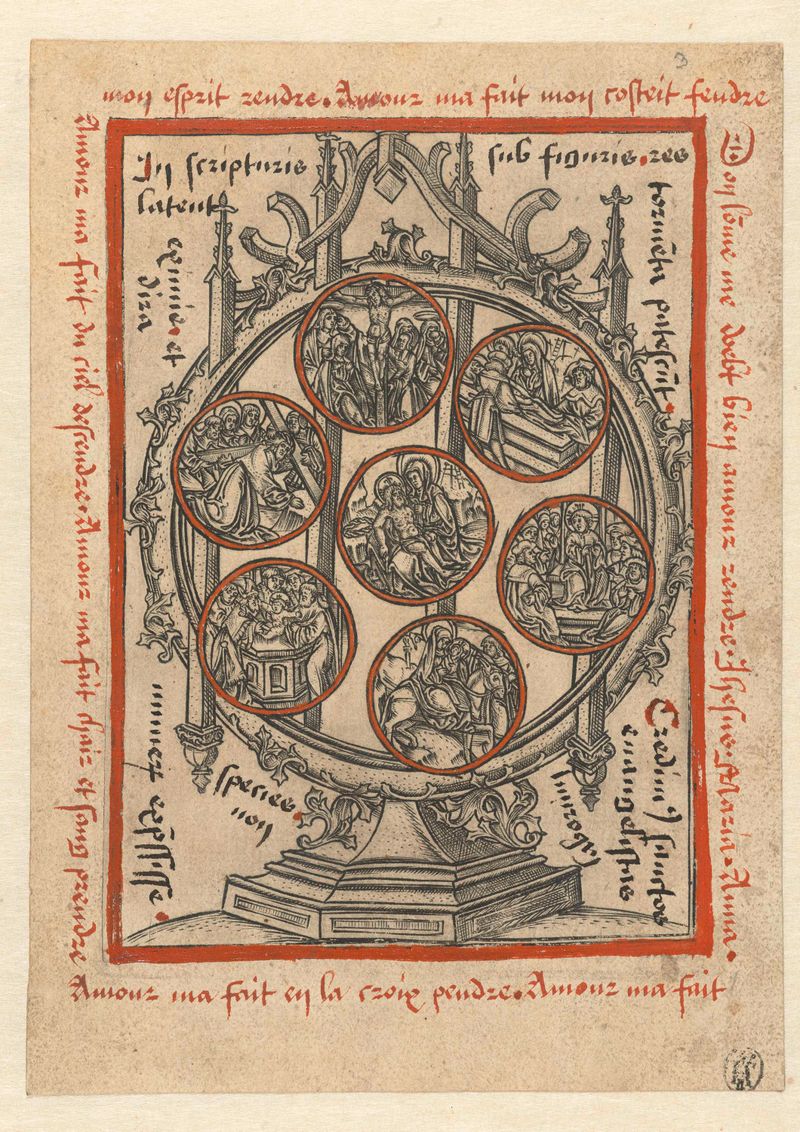
Zeven smarten van Maria
Monogrammist S (16e eeuw)

Maria met kind en vier scènes uit haar leven.
Monogrammist S (16e eeuw)

Zeven Smarten van Maria
Monogrammist S (16e eeuw)

Christus verschijnt aan Maria Magdalena
Monogrammist S (16e eeuw)
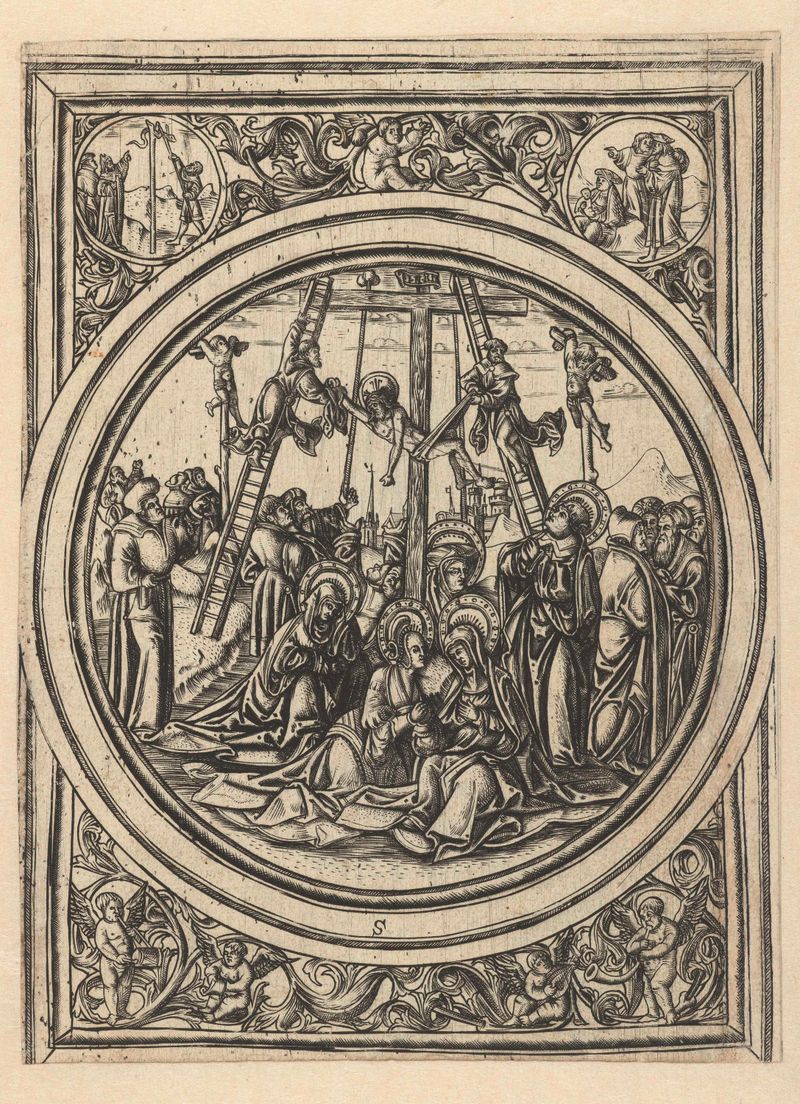
Kruisafname
Monogrammist S (16e eeuw)
More Religious Art
Browse all →
The Return of the Prodigal Son
Rembrandt van Rijn

The Garden of Earthly Delights
El Bosco

Count Orgaz’ funeral
El Greco

The Hundred Guilder Print: the central piece with Christ preaching, the plate arched
Rembrandt van Rijn

The Descent from the Cross
Rogier van der Weyden

The return of the prodigal son
Rembrandt van Rijn