
Zeven smarten van Maria — History & Facts
Is this a mirror — or a memory? In Zeven smarten van Maria, the tension between reality and illusion unravels, inviting the viewer into a world that grapples with the edge of madness. Look to the center where a serene figure of Mary is poised, her gaze penetrating yet serene. The interplay of light against her soft features highlights a delicate halo, while the intricate details of her robe draw the eye outward. Notice how the dark background serves as a canvas for both her ethereal presence and the seven symbolic actions surrounding her, each rendered with meticulous precision.
The artist’s deft brushwork gives life to each element, transforming this scene into an intricate tapestry of meaning. Delve deeper into the figures surrounding Mary; each one silently narrates a part of her story. The seven actions, representing the grief and wisdom of motherhood, contrast sharply against the stillness of her face, suggesting a tumultuous inner world. The juxtaposition of calm and chaos reflects the broader emotional landscape of devotion and despair, evoking a haunting sense of madness lurking beneath serene exteriors.
Each figure seems to mirror a facet of Mary’s experience, collectively inviting the viewer to ponder the complexity of motherhood and the burden of certain knowledge. Created between 1510 and 1530, this striking work emerged from an era when Europe was wrestling with religious transformation and personal introspection. The mysterious Monogrammist S was likely influenced by the profound shifts in thought and faith, mirroring the chaotic balance between faith and doubt, sanity and madness. This painting stands as a testament to the intricate dialogues happening within the art world, as artists grappled with the depths of human experience amidst a changing spiritual landscape.
More Artworks by Monogrammist S (16e eeuw)
Browse all →
De aanbidding der koningen
Monogrammist S (16e eeuw)

Maria met kind en vier scènes uit haar leven.
Monogrammist S (16e eeuw)

Zeven Smarten van Maria
Monogrammist S (16e eeuw)

Heilige Dominicus
Monogrammist S (16e eeuw)

Christus verschijnt aan Maria Magdalena
Monogrammist S (16e eeuw)
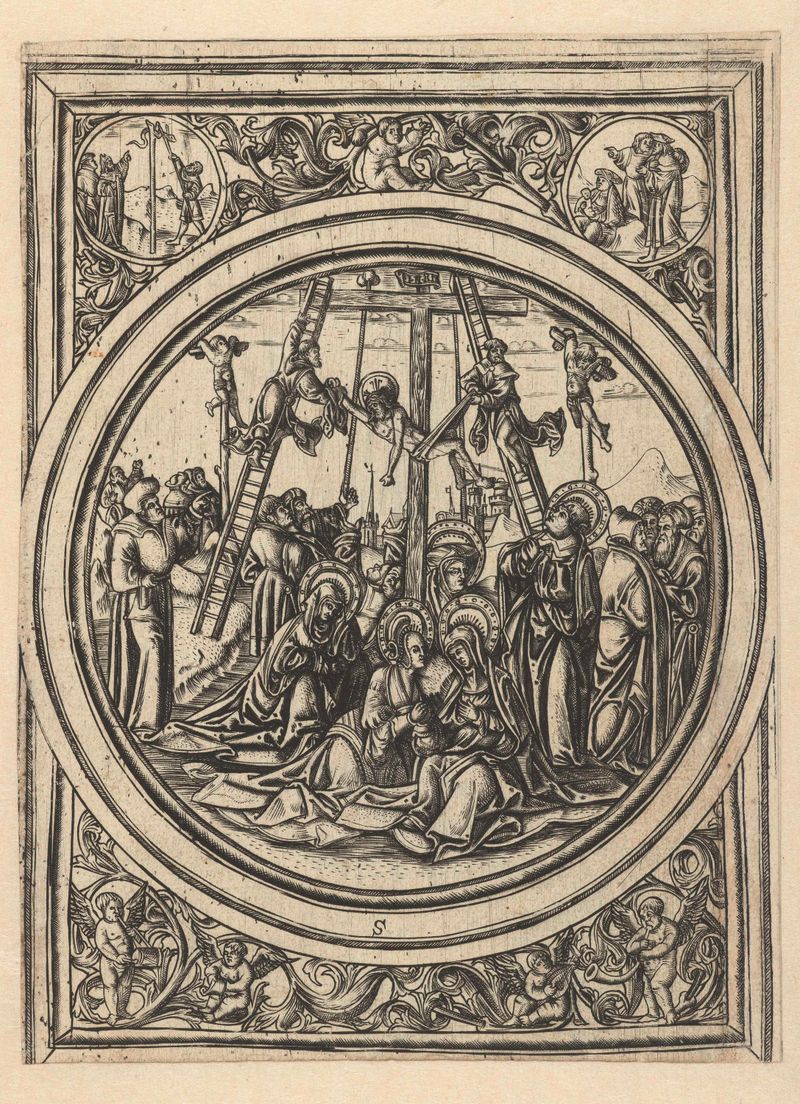
Kruisafname
Monogrammist S (16e eeuw)
More Religious Art
Browse all →
The Return of the Prodigal Son
Rembrandt van Rijn

The Garden of Earthly Delights
El Bosco

Count Orgaz’ funeral
El Greco

The Hundred Guilder Print: the central piece with Christ preaching, the plate arched
Rembrandt van Rijn

The Descent from the Cross
Rogier van der Weyden

The return of the prodigal son
Rembrandt van Rijn