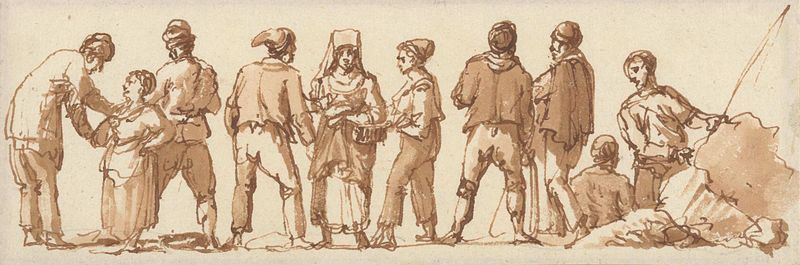
De Aqua Paolo, de fontein op de Janiculus — History & Facts
What if silence could speak through light? In Victor Jean Nicolle's De Aqua Paolo, de fontein op de Janiculus, the whisper of water and the glow of dusk intertwine to evoke a delicate fragility that resonates throughout the canvas. Focus first on the tranquil fountain, which commands attention at the center of the composition. The intricate details of the water's descent are captured with a deft hand, allowing the viewer to almost hear the gentle trickle that breaks the still air. Notice how the soft, golden light cascades over the stone, highlighting the subtle textures and inviting us to linger in this serene moment, where nature and architecture harmoniously coexist. Yet beneath the surface, contrasts emerge.
The serene beauty of the fountain juxtaposes with the looming shadows that hint at the passage of time—an unspoken reminder of the impermanence of such moments. The surrounding lush greenery, painted with soft strokes, suggests growth and vitality but also hints at the inevitable decay that follows. This duality evokes a bittersweet emotion, as we witness both the splendor and the fragility of life in a single glance. During the years 1787 to 1811, Nicolle produced this work while navigating the shifting tides of post-Revolutionary France, a period marked by intense artistic exploration and transformation.
Living and working primarily in Italy, he drew inspiration from the classical beauty surrounding him, capturing not only the architectural elegance of the time but also the nuanced emotions that such settings evoke. In this context, the painter's focus on light and detail reflects a deep engagement with both the aesthetic and existential questions of his era.