Fontana di Trevi, gezien vanuit het Westen — History & Facts
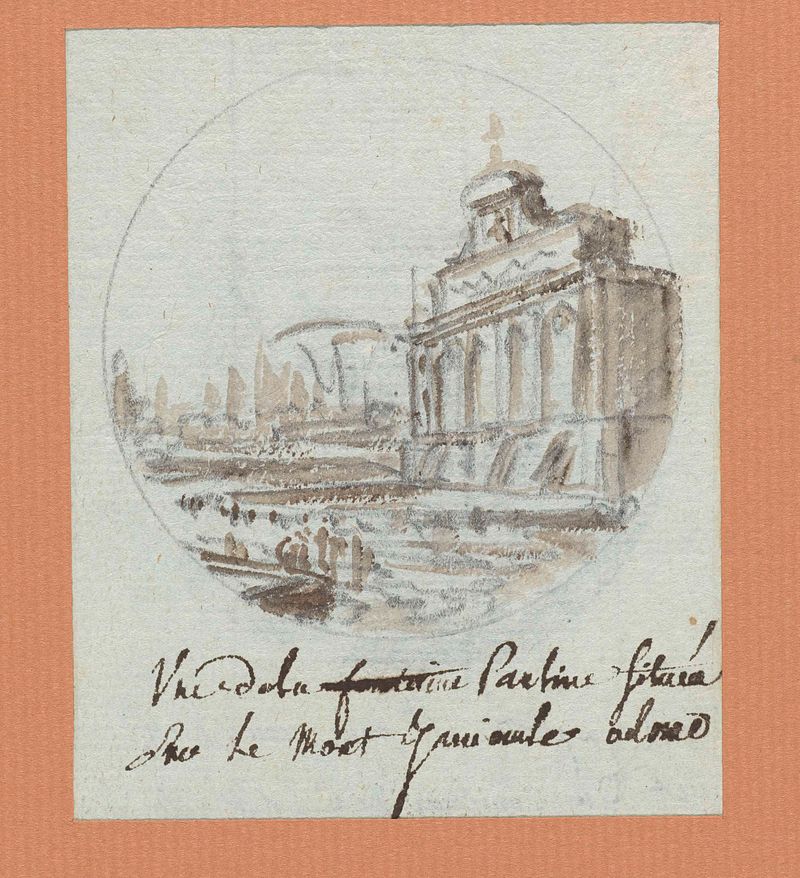
In the delicate strokes of this piece, innocence emerges as a timeless theme, inviting viewers to explore a world untainted by the passage of years. Look to the left of the canvas, where the grand façade of the Trevi Fountain rises majestically against the backdrop of an azure sky. Notice the playful interplay of light and shadow, as the sun illuminates the intricate marble details while casting a gentle glow on the water's surface. The figures are positioned harmoniously, leading the eye from one scene to another, creating a fluid narrative that captures life in motion. Beneath the vibrant colors and lively gestures lies a poignant contrast between the joyous splendor of the fountain and the fleeting nature of the moment.
The innocence of the scene is palpable; children frolic near the water's edge, embodying a carefree spirit. Yet, as the viewer gazes deeper, there is an inherent transience in the way the water flows, a reminder that even the most blissful moments are ephemeral. The juxtaposition of youthful exuberance against the enduring stone architecture evokes a bittersweet tension between permanence and change. Victor Jean Nicolle created this work between 1787 and 1811, during a period of significant artistic evolution in Europe.
Living in Rome, he was inspired by the grandeur of the city’s classical architecture, while also influenced by the shifting currents of Neoclassicism and Romanticism. His renderings of iconic landmarks, like this homage to the Trevi Fountain, reflect both the admiration for historical beauty and the artist's personal journey through a transformative era in art.