
De hulpverlening tijdens de watersnood van 1926, symbolisch voorgesteld — History & Facts
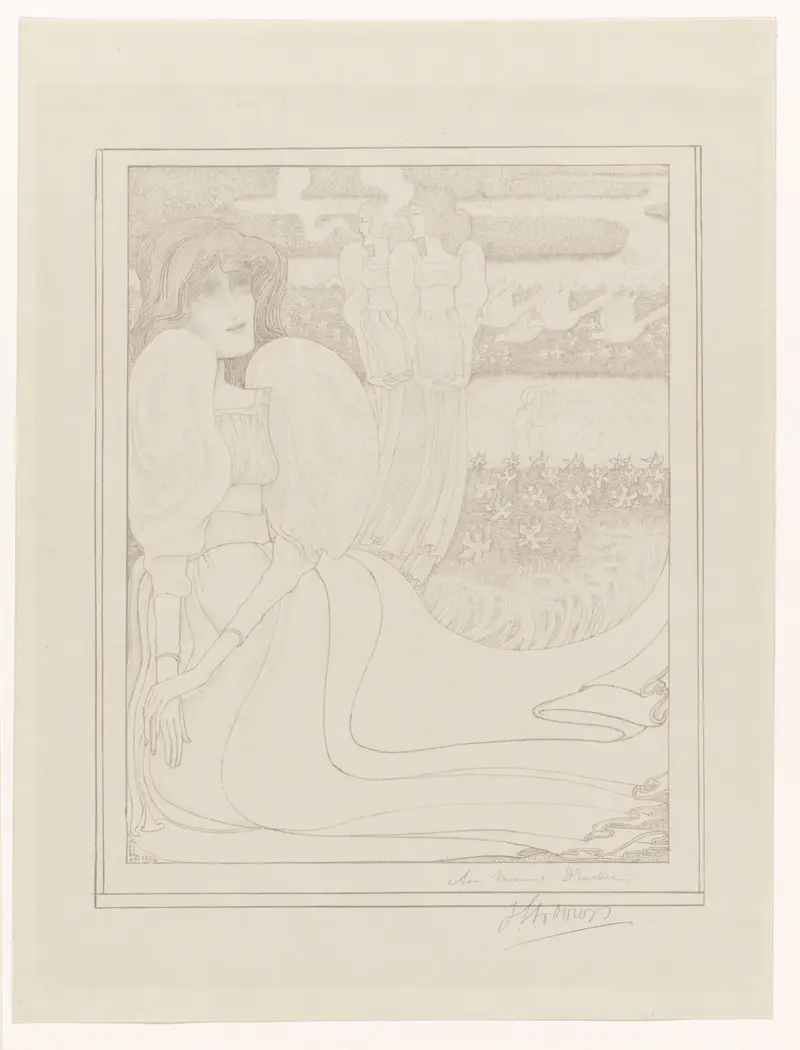
In De hulpverlening tijdens de watersnood van 1926, symbolisch voorgesteld, Jan Toorop uses a palette of muted colors, primarily blues and grays, to depict a scene of chaos and struggle. Figures are shown in various poses, some reaching out for help while others are engaged in rescue efforts. The setting is filled with water, symbolizing the flood that devastated the area.
The overall composition conveys a sense of urgency and collective human effort in the face of disaster. The painting is executed in oil on canvas, allowing for rich textures and depth in the colors. Toorop's brushwork is expressive, with swirling forms that enhance the emotional impact of the scene. The figures are stylized, reflecting the Symbolist movement's influence, which emphasizes the emotional and symbolic over the realistic.
Viewers can observe the intricate details in the clothing and expressions of the figures, adding to the narrative of the painting. Jan Toorop was a prominent Dutch artist known for his Symbolist style, which often incorporated themes of spirituality and social issues. This particular work reflects the humanitarian response to the 1926 flood in the Netherlands, a significant event that affected many lives. Interestingly, Toorop's approach in this painting combines realism with symbolism, creating a powerful commentary on human resilience.
The work serves as a reminder of the importance of community and solidarity during times of crisis.
More Artworks by Jan Toorop

Poster for Delft Salad Oil
Jan Toorop
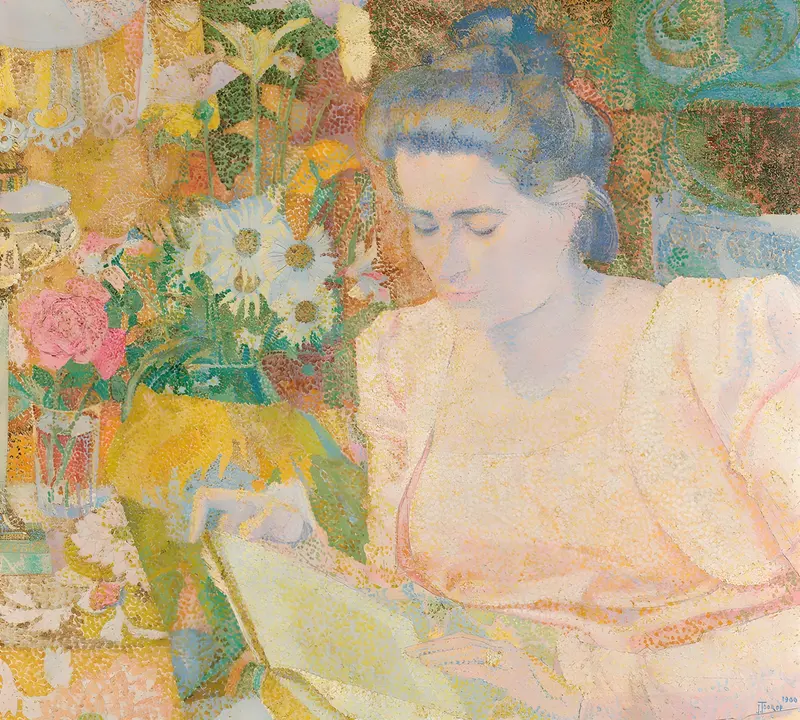
Portrait of Mrs Marie Jeannette de Lange
Jan Toorop
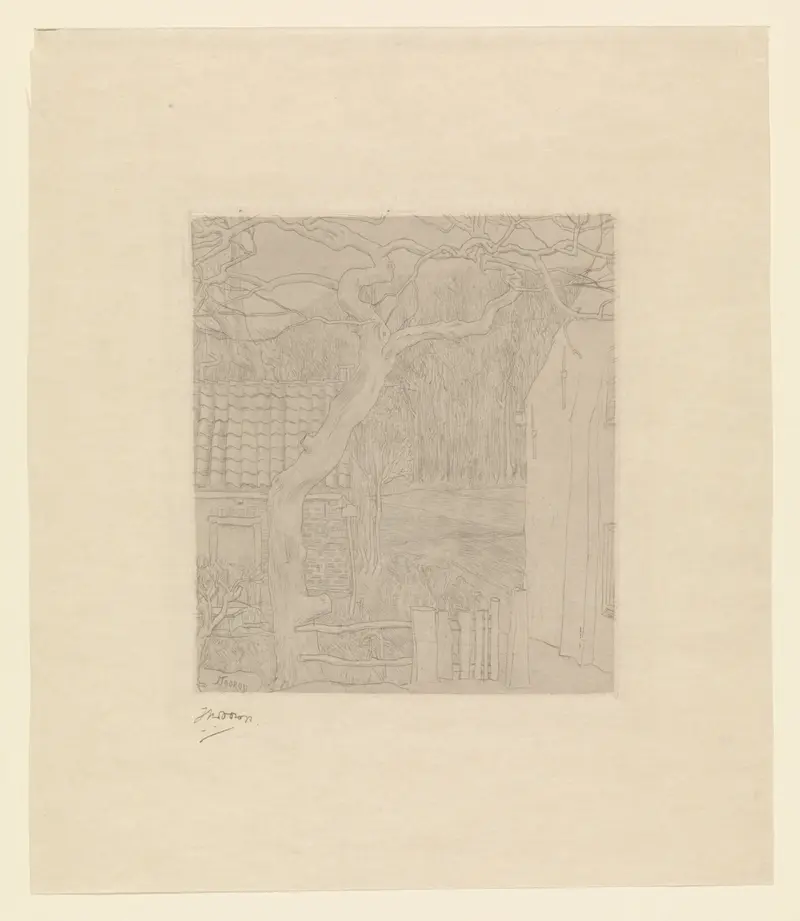
Boom bij twee huizen aan een bosrand
Jan Toorop
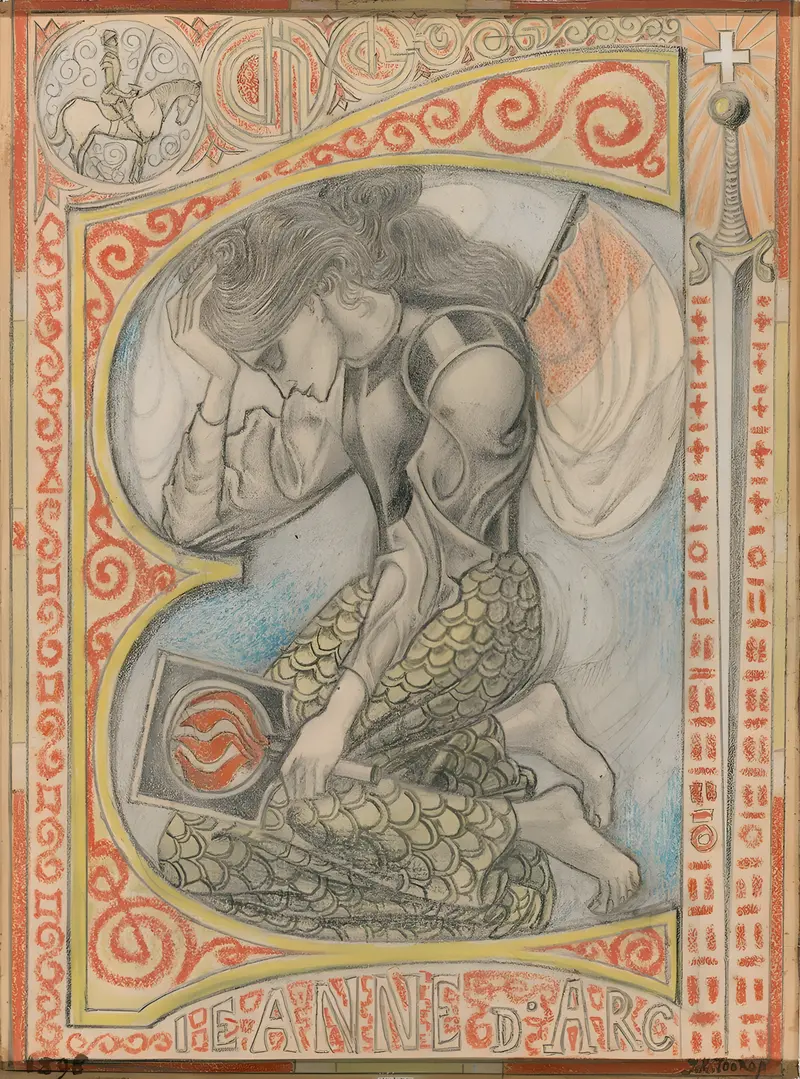
Joan of Arc
Jan Toorop
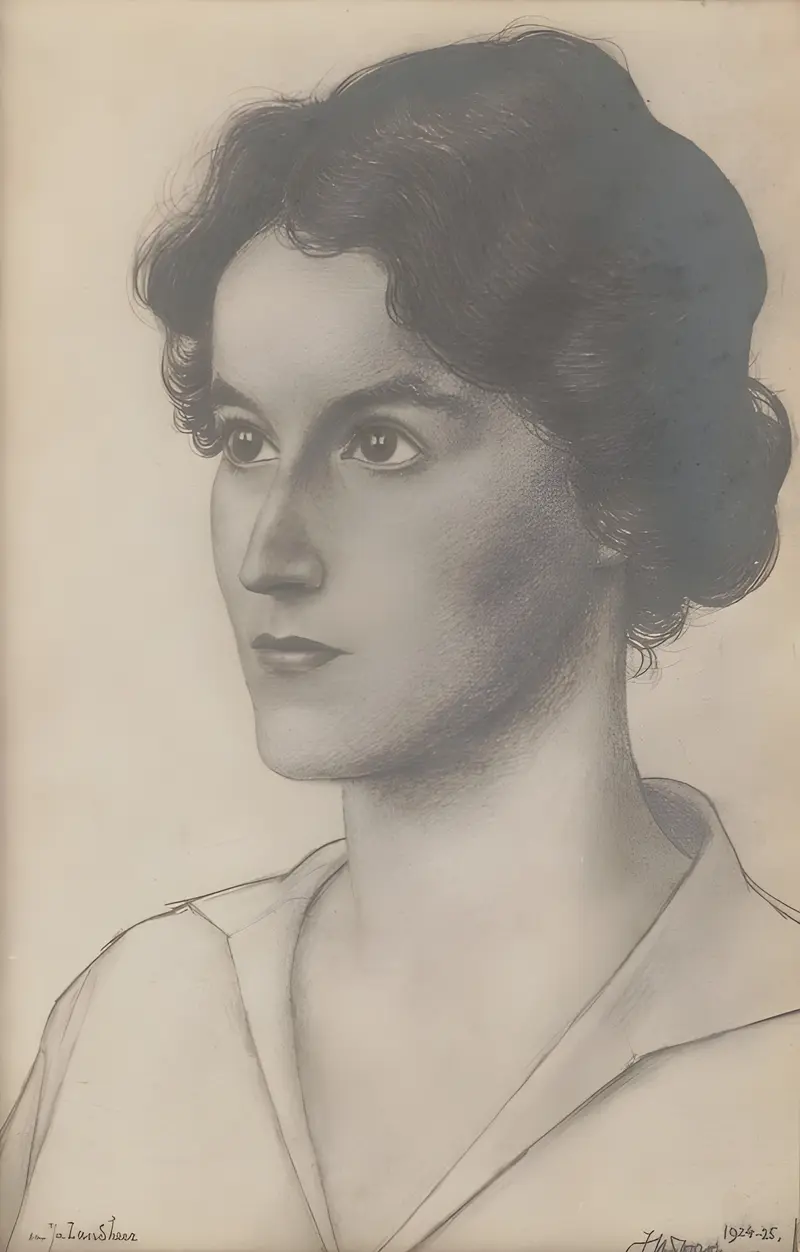
Fotoreproductie aan Jenny Kraft
Jan Toorop
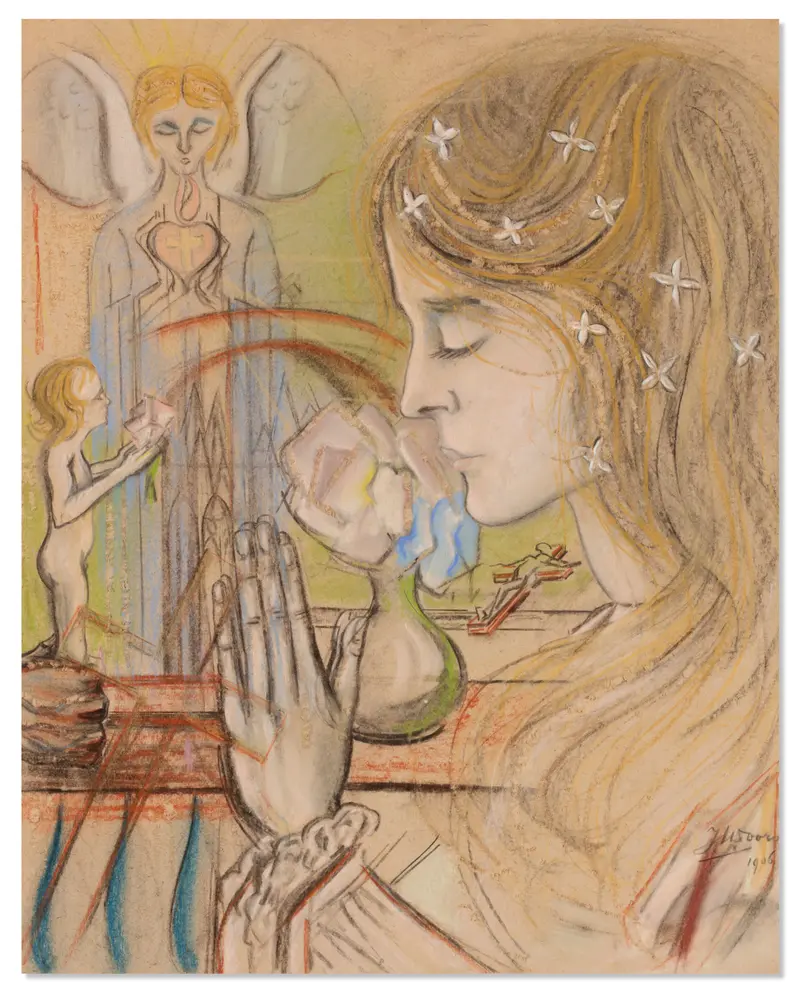
Het Gebed
Jan Toorop
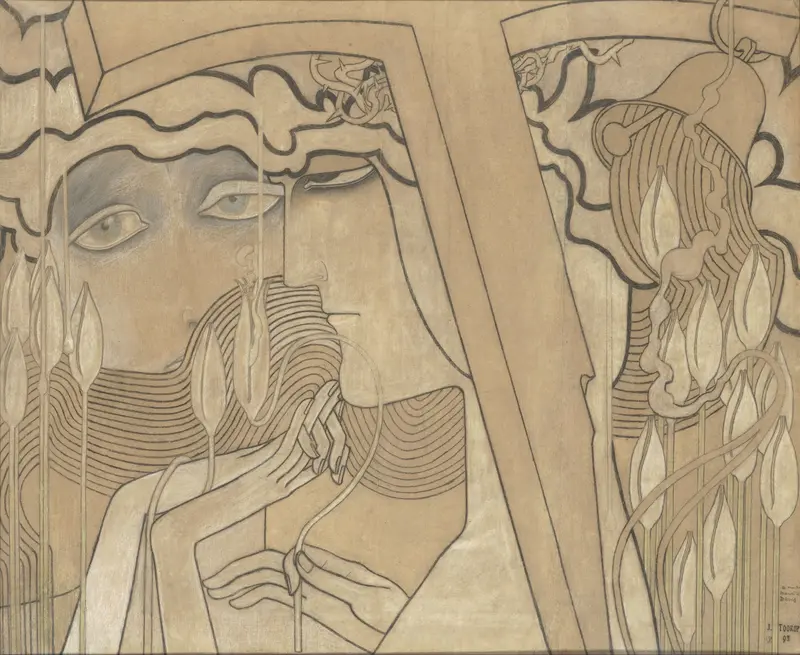
Desire and Satisfaction
Jan Toorop
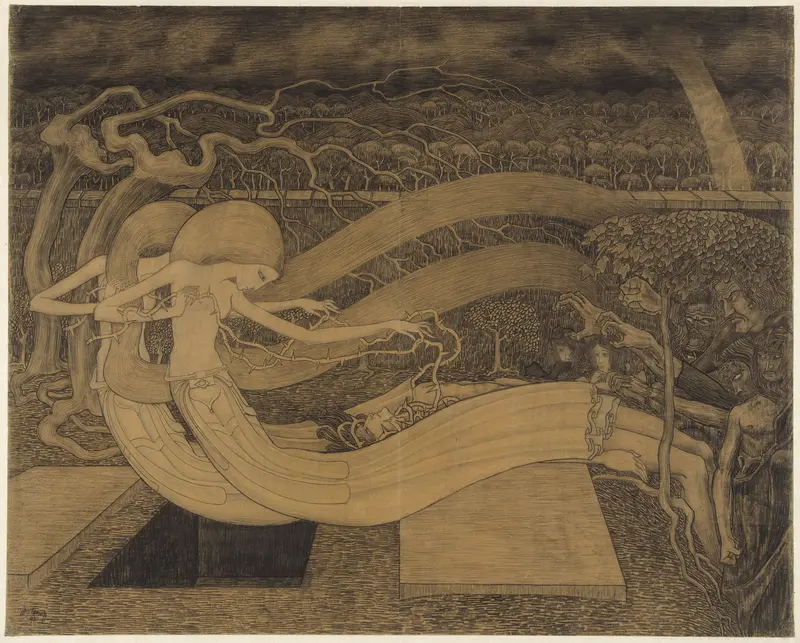
O Grave, where is thy Victory
Jan Toorop
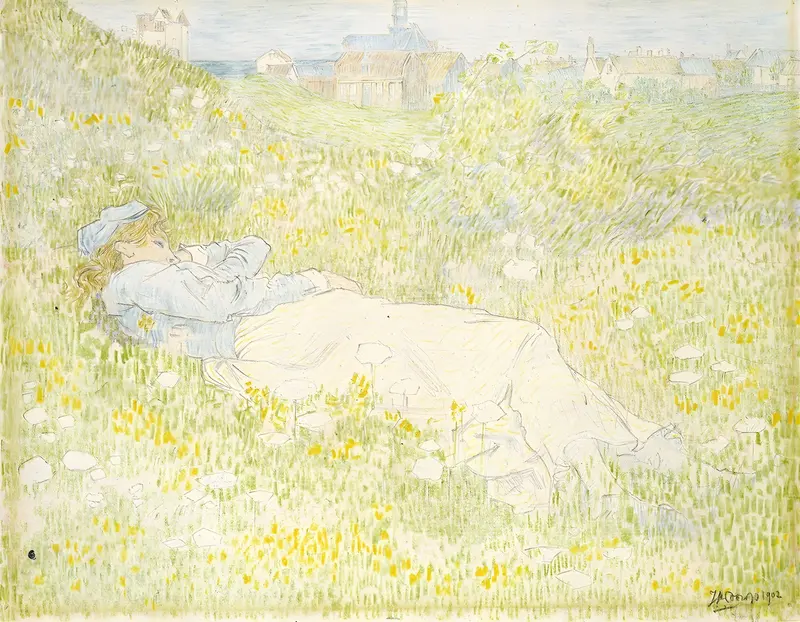
Woman Lying in the Dunes near Noordwijk
Jan Toorop
Allegorische voorstelling met drie vrouwen in een tuin
Jan Toorop





