
De kerk te Warmond — History & Facts
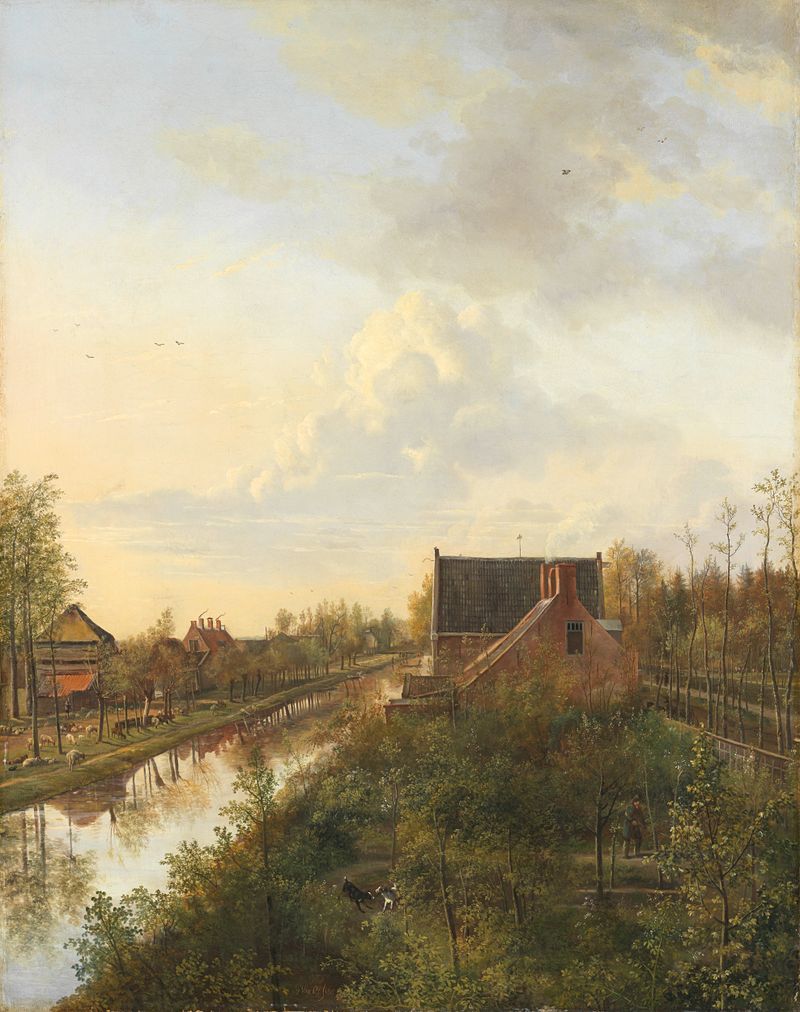
What secret hides in the quiet of the canvas? Within the stillness of a Dutch landscape, a church stands as both a sentinel of faith and a witness to the passage of time. Look to the left at the sturdy, weather-beaten stones of the church, their textures rich with the stories of countless prayers. Notice how the soft sunlight bathes the scene, casting gentle shadows that dance upon the grass, whispering of life even in stillness. The horizon stretches wide, luring your gaze toward the distant fields, painted in lush greens and muted gold, hinting at the vibrancy of the world just beyond the frame. Yet it is the contrast between the church’s solemnity and the lively brushstrokes of the surrounding nature that invites deeper contemplation.
The vibrancy of the foliage suggests movement and energy, a life juxtaposed against the stoic structure. This duality speaks to the tension between spiritual permanence and the ever-changing world, evoking feelings of both peace and nostalgia for what has been left behind. Pieter Gerardus van Os painted this work during a time of significant change in the Dutch art world, with the Romantic movement gaining traction. Created between 1786 and 1839, he drew inspiration from the picturesque landscapes of his homeland, capturing the essence of tranquility while exploring the interplay between nature and architecture.
At this time, the artist was developing his distinct style, melding realism with an emotive touch that would earn him recognition in the annals of Dutch landscape painting.
More Artworks by Pieter Gerardus van Os
Browse all →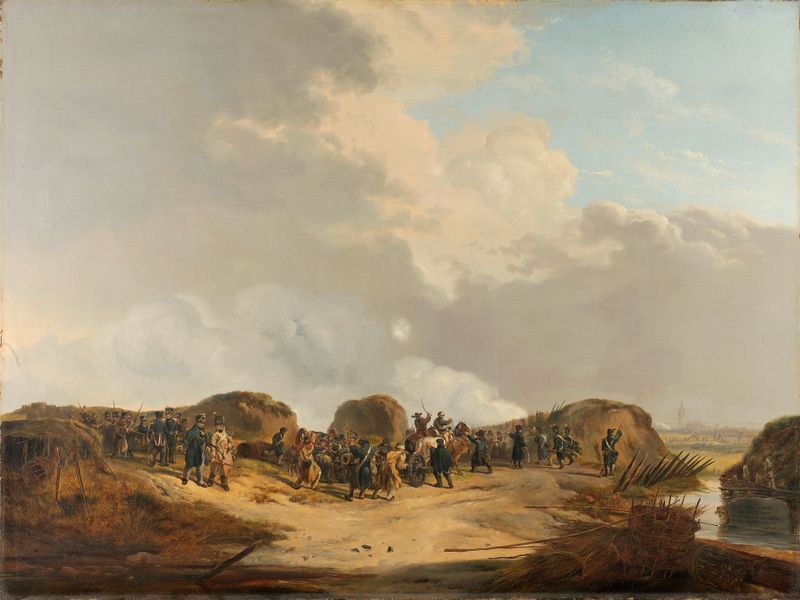
The Demilune constructed at the Siege of Naarden, April 1814
Pieter Gerardus van Os
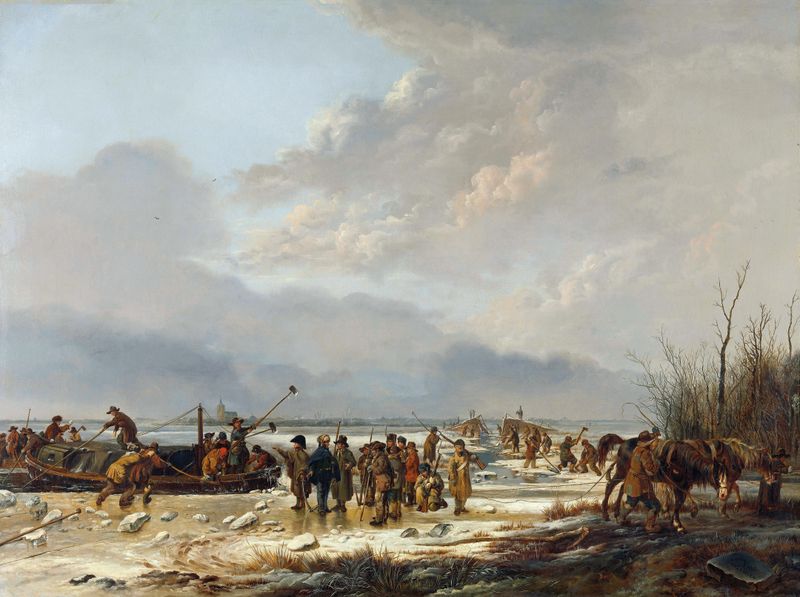
Breaking the Ice on the Karnemelksloot, Naarden, January 1814
Pieter Gerardus van Os
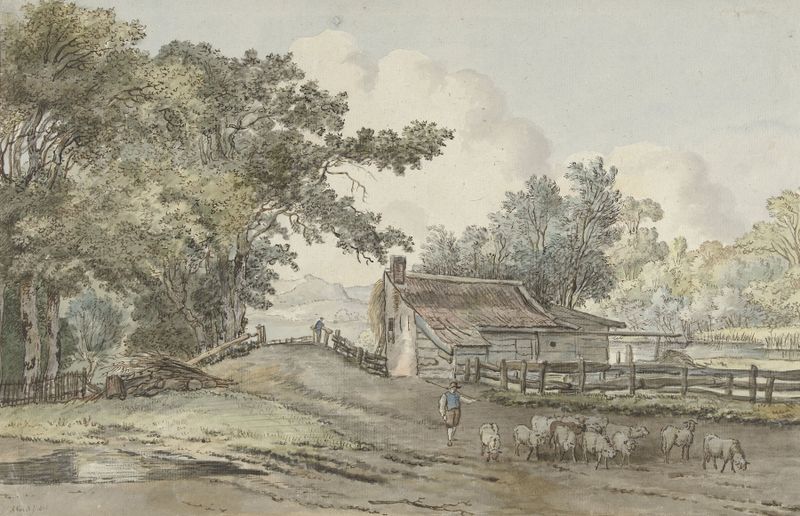
Elswoutshoek te Overveen
Pieter Gerardus van Os
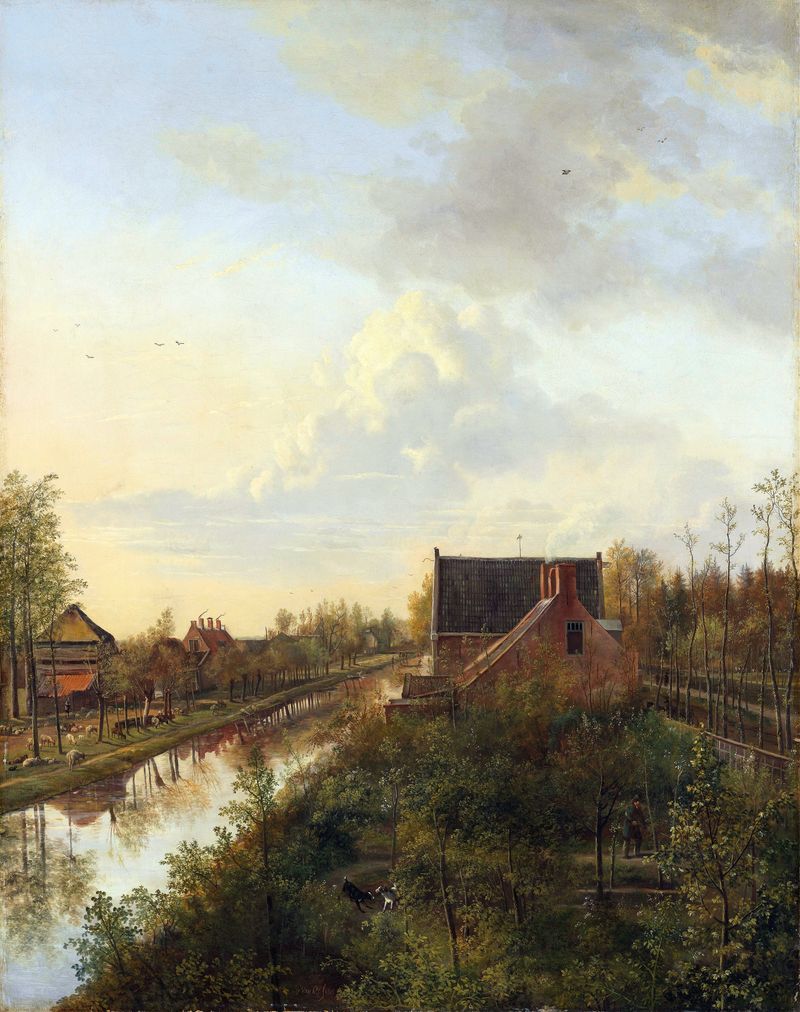
The Canal at ’s-Graveland
Pieter Gerardus van Os
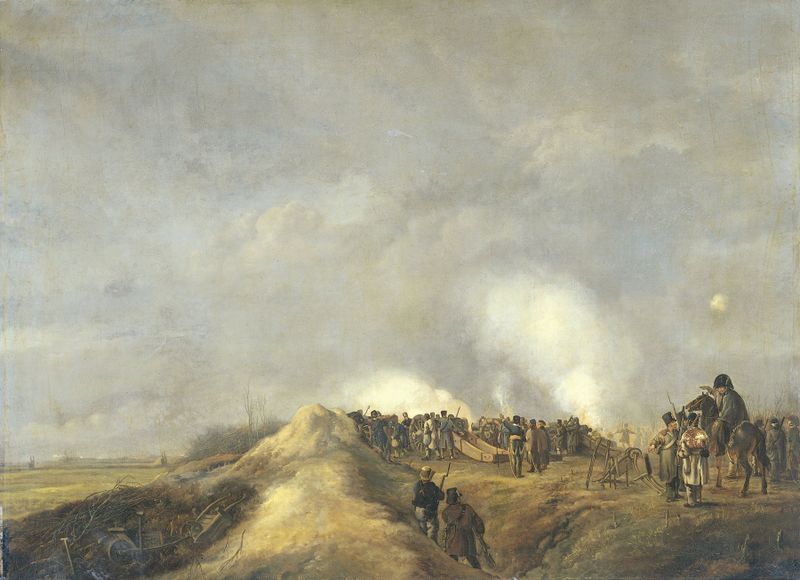
The Bombardment of Naarden, April 1814
Pieter Gerardus van Os
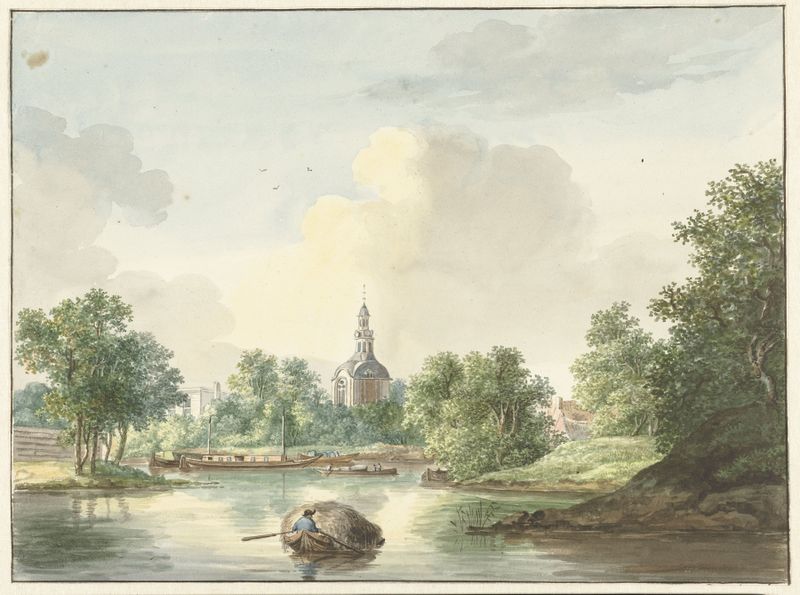
De Hogerwoerdse Poort te Leiden vanaf de Singel gezien
Pieter Gerardus van Os
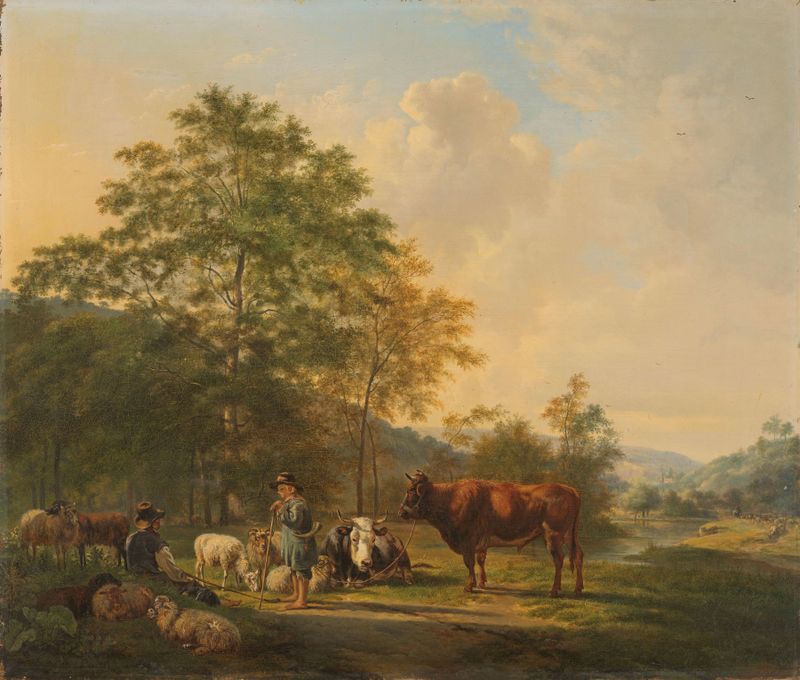
Hilly Landscape with Shepherd, Drover and Cattle
Pieter Gerardus van Os
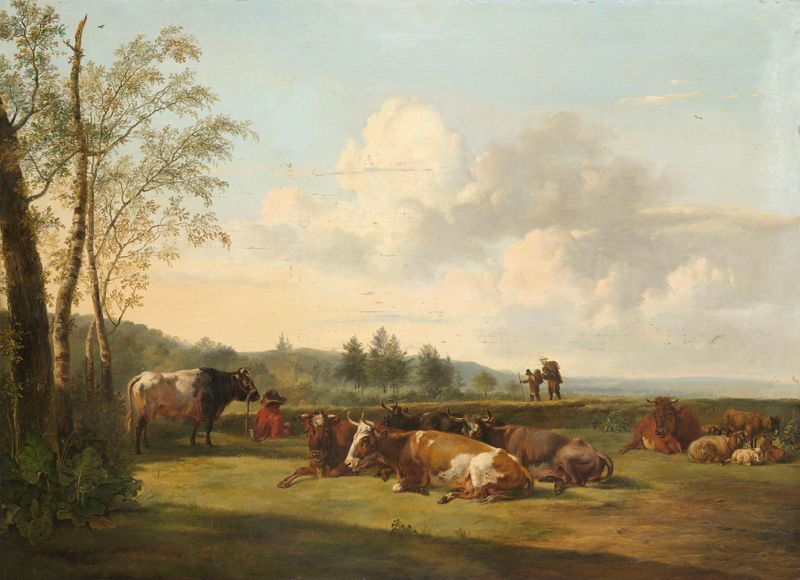
Landscape with Cattle
Pieter Gerardus van Os
The Canal at ’s-Graveland
Pieter Gerardus van Os
Rast nach der Jagd
Pieter Gerardus van Os
More Architecture Art
Browse all →
The statue of Liberty
Frédéric Auguste Bartholdi

View of Houses in Delft, Known as ‘The Little Street’
Johannes Vermeer

View of Houses in Delft, Known as ‘The Little Street’
Johannes Vermeer

The Cathedral in Rouen. The portal, Grey Weather
Claude Monet

The yellow house
Vincent van Gogh

The Church in Auvers-sur-Oise, View from the Chevet
Vincent van Gogh