
Rast nach der Jagd — History & Facts
Could beauty survive in a century of chaos? In Rast nach der Jagd, the serene tableau offers a moment of respite, a tranquil haven amidst the tumult of the early nineteenth century. Look to the left where the soft light caresses the figures resting beneath the shade of a sprawling tree. Their relaxed postures are complemented by the gentle hues of nature surrounding them—lush greens and warm earthy tones create a harmonious blend that draws the eye. The meticulous details of the hunting dogs and the carefully arranged game evoke a sense of tranquility and order, set against the backdrop of a sprawling landscape that feels both expansive and intimate. As you examine the scene closer, notice the contrast between the hunters’ calm demeanor and the vivid imagery of their recent success—the slain game depicted with precision and care.
This juxtaposition captures the tension between the thrill of the hunt and the peace of the moment afterward. The painting reflects a deeper yearning for balance in a world marked by unrest, offering a quiet commentary on the relationship between humanity and nature. Pieter Gerardus van Os created this piece in 1818, during a period when Europe was grappling with the aftermath of the Napoleonic Wars. Residing in the Netherlands, he found a way to express his love for nature and the simplicity of life through his art.
This work stands as a testament to a time when artists sought refuge in pastoral scenes, reflecting a longing for stability amidst societal upheaval.
More Artworks by Pieter Gerardus van Os
Browse all →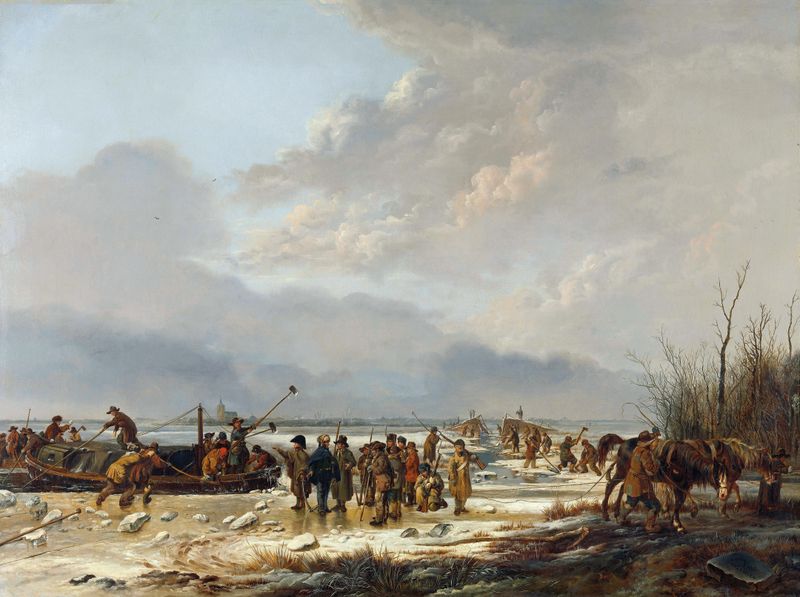
Breaking the Ice on the Karnemelksloot, Naarden, January 1814
Pieter Gerardus van Os
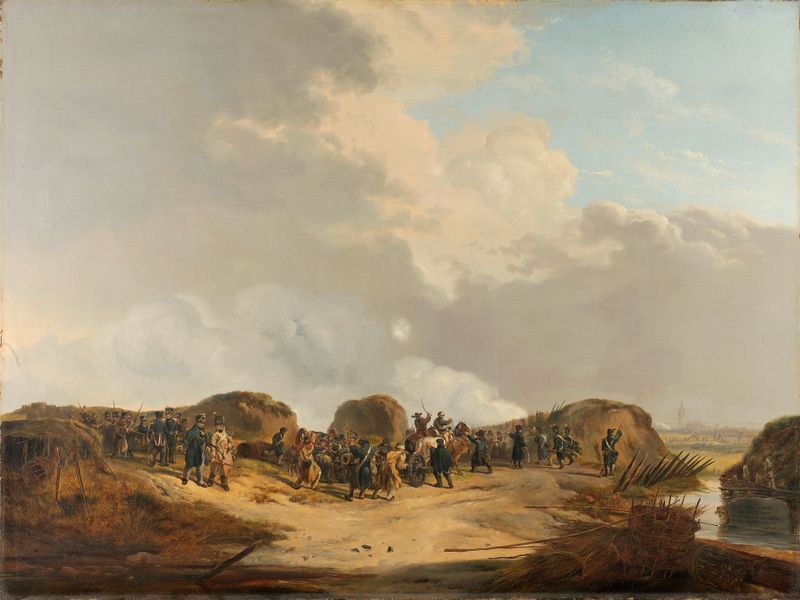
The Demilune constructed at the Siege of Naarden, April 1814
Pieter Gerardus van Os
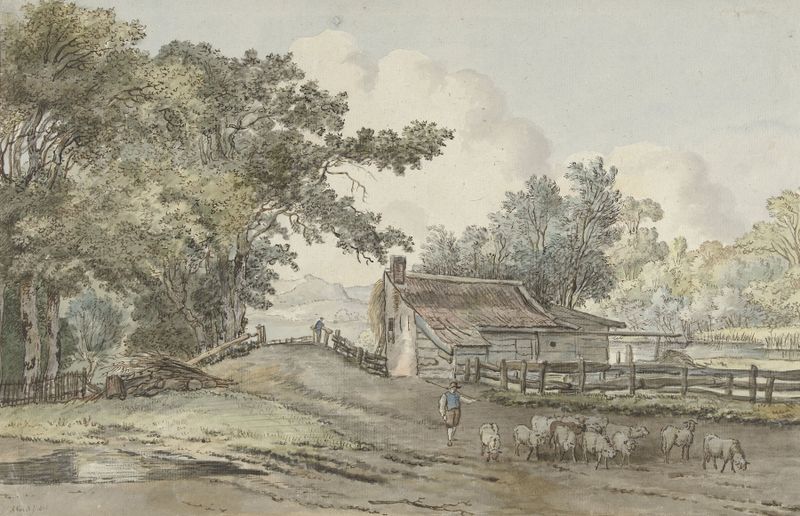
Elswoutshoek te Overveen
Pieter Gerardus van Os
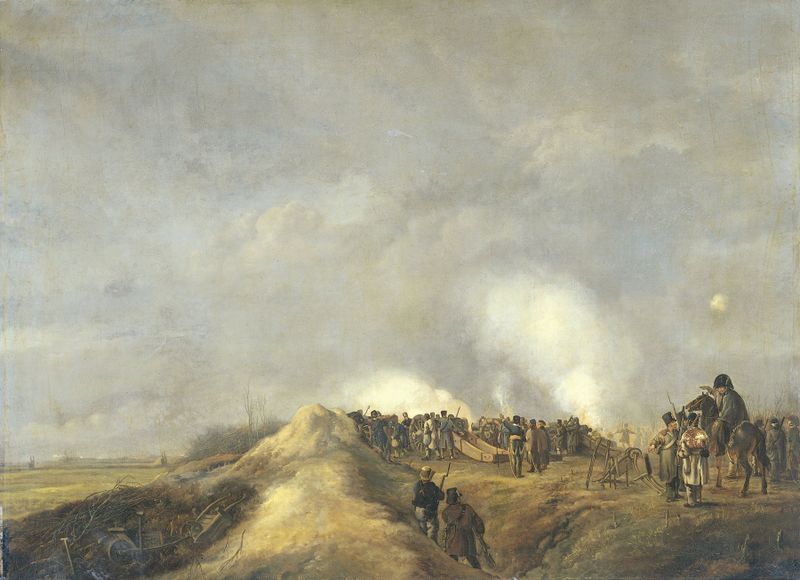
The Bombardment of Naarden, April 1814
Pieter Gerardus van Os
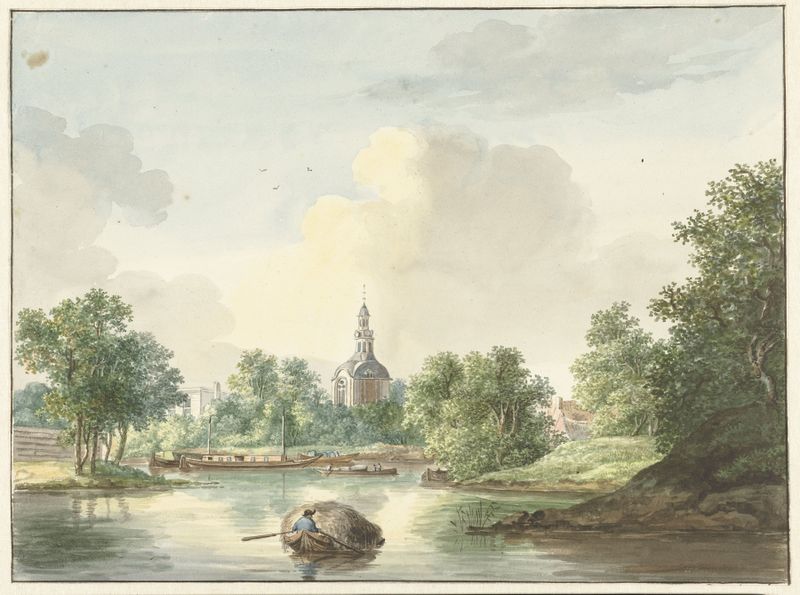
De Hogerwoerdse Poort te Leiden vanaf de Singel gezien
Pieter Gerardus van Os
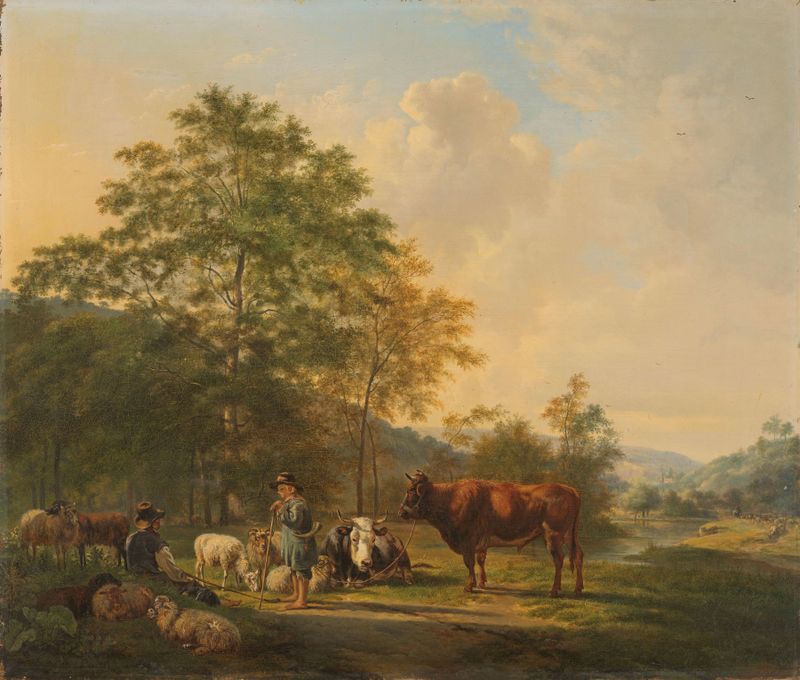
Hilly Landscape with Shepherd, Drover and Cattle
Pieter Gerardus van Os
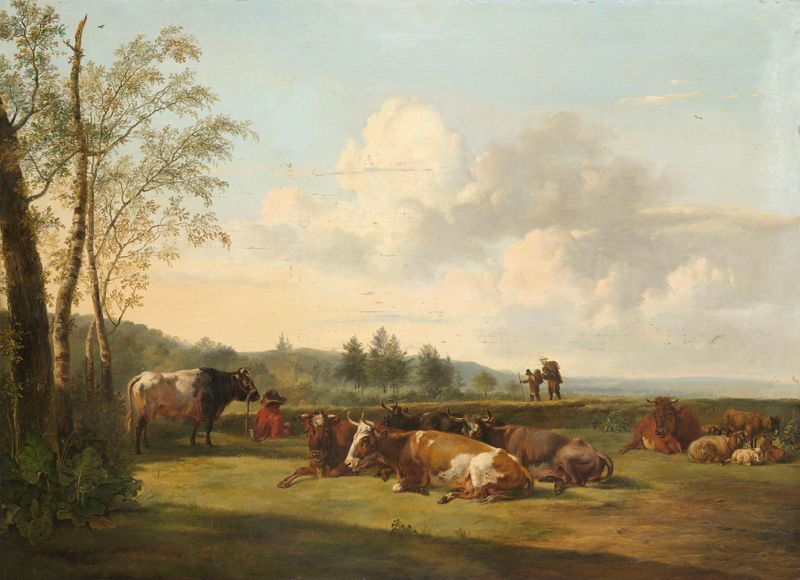
Landscape with Cattle
Pieter Gerardus van Os
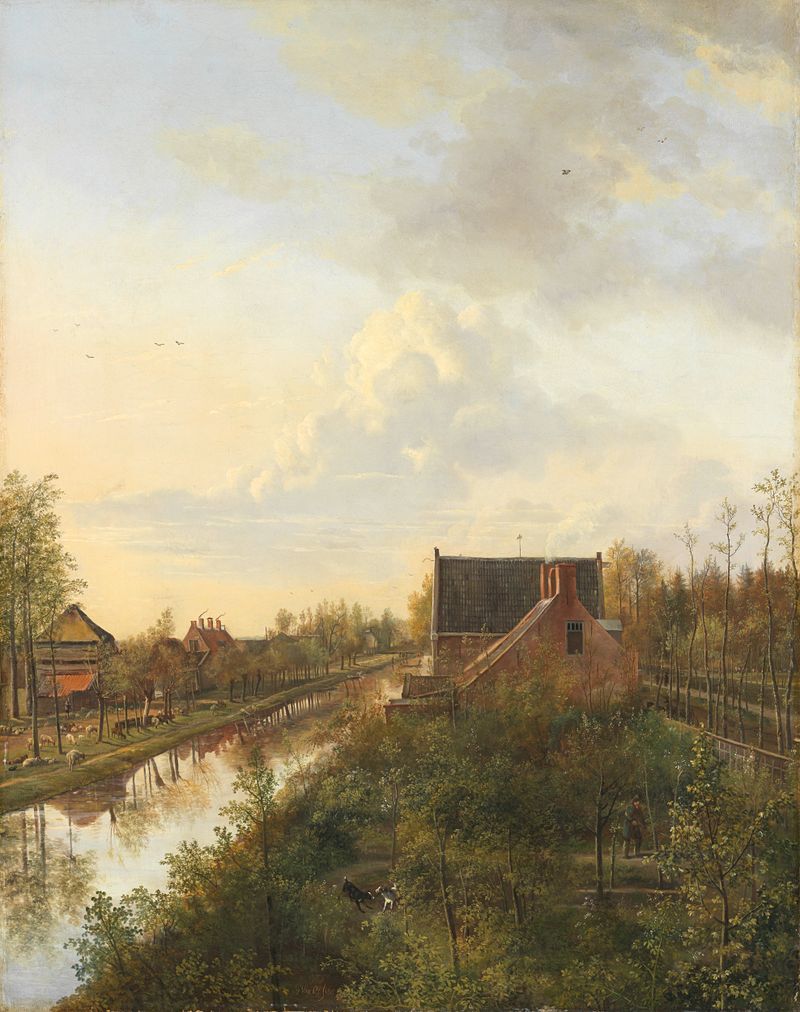
The Canal at ’s-Graveland
Pieter Gerardus van Os
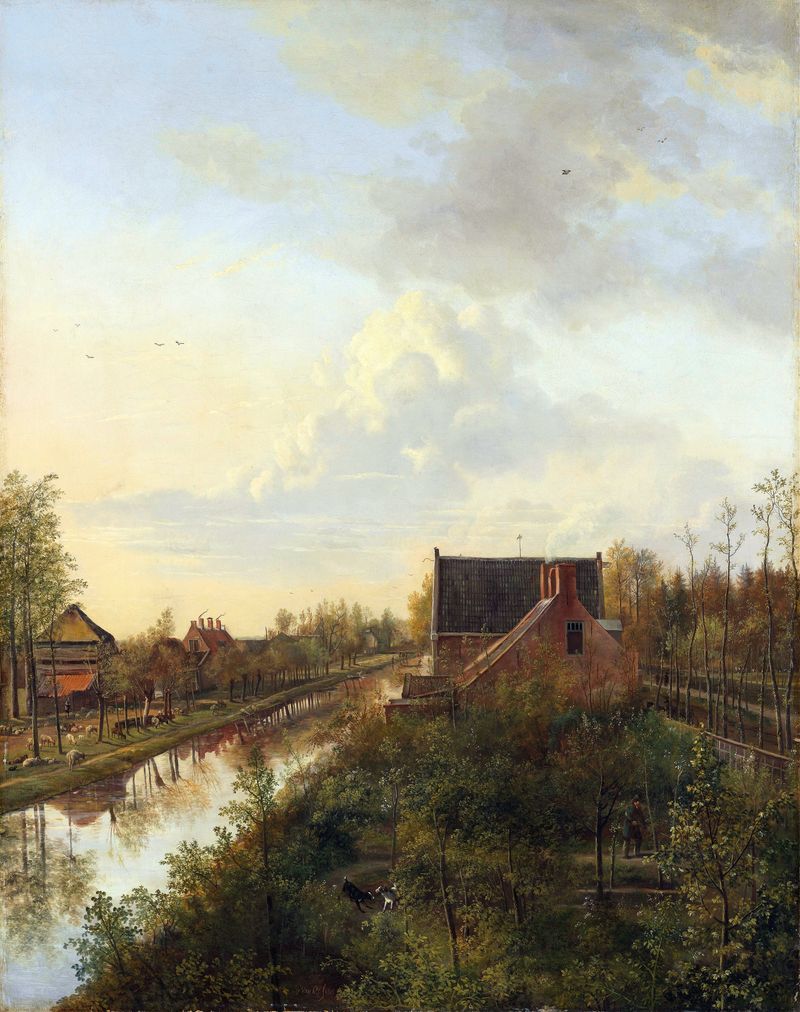
The Canal at ’s-Graveland
Pieter Gerardus van Os
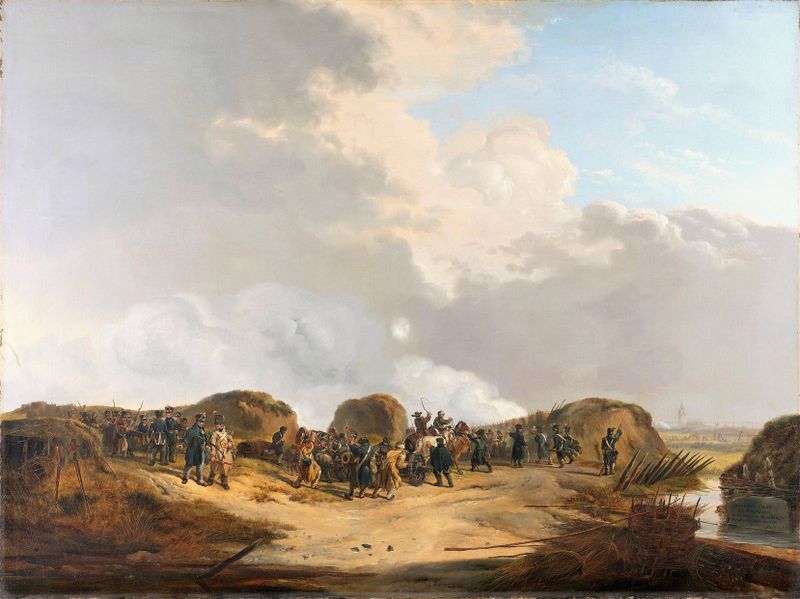
The Demilune constructed at the Siege of Naarden, April 1814
Pieter Gerardus van Os





