
De Landpoort te Vianen — History & Facts
Within the stillness of De Landpoort te Vianen, a subtle revelation unfolds; the viewer becomes an intimate witness to moments unuttered, secrets held within the walls of the structure. Look to the right at the grand archway, where light spills through, casting long shadows that dance upon the cobblestones. Notice how the muted palette of earthy browns and soft greens evokes a sense of timelessness, inviting contemplation. The delicate brushwork captures the intricate details of the brickwork, with each nuance suggesting a story etched into the layers of history.
The distant figures, rendered small against the imposing gate, draw our eye to the scale of the entrance, hinting at journeys begun and endings embraced. Beneath the surface, this scene pulses with contrast: the sturdy, formidable gate against the delicate human presence evokes both security and isolation. The soft edges of the landscape evoke a feeling of nostalgia, while the imposing structure signifies barriers and boundaries that beckon yet intimidate. Each element intertwines—light and shadow, presence and absence—creating a dialogue that urges the viewer to consider both passage and imprisonment. Gerrit Lamberts painted this piece between 1786 and 1850, a time marked by significant changes in Dutch society and the art world.
As the artist navigated the shifting tides of Romanticism, he sought to capture the essence of his landscapes with a focus on architectural forms and their connection to human experience. This particular work reflects his interest in the interplay of light and structure, resulting in a scene that resonates with the viewer long after they’ve departed.
More Artworks by Gerrit Lamberts
Browse all →
Gezicht van de Ringdijk op de Schulpbrug, ziende naar de Utrechtse zijde van de Amstel
Gerrit Lamberts
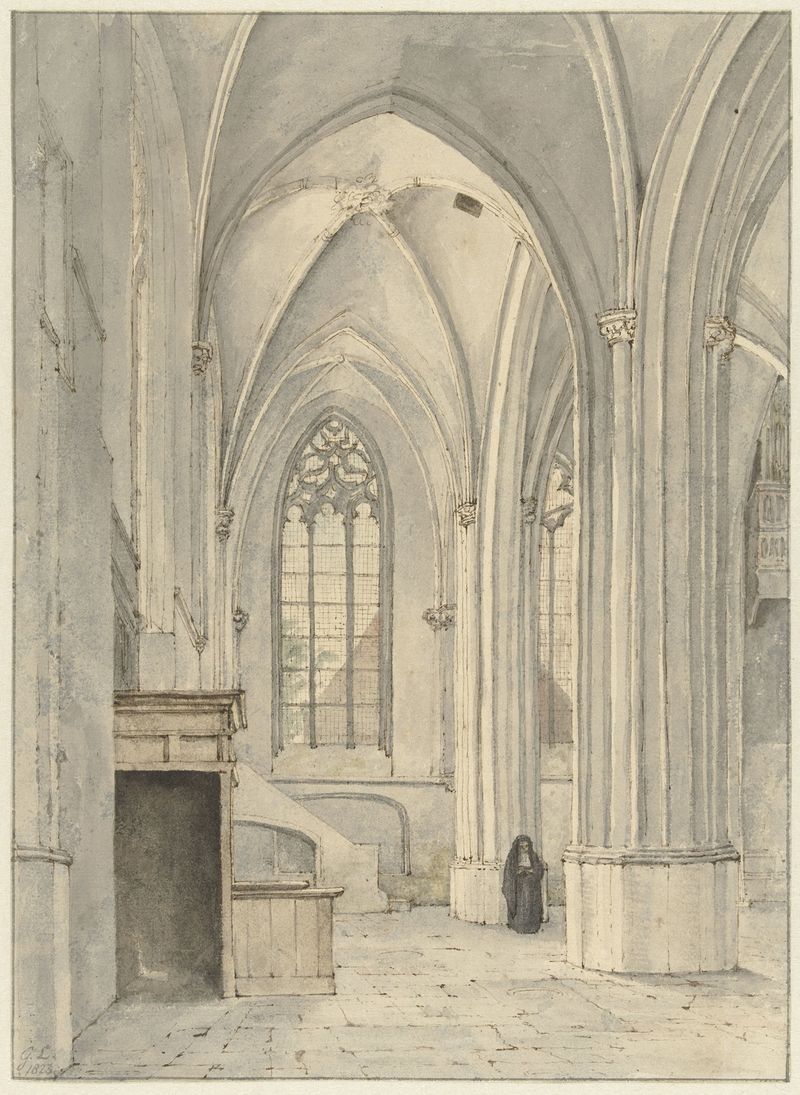
Interieur van de kerk van Rhenen
Gerrit Lamberts
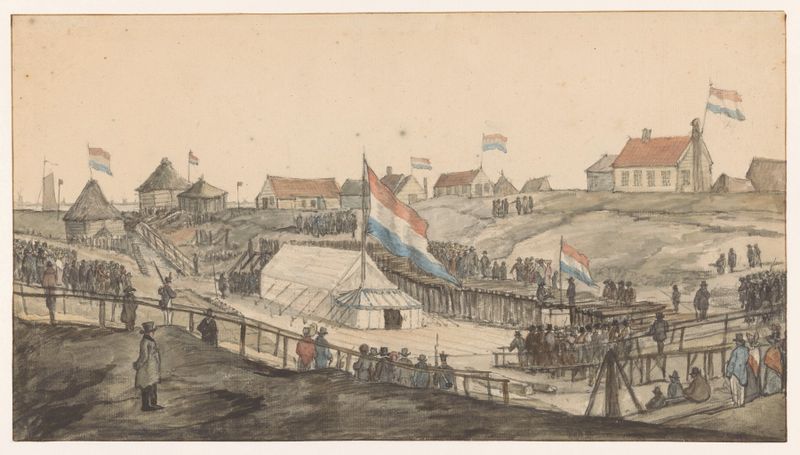
Eerstesteenlegging voor de Willemssluis, 1820
Gerrit Lamberts

Winterlandschap
Gerrit Lamberts

Riviergezicht
Gerrit Lamberts

Binnenhuis
Gerrit Lamberts
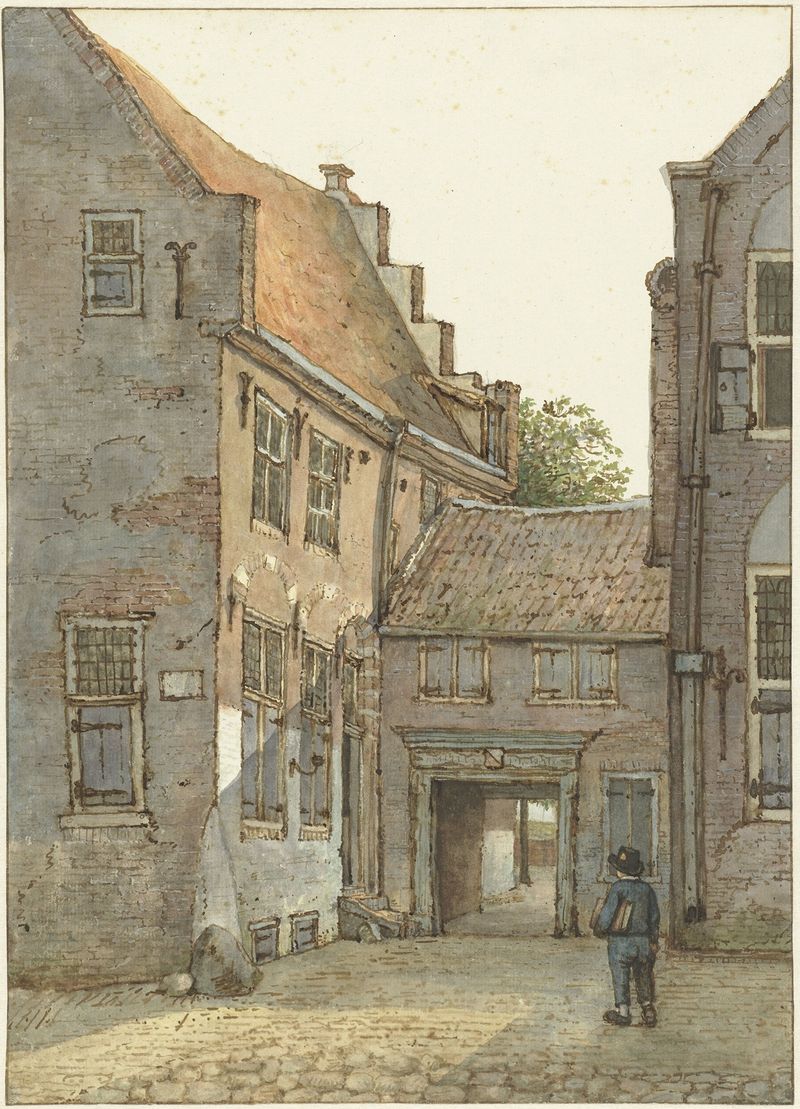
Gezicht op de ingang van de Latijnse school, de St. Hieronymusschool, aan de Kromme Nieuwegracht te Utrecht
Gerrit Lamberts
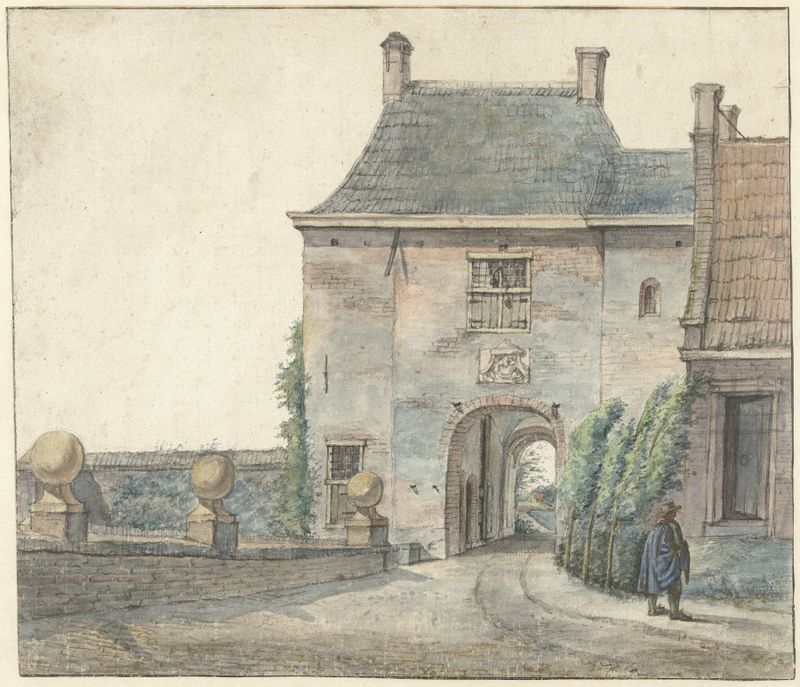
De poort van het kasteel van Heemstede
Gerrit Lamberts
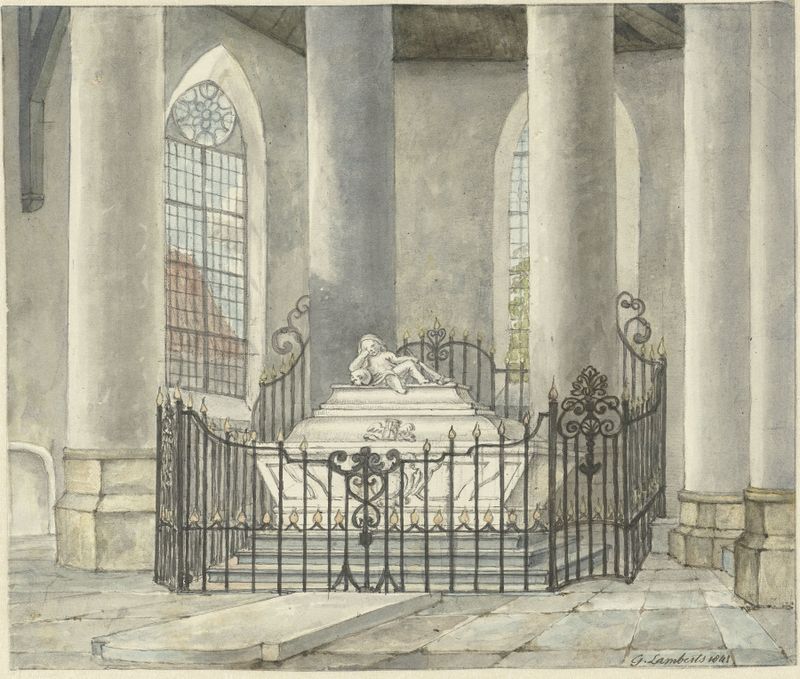
Grafmonument van Catharina Alida van der Dussen, in een kerk te Culemborg
Gerrit Lamberts
More Architecture Art
Browse all →
The statue of Liberty
Frédéric Auguste Bartholdi

View of Houses in Delft, Known as ‘The Little Street’
Johannes Vermeer

View of Houses in Delft, Known as ‘The Little Street’
Johannes Vermeer

The Cathedral in Rouen. The portal, Grey Weather
Claude Monet

The yellow house
Vincent van Gogh

The Church in Auvers-sur-Oise, View from the Chevet
Vincent van Gogh