
Défaite du comte de Marsin près du canal de Bruges — History & Facts
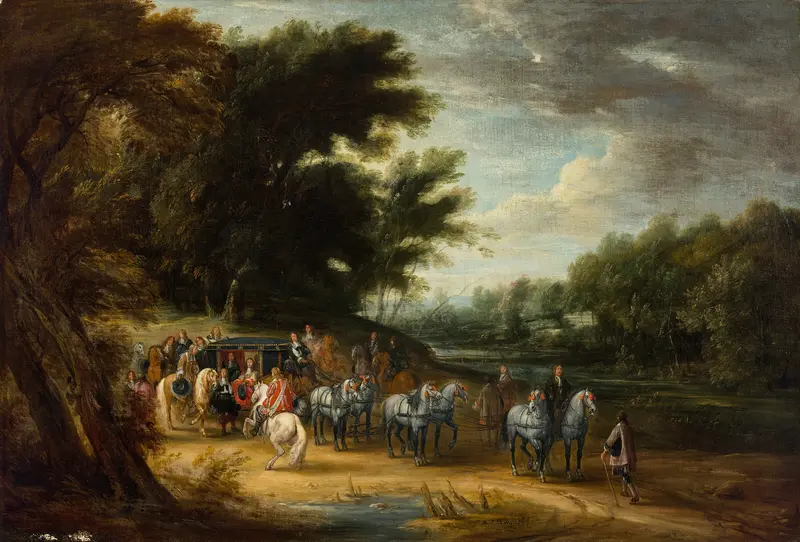
A swirl of color and movement draws the viewer’s gaze immediately to the richly dressed horsemen in the foreground, their brilliant reds and golds setting them apart from the chaos that churns behind. The painter, Adam Frans van der Meulen, orchestrates a spectacle of war, not with the cold distance of a chronicler, but with the urgency of a witness. The eye is led from the elegant, feathered hats and ornate trappings of the commanders to the smoky tumult of battle that stretches across the fields beyond—a tapestry of cavalry charges, banners, and distant musket fire.
Every gesture is charged with purpose: the lead figure’s outstretched arm signals command, while the swirl of horses suggests both flight and pursuit. The clear sky above, momentarily untouched by the violence below, lends the scene a sense of suspended breath. This painting belongs to a world where art and power marched in step. In the late seventeenth century, grand canvases like this were commissioned to commemorate victories, assert dynastic legitimacy, and impress upon viewers the might of their patrons—here, the collection of Louis XIV himself.
Van der Meulen was renowned for his ability to translate the spectacle of war into paint, serving the Sun King’s appetite for images that glorified his reign. The War of Devolution, referenced in the source, was one of many conflicts in which such scenes became both propaganda and record. Today, the painting’s survival in a major collection is a reminder that history’s battles are not only fought with swords, but also with images—inviting us to return, again and again, to the drama unfolding within the frame.
Sources: Wikidata Q29837841 · Image source (Wikimedia Commons)
More Artworks by Adam Frans van der Meulen
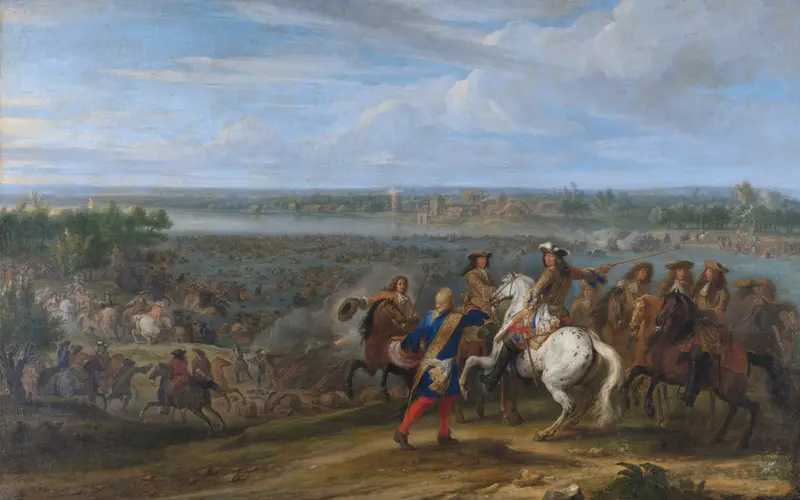
Louis XIV Crossing into the Netherlands at Lobith
Adam Frans van der Meulen
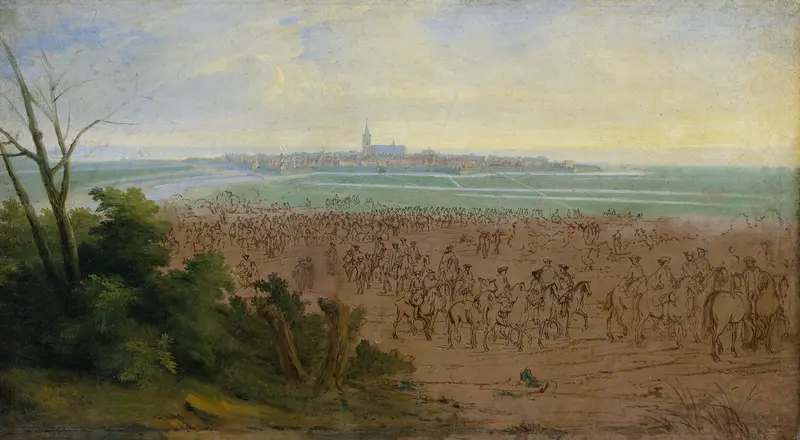
The Troops of Louis XIV before Naarden, 20 July 1672
Adam Frans van der Meulen
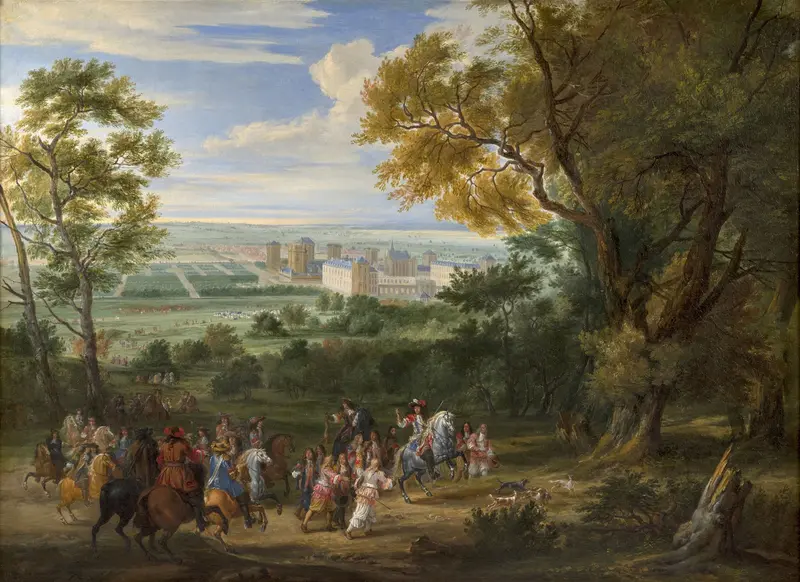
View of the château de Vincennes or The Departure of Louis XIV for the hunt
Adam Frans van der Meulen

A battle scene
Adam Frans van der Meulen
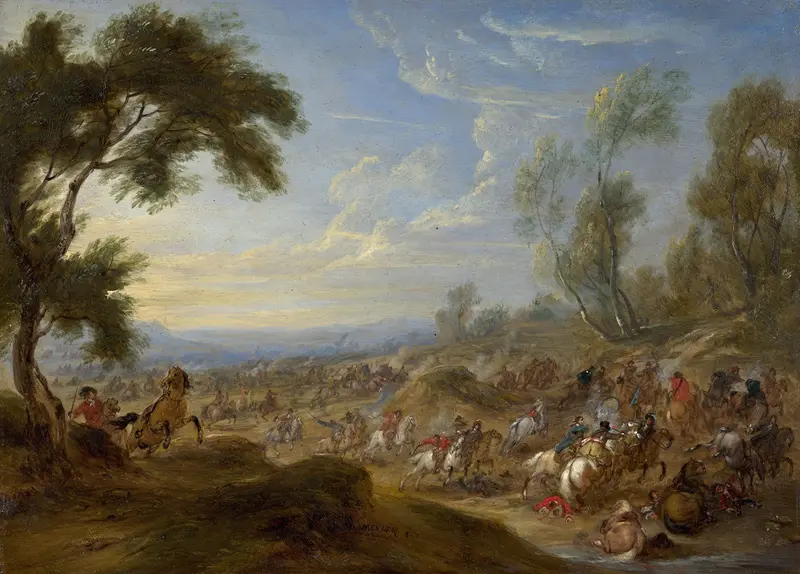
A cavalry charge
Adam Frans van der Meulen
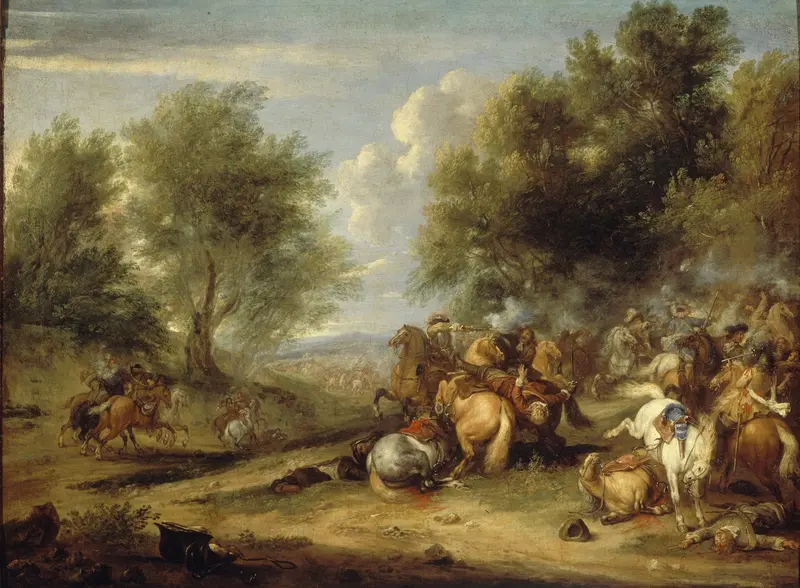
Choc de cavalerie ou Combat de cavalerie
Adam Frans van der Meulen
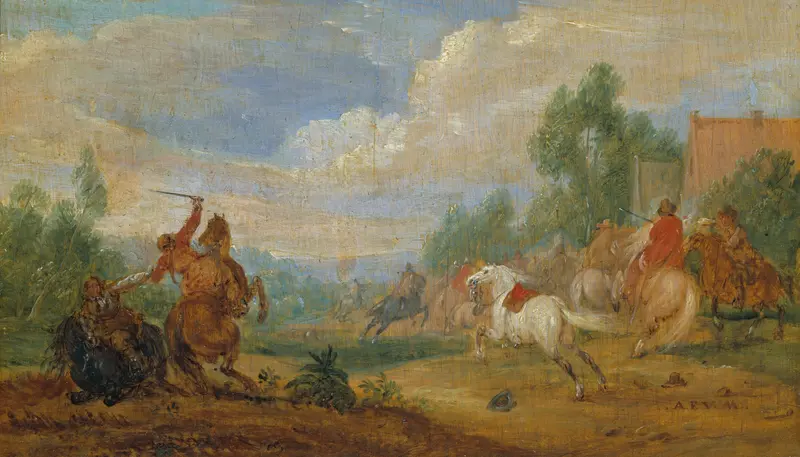
Cavalry Skirmish
Adam Frans van der Meulen
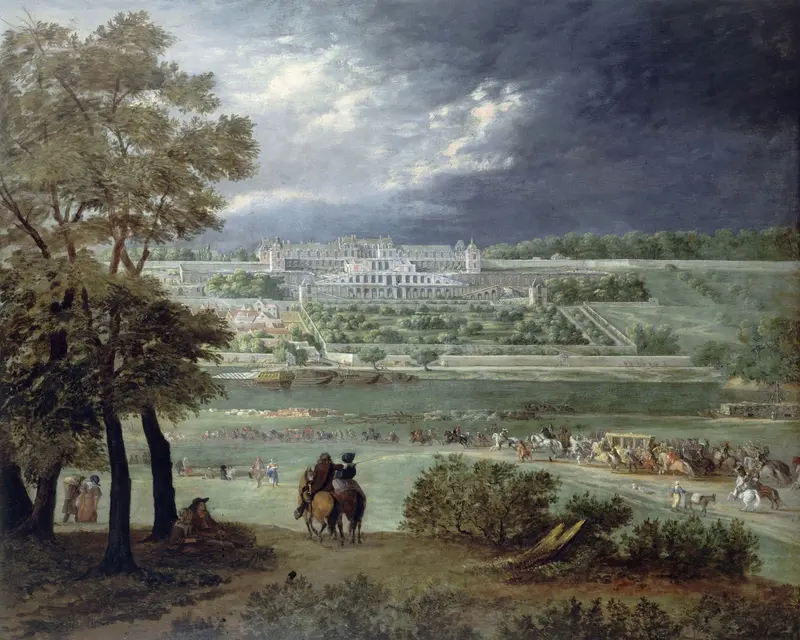
Le Château Neuf de Saint-Germain-en-Laye et les jardins, vus de la rive droite de la Seine
Adam Frans van der Meulen
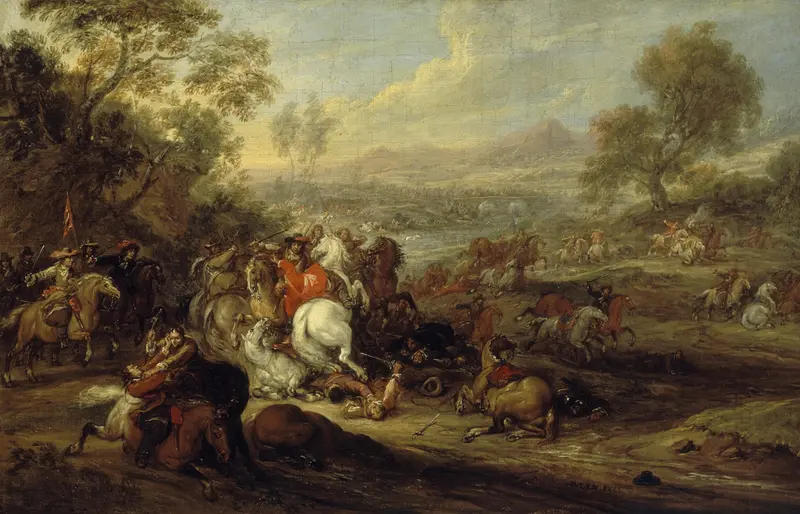
Choc de cavalerie ou Combat de cavalerie
Adam Frans van der Meulen
A nobleman in a state coach at rest escorted by his men and horses, with a gentleman on a white horse approaching and landscape beyond
Adam Frans van der Meulen





