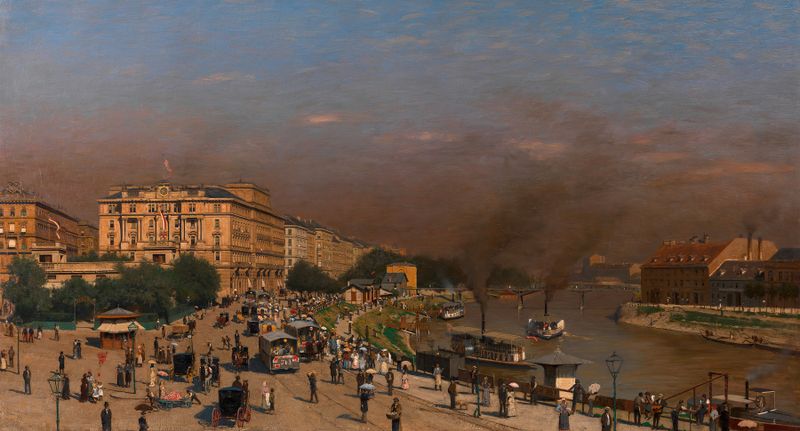
Der Franz-Josefs-Kai (Blick kanalaufwärts gegen das Hotel Metropol) — History & Facts
Can beauty exist without sorrow? In the delicate balance of nature and architecture, the loss of what once was hangs heavily in the air. Look to the left at the serene flow of the canal, where ripples reflect the soft hues of twilight, casting a gentle beckoning light. Notice how the buildings stand tall against the skyline, their facades richly detailed, yet there’s a certain stillness in their grandeur, creating a profound juxtaposition of strength and vulnerability. The muted colors, lovingly applied, evoke a sense of nostalgia, as if time itself has paused to remember something precious lost. Hidden beneath the surface, the painting whispers stories of transformation and the passage of time.
The water, calm yet ever-changing, mirrors the impermanence of life, a reminder of moments that flow past us without return. The looming Hotel Metropol stands as both a monument to progress and a silent witness to the ghosts of the past, capturing the tension between aspiration and remembrance. It invites contemplation on whether the beauty of the scene can ever overshadow the sorrow of what it signifies. In 1880, while painting this piece, the artist found himself amidst the vibrant cultural shifts of Vienna, a city rebounding from the echoes of revolution.
Bernatzik was immersed in an era where art was evolving, and yet he was personally grappling with the changes around him, reflecting the duality of loss and beauty in his work. This piece, like many of his others, captures not only a visual moment but also the soul of a transforming world, steeped in longing and hope.