Sommermorgen am Franz Josephs-Quai — History & Facts
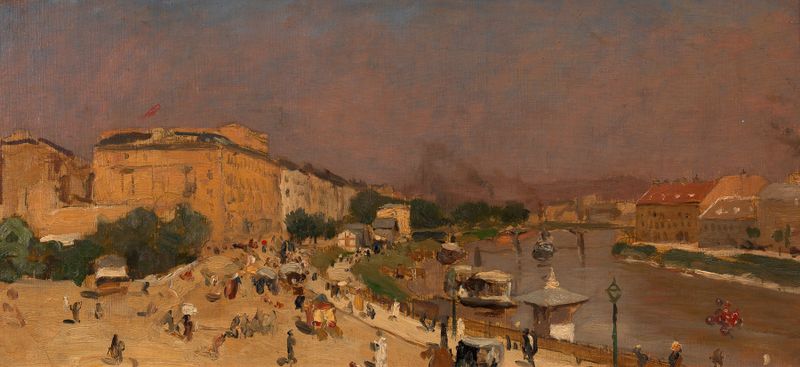
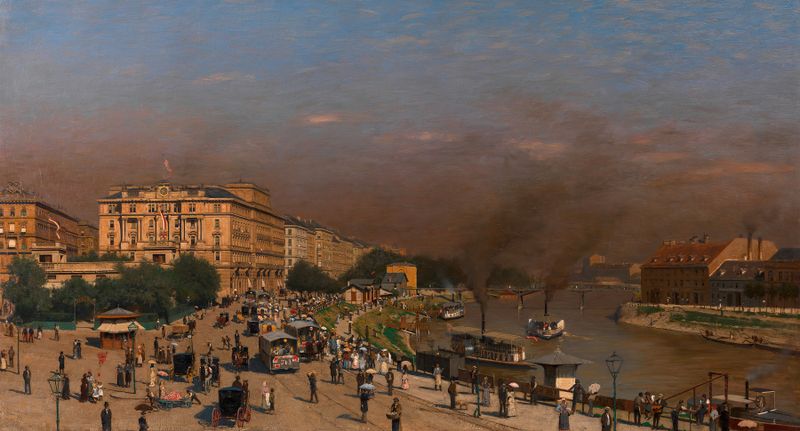
The shimmering light that dances along the surface of the water in Sommermorgen am Franz Josephs-Quai envelops the viewer in a moment that appears idyllic at first glance. Yet beneath this surface, there lies an unsettling truth about the passage of time and decay. Look to the foreground, where the gentle ripples of the river reflect the luminous sky, casting a serene ambiance that invites you closer. Notice how the soft greens and muted blues are punctuated by warm hues, creating a harmonious yet fleeting atmosphere.
The composition draws your eye along the quay, inviting exploration of the tranquil gathering of figures, each seemingly lost in their own reverie, while hints of age and neglect linger in the shadows. Delve deeper into the contrasting elements: the vibrant vitality of the scene juxtaposed with a sense of erosion. The weathered stones beneath the feet of the figures whisper stories of the past, as the meticulously detailed foliage hints at life’s impermanence. Each brushstroke captures the beauty of a fleeting moment, reminding us that even in tranquility, decay is ever-present, lurking in the backdrop of our lives. Wilhelm Bernatzik painted this work during a period of significant transition in the art world, likely in the late 19th to early 20th century.
As an artist based in Vienna, he found himself influenced by the burgeoning movements that sought to balance realism with impressionistic aesthetic. The work reflects not only his personal exploration but also the collective struggle with the tension between beauty and the inevitable passage of time in a rapidly changing world.