
Der Gabentempel des Wiener Schützenfestes von 1898 — History & Facts
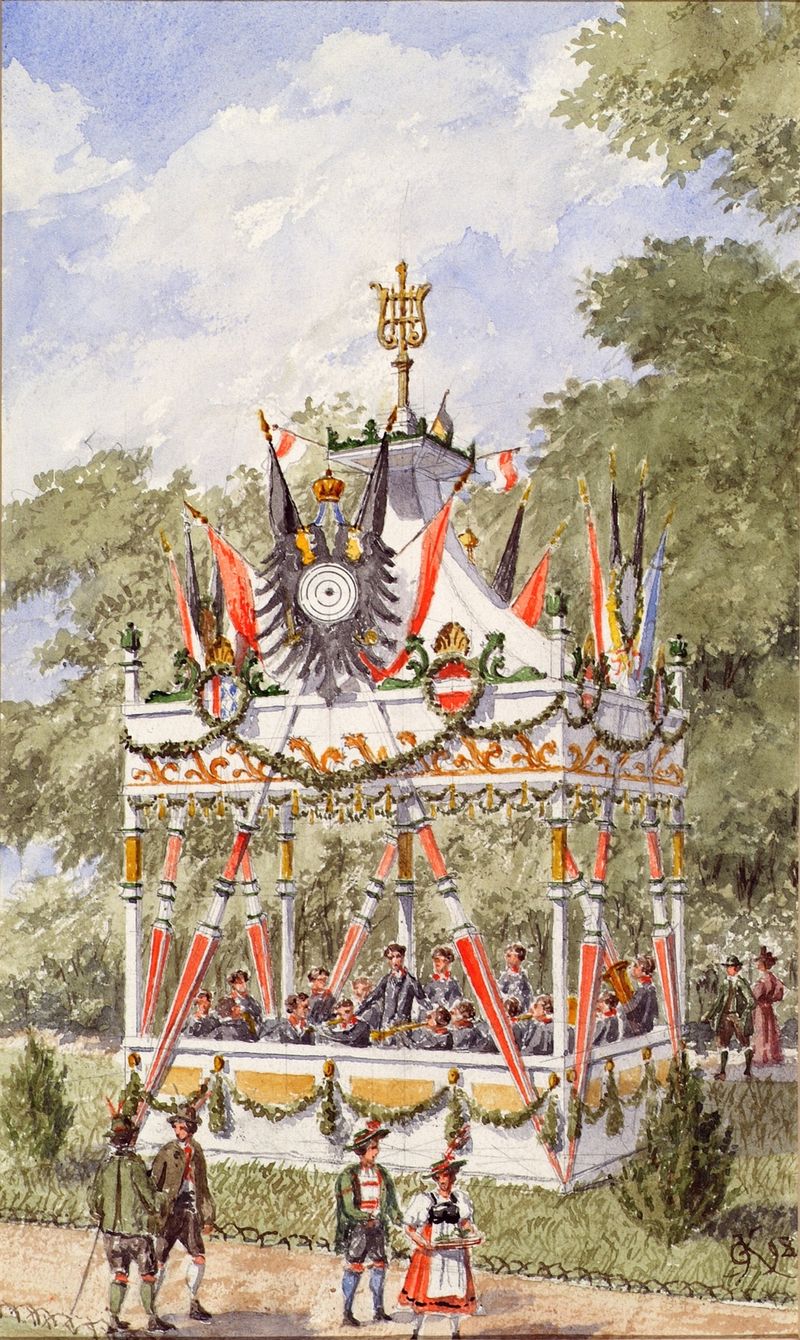
Can beauty exist without sorrow? In Der Gabentempel des Wiener Schützenfestes von 1898, a silent longing echoes through the vibrant façade of a festive structure, presenting a paradox of celebration and emptiness. Look to the center, where the temple rises, ornate and gleaming under soft, filtered light. The warm hues of gold and deep reds dominate, revealing intricate architectural details that draw the eye upward, like a longing for transcendence. The composition’s symmetry lends a sense of order, yet the surrounding space feels almost barren, contrasting sharply with the opulence of the structure itself.
Shadows dance delicately at its base, hinting at the unseen depths of emotion under the surface. The temple, while a symbol of festivity, conveys a deeper narrative of isolation. Each decorative element whispers of joy, yet the stark absence of people imbues the scene with a profound solitude. This juxtaposition challenges the viewer to consider the ephemeral nature of celebration—a moment that, while beautiful, is fleeting.
The emptiness around the temple serves as a reminder of the hollowness that often accompanies grand displays, evoking a poignant sense of nostalgia for what once was. In 1898, while painting this work in Vienna, the artist was immersed in a world grappling with the tension between tradition and modernity. Korompay was navigating the shifting artistic landscape of the time, where the echoes of past celebrations clashed with the rapid changes of a new era. Amid this backdrop, he captured a moment that transcends the physical, inviting reflection on the complexities of joy and emptiness.
More Artworks by Gustav Korompay
Browse all →

More Architecture Art
Browse all →
The statue of Liberty
Frédéric Auguste Bartholdi

View of Houses in Delft, Known as ‘The Little Street’
Johannes Vermeer

View of Houses in Delft, Known as ‘The Little Street’
Johannes Vermeer

The Cathedral in Rouen. The portal, Grey Weather
Claude Monet

The yellow house
Vincent van Gogh

The Church in Auvers-sur-Oise, View from the Chevet
Vincent van Gogh