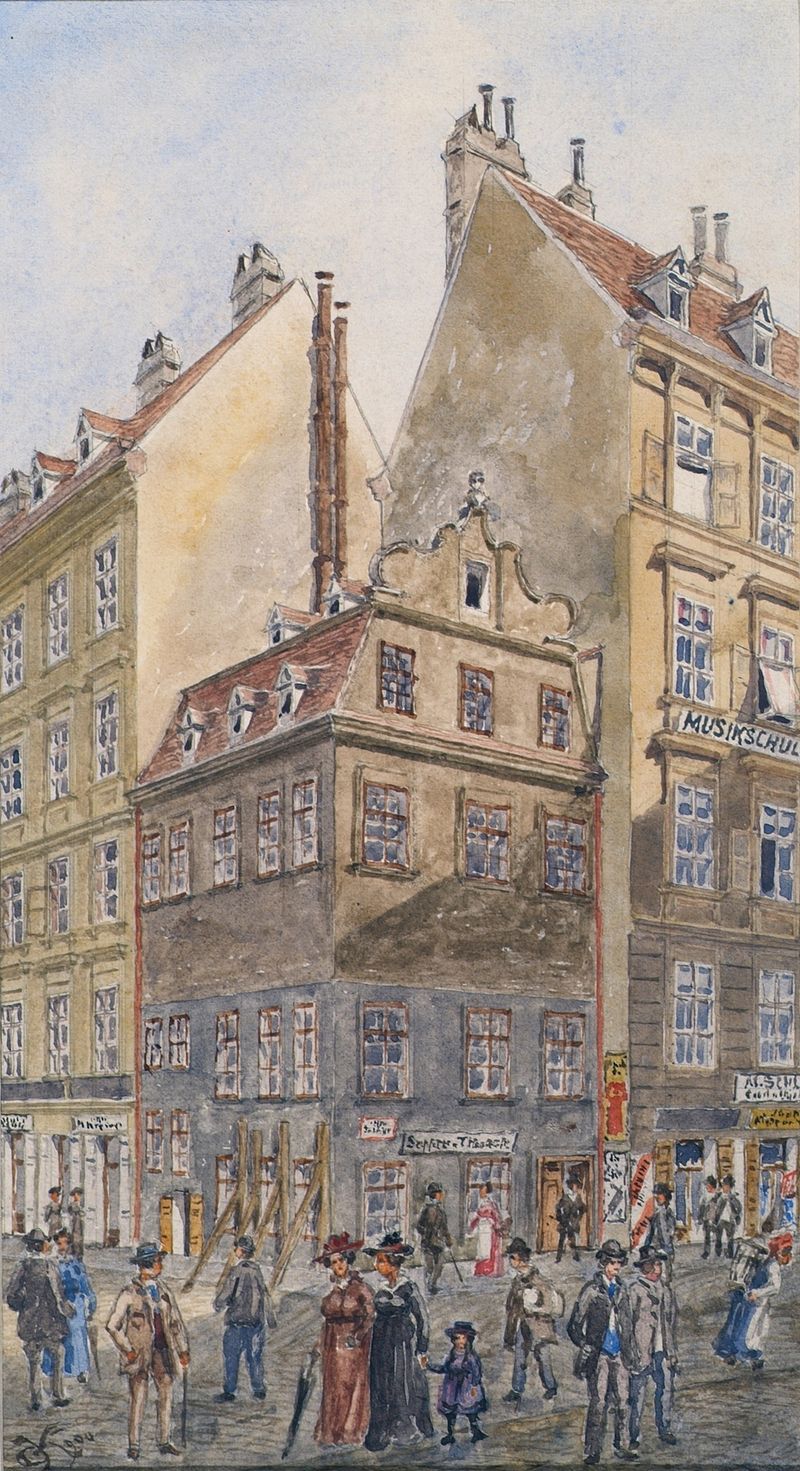
Die Hohlweggasse in Wien-Landstraße — History & Facts
In the stillness of a moment captured on canvas, time seems to pause, inviting reflection on the passage of life and memory. Focus on the central path winding through the composition, leading the viewer’s eye deeper into the scene. The trees arch gracefully overhead, their foliage a vibrant mix of greens and ochres, and the dappled light filtering through creates an interplay of shadow and illumination. Notice how the artist’s delicate brushwork suggests a gentle breeze, bringing a sense of movement to the serene environment, while the soft textures of the earth evoke a tactile connection to the land. Beneath the tranquil exterior lies a poignant contrast between nature’s unyielding presence and the impermanence of those who pass through it.
The wayward path speaks to journeys taken and stories left behind, while the quiet solitude of the surrounding trees hints at both comfort and isolation. Each detail, from the warmly lit ground to the distant, hazy horizon, encapsulates the tension between the eternal and the ephemeral, urging contemplation on our own transience in the face of nature's enduring beauty. Gustav Korompay created this work in 1890 while living in Vienna, a time of significant artistic upheaval and innovation. The city was experiencing a cultural renaissance, with movements like the Vienna Secession challenging conventional forms of expression.
Korompay, influenced by these shifting tides, embraced the allure of landscape painting, capturing intimate moments of nature’s grace and the fleeting essence of time.