Der Musikpavillion des Wiener Schützenfestes von 1898 — History & Facts
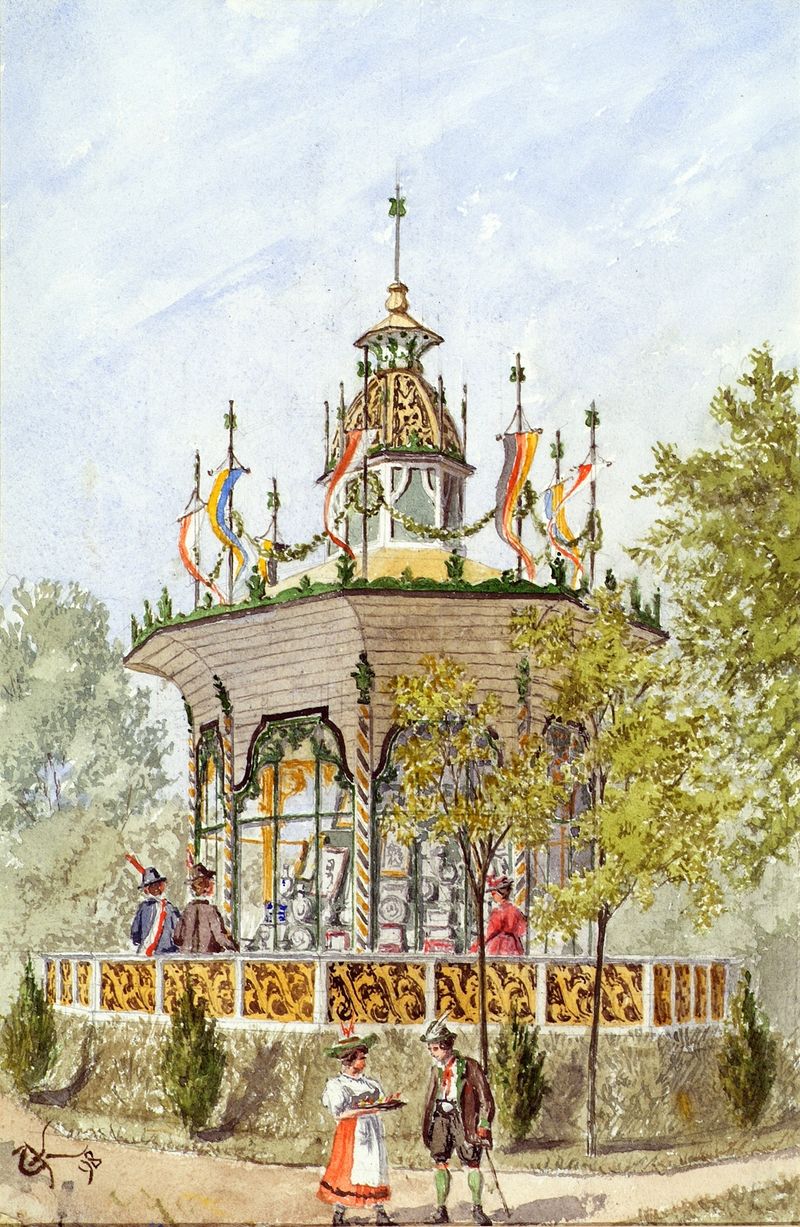
Is this a mirror — or a memory? The delicate interplay of light and shadow invites the viewer to reflect not only on the scene but also on the ephemeral nature of innocence itself. Focus first on the vibrant figures that seem to dance around the music pavilion, their faces animated with joy and anticipation. The warm palette of ochres, greens, and soft blues draws you in, while the intricate details of their clothing shimmer like whispers of the past. Notice how the light spills across the scene, illuminating the joyful expressions and transforming the mundane into something almost magical.
Each stroke of the brush breathes life into the gathering, encapsulating a fleeting moment in time. Hidden within the jubilant atmosphere lies a deeper tension between nostalgia and the passage of time. The figures, lost in their celebration, seem almost unaware of their eventual departure from this moment, reflecting the innocence of youth that is so easily lost. The music pavilion itself stands as both a literal and metaphorical center; it is a source of joy yet also a reminder of all that must eventually fade.
Observe the subtle contrasts between the lively crowd and the static pavilion, which anchors the scene, urging us to consider what remains when the music finally stops. Created in 1898, during a vibrant period in Vienna where art and culture flourished, this piece emerged from the brush of Gustav Korompay at a time when he was establishing his own voice within the artistic community. The late 19th century was marked by a longing for tradition while simultaneously embracing modernity, and Korompay’s work reflects this tension. His depiction of a lively festival captures not just a social gathering but also an era imbued with the innocence of carefree days, forever suspended in time.