Der Geist im Hausgestühl, Stillleben mit Katze — History & Facts
A calico cat, eyes half-closed in a moment of sunlit bliss, steals the scene from the usual still life arrangement in Der Geist im Hausgestühl, Stillleben mit Katze by August Macke. The table is a stage: a lemon, a pair of oranges, a blue jug, and a potted geranium are arranged with deliberate simplicity, each object casting a soft shadow that anchors it to the cool, pale surface. The cat’s tail, striped and lively, curves into the foreground, guiding the viewer’s gaze across the composition.
Above, a playful painting-within-the-painting—three musicians in bright, blocky colors—adds a note of whimsy and hints at the world beyond this quiet domestic corner. The palette is fresh and direct, dominated by cool greens and blues, punctuated by the warm notes of fruit and fur. Painted in 1910, this work belongs to a moment in German art when artists like August Macke were breaking with tradition, seeking new ways to see the everyday. Still lifes, long the domain of careful realism and moral symbolism, became instead a field for bold color, flattened space, and personal vision.
Such paintings were rarely grand commissions; rather, they were intimate explorations, often made for the artist’s own circle or for small exhibitions. The presence of the cat—so rarely the focus in earlier still lifes—signals a modern delight in the incidental and the familiar. Now in the collection of the Lenbachhaus, this painting invites us to linger, to notice how the ordinary can become quietly extraordinary under an attentive gaze.
More Artworks by August Macke
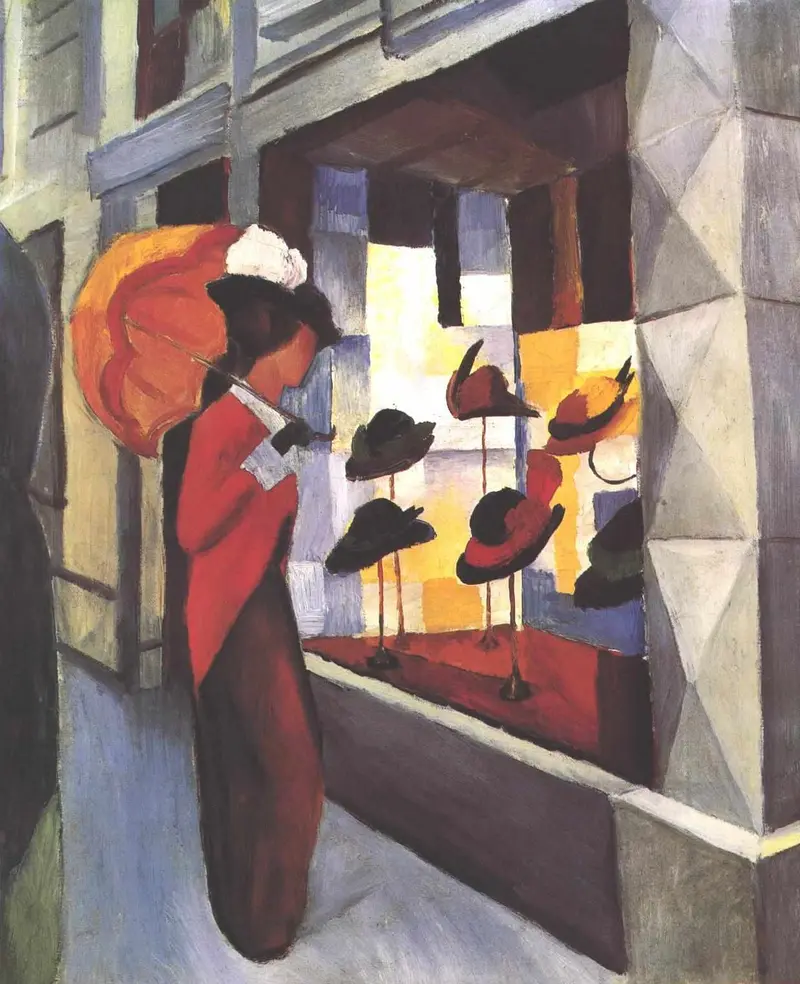
Woman with a Parasol in Front of a Hat Shop
August Macke

Street with Church in Kandern
August Macke
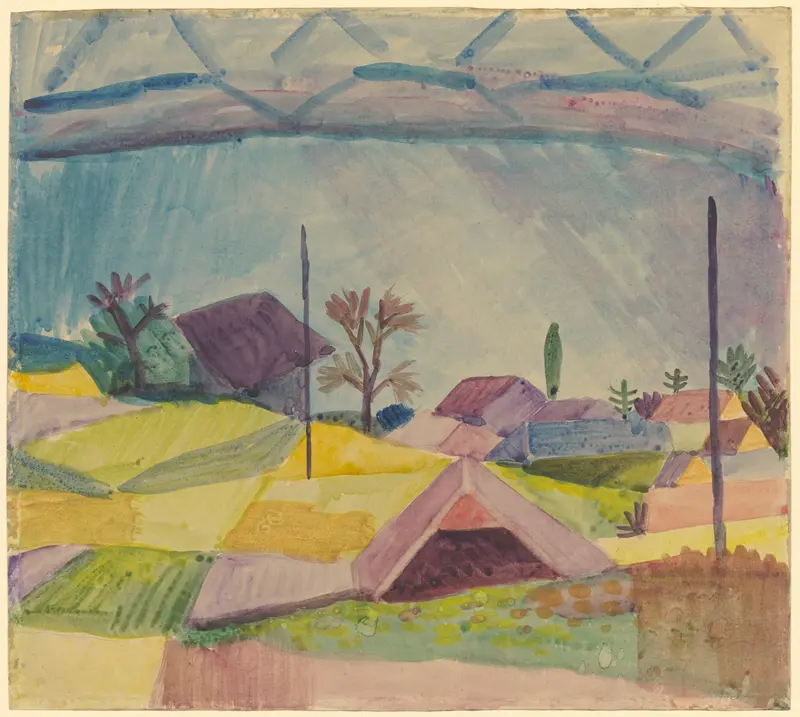
View of Hilterfingen
August Macke

Paar im Nachen
August Macke
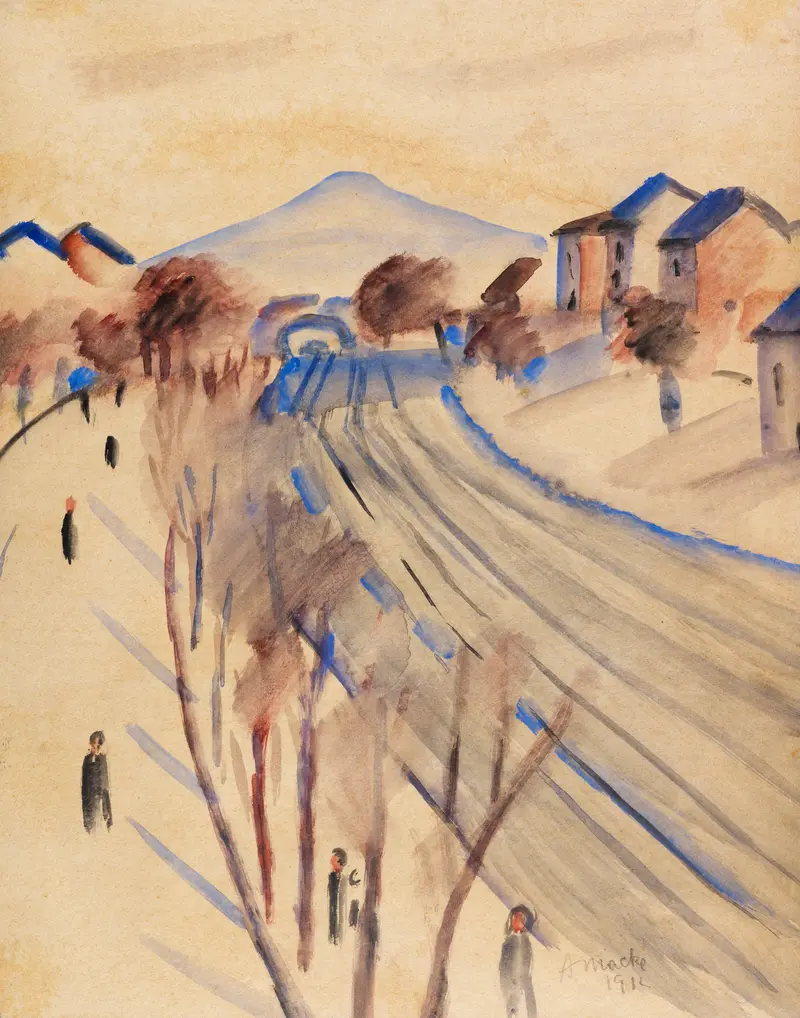
Ölberg mit Bahngleisen II
August Macke
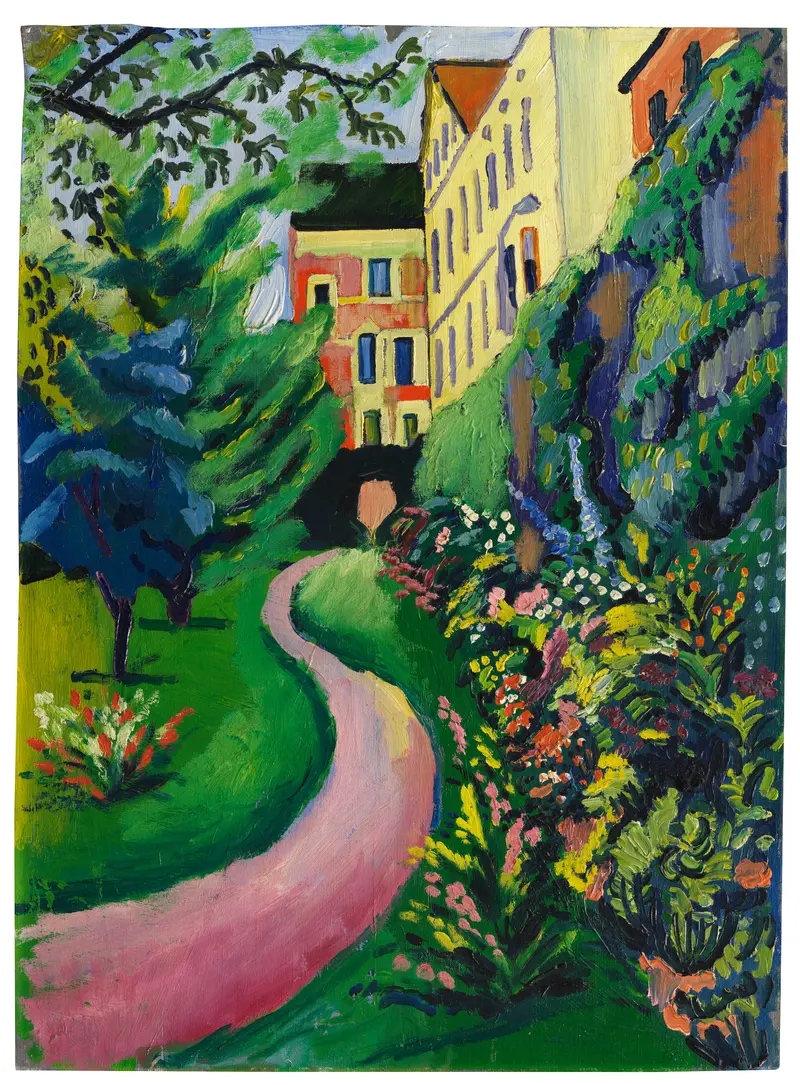
Unser Garten mit blühenden Rabatten
August Macke
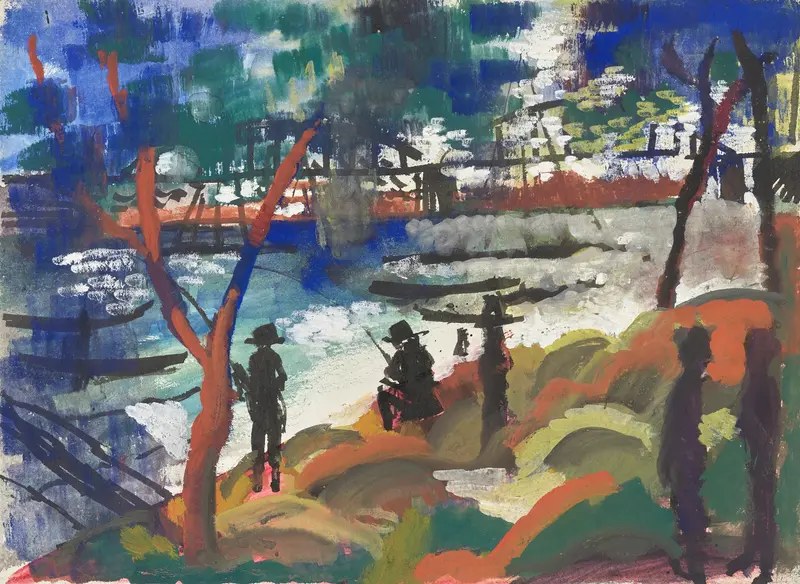
Angler am Fluss
August Macke
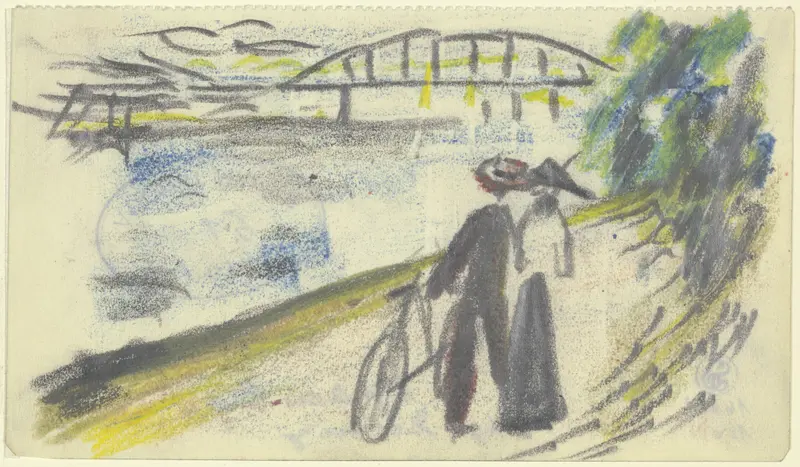
Path at the Rhine
August Macke
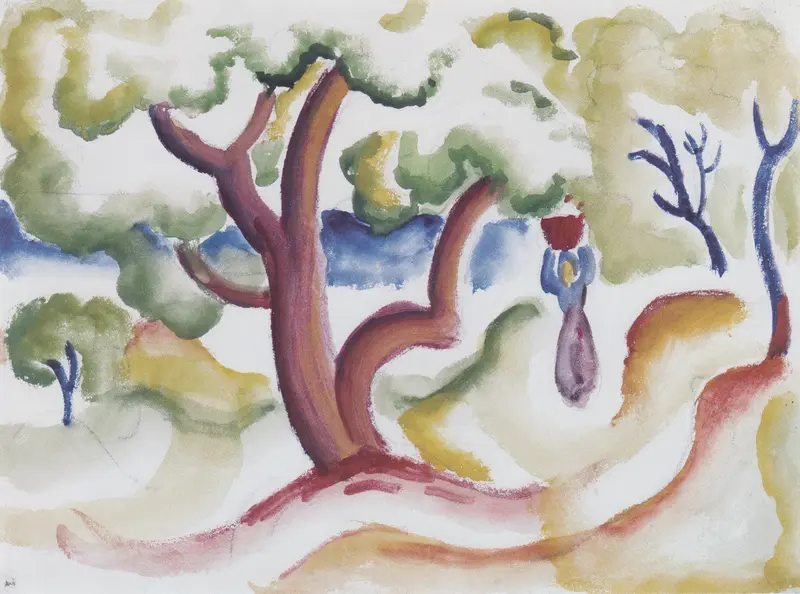
Frau mit Krug unter Bäumen
August Macke
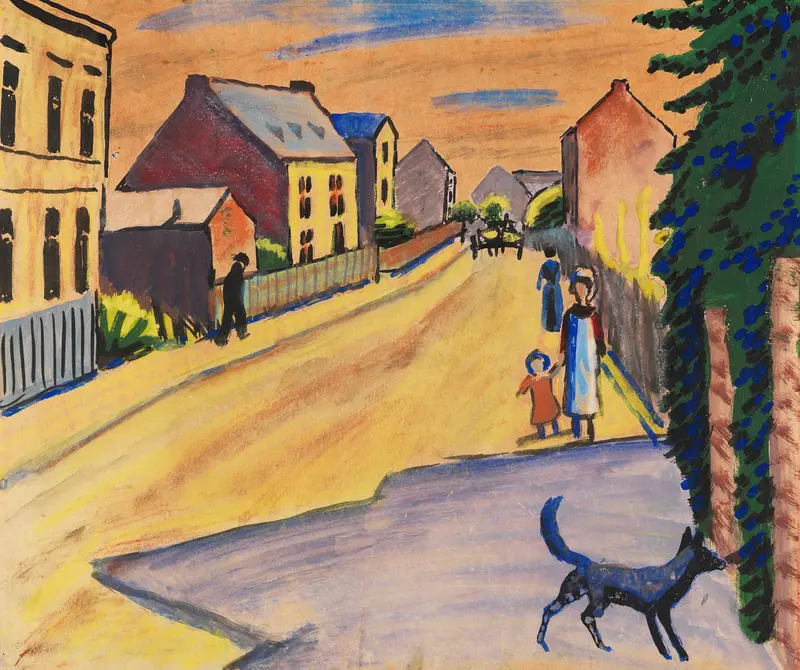
Sonnige Straße mit Hund
August Macke