Der Meerbusen von Baiae bei Sonnenuntergang — History & Facts
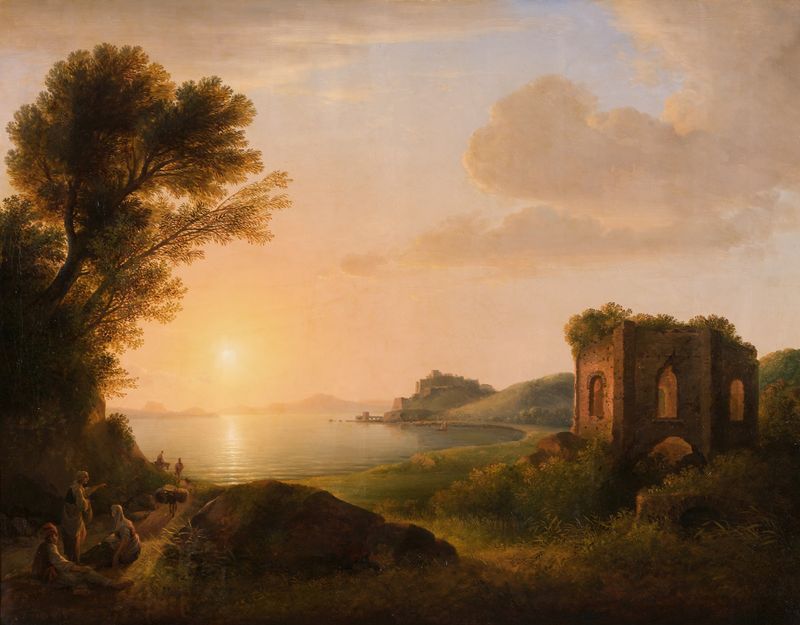
Can beauty exist without sorrow? In Der Meerbusen von Baiae bei Sonnenuntergang, the interplay of light and shadow suggests a delicate balance between joy and melancholy, evoking a profound emotional response. Focus on the warm, golden hues that bathe the landscape as the sun descends, illuminating the tranquil waters of the bay. Notice how the light dances across the surface, creating a shimmering effect that draws the eye toward the horizon. The lush greenery framing the scene contrasts with the ethereal sky, while wisps of clouds, tinted with soft pastels, hint at the day's end.
The artist employs a masterful blend of color and soft brushwork to evoke a sense of serene transition, emphasizing the fleeting nature of beauty. Delve deeper, and you will find a poignant tension within the composition. The idyllic scene, while breathtaking, carries an undercurrent of impermanence, reflected in the retreating sunlight. The bay, a symbol of tranquility, also embodies the passage of time, reminding viewers that moments of beauty are often juxtaposed with inevitable loss.
The gentle ripples in the water echo this duality, suggesting that serenity is intertwined with the transient nature of existence. In 1804, Schönberger created this work against a backdrop of Romantic ideals, embracing nature's sublime beauty amid the anxieties of an evolving world. Residing in Europe during a time of political upheaval and shifting artistic paradigms, he sought to capture the essence of emotion and experience through landscape painting. His work reflects the broader movement of the time, wherein artists grappled with the complexities of the human condition, making this piece resonate even more deeply.