Der Meerbusen von Baiae bei Sonnenuntergang — History & Facts
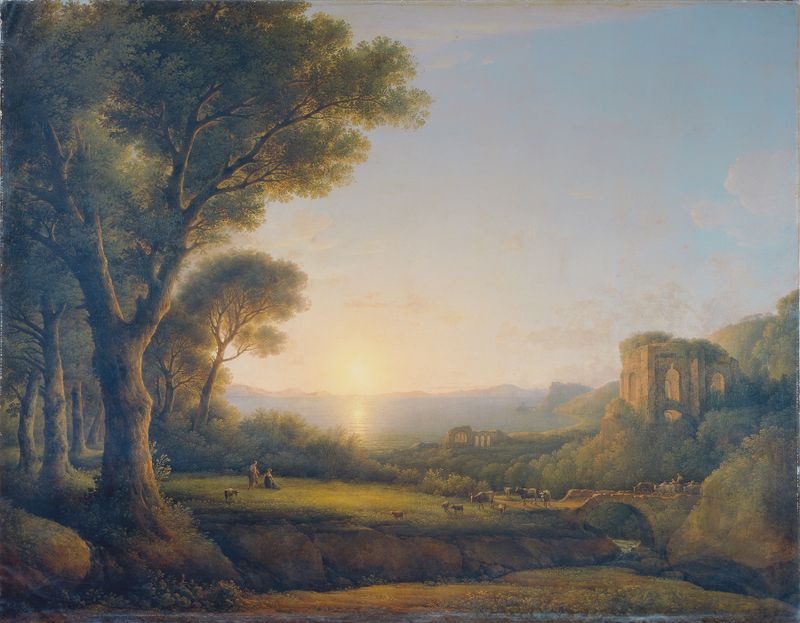
In the quietude of a sunset, beauty can both illuminate and conceal the tumult of a revolution. As shadows stretch and colors deepen, the heart swells, reflecting a world on the brink of change. Look to the left at the shimmering waters that seem to cradle the fading sun. The artist masterfully captures the warm hues of orange and red merging seamlessly with the cool blues of the sea, creating a vibrant contrast that draws the viewer in.
Notice how the delicate brushwork conveys the gentle ripples on the water's surface, evoking a sense of movement and tranquility amidst the impending darkness. The horizon, where the sky kisses the sea, is alive with a blending of color that speaks to both beauty and unrest. Amidst the tranquil scene lies a deeper narrative—the tranquil sunset serves as a poignant metaphor for the fleeting nature of peace. The idyllic depiction of Baiae, a once-glorious Roman resort, contrasts sharply with the knowledge of societal upheaval just beyond the canvas.
The interplay of light and shadow hints at the inevitable shifts in fortune, evoking feelings of nostalgia and trepidation for what lies ahead. Each brushstroke is laden with the tension of beauty and the threat of change, capturing an essence that resonates with the viewer's own experiences of instability. In 1807, while Schönberger painted this serene vista, Europe was ensnared in the turmoil of the Napoleonic Wars. Amidst the chaos, artists sought solace in the natural world, finding refuge in idealized landscapes.
This painting reflects not only the artist’s personal pursuit of beauty but also the broader artistic movement grappling with the transformation of society and the role of art in such times.