Diana and Callisto (Richard Wilson) — History & Facts
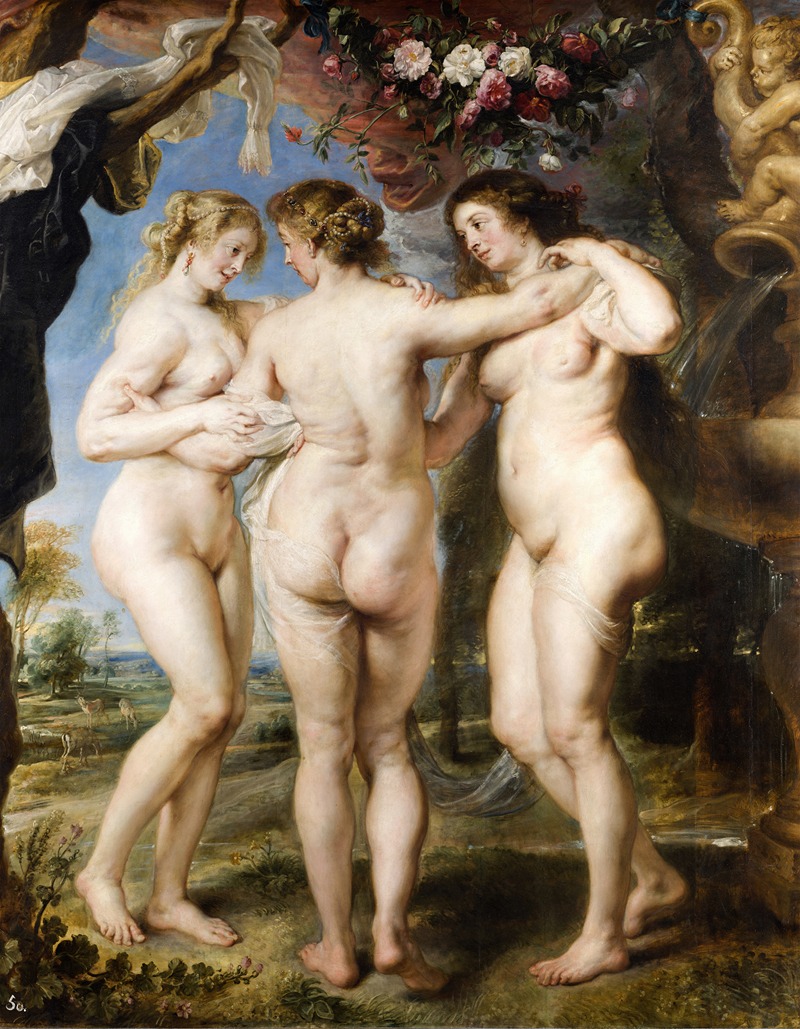
In the still embrace of fate, the moment hangs heavy, echoing the inevitable course of destiny for its subjects. Each gaze, each posture whispers untold stories, revealing layers of human emotion intertwined with the divine narrative. Begin by focusing on the central figures, Diana and Callisto, elegantly poised beneath the lush canopy of trees. Notice how the interplay of light and shadow dances across their forms, highlighting the tension between camaraderie and betrayal.
The warm hues of the figures contrast with the verdant greens surrounding them, drawing your eye to their expressions and the unspoken conflict that brews in this serene setting. The meticulous brushstrokes that define their delicate features and flowing garments invite a closer examination of their intimate yet fraught relationship. As you explore further, consider the symbolism embedded in the composition. The juxtaposition of Diana’s serene confidence against Callisto’s quiet turmoil hints at a fragile balance of power and trust.
The surrounding nature, both vibrant and oppressive, mirrors the duality of friendship and jealousy. Each element, from the flowers at their feet to the distant horizon, contributes to a larger narrative about destiny’s inexorable march, emphasizing the weight of choice and consequence. Louis Marvy created this piece in 1850, a period marked by personal upheaval and shifting artistic landscapes in France. Emerging amidst the Romantic movement, he grappled with themes of emotion and myth, drawing inspiration from classical narratives.
At this time, the art world was evolving, as new ideas about nature and humanity began to take shape, allowing Marvy to explore deeper moral and existential questions through his work.
More Artworks by Louis Marvy
Browse all →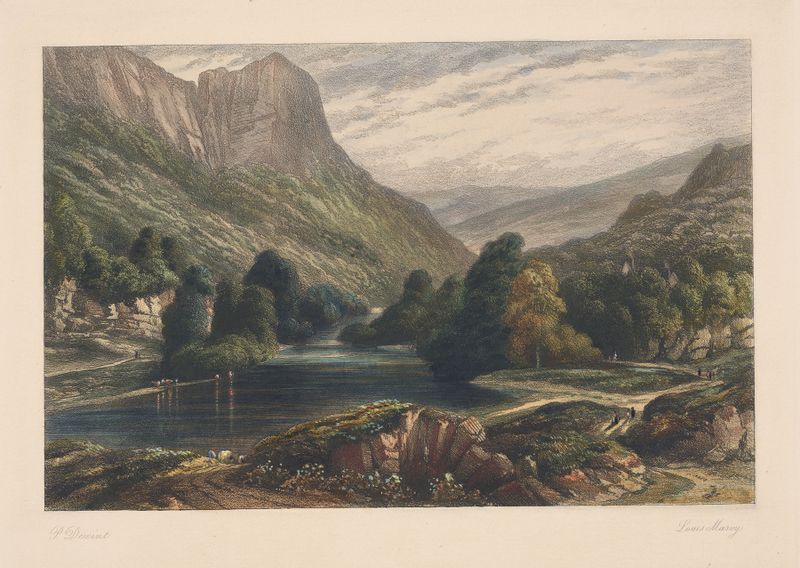
Landscape with mountain lake (Peter DeWint)
Louis Marvy
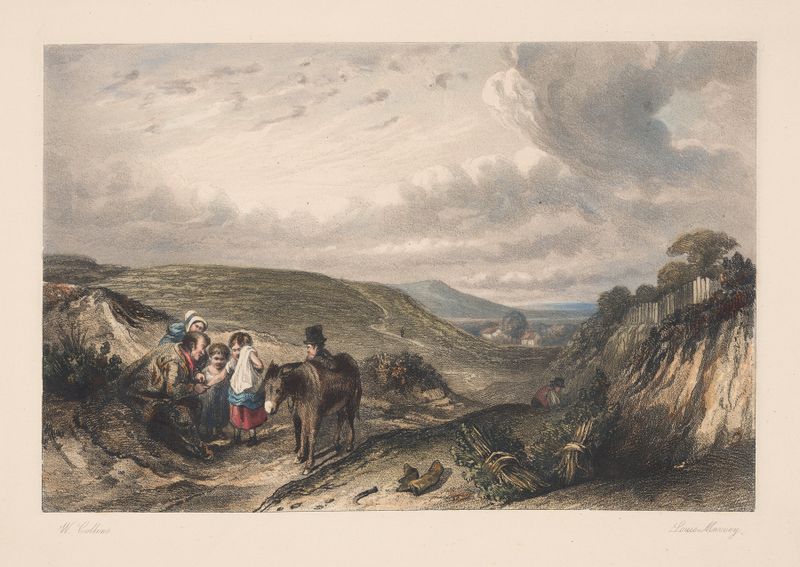
Landscape with woodgatherers (William Collins)
Louis Marvy
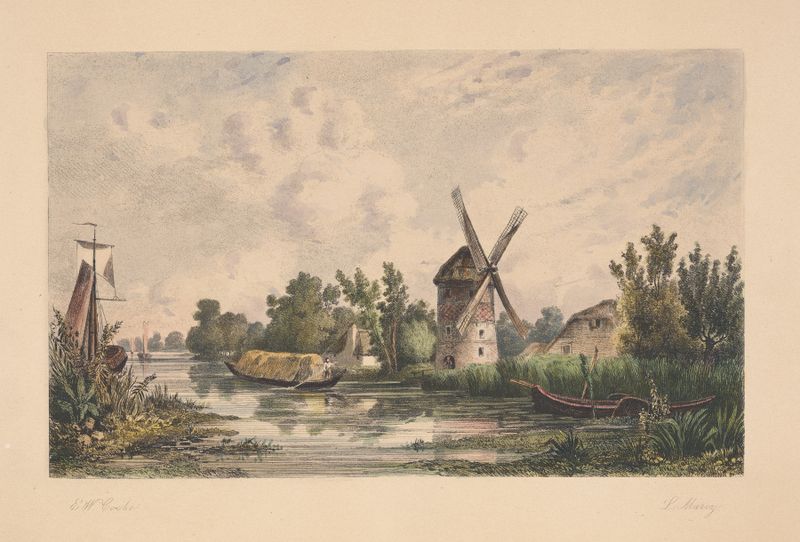
Landscape with windmill (Edward William Cooke)
Louis Marvy
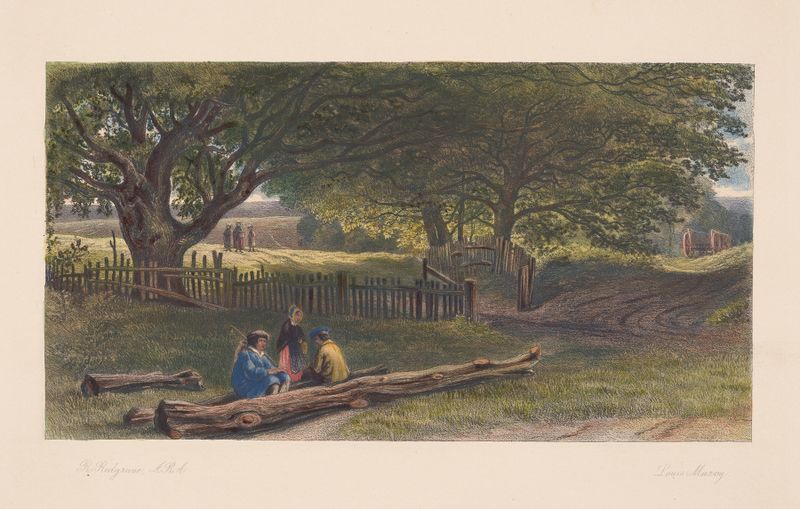
Landscape with gypsies (Richard Redgrave)
Louis Marvy
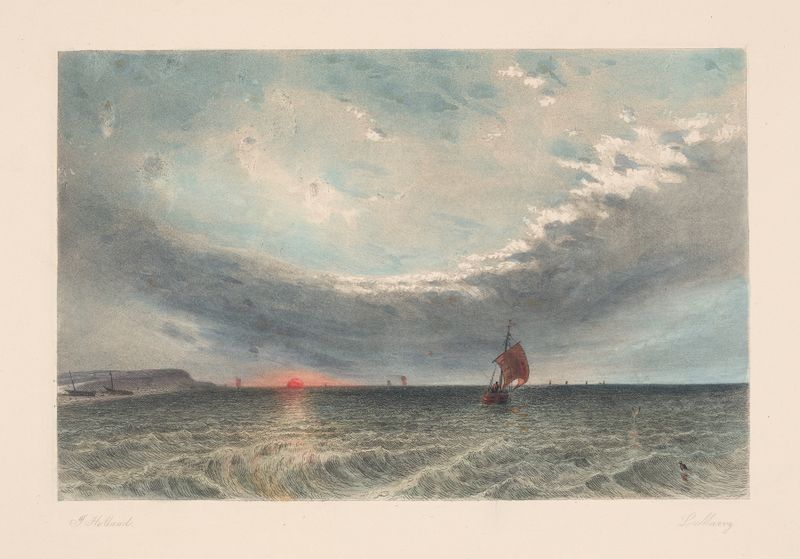
Seascape at sunset (James Holland)
Louis Marvy
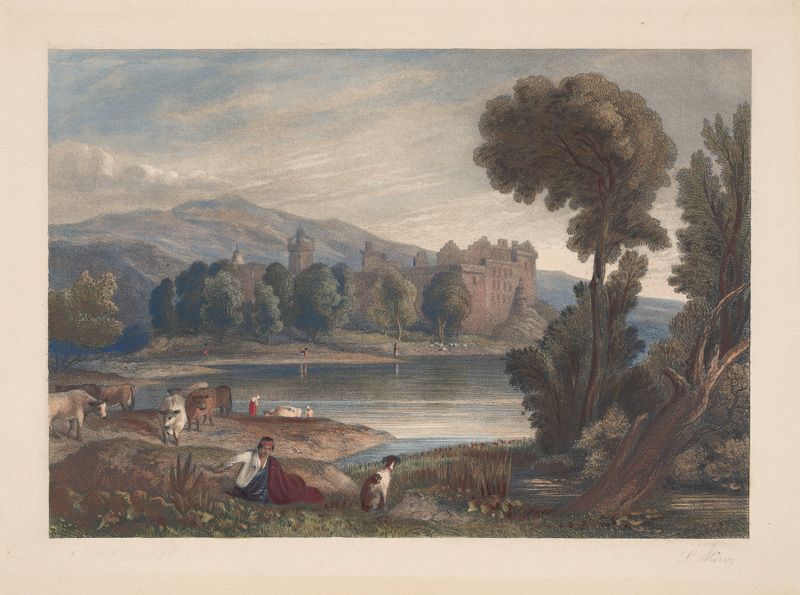
Lakeside castle (Joseph Mallord William Turner)
Louis Marvy
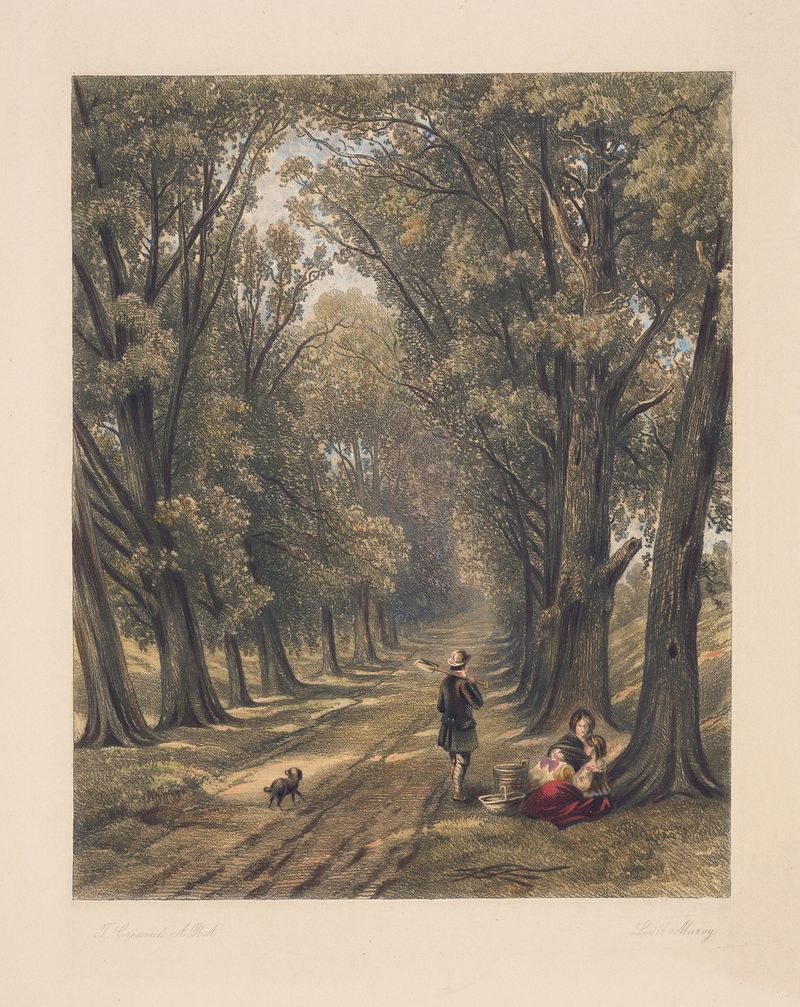
Landscape with tree-lined country road (Thomas Creswick)
Louis Marvy
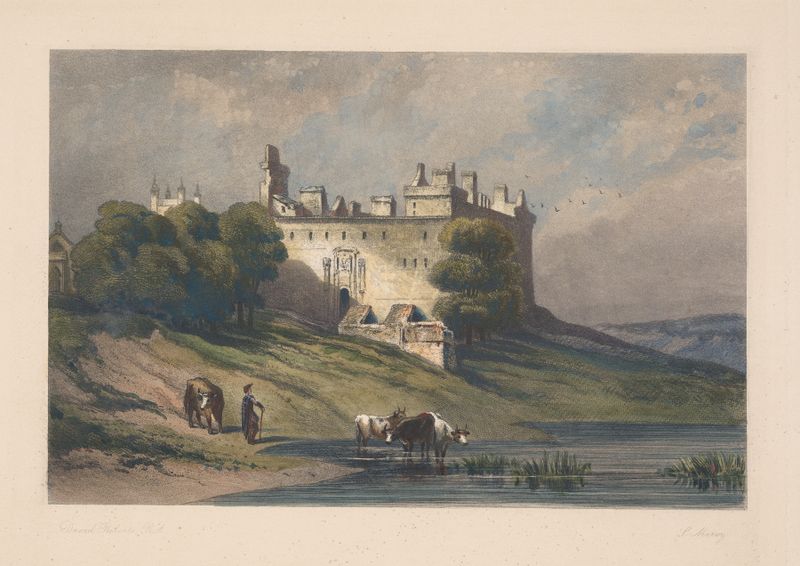
Landscape with cattle near castle (David Roberts)
Louis Marvy
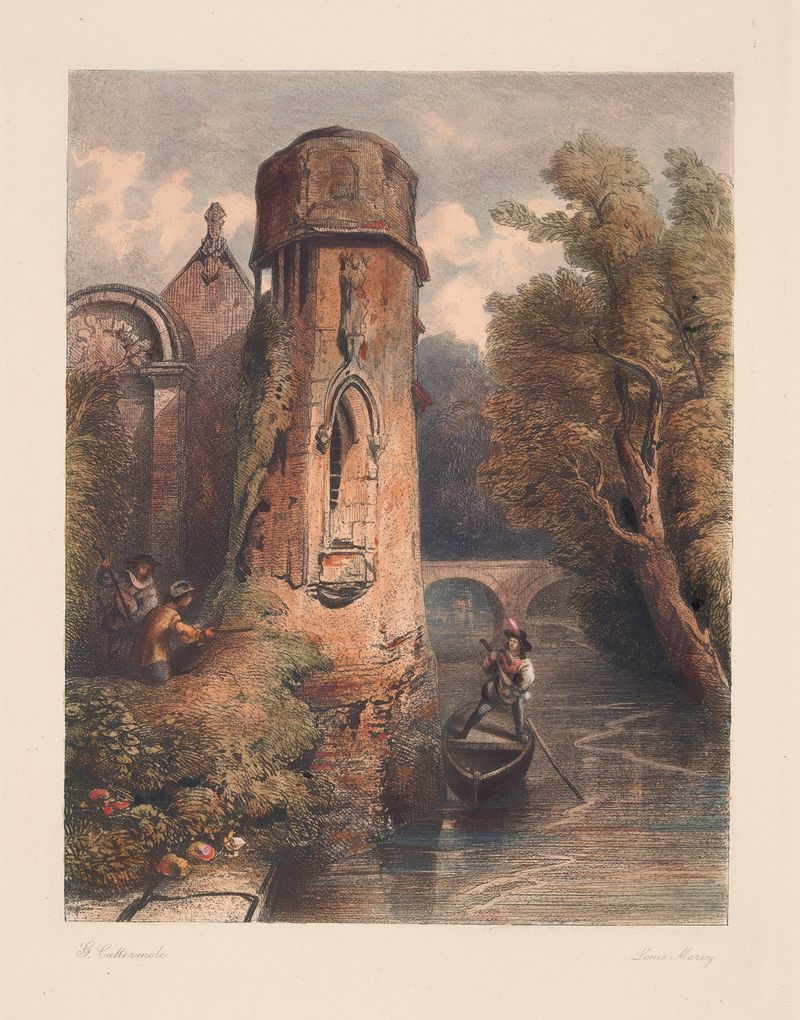
Landscape with man in boat playing lute near moss-covered tower (George Cattermole)
Louis Marvy
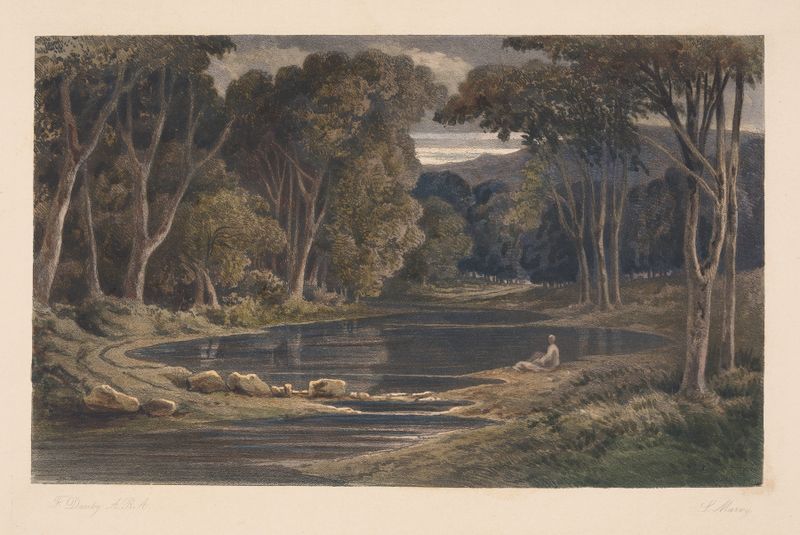
Woodland pool with seated figure (Francis Danby)
Louis Marvy