Die breite Föhre nächst der Brühl bei Mödling — History & Facts
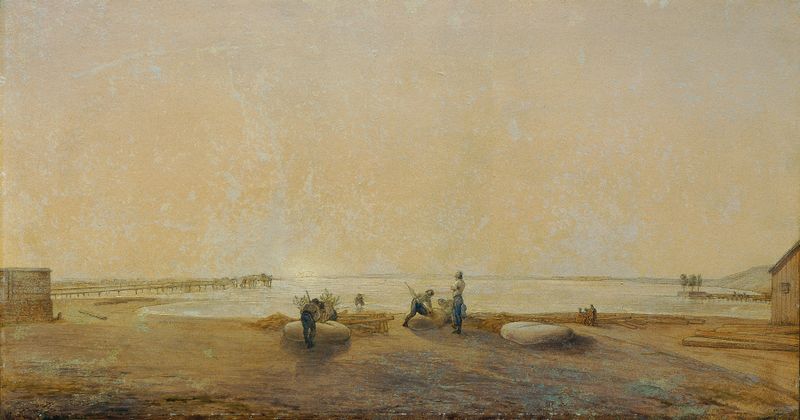
In the stillness of nature, silence unveils the profound beauty hidden within its folds. Look to the left at the towering pine, its branches stretching outward like welcoming arms, inviting you deeper into a tranquil world. The deliberate strokes of the artist create a serene landscape, where vibrant greens contrast with earthy browns, revealing a harmonious interplay between the trees and the soft earth. Notice how the light dances through the foliage, casting gentle shadows that hint at the passage of time and the quiet whispers of the wind. Within this tranquil scene, a sense of stillness reigns.
The distant horizon carries a weight of unspoken stories, evoking a sense of solitude that resonates with the viewer’s own introspections. The delicate textures of the leaves suggest a fleeting moment, embodying the tension between permanence and transience, while the muted palette evokes a reflective mood, encouraging contemplation. In 1838, the artist captured this scene during a period of artistic evolution in Europe, where Romanticism sought to explore the emotional depth of nature. Living in Germany, Schnorr von Carolsfeld was influenced by the burgeoning appreciation for landscapes as a genre, reflecting both personal experiences and the broader cultural shifts of his time.
This work stands as a testament to his dedication to embracing the beauty found in the serenity of nature, embodying a pivotal moment in his artistic journey.