
Die Brigitta-Kapelle in Wien-Brigittenau — History & Facts
Could beauty survive in a century of chaos? In a world often defined by upheaval and uncertainty, the tranquility captured in the artwork speaks volumes of resilience and hope. Look to the upper left, where the elegant architecture of the Brigitta-Kapelle rises gracefully against the backdrop of a cerulean sky. The delicate strokes weave shadows and light, creating a play of luminosity that highlights the chapel's intricate details—its steeple piercing the heavens, adorned with a vibrant green patina that suggests life amidst the stillness. Notice how Weckbrodt’s soft palette allows the golden hues of sunlight to dance across the structure, imbuing the scene with a warmth that invites serenity. Delve deeper, and you’ll find contrasts that enrich the narrative.
The solidity of the chapel stands in stark opposition to the fluidity of the clouds, evoking an eternal struggle between permanence and transience. This juxtaposition speaks to the persistence of faith and beauty, suggesting that even in an era fraught with turmoil, such elements might flourish quietly, offering solace. Amidst the serenity, the absence of human figures hints at solitude, drawing viewers into their own contemplative space. Ferdinand Weckbrodt painted this piece during a tumultuous period, likely in the early 20th century, when Vienna was undergoing significant social and political changes.
As a member of the Vienna Secession, he sought to reconcile traditional craftsmanship with contemporary aesthetics, capturing the spirit of a city in transition. His work reflects a moment when art served as a sanctuary, a reminder of beauty's potential to endure amidst the chaos of modern life.
More Artworks by Ferdinand Weckbrodt
Browse all →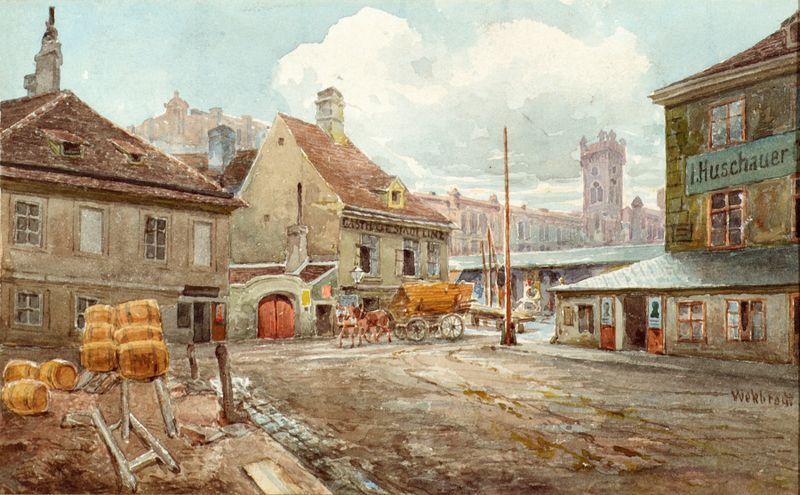
Der Tandelmarkt in Wien
Ferdinand Weckbrodt
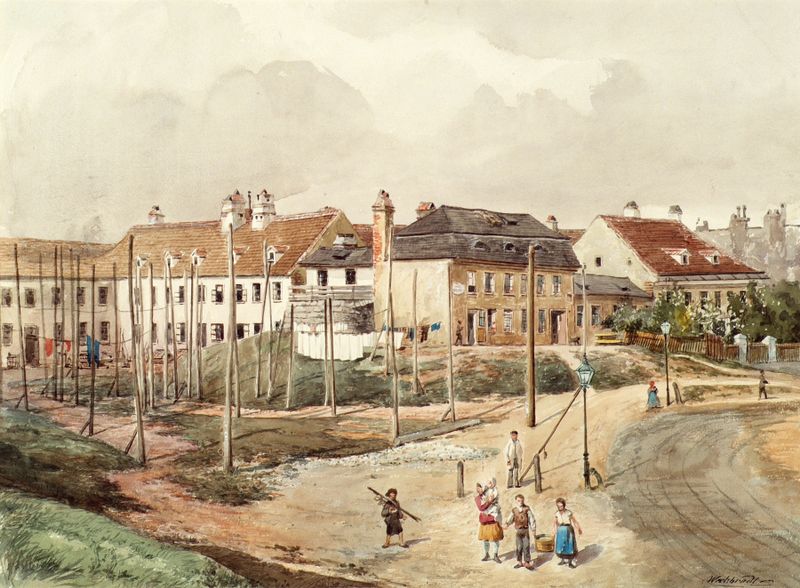
Vorstädtischer Bauplatz
Ferdinand Weckbrodt

Die Kettenbrücke über den Wienfluß
Ferdinand Weckbrodt

Die Kohlmessergasse und der Salzgries bei der Ruprechtsstiege
Ferdinand Weckbrodt
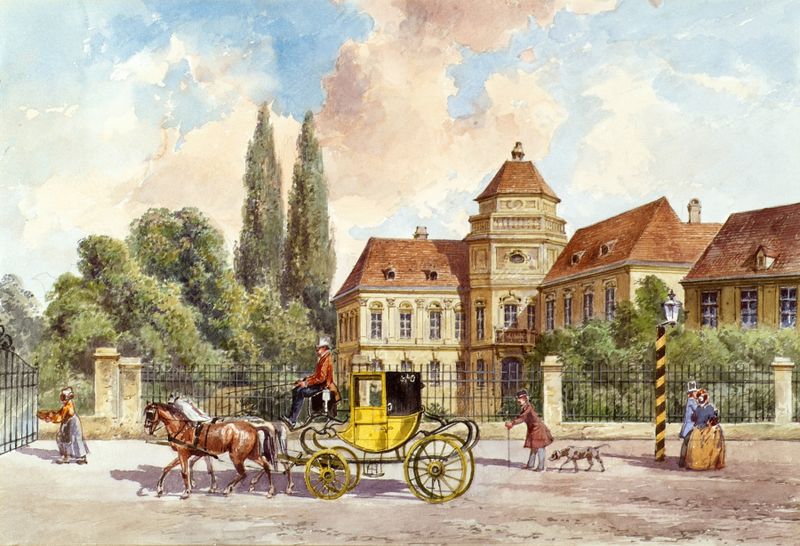
Im Althan-Palais Puthon in Wien
Ferdinand Weckbrodt
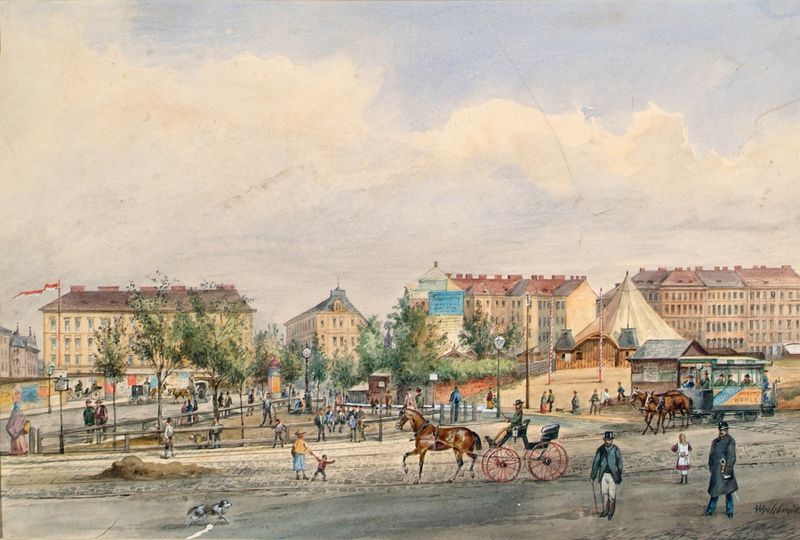
Die Währinger Linie in Wien
Ferdinand Weckbrodt
More Architecture Art
Browse all →
The statue of Liberty
Frédéric Auguste Bartholdi

View of Houses in Delft, Known as ‘The Little Street’
Johannes Vermeer

View of Houses in Delft, Known as ‘The Little Street’
Johannes Vermeer

The Cathedral in Rouen. The portal, Grey Weather
Claude Monet

The yellow house
Vincent van Gogh

The Church in Auvers-sur-Oise, View from the Chevet
Vincent van Gogh