
Die Währinger Linie in Wien — History & Facts
In the heart of Vienna, destiny weaves its intricate threads, hinting at the stories lurking beneath the surface. Look to the foreground where a bustling street scene unfolds, the cobblestones glistening with the sheen of recent rain. The figures, elegantly attired in the fashion of the day, move with purpose, their postures suggesting both urgency and leisure. Notice how light spills from the lampposts, creating pools of warmth that contrast with the cooler tones of shadows creeping around the edges, a subtle reminder of the delicate balance between joy and sorrow in life’s journey. Beneath this vibrant veneer lies a deeper emotional tension—a whisper of longing intertwined with fleeting moments of connection.
The juxtaposition of gilded architecture against the weary faces of passersby speaks volumes about the human experience, revealing how beauty often conceals struggles. The richness of the palette echoes the duality of existence, drawing the viewer into a contemplation of their own path, where destiny is shaped by both light and shadow. In 1895, Ferdinand Weckbrodt painted this piece during a period of artistic transformation in Vienna, a time when the city was undergoing rapid change and modern influences began to seep into traditional artistry. The artist was keenly aware of the shifting dynamics in art, embracing new techniques while reflecting on the past.
This work stands as a testament to his ability to capture the essence of his time, encapsulating both the vibrancy and the complexities of life’s unfolding narrative.
More Artworks by Ferdinand Weckbrodt
Browse all →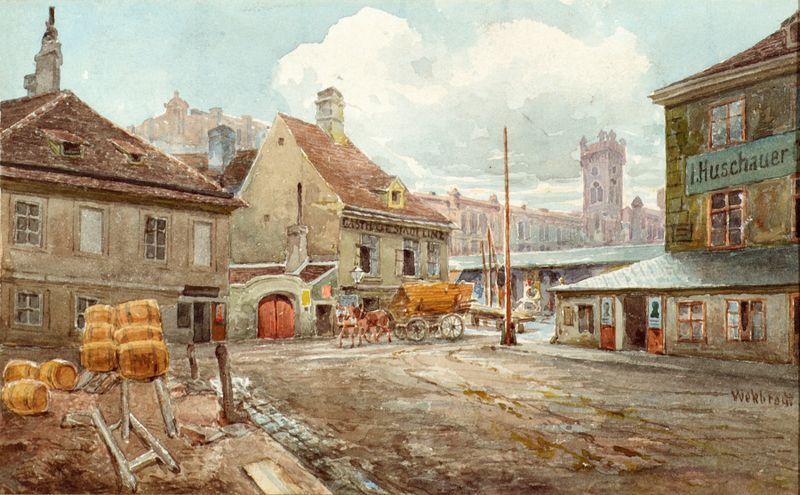
Der Tandelmarkt in Wien
Ferdinand Weckbrodt
Vorstädtischer Bauplatz
Ferdinand Weckbrodt

Die Kettenbrücke über den Wienfluß
Ferdinand Weckbrodt

Die Kohlmessergasse und der Salzgries bei der Ruprechtsstiege
Ferdinand Weckbrodt

Die Brigitta-Kapelle in Wien-Brigittenau
Ferdinand Weckbrodt
Im Althan-Palais Puthon in Wien
Ferdinand Weckbrodt





