Die Bucht von Pozzuoli bei Neapel — History & Facts
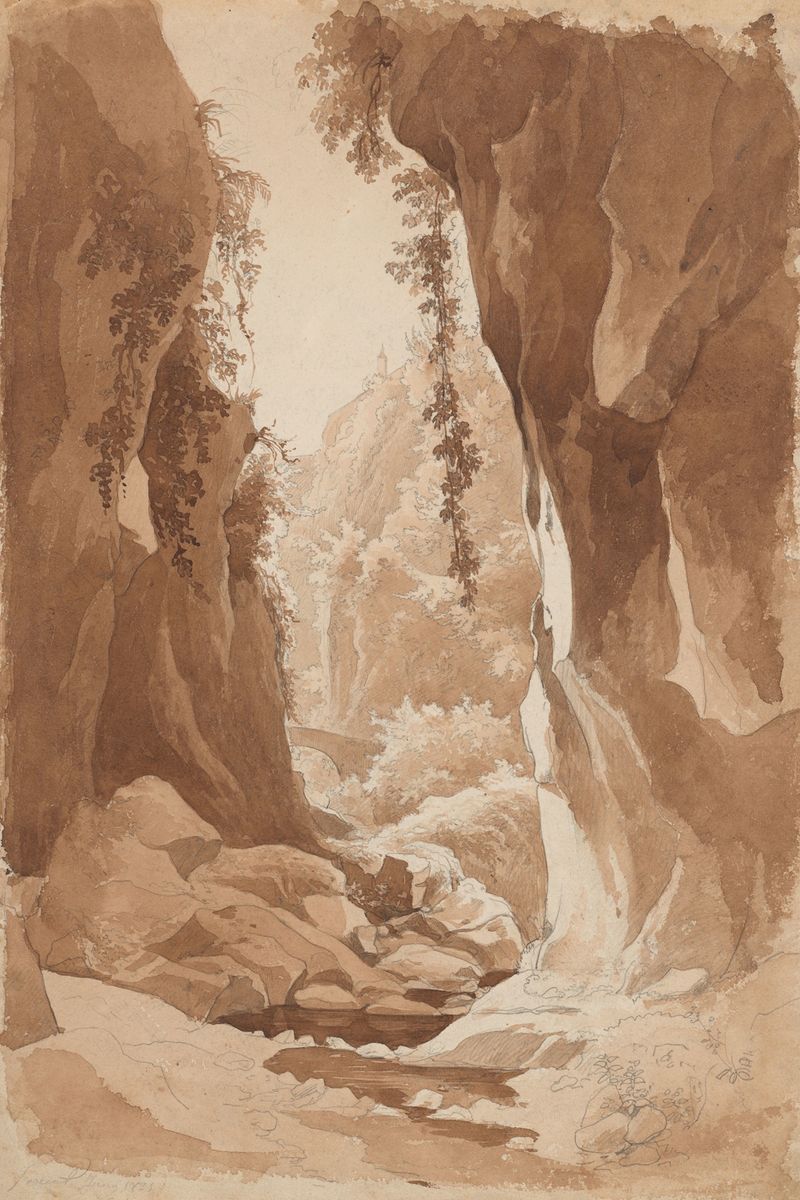
Can paint confess what words never could? In Die Bucht von Pozzuoli bei Neapel, the artist masterfully captures an awakening world, where land and sea collide under the gentle caress of dawn. Look to the horizon, where soft pastels blend seamlessly into a gradient of lavender and peach, heralding the morning sun. The tranquil waters of the bay shimmer like scattered diamonds, inviting the eyes to follow their glistening path towards a distant shore. Notice how the delicate brushstrokes convey the rippling surface of the water, while the rugged cliffs stand resolute, painted in earthy tones that ground the scene.
This juxtaposition of fluidity and solidity creates a visual symphony, emphasizing the serene yet vibrant nature of the landscape. Hidden beneath the surface, the painting speaks of longing and transformation. The interplay of light and shadow suggests an eternal dance between night and day, hinting at the transient beauty of time. The modest buildings on the shore whisper of human presence, yet they remain dwarfed by the embracing expanse of nature, inviting contemplation on humanity’s place in this majestic setting.
Each detail—be it the whisper of the waves or the gentle rustle of foliage—evokes a sense of peace, yet stirs an underlying anticipation for what lies ahead. In 1829, Johann Joachim Faber painted this piece during a period marked by the Romantic movement's fascination with nature and emotion. Working in Germany, he sought to capture the sublime beauty of landscapes, drawing inspiration from both his travels and the emerging ideals of the era. The artwork reflects not only Faber's personal journey but also the broader cultural shift towards embracing the expressive power of the natural world.