Die Ernte — History & Facts
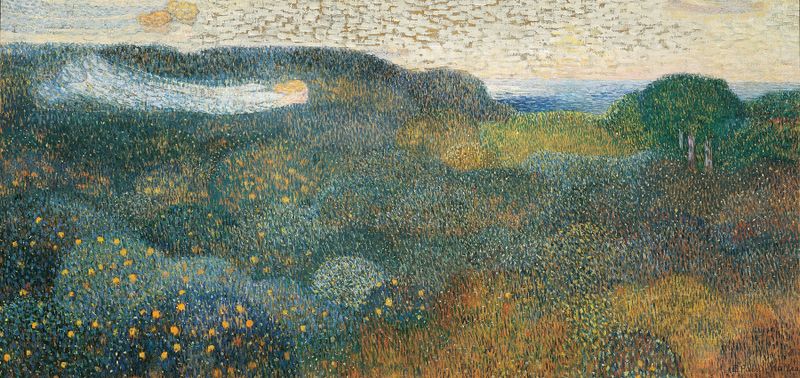
In quiet moments, the act of creation reveals itself, echoing in the hearts of those who labor. Look to the left at the cluster of figures, their hands entwined with the earth's bounty. With a palette of earthy greens and soft golds, the artist captures the essence of harvest, transforming labor into art. Notice how the gentle light illuminates their faces, conveying a sense of unity and purpose, while the textured brushstrokes evoke the richness of the crops they gather. As you delve deeper, consider the contrast between toil and tranquility.
The rhythmic motion of the workers juxtaposes the serene backdrop of rolling hills, suggesting a dialogue between nature and humanity. Each facial expression encapsulates both joy and exhaustion, revealing the emotional weight of agrarian life. The scene speaks to the cycles of creation and the intimate relationship between the laborer and the land, inviting reflections on the deeper meaning of nourishment. In 1908, the artist painted this piece in Vienna amidst a burgeoning interest in modernism and the exploration of female identity in art.
Koller-Pinell, a member of the Viennese Secession, sought to highlight the woman’s role in both society and nature, using her work to challenge traditional narratives. This period marked a pivotal moment in her career, as she embraced themes of creation and labor, bringing to life the delicate balance between human effort and the beauty of the natural world.