
Die Maximilianstraße in München — History & Facts
When did color learn to lie? The vivid hues of memory can twist the truth, leading us into a dreamlike past where streets whisper secrets of bygone eras. Focus on the dynamic interplay of vibrant colors in this piece. Look to the warm yellows and deep blues that blend harmoniously, drawing you into the heart of Maximilianstraße. The architecture stands proud, capturing the essence of early 20th-century Munich, while the brushwork reveals a textured surface that breathes life into the scene.
Shadows dance along the cobblestones, hinting at the gentle passage of time, while the sunlight filters through the buildings, casting a nostalgic glow that evokes longing and reflection. Delve deeper, and you’ll uncover a tapestry of contrasts within the canvas. The lively marketplace buzzes with energy, yet the empty spaces in the foreground suggest isolation amidst the vibrancy. The juxtaposition of modernity and tradition is palpable; the sophisticated architecture symbolizes progress, while the familiar charm of the street invokes a sense of comfort and belonging.
Here, nostalgia hangs heavy, a delicate reminder of the moments that shape our perceptions and connections to place. In 1920, Charles Vetter painted this work in Munich, during a time of significant change in post-war Germany. The nation was grappling with the aftermath of World War I, and artists were exploring new expressions that mirrored society's shifting dynamics. Vetter's creation reflects not only his personal artistic journey but also a collective yearning for stability and beauty in a rapidly evolving world.
More Artworks by Charles Vetter
Browse all →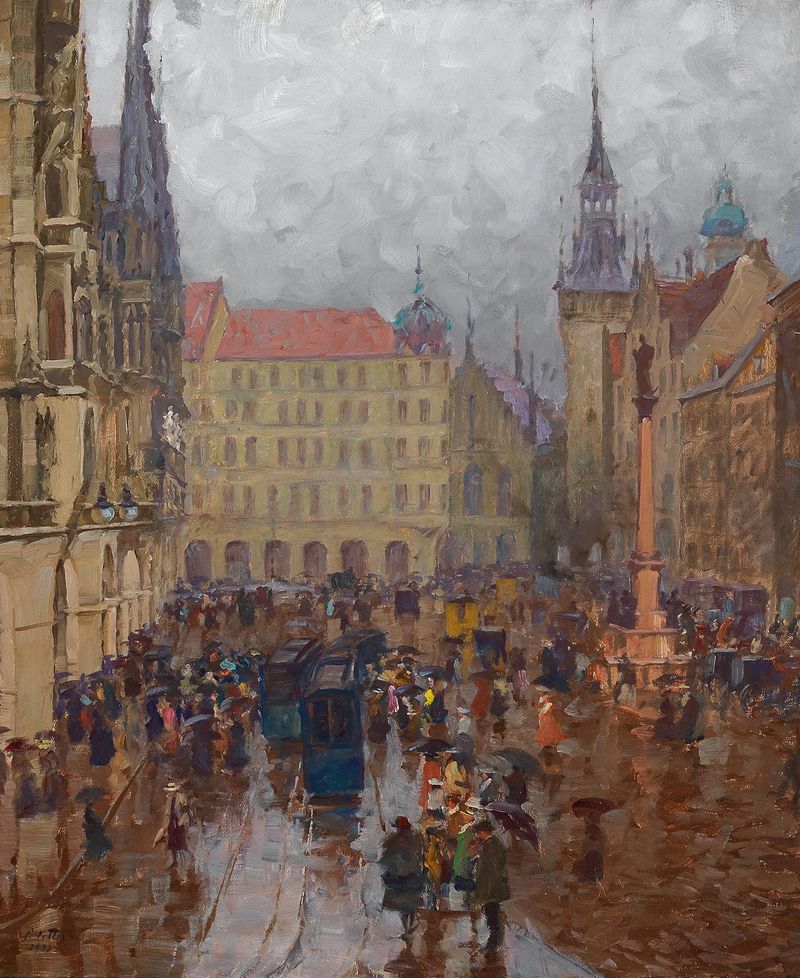
München Marienplatz und altes Rathaus
Charles Vetter
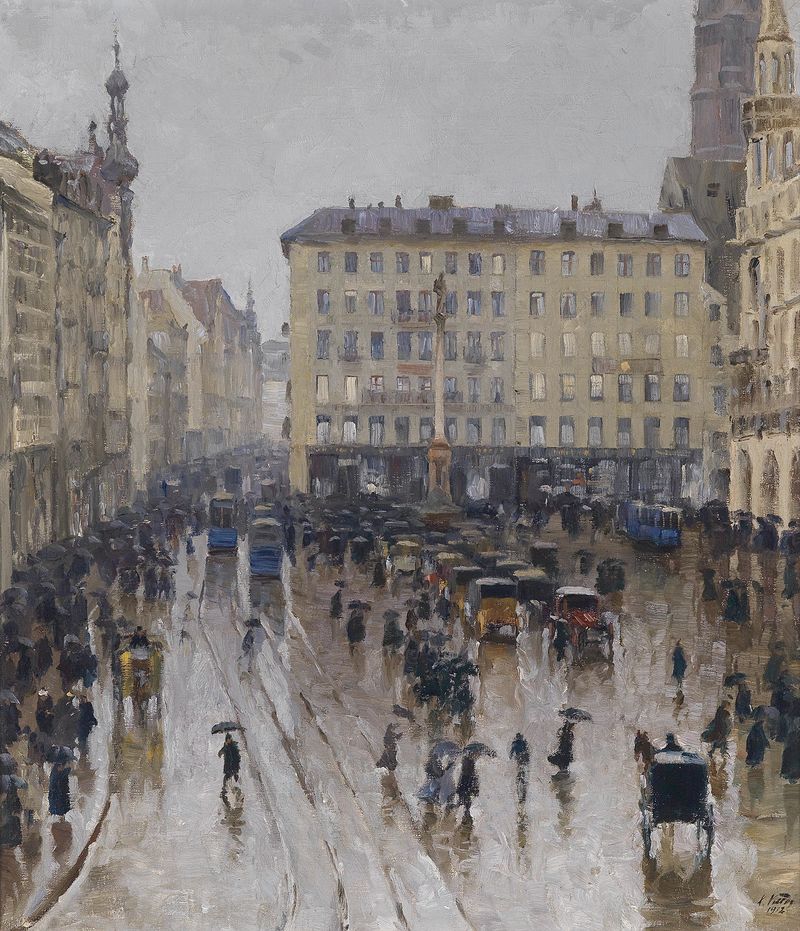
Blick auf den Marienplatz in München
Charles Vetter
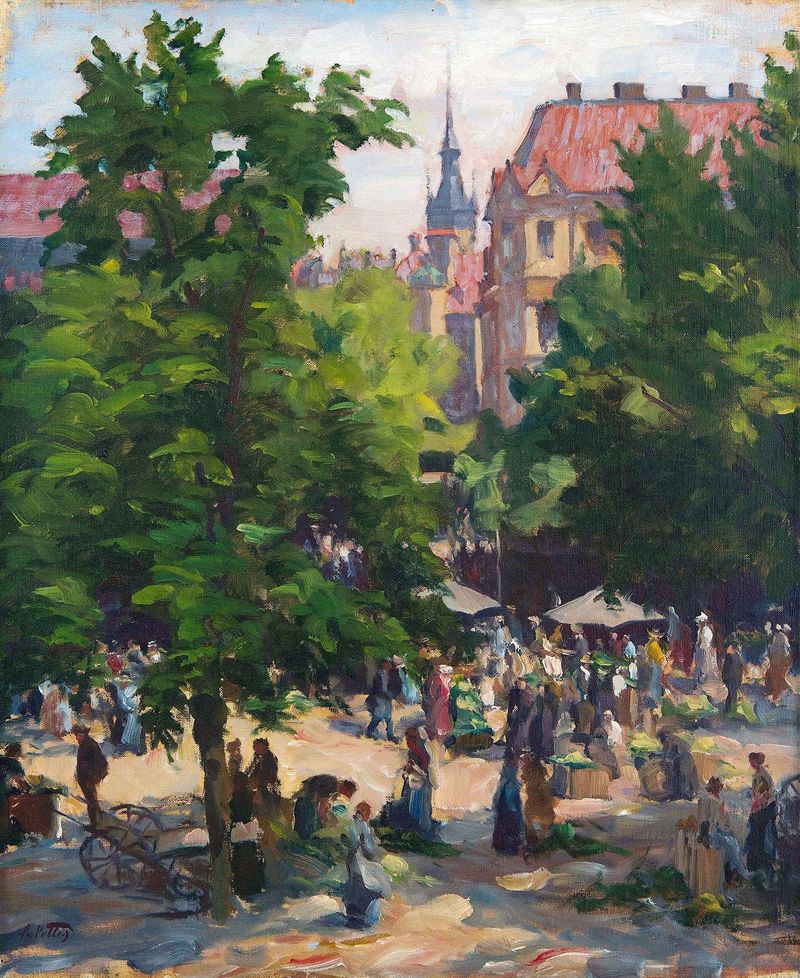
Der Viktualienmarkt in München
Charles Vetter
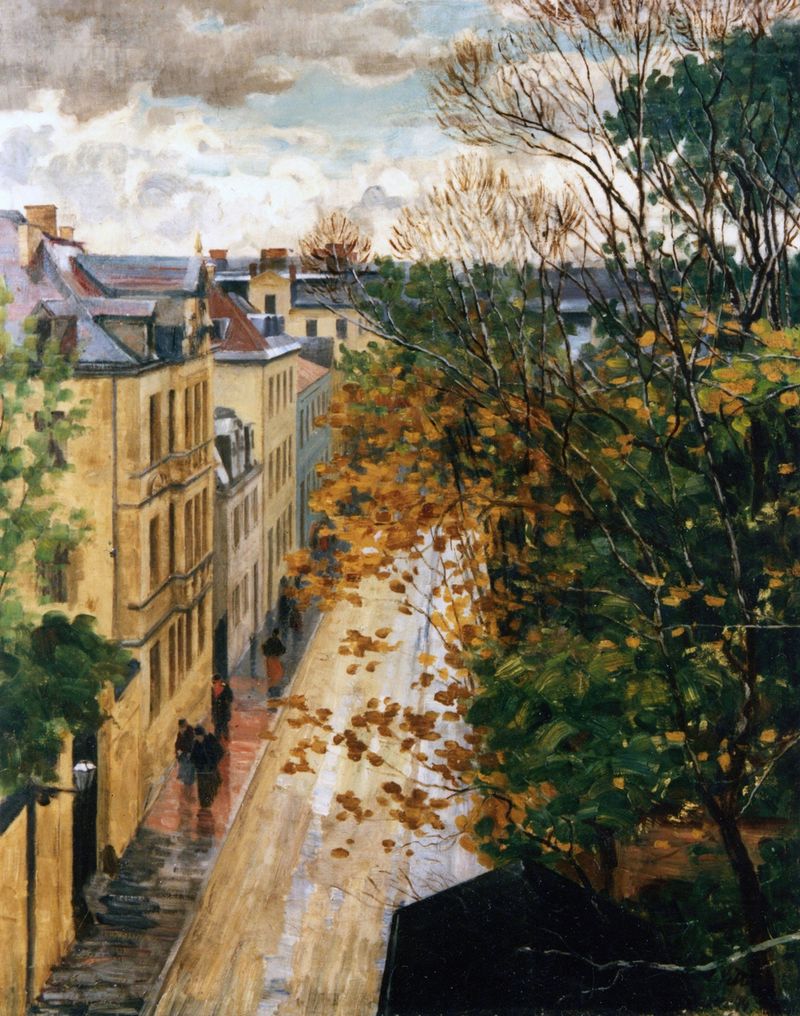
Die Kaulbachstraße in München nach dem Gewitter
Charles Vetter
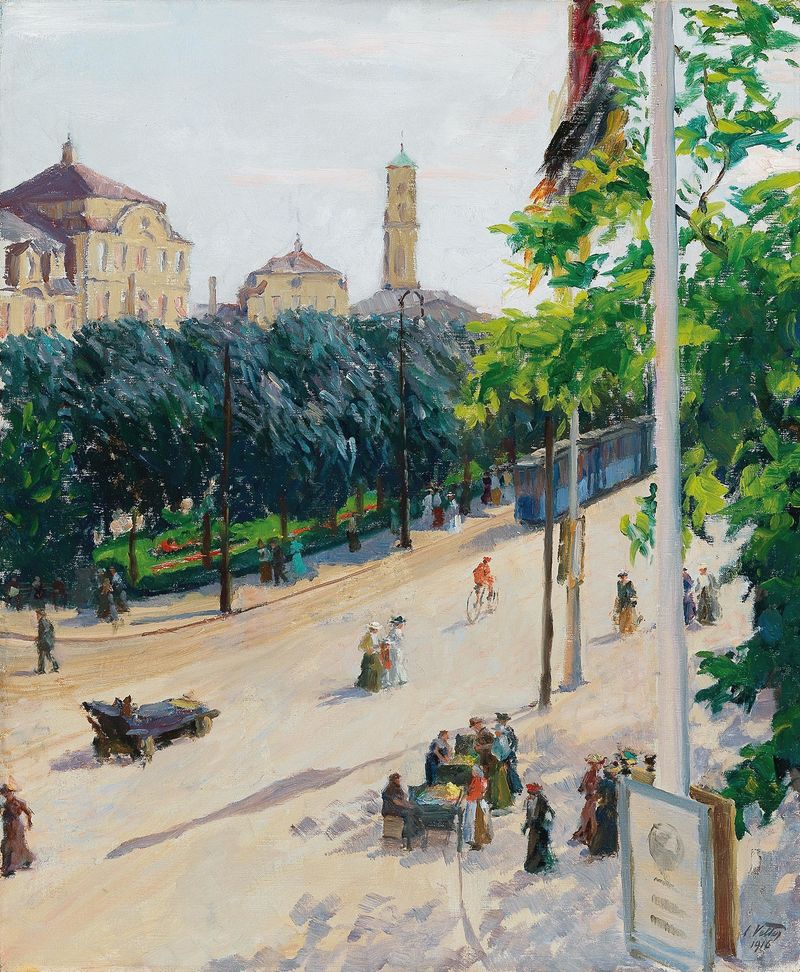
A view of the southern Stachus Rondell, the Sonnenstraße and the old St Matthew’s Church
Charles Vetter
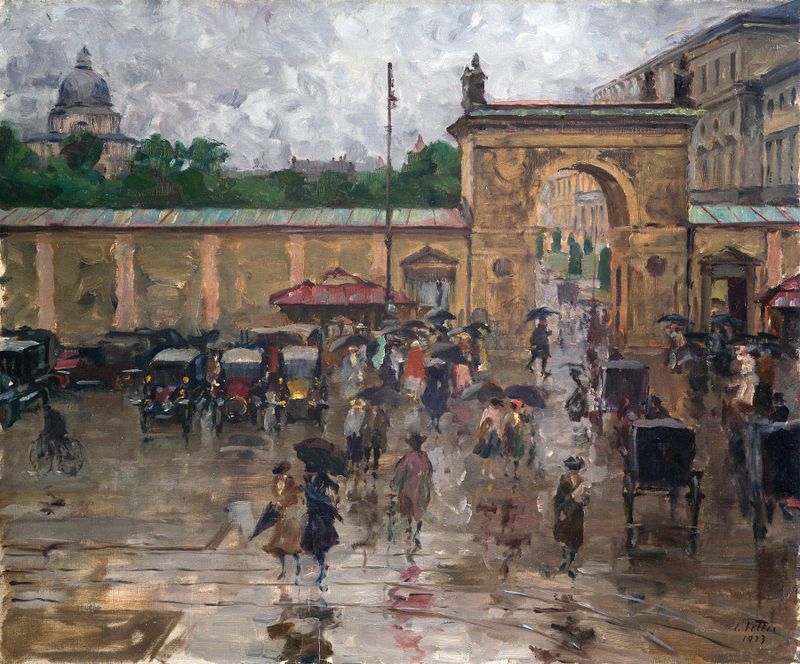
München – Odeonsplatz im Regen
Charles Vetter
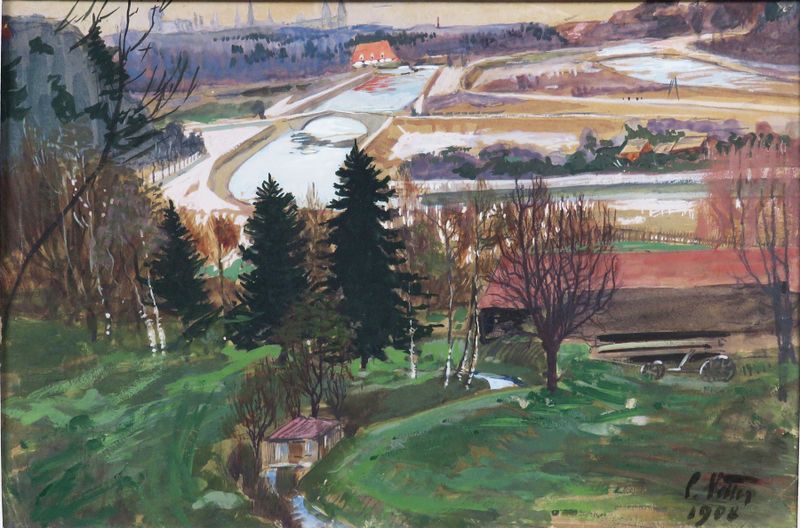
Au Vorstadt-Landschaft
Charles Vetter
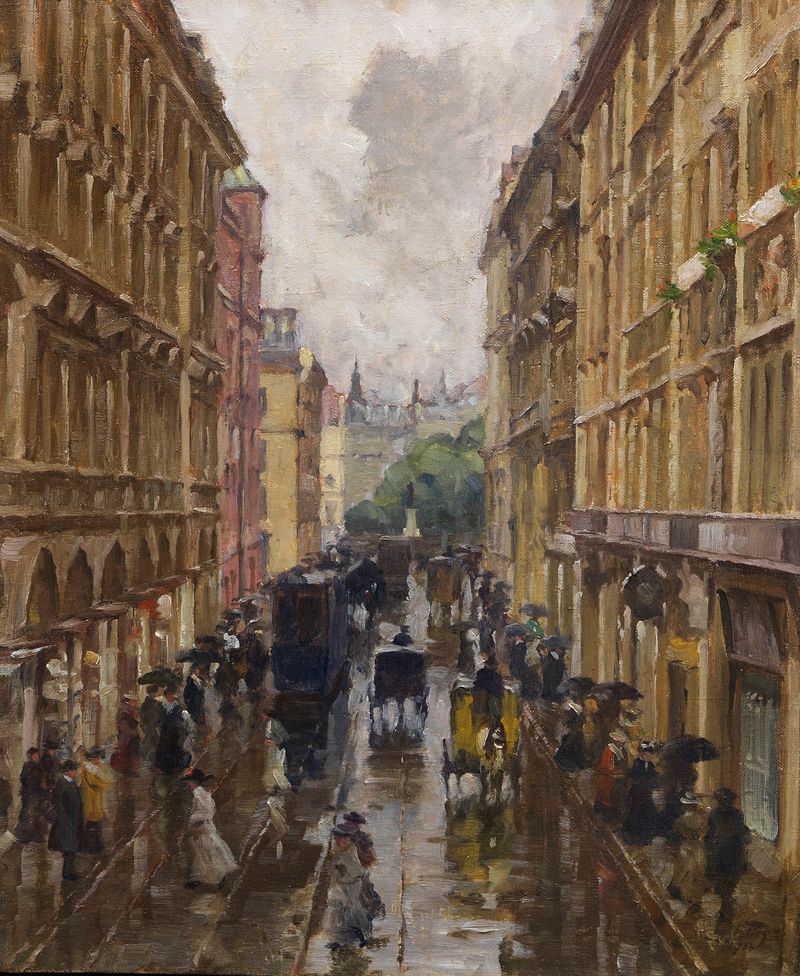
Maffeistraße im Regen
Charles Vetter
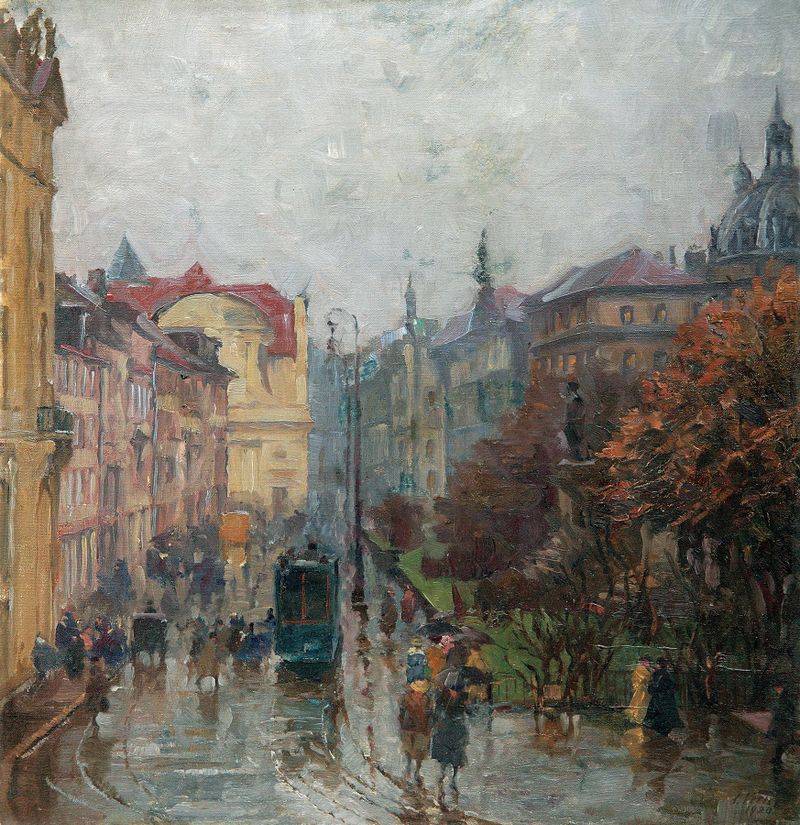
Promenadeplatz in München im Regen
Charles Vetter
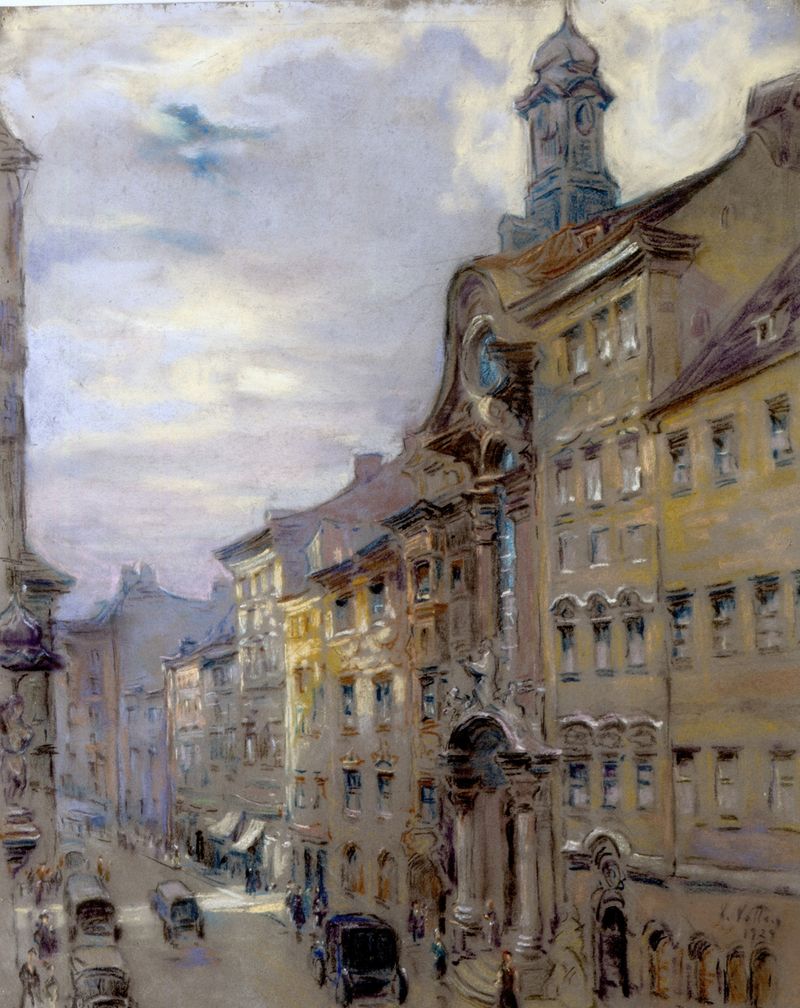
Die Sendlinger Straße in München (mit der Asamkirche)
Charles Vetter
More Architecture Art
Browse all →
The statue of Liberty
Frédéric Auguste Bartholdi

View of Houses in Delft, Known as ‘The Little Street’
Johannes Vermeer

View of Houses in Delft, Known as ‘The Little Street’
Johannes Vermeer

The Cathedral in Rouen. The portal, Grey Weather
Claude Monet

The yellow house
Vincent van Gogh

The Church in Auvers-sur-Oise, View from the Chevet
Vincent van Gogh