
München – Odeonsplatz im Regen — History & Facts
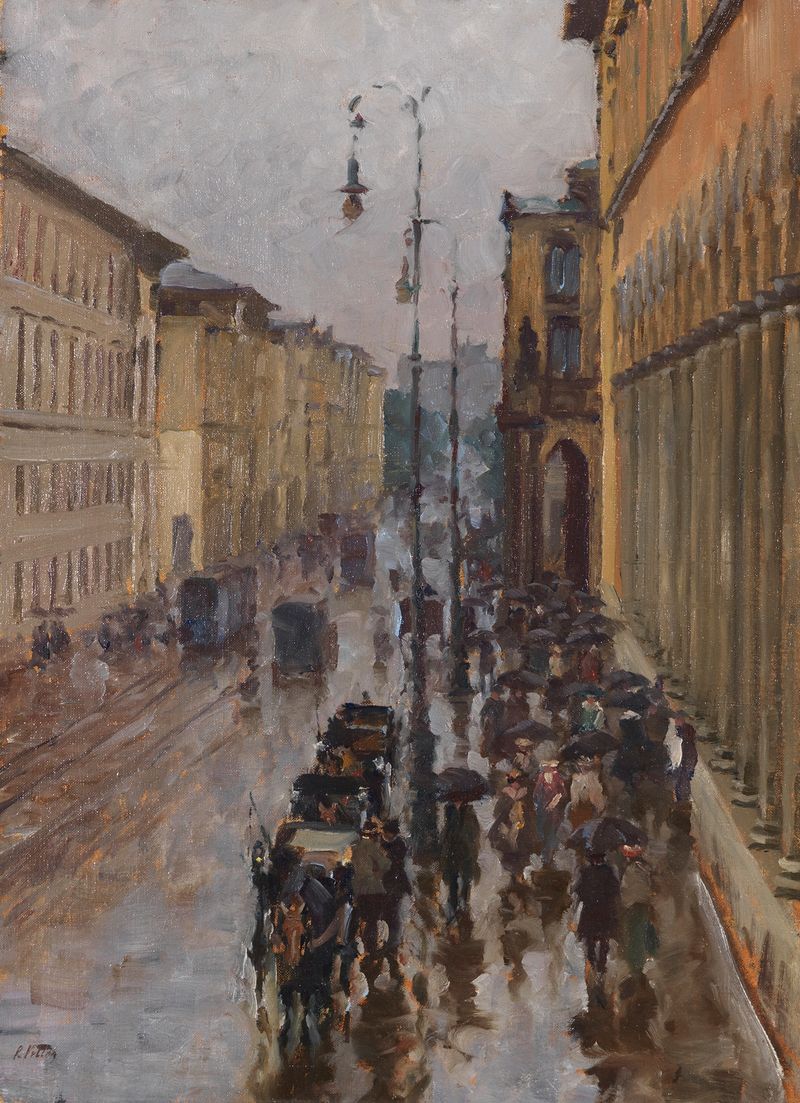
In a world overshadowed by clouds, fear silently weaves itself into the fabric of memory. A scene draped in melancholy invites us to explore the depths of human emotion. Look to the center of the canvas, where the grand architecture of the Odeonsplatz looms, heavy with history. The muted palette of grays and blues speaks of rain-soaked streets reflecting a somber sky.
Notice how the brushstrokes capture the wet surfaces, creating a shimmering illusion that draws the eye downward, as if the viewer might step into this moment. The figures, small and shrouded in umbrellas, move cautiously, embodying a tension between the stability of stone and the unpredictable nature of the elements. Hidden within the rain-drenched scene lies a commentary on the fragility of human existence. The umbrellas, symbols of protection, juxtapose the oppressive weight of the gray atmosphere pressing down.
Each solitary figure appears isolated, emphasizing the loneliness that blooms in the heart of a crowd. Vetter’s careful control of light and shadow reveals fear not just of the storm, but also of the unsteady world that lies beyond this threshold. In 1923, the artist worked in Munich during a time of profound social and political upheaval. The Weimar Republic was struggling, and the shadows of World War I loomed large.
Against this backdrop, Vetter crafted München – Odeonsplatz im Regen, reflecting the collective anxiety of a society caught between the ruins of the past and an uncertain future. The painting thus serves as a poignant reminder of the fears that bind us all.
More Artworks by Charles Vetter
Browse all →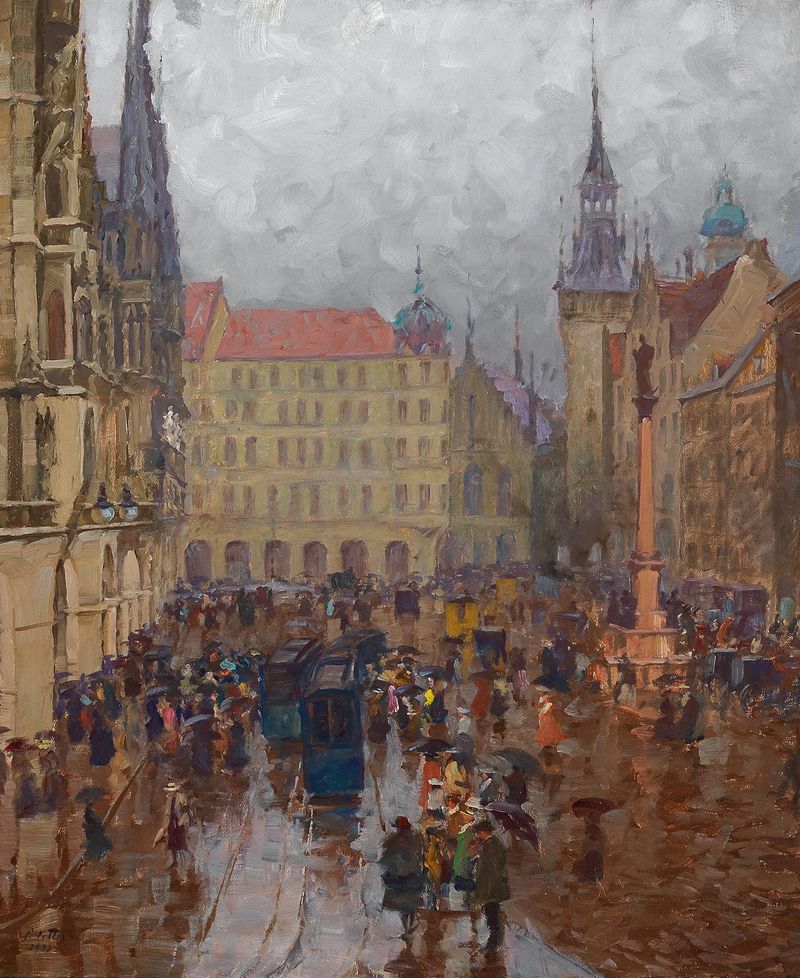
München Marienplatz und altes Rathaus
Charles Vetter
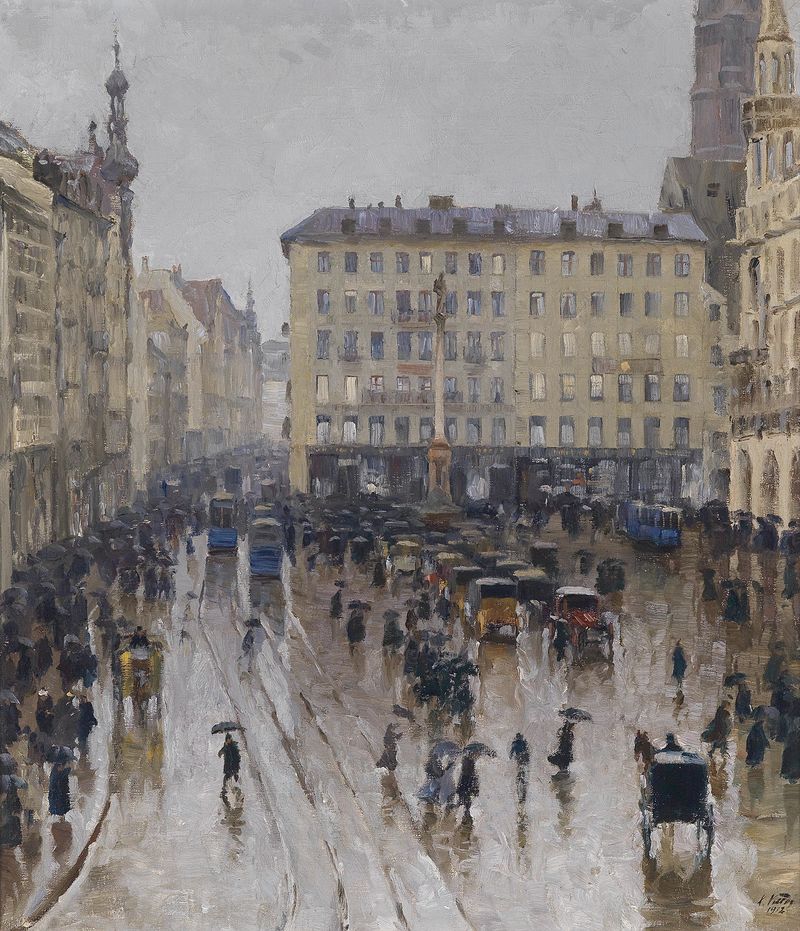
Blick auf den Marienplatz in München
Charles Vetter
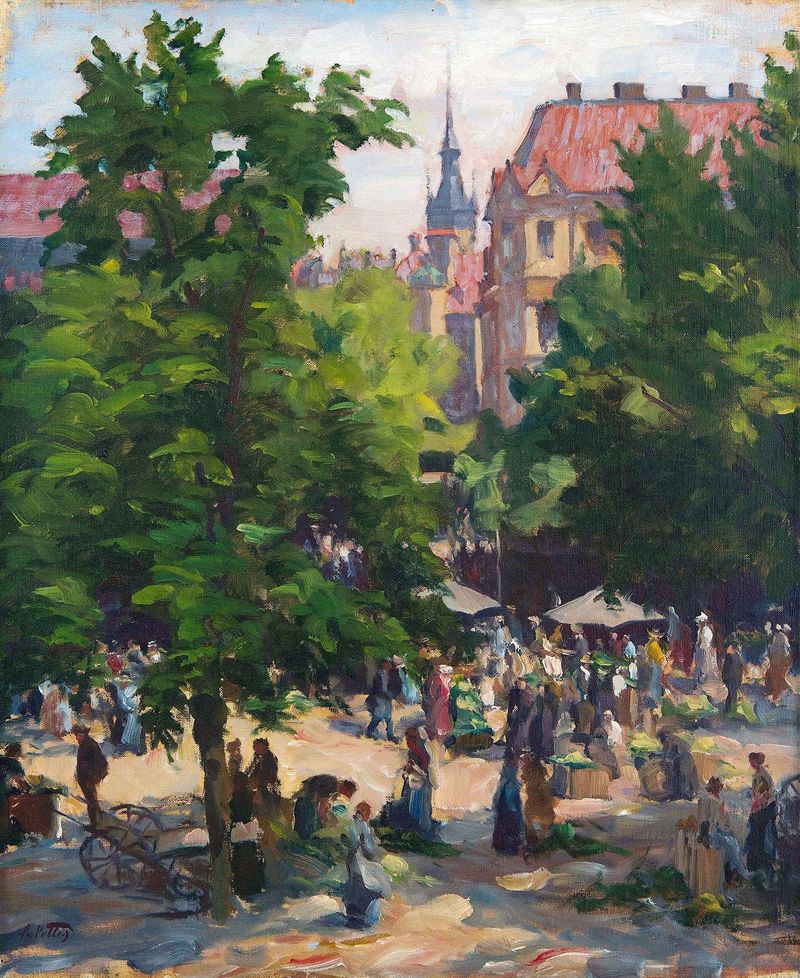
Der Viktualienmarkt in München
Charles Vetter
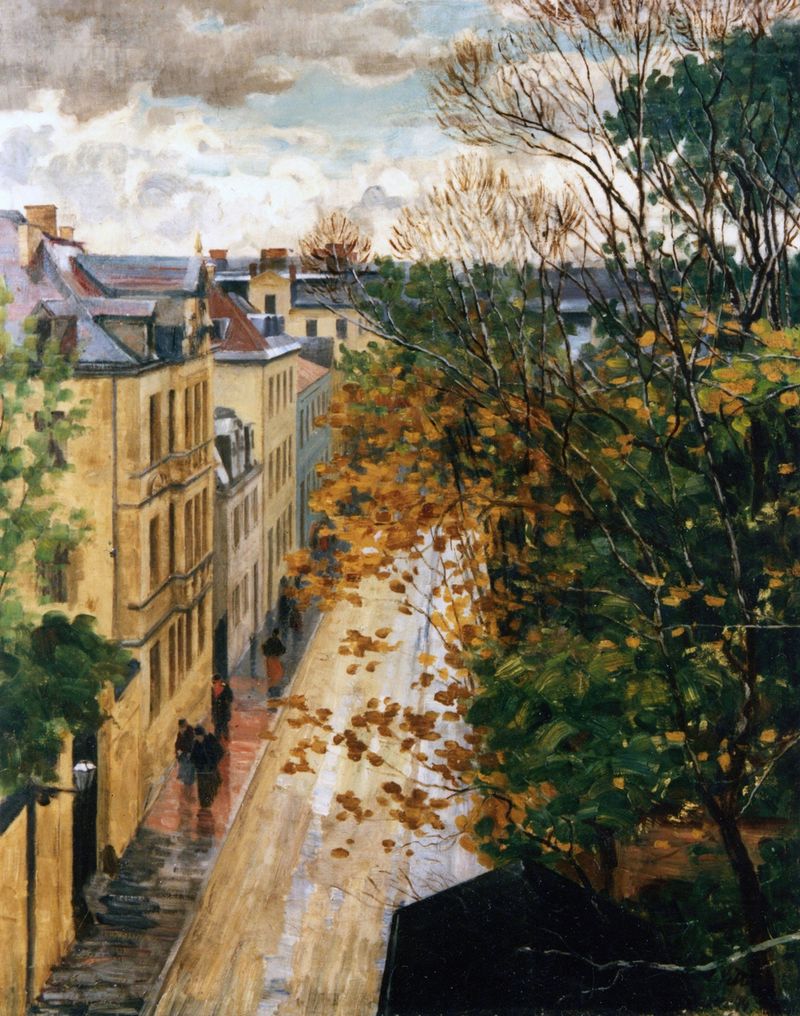
Die Kaulbachstraße in München nach dem Gewitter
Charles Vetter
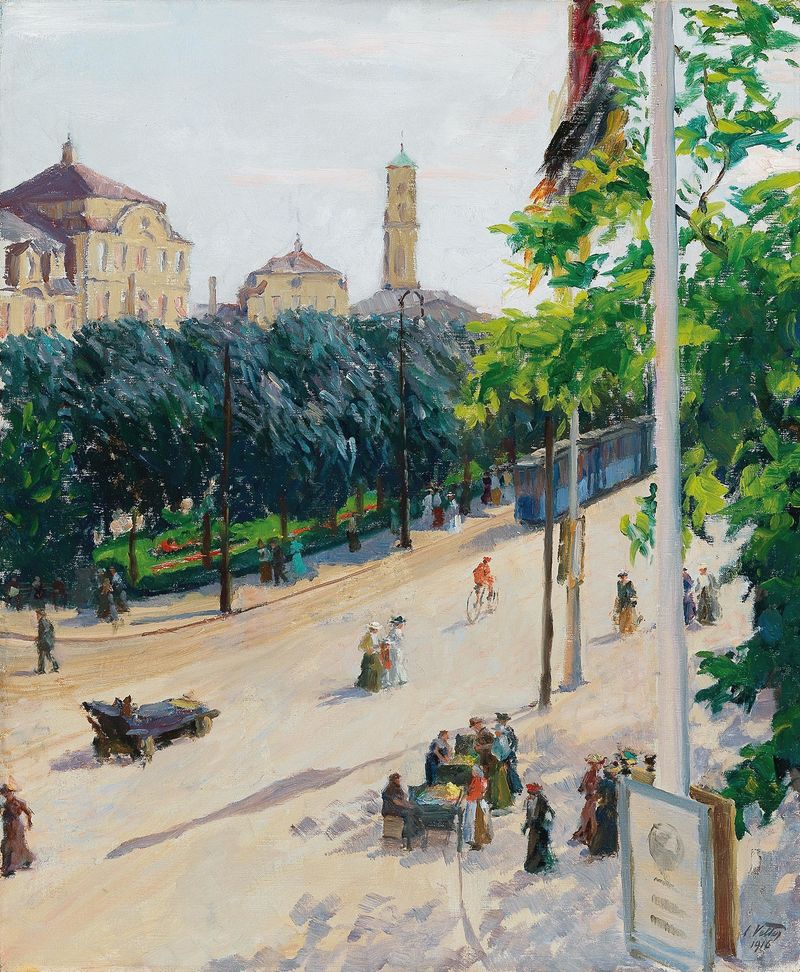
A view of the southern Stachus Rondell, the Sonnenstraße and the old St Matthew’s Church
Charles Vetter
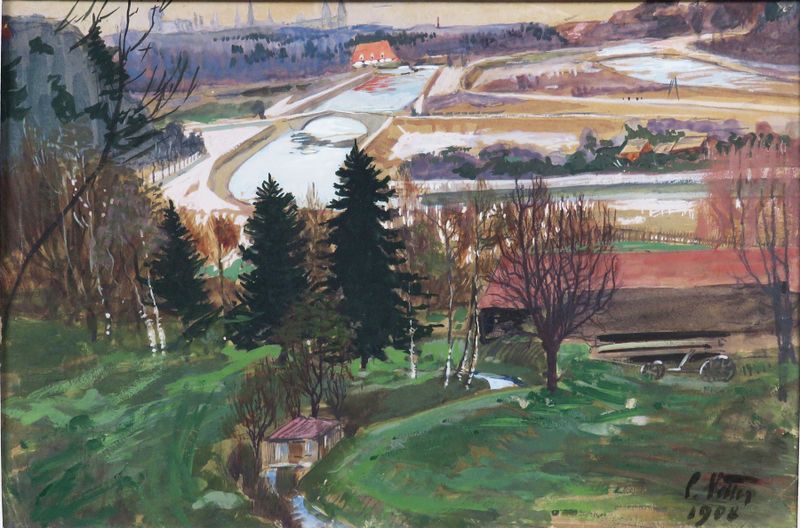
Au Vorstadt-Landschaft
Charles Vetter
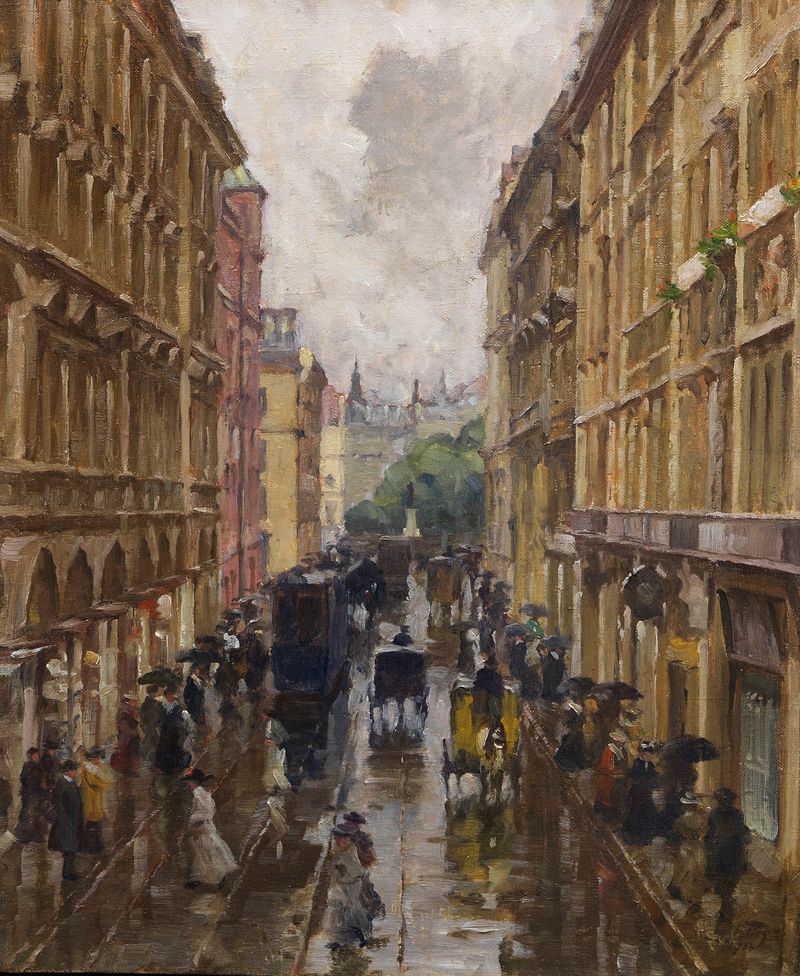
Maffeistraße im Regen
Charles Vetter
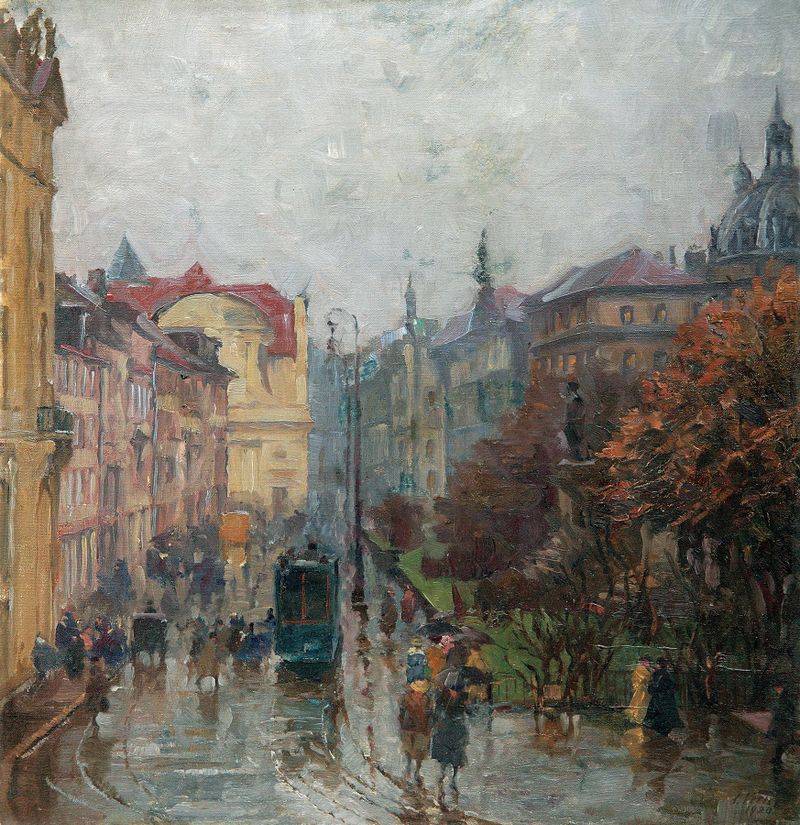
Promenadeplatz in München im Regen
Charles Vetter
Die Maximilianstraße in München
Charles Vetter
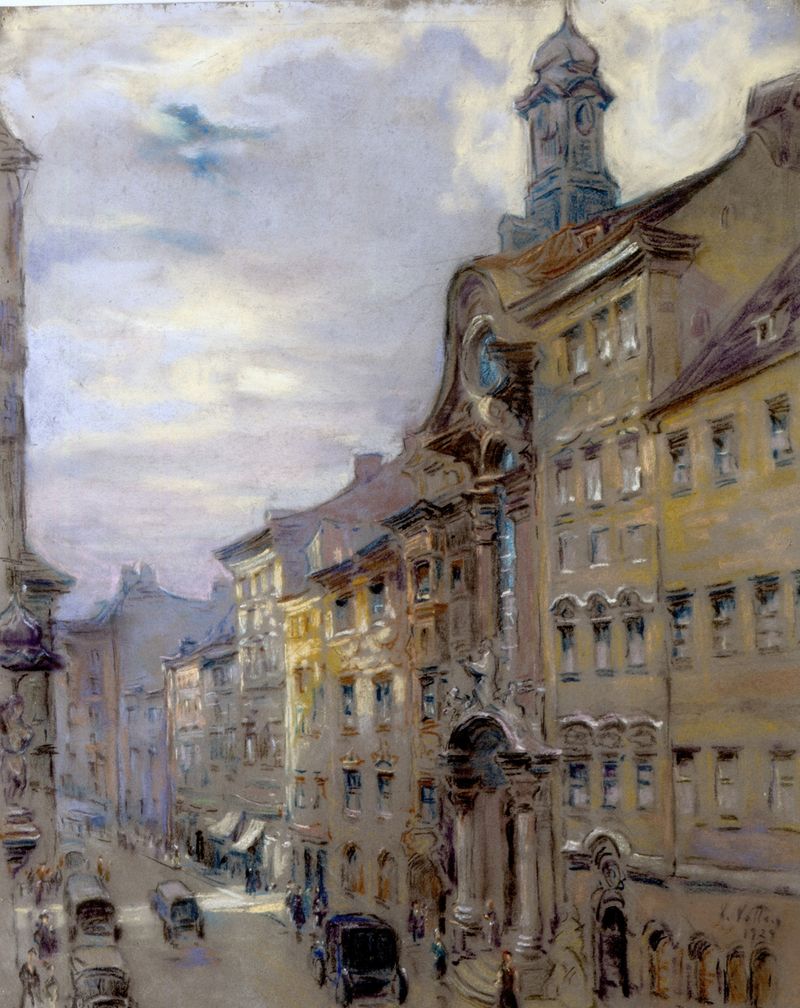
Die Sendlinger Straße in München (mit der Asamkirche)
Charles Vetter
More Architecture Art
Browse all →
The statue of Liberty
Frédéric Auguste Bartholdi

View of Houses in Delft, Known as ‘The Little Street’
Johannes Vermeer

View of Houses in Delft, Known as ‘The Little Street’
Johannes Vermeer

The Cathedral in Rouen. The portal, Grey Weather
Claude Monet

The yellow house
Vincent van Gogh

The Church in Auvers-sur-Oise, View from the Chevet
Vincent van Gogh