Die Neptungrotte (Wasserfall bei Tivoli) — History & Facts
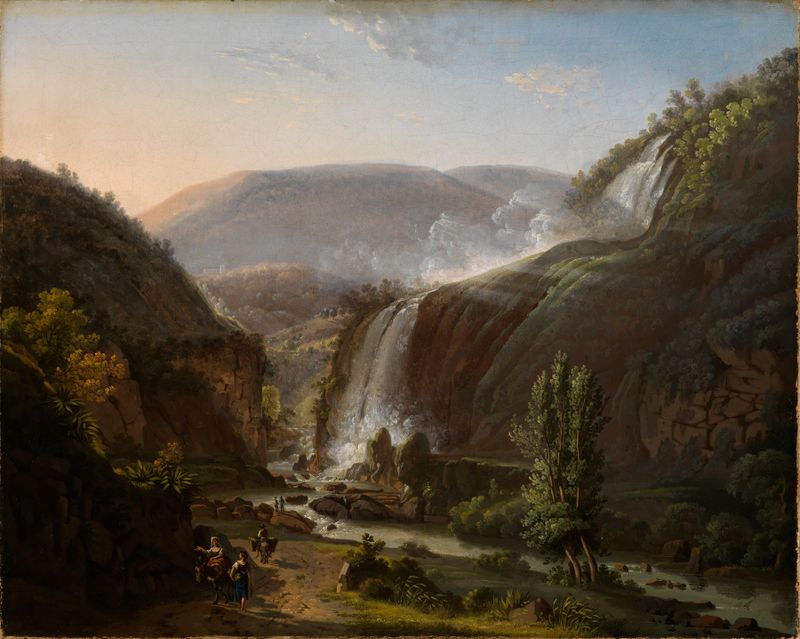
In its tranquil embrace, one finds the ecstasy of nature rendered with exquisite precision, a timeless invitation to lose oneself in the sublime. Look to the right at the cascading waterfall, where silvery glimmers dance upon the water’s surface. The vibrant greens and earthen tones envelop the scene, inviting the eye to explore the rich foliage framing the rushing stream. Notice how the light filters through the leaves, casting dappled shadows that add depth and vibrancy, suggesting a moment frozen in the embrace of a sunlit afternoon.
Each brushstroke breathes life into the composition, revealing the artist’s deft handling of texture and color. Beyond the surface, there’s a symphony of emotions at play. The juxtaposition of the serene water against the rocky landscape speaks to the tension between tranquility and chaos inherent in nature. The viewer senses the thrill of the water’s movement, a metaphor for sublime ecstasy that beckons us to embrace the wild beauty of life.
The figures in the distance, mere silhouettes against the grandeur, evoke a sense of scale that reminds us of our smallness in the face of nature’s vastness. In 1809, as Johann Martin von Rohden painted Die Neptungrotte (Wasserfall bei Tivoli), he was steeped in a world of Romanticism that celebrated the emotional aspects of nature. Living in Germany, he was influenced by the emerging ideas of the time, which emphasized individual experience and reverence for the natural world. This work represents a moment of personal and artistic alignment, where the beauty of Tivoli’s landscapes merged with his vision, capturing the essence of a transformative era in art.