Wasserfälle bei Tivoli — History & Facts
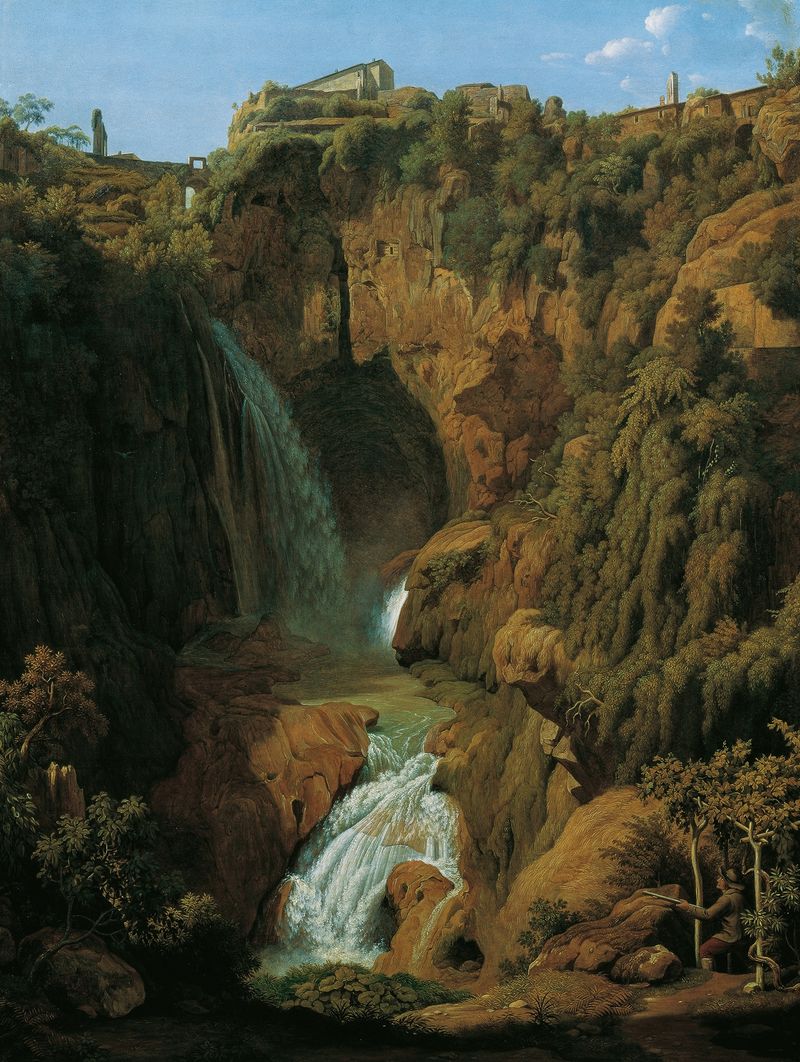
In the stillness of Wasserfälle bei Tivoli, the beauty of nature reveals its secrets, inviting contemplation and reverence. Look to the left at the cascading waters, where the shimmering droplets seem to dance under the gentle caress of sunlight filtering through the trees. The fluidity of the water contrasts beautifully with the solidity of the rocky outcrops, painted in earthy tones that ground the scene. Notice how the vibrant greens of the foliage frame the waterfall, creating a harmonious balance that draws the eye upward, culminating in the soft blues of the sky.
Each brushstroke reflects the artist's reverence for the landscape, an embrace of nature's raw beauty. The interplay between light and shadow imbues the piece with an emotional depth, suggesting a dialogue between tranquility and tumult. The falls, while serene, carry an undercurrent of power—echoing the relentless passage of time and nature's ability to shape the earth. Amidst this beauty lies a whisper of nostalgia, as if the artist captures a fleeting moment of perfection, challenging viewers to reflect on their own relationship with the natural world. In 1797, Johann Martin von Rohden crafted this piece during a period of artistic transition, embracing Romantic ideals that celebrated nature’s sublime aspects.
Living in Germany yet drawing inspiration from Italy's landscapes, he found himself at a crossroads of artistic influence, depicting the picturesque in ways that spoke to both the heart and the mind. This work embodies a moment when beauty was not merely observed but profoundly felt, echoing the sentiments of a world searching for meaning in its surroundings.