The Grotto of Neptune in Tivoli — History & Facts
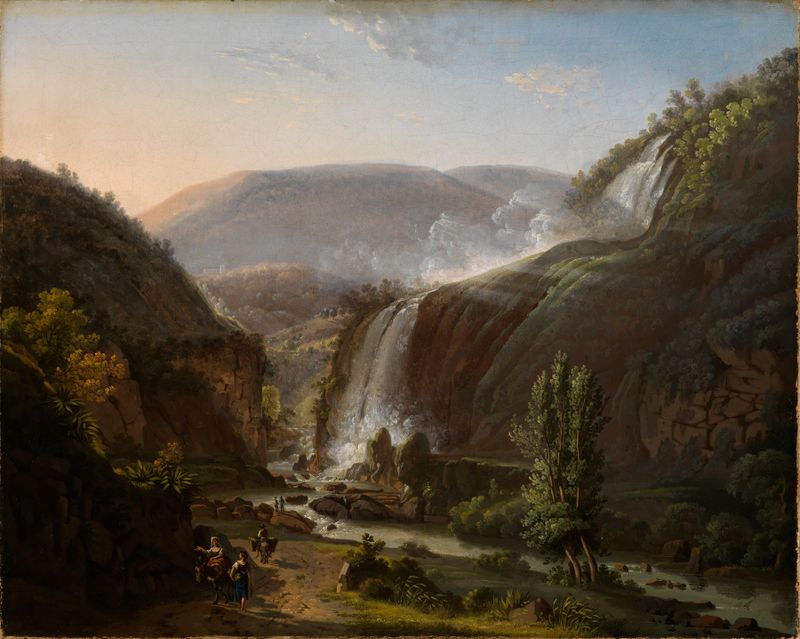
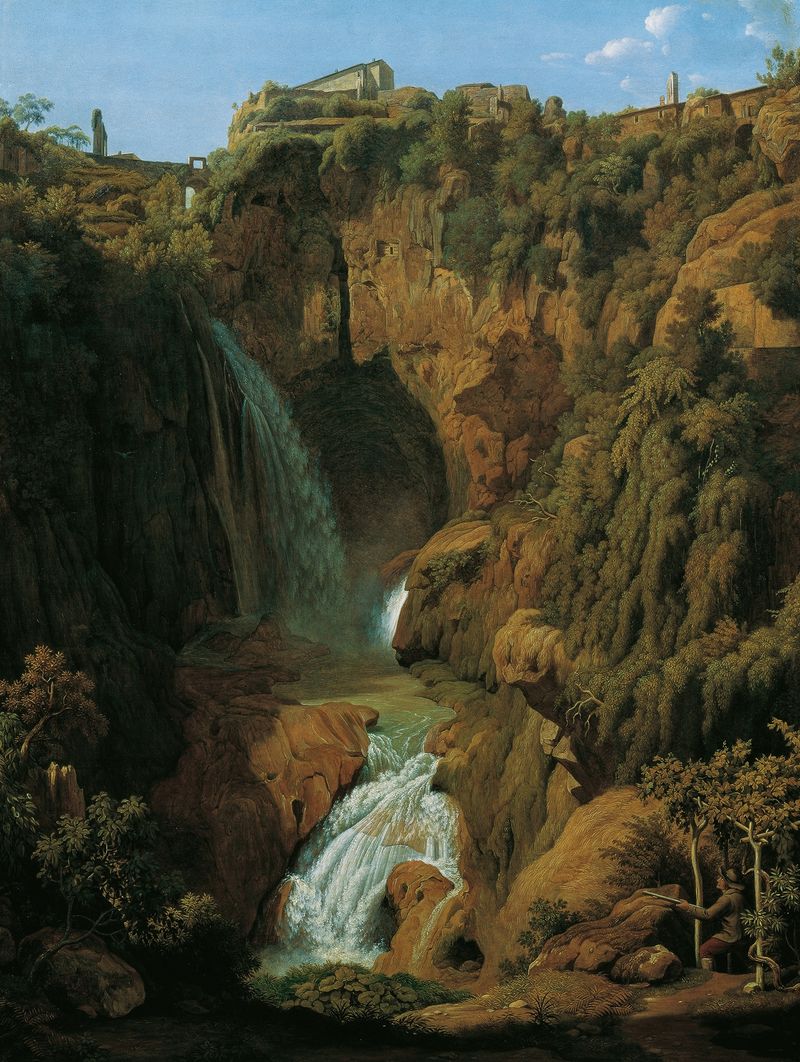
In times of revolution, creative expression becomes a sanctuary, a place where the tumult can be confronted and transformed. Look to the foreground, where cascading water tumbles over rocky outcrops, drawing your eye into a lush grotto alive with the vibrancy of nature. Notice how the light filters through the foliage, casting intricate shadows that dance across the textured surfaces, creating a sense of depth and mystery. The colors are rich and inviting; deep greens intertwine with the warm browns of the rocks, evoking an atmosphere that is both serene and exhilarating. Beneath its serene surface, The Grotto of Neptune in Tivoli holds a tension between nature's calmness and the underlying currents of change.
The figures in the background, seemingly at ease, contrast sharply with the chaotic vitality of the water. This juxtaposition mirrors the socio-political unrest of the time, suggesting that even in moments of peace, a revolution is brewing, both in nature and society. The lushness of the scene can be seen as a refuge, yet it also reflects the fragility of tranquility in the face of change. When Rohden painted this work in 1812, he was influenced by the Romantic movement, which emphasized emotion, nature, and the sublime.
Living in a Europe on the brink of upheaval, he sought to capture the beauty of the natural world while acknowledging the imminent shifts in human experience. This artwork stands as a testament to his sensitivity to the environment around him, serving as a reminder of art's power in tumultuous times.