
Die Ponte dei Quattro Capi in Rom — History & Facts
What if beauty was never meant to be finished? In Die Ponte dei Quattro Capi in Rom, a moment suspended in time invites the viewer into a realm of longing and desire, where each brushstroke beckons the eye to linger. Look to the center, where the bridge elegantly arcs over a shimmering river, its stonework kissed by the warm glow of the setting sun. The lush greenery on either bank adds depth, contrasting with the soft, muted hues of the architecture. Notice how light reflects off the water's surface, creating a dance of ripples that captures the viewer's imagination and guides them deeper into the scene.
The precision of the artist’s technique draws attention to the intricate details of the bridge, the figures engaged in conversation, suggesting life beyond the canvas. Yet, within the tranquil beauty lies a palpable tension; the distance between the figures hints at unspoken words and unresolved desires. The contrast between the solidity of the stone bridge and the fluidity of the water below evokes the struggle between permanence and transience. Elements of nature entwined with human presence remind us of our fleeting moments of connection, suggesting a yearning for something that remains just out of reach. Adolf Hirémy-Hirschl painted this piece in 1910 while living in Rome, where the charm of the city continued to inspire his work.
At this time, the art world was evolving, with movements like Impressionism and Symbolism influencing new perspectives on beauty and emotion. Hirémy-Hirschl's focus on atmospheric beauty and intimate narratives reflects a desire to capture the essence of human experience amidst the backdrop of a changing artistic landscape.
More Artworks by Adolf Hirémy-Hirschl
Browse all →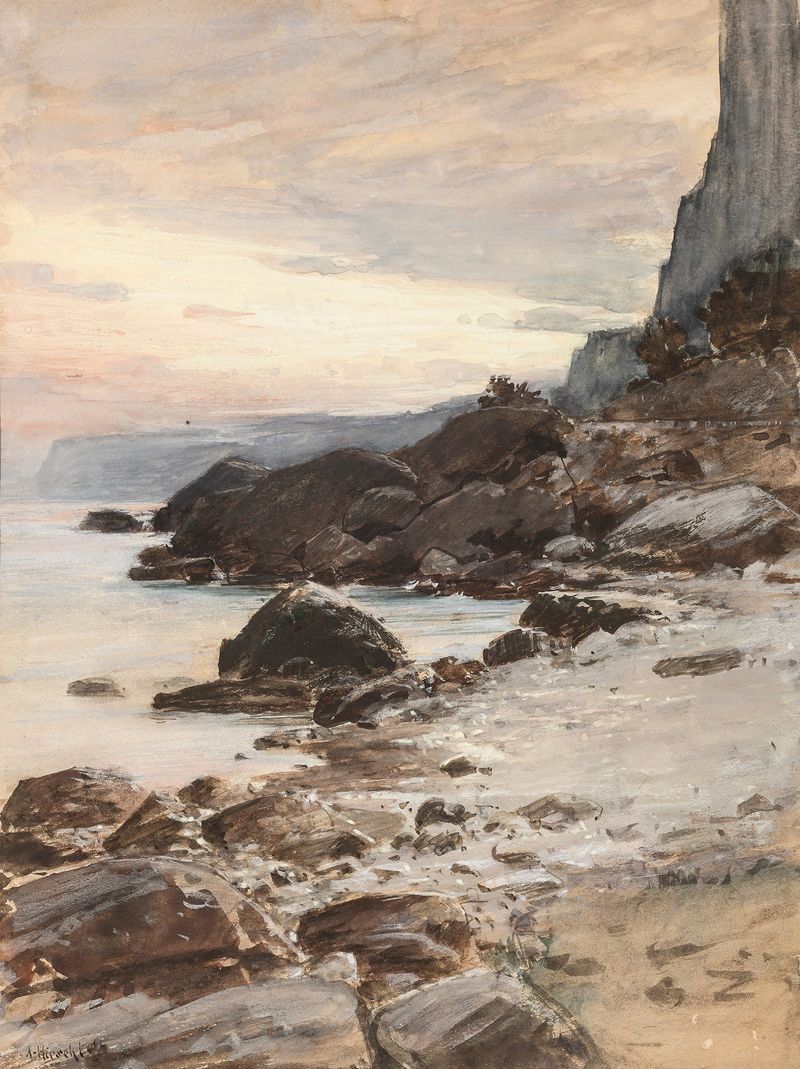
Südliche Küste
Adolf Hirémy-Hirschl

Gasse in Rom mit Blick auf den Faustinatempel
Adolf Hirémy-Hirschl
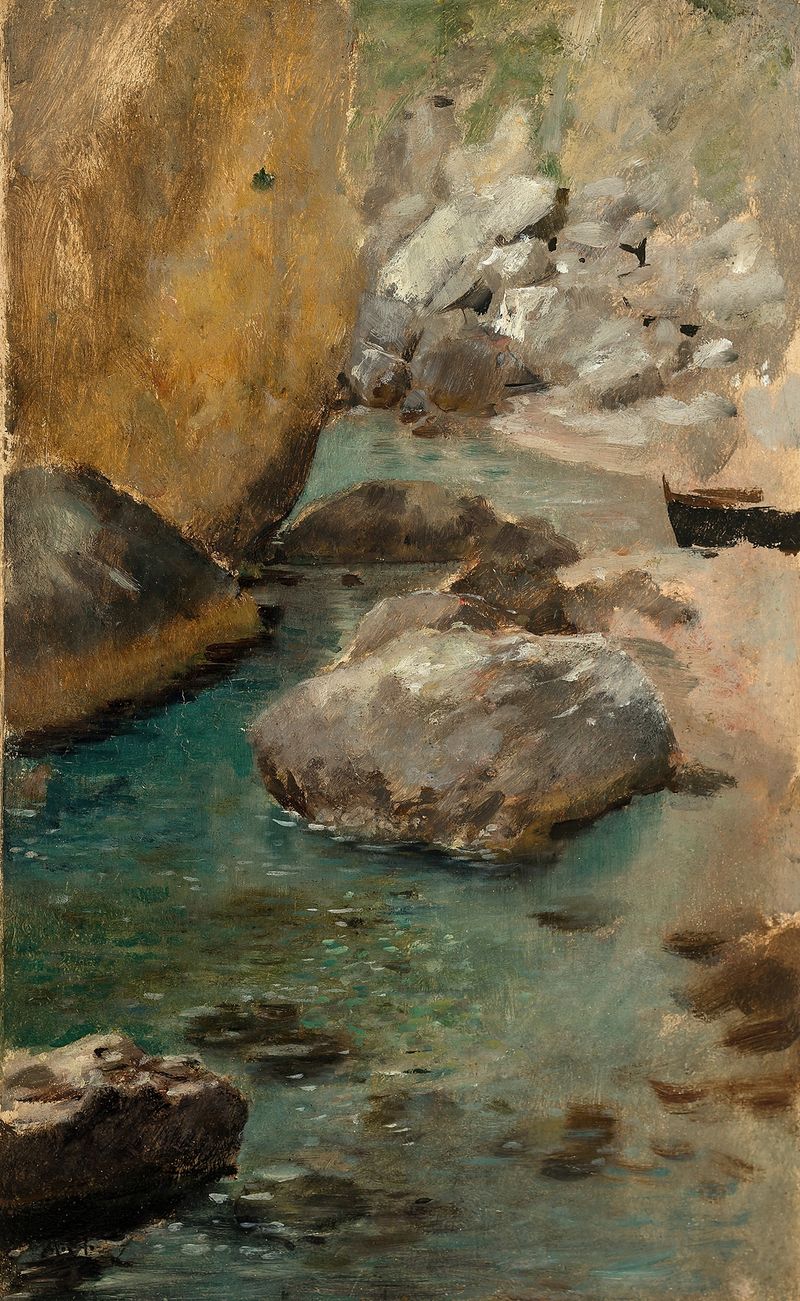
Italienische Bucht
Adolf Hirémy-Hirschl
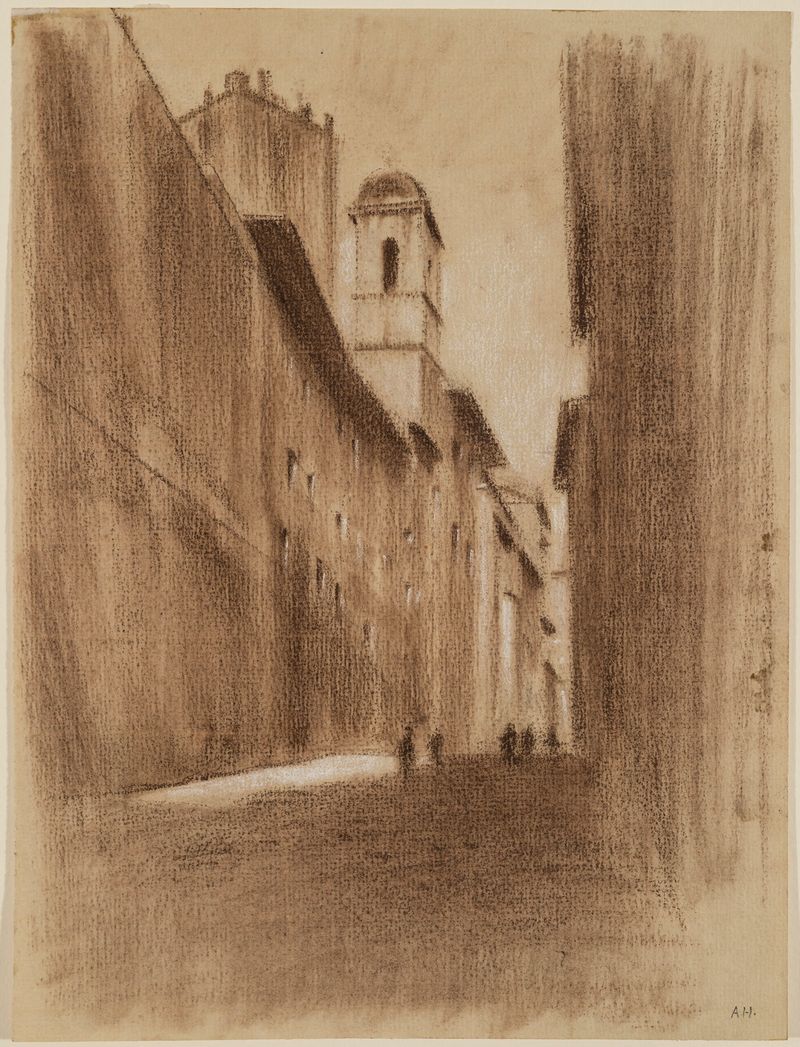
Gasse Salita del Grillo in Rom
Adolf Hirémy-Hirschl

Seaside Cemetery (Seefriedhof)
Adolf Hirémy-Hirschl
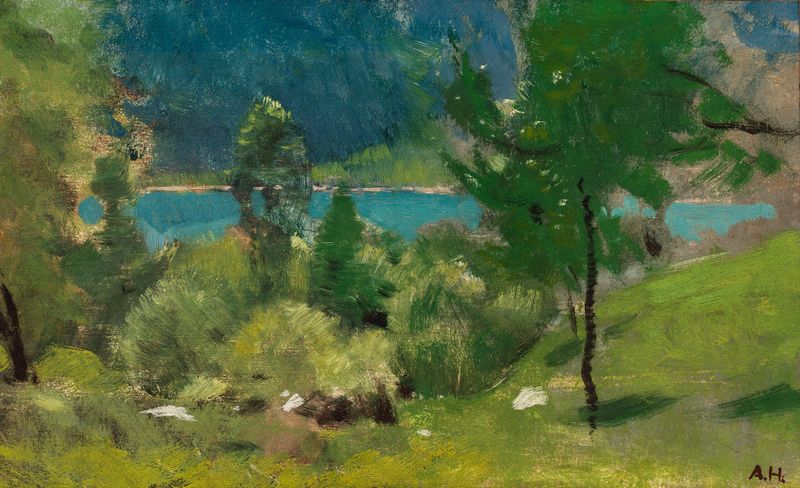
Blick auf einen Gebirgssee
Adolf Hirémy-Hirschl

Landschaft mit Wildbach
Adolf Hirémy-Hirschl





