
Landschaft mit Wildbach — History & Facts
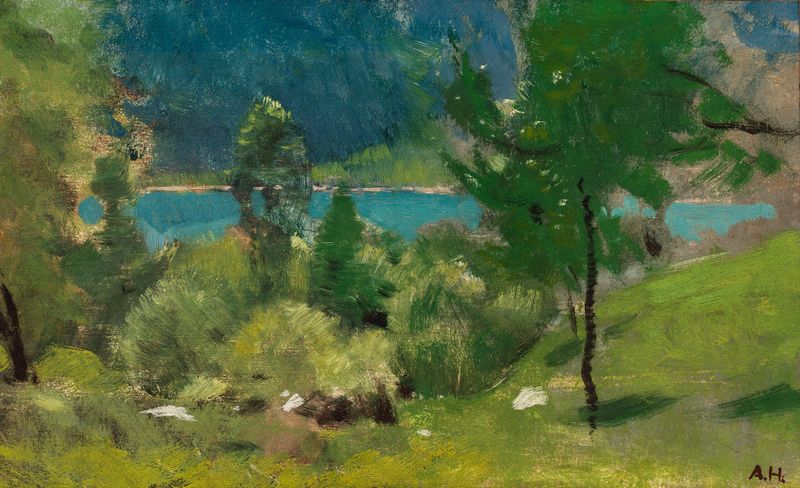
The delicate embrace of nature often masks a deeper turmoil, an undercurrent of emotion that swirls beneath its tranquil surface. In Landschaft mit Wildbach, the scene invites contemplation on the intricate relationship between beauty and sorrow. Look to the foreground, where the wild brook flows energetically across the canvas, its clear waters sparkling under a gentle sun. The artist employs a palette of vibrant greens and soft earth tones, drawing your gaze along its winding path.
Notice how the light dances upon the water's surface, contrasting with the shadowy depths of the surrounding foliage, creating a sense of movement and life that resonates with the viewer’s soul. Yet, as you explore further, small details begin to unravel a contrasting narrative. The rugged cliffs towering in the background hint at isolation, while the delicate flowers that bloom at the brook’s edge symbolize transience. These elements reveal a duality—one that speaks to the ephemeral nature of beauty and the inevitability of loss.
The interplay of light and shadow serves not only to capture a picturesque landscape but to evoke an emotional landscape, rich with unspoken stories. During an unrecorded moment in the late 19th century, Hirémy-Hirschl painted this work amidst a burgeoning era of Romanticism, where the natural world was celebrated as a source of inspiration and reflection. At this time, he was in a phase of exploring the emotional depth in landscapes, seeking to convey the essence of human experience through nature's beauty. The artwork stands as a testament to this exploration, revealing the artist's commitment to the profound connections between emotion and environment.
More Artworks by Adolf Hirémy-Hirschl
Browse all →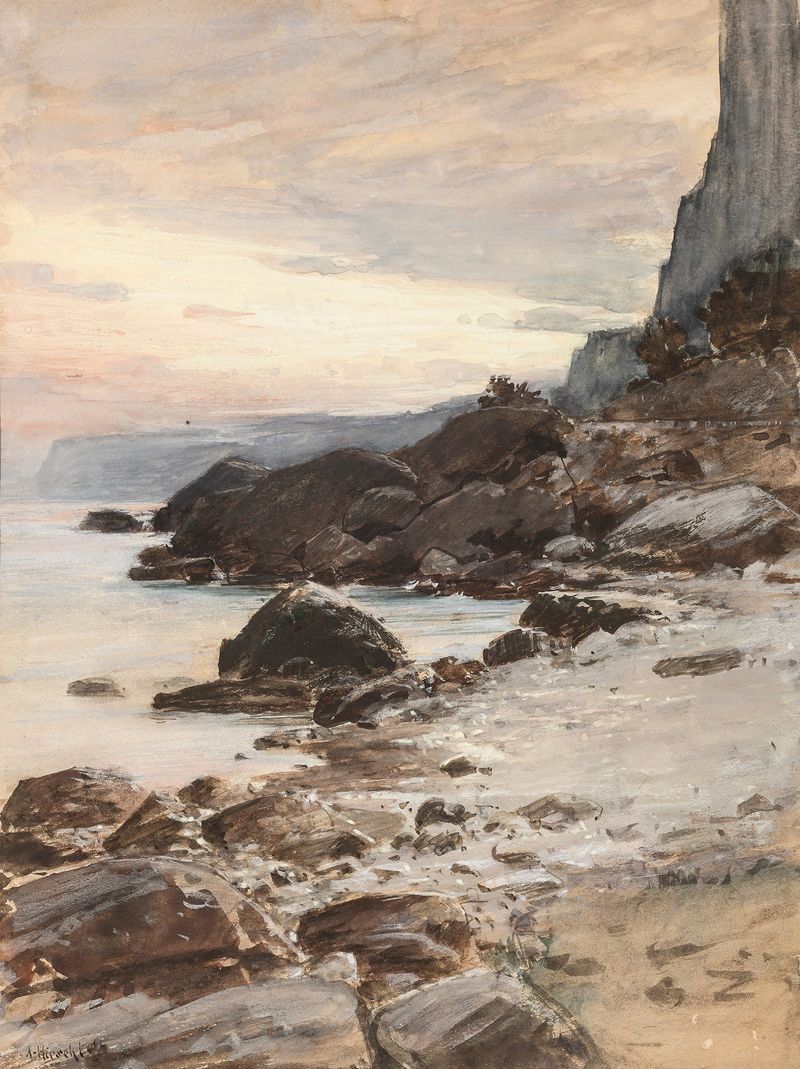
Südliche Küste
Adolf Hirémy-Hirschl

Gasse in Rom mit Blick auf den Faustinatempel
Adolf Hirémy-Hirschl
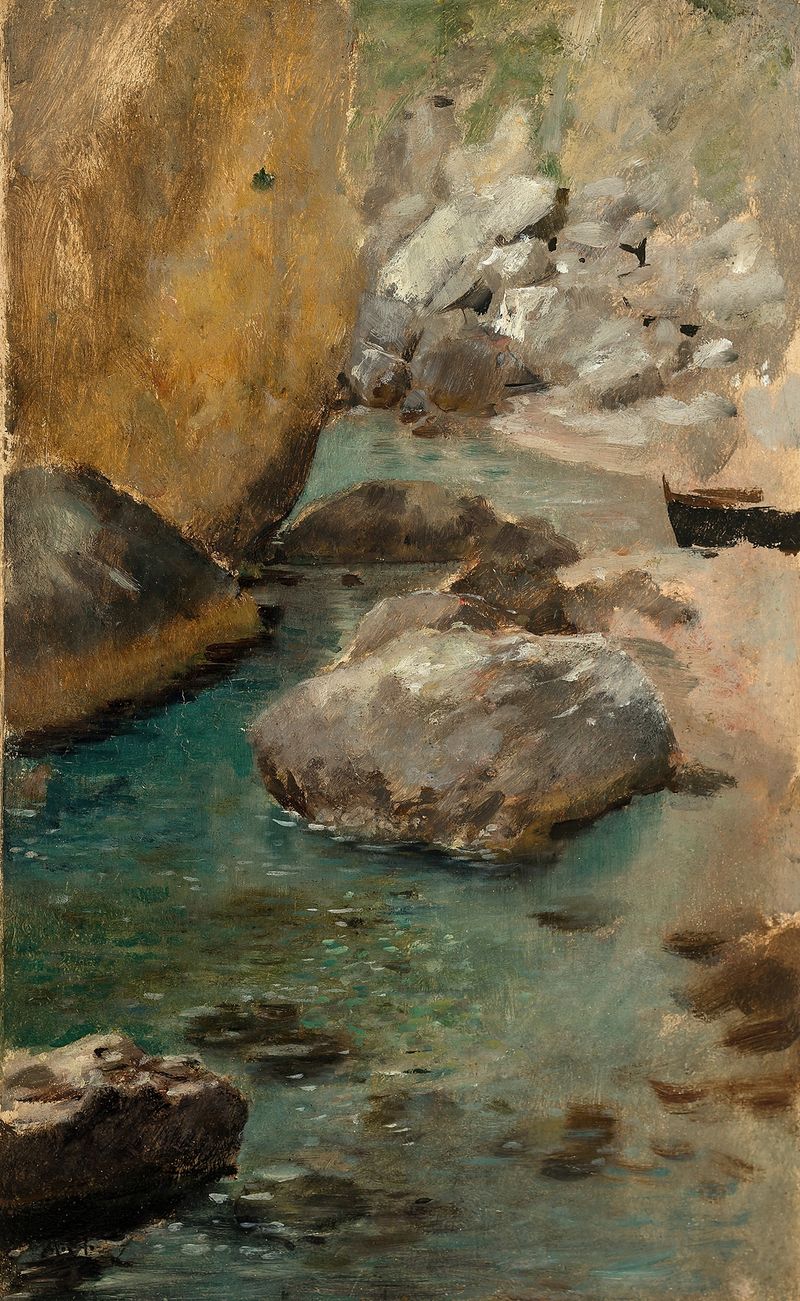
Italienische Bucht
Adolf Hirémy-Hirschl
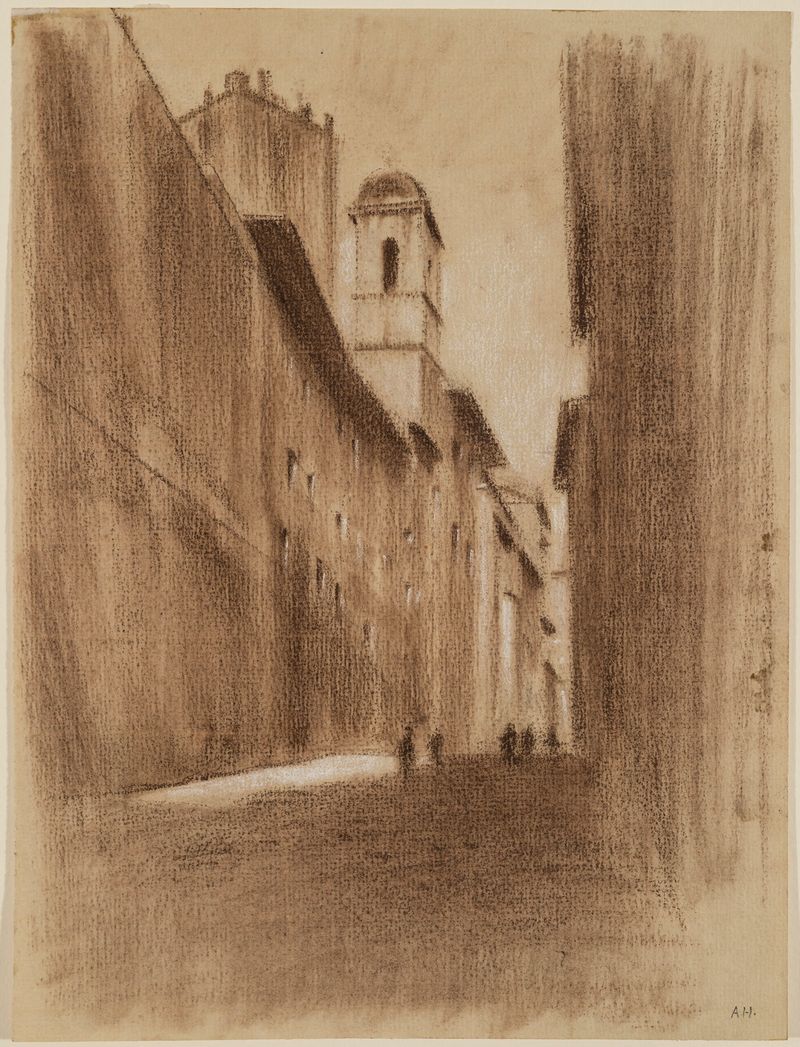
Gasse Salita del Grillo in Rom
Adolf Hirémy-Hirschl

Seaside Cemetery (Seefriedhof)
Adolf Hirémy-Hirschl
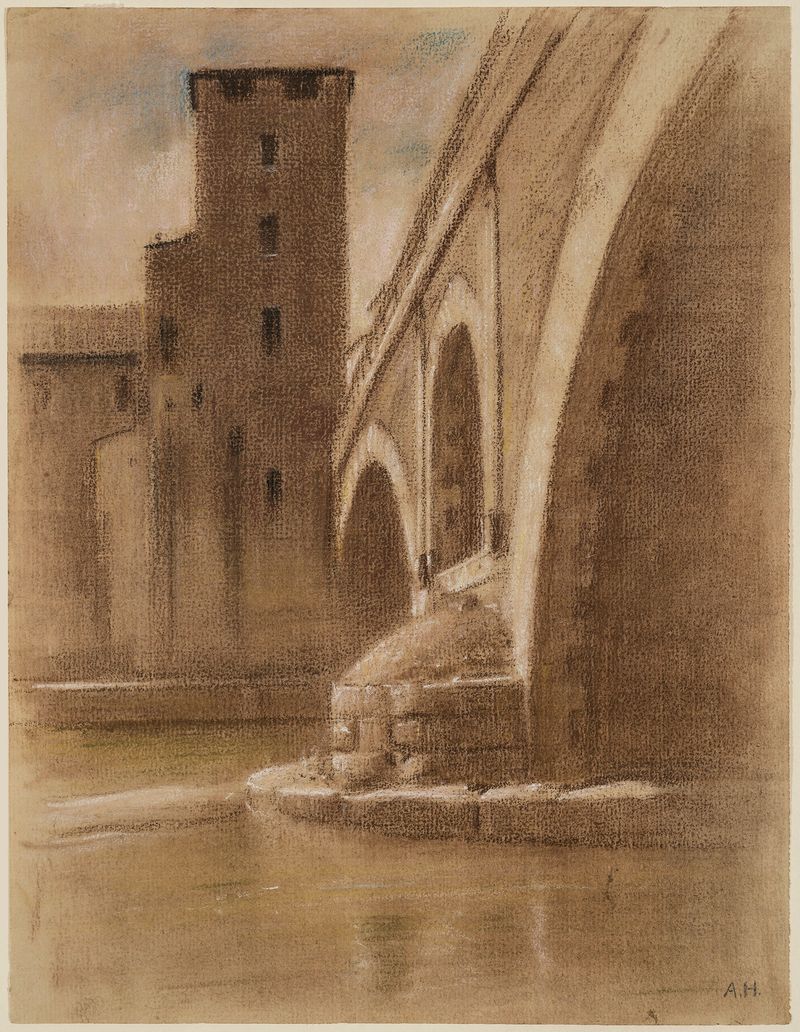
Die Ponte dei Quattro Capi in Rom
Adolf Hirémy-Hirschl
Blick auf einen Gebirgssee
Adolf Hirémy-Hirschl





