
Die Schlacht bei Temesvár — History & Facts
Did the painter know this moment would outlive them? In Die Schlacht bei Temesvár, the tension of a historic battle is captured, a fleeting moment transformed into a lasting testament of courage and conflict. Look to the center of the canvas where a fierce clash unfolds, the chaos of soldiers engaging in combat. The brushwork is vigorous, with swirling strokes that give a sense of movement, while the rich palette of earthy tones and splashes of red evoke both the brutality and valor of war. Notice how light breaks through the clouds, highlighting the determination etched on the faces of the combatants, drawing the viewer's eye to their expressions of both fear and defiance. Beneath the surface of this dramatic scene lies a profound commentary on the nature of transformation.
The clash of arms symbolizes changing allegiances and the shifting tides of power, while the portrayal of figures grappling in the struggle reflects the internal conflicts that accompany moments of historical significance. This is not merely a depiction of battle; it raises questions about sacrifice, the human condition, and the legacy of conflict that transcends time. Albrecht von Adam painted this work in 1855, during a period when Europe was rife with revolution and nationalistic fervor. Living in Vienna, he was influenced by the Romantic movement, which emphasized emotion and individual experience.
This canvas not only chronicles a significant event—the Battle of Temesvár—but also embodies the zeitgeist of an era grappling with its identity and direction, encapsulating both the turmoil and the beauty of transformation amidst strife.
More Artworks by Albrecht von Adam
Browse all →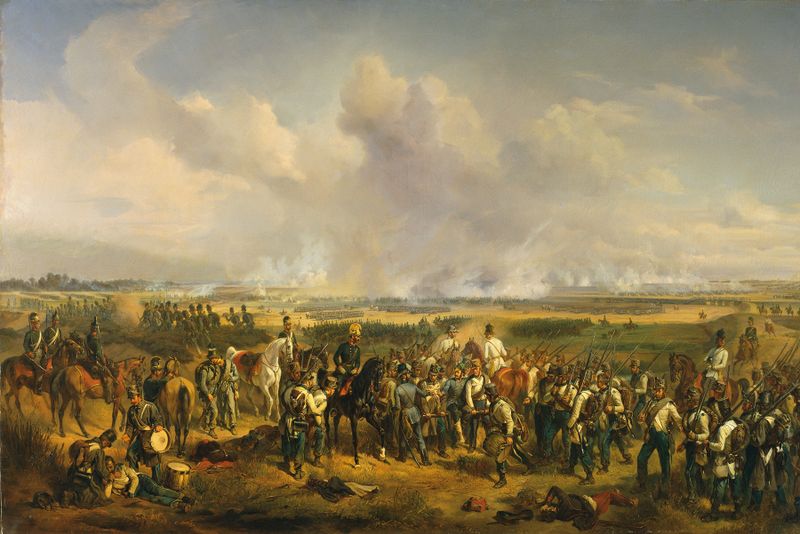

More Historical Art
Browse all →
The Night Watch Militia Company of District II under the Command of Captain Frans Banninck Cocq
Rembrandt van Rijn

Lincoln Memorial
Henry Bacon

The Third of May 1808
Francisco de Goya

Isaac and Rebecca, Known as ‘The Jewish Bride’
Rembrandt van Rijn

The Charge of the Mamelukes (1814)
Francisco de Goya

De vier ruiters van de apocalyps
Albrecht Dürer