Die Villa Artaria am Comer See — History & Facts
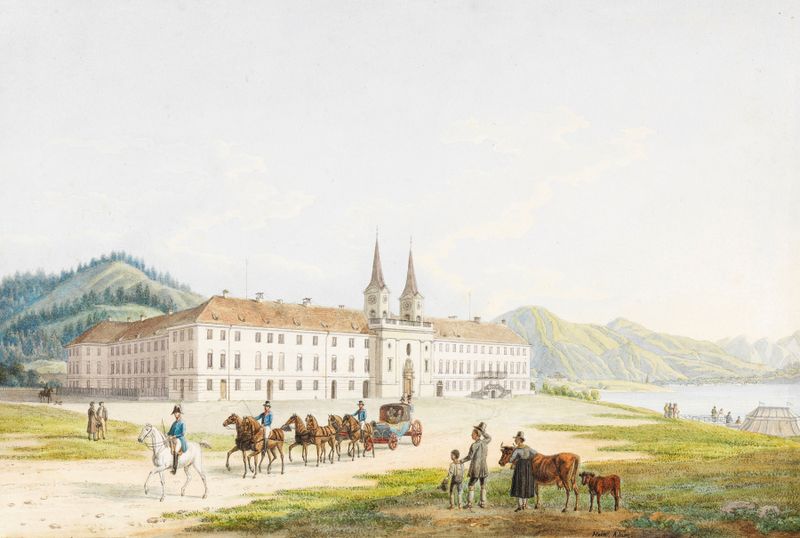
Can paint confess what words never could? In Die Villa Artaria am Comer See, a divine tranquility envelops the viewer, inviting a contemplative engagement with both nature and humanity's place within it. Look to the left of the canvas, where the villa stands majestically against the backdrop of lush green hills and a serene lake. The gentle strokes of Adam’s brush capture the delicate interplay of light and shadow, which dances across the surface of the water, creating a shimmering reflection of the idyllic scenery. The palette is rich yet earthy, with warm ochres and deep greens harmonizing beautifully, evoking a sense of peace and permanence. As you explore the painting further, notice the contrasting elements of architecture and nature — the structured villa, a symbol of human endeavor, juxtaposed against the untamed beauty of the surrounding landscape.
This tension suggests a dialogue between civilization and the divine serenity of the natural world, hinting at humanity’s eternal quest for harmony. The gentle rise of the hills, embraced by a soft twilight, encapsulates a fleeting moment in time, inviting introspection about our connection to both the built environment and the transcendent. Heinrich Adam painted Die Villa Artaria am Comer See in 1813, during a period when Romanticism profoundly influenced the art world. Living in Germany, he was captivated by the beauty of the Italian landscape, reflecting a common yearning for the sublime that marked the era.
This work embodies the shift towards an appreciation of nature’s divinity, steering away from mere representation, and revealing a deeper emotional resonance that would define much of 19th-century art.