Ansicht vom Tegernsee mit dem großen Paraplui — History & Facts
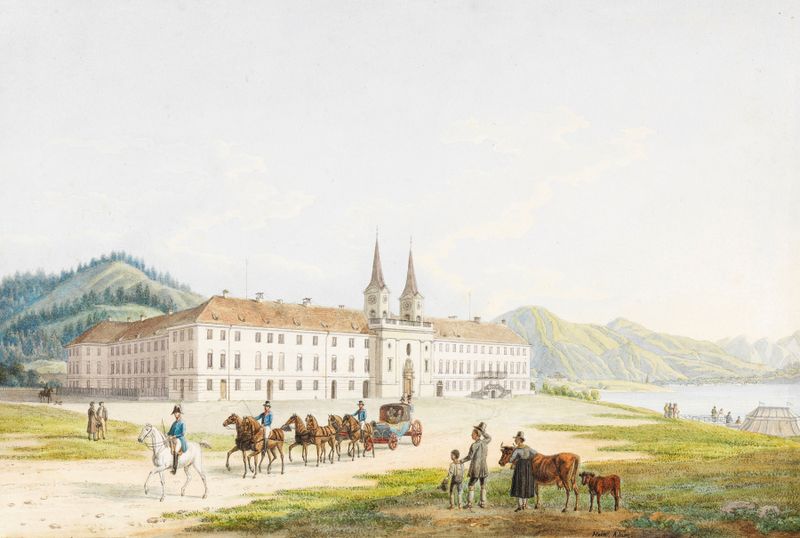
The stillness of the moment offers a revelation, inviting us to explore the hidden depths of life and nature. Look to the foreground, where a solitary figure clad in a dark coat stands beneath a vast umbrella, contemplatively gazing toward the distant mountains. The rich hues of green and blue harmonize with the hints of gold and white that dance across the sky, creating a serene yet charged atmosphere. Notice how the artist captures the play of light on the water's surface, reflecting an intricate tapestry of nature, while the thoughtful posture of the figure suggests a profound inner dialogue. In this composition, there exists a delicate balance between solitude and connection.
The large parasol not only shelters the figure but also acts as a barrier, symbolizing emotional protection amidst the beauty of the lake and the mountains. The contrasting elements of the vibrant landscape and the solitary figure evoke a poignant tension—a moment suspended between introspection and the allure of the world beyond. Each detail, from the ripples of the water to the clouds, seems to whisper secrets of existence. Heinrich Adam created this work in 1831, during a time when Romanticism was flourishing in Europe.
He painted it in the picturesque landscape surrounding Tegernsee, a popular destination for artists and romantics alike. At that moment in his life, he was becoming known for his landscape paintings, reflecting both the beauty and emotional resonance of nature, capturing not just what was seen but what lay beneath the surface.