
Dinant, No. 1: Southwest View — History & Facts
Who listens when art speaks of silence? In Dinant, No. 1: Southwest View, the stillness resonates, revealing a moment suspended in time, inviting us to contemplate the profound within the quiet. Look to the foreground, where the tranquil river mirrors the muted palette of ochres and blues. The gentle undulations of the landscape guide your gaze toward the distant hills, cloaked in a soft haze.
Notice how the delicate interplay of light highlights the rugged cliffs, creating a subtle depth that draws you into this serene vista. Each brushstroke contributes to an atmosphere that feels both intimate and expansive, capturing the essence of the Belgian landscape. Explore the contrasts woven throughout the composition, particularly the harmony between the natural elements and the encroaching silence. The towering cliffs stand in stark juxtaposition to the calm water below, a reminder of nature's majesty and its quietude.
The absence of human figures magnifies the solitude of the scene, hinting at a revelation found only in stillness. This quiet beauty evokes an emotional response, urging the viewer to engage with the tranquility rather than the tumult of life. Created between 1818 and 1828, this piece emerged during a transformative period for George Arnald, who was deeply engaged with the Romantic movement in landscape painting. Working in England but inspired by his travels, Arnald sought to blend realism with emotive landscapes, reflecting the evolving relationship between humanity and nature.
In this era, as art began to shake off the heavy hand of neoclassicism, Arnald’s work stood as a testament to the power of nature—both in its beauty and its silence.
More Artworks by George Arnald
Browse all →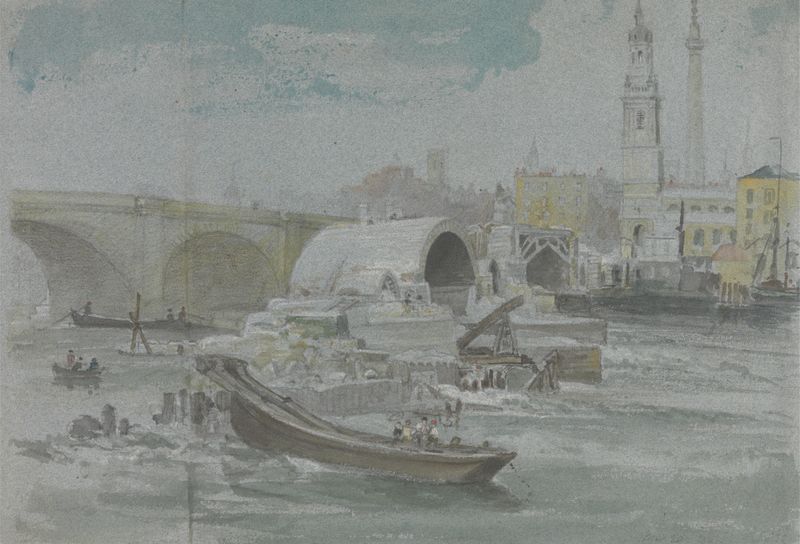
The Demolition of Old London Bridge
George Arnald
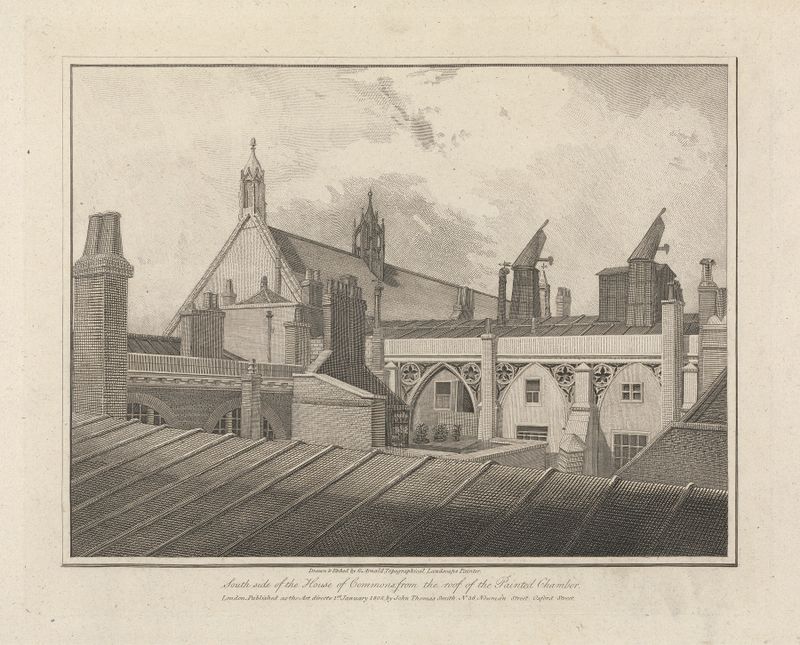
South Side of the House of Commons, from the Roof of the Painted Chamber
George Arnald
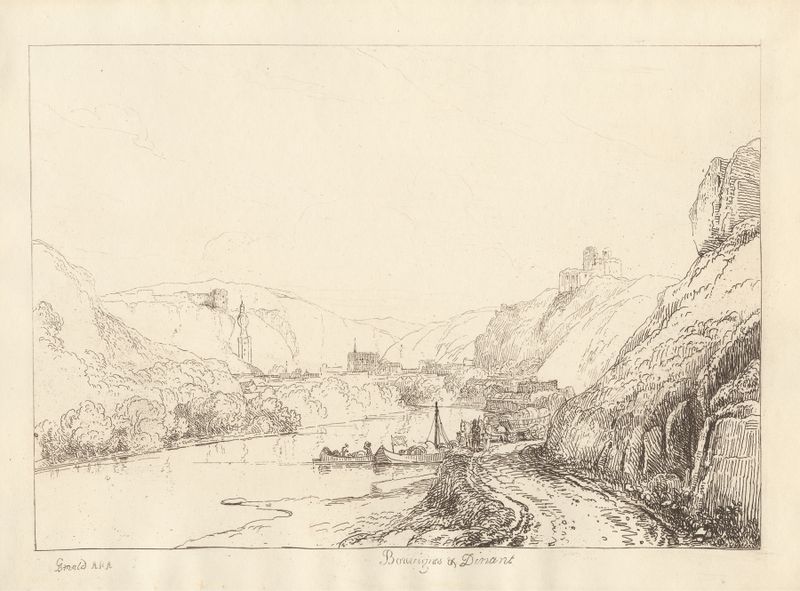
Bouvignes and Dinant
George Arnald
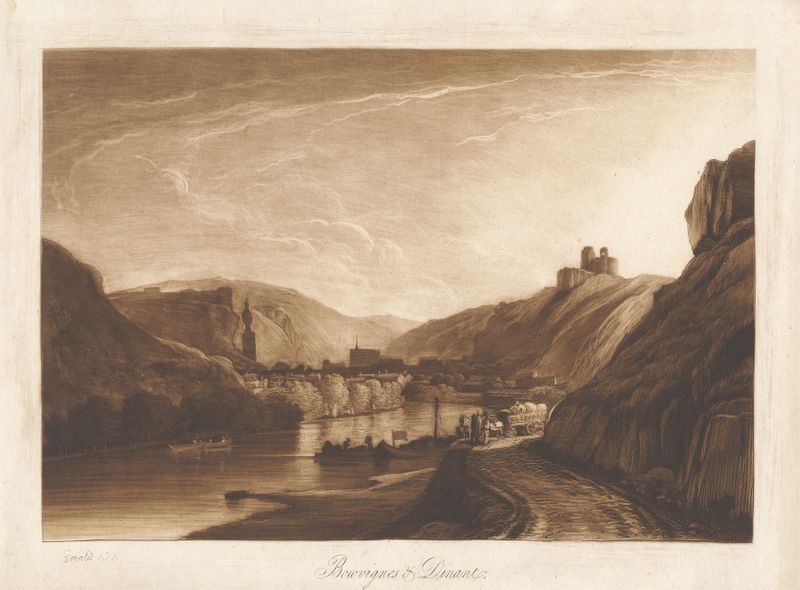
Bouvignes and Dinant
George Arnald

Dinant, No. 1: Southwest View
George Arnald
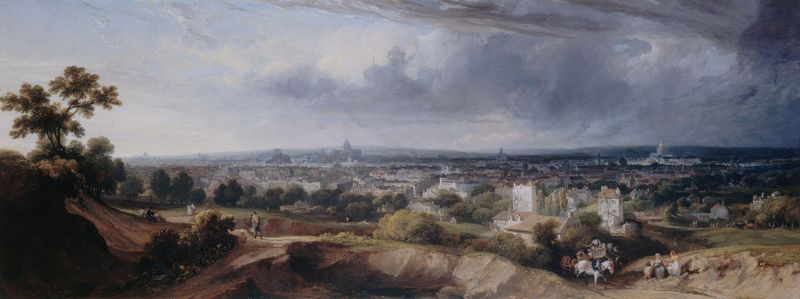
Paris, vu des hauteurs de Montmartre
George Arnald
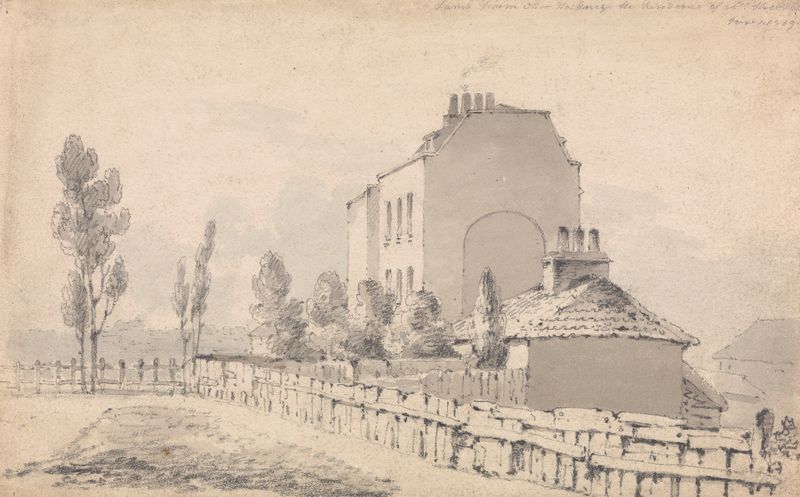
Lamb Farm near Hackney, the Residence of Hick: Richmond Road
George Arnald

Left Bank, Meuse
George Arnald
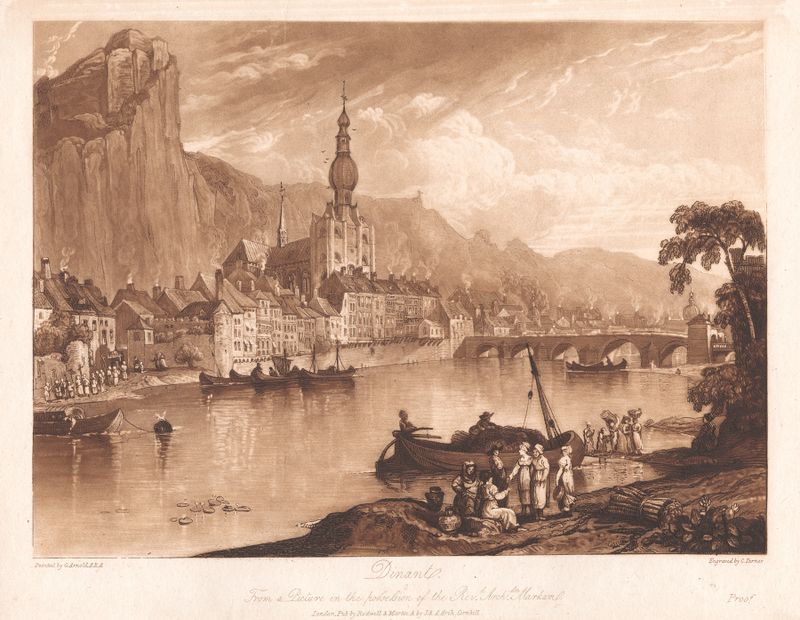
Dinant
George Arnald
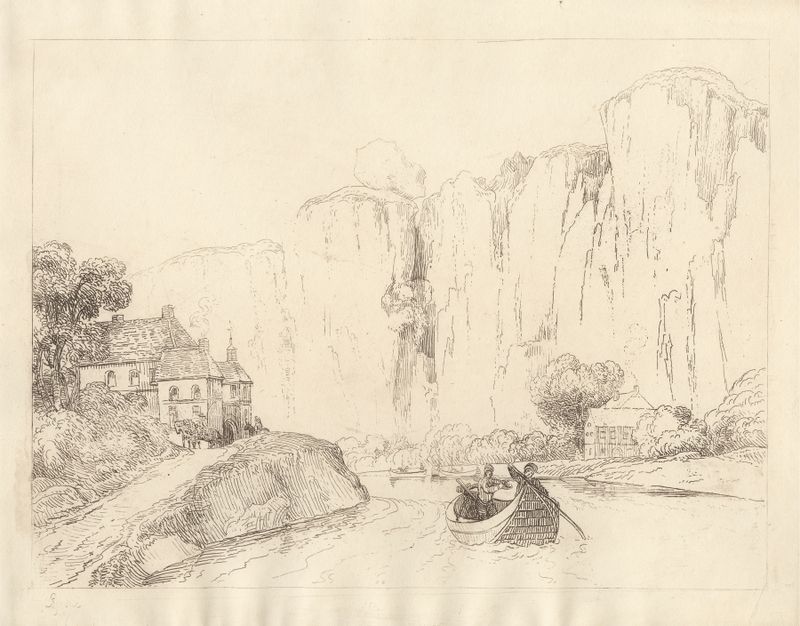
Left Bank, Meuse
George Arnald





