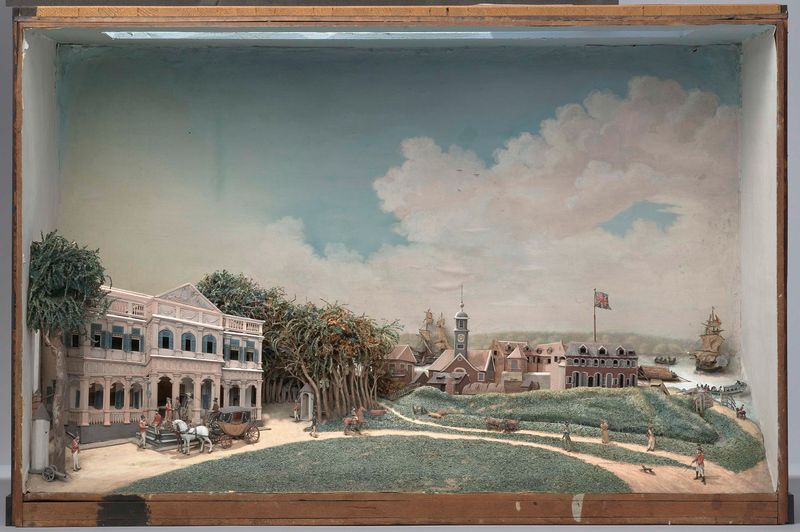
Diorama of a Du, a Dance Celebration on the Plantation — History & Facts
Is this a mirror — or a memory? The vibrant colors and rhythmic energy of the piece beckon us to step into a world where dance and celebration intertwine with a deeper longing for connection and heritage. Look to the right at the joyful figures swirling in motion, their bodies alive with exuberance. Notice how the artist expertly captures the movement through blurred lines and vivid hues, creating a sense of dynamism that invites the viewer to feel the music and spirit of the dance. The warm light cascades across their faces, illuminating both elation and a flicker of something unspoken, suggesting the weight of history mingled with joy. Within this lively celebration lies an undercurrent of nostalgia, a tension between the exuberance of dance and the solemnity of plantation life.
Each figure appears both liberated and bound, reflecting the duality of joy and sorrow that permeates their existence. The rhythmic patterns that unify them evoke a sense of communal resilience, while the contrasting shadows hint at the darker legacy of the very ground beneath their feet. The origins of this work remain elusive, with its creation believed to span an unknown period in Gerrit Schouten's life. Active during a time when the art world was in flux, grappling with themes of identity and history, the artist channeled his experiences and observations into this vivid tableau, capturing not just a moment, but an echo of the cultural narrative that resonates through generations.