Distant View with a Village — History & Facts
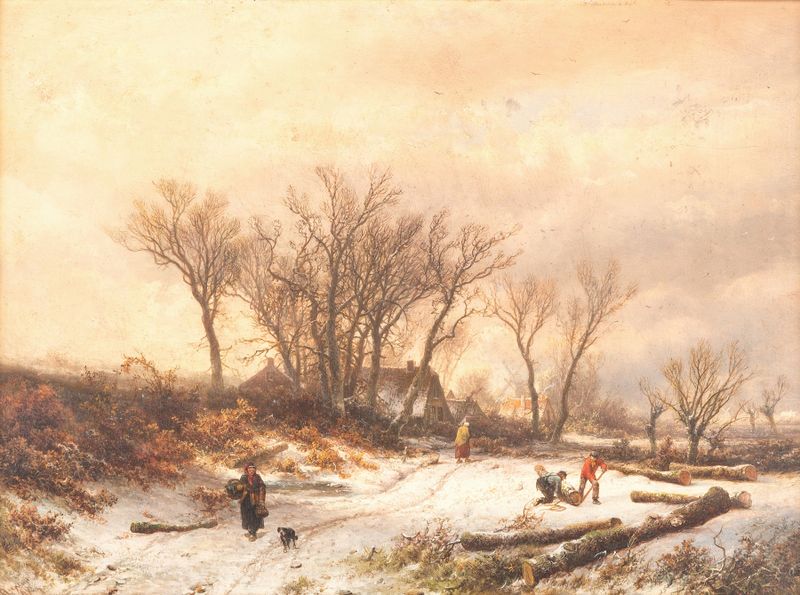
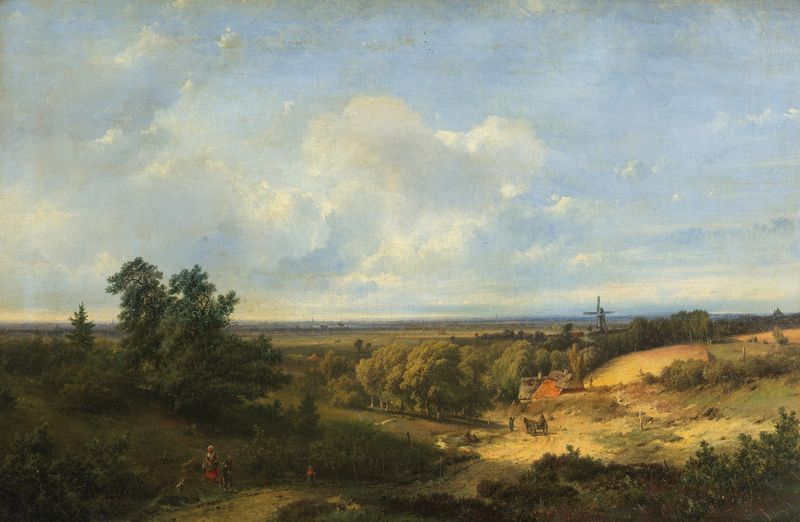
Can beauty exist without sorrow? In the delicate hues of a distant landscape, transformation unfolds, revealing the bittersweet dance between light and shadow. Look to the left at the soft, rolling hills that cradle the village nestled within them. The greens and browns of the fields blend seamlessly with the sky, a subtle interplay of colors that heightens the sense of distance and time. Notice how the golden light of the setting sun casts a warm glow over the rooftops, inviting the eye to wander through the quaint homes and beyond, where the horizon blurs, hinting at the passage of days and seasons. The juxtaposition of nature’s tranquility and the village’s life signifies the ever-present tension between permanence and change.
The silhouette of the distant mountains stands resilient, contrasting with the ephemeral beauty of the moment captured in the foreground. This painting evokes a deep sense of nostalgia, reminding us that each serene moment harbors its own history, layered with stories of joy and sorrow that define the human experience. Created between 1840 and 1900, this work reflects the artist's transition into a mature style characterized by an intimate connection to the landscape. Kluyver was influenced by the shifting artistic currents of Romanticism and Realism, as he sought to encapsulate the beauty of rural life while navigating an era marked by rapid industrial change.
The harmony of nature and the simplicity of village life in this piece encapsulates his desire to preserve a world that was gradually transforming.