Winter landscape — History & Facts
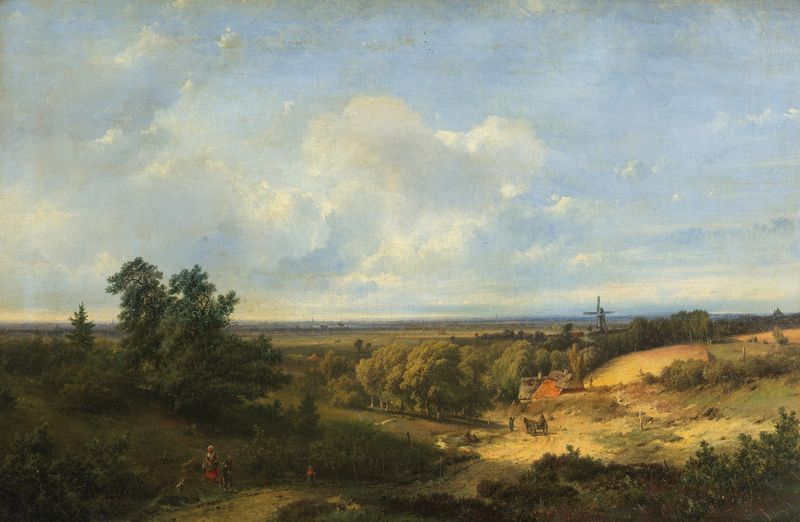
What if silence could speak through light? In the stillness of a winter landscape, the icy hues and gentle brushstrokes whisper the secrets of balance between nature and tranquility. Look to the foreground, where a soft blanket of snow covers the ground, inviting your gaze to wander. Notice how the delicate interplay of white and muted blues creates a sense of depth, drawing you toward the horizon. The bare trees, etched against a pale sky, stand like sentinels in stillness, their branches frosted with the weight of winter.
This choice of color—a palette ranging from icy grays to soft pastels—evokes a serene, almost meditative state. Yet beneath this calm exterior lies an emotional tension. The starkness of the barren trees hints at the struggle of life against the harshness of the season, while the distant mountains loom, echoing the daunting challenges we face. The light filtering through the clouds imbues the scene with a sense of hope, suggesting that even in the coldest moments, beauty and balance can be found. In 1869, Kluyver painted this evocative scene during a time when the Dutch art world was shifting toward realism, embracing the raw beauty of nature.
Living in the Netherlands, he was influenced by the Romantic movement and sought to capture the essence of landscapes through meticulous detail and harmonious composition. This painting reflects not only his artistic evolution but also the profound connection between humanity and the natural world.