Extensive landscape with a church in the distance — History & Facts
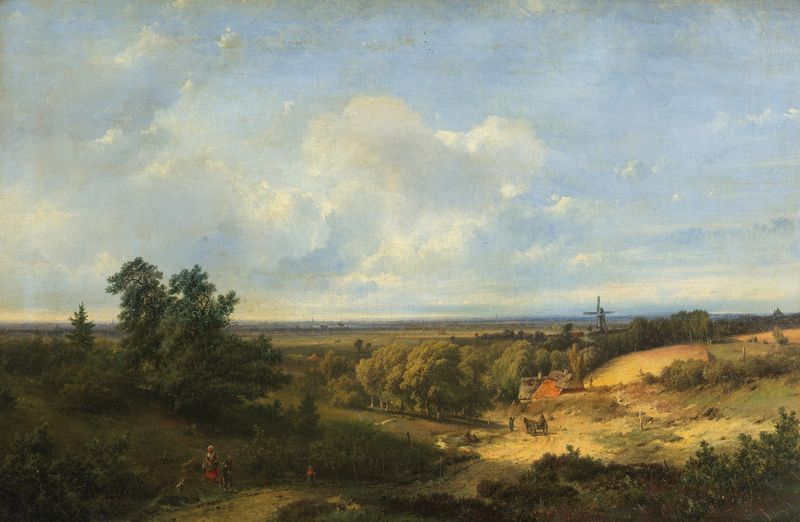
When did color learn to lie? The hues of the landscape vibrate with an unsettling beauty, inviting us to question the truths hidden beneath their surface. Look to the left, where the vibrant greens of the rolling hills flow seamlessly into the soft blues of the sky. Notice how the delicate strokes create a rhythm that guides the eye toward the distant church, its stark white façade glowing against the verdant backdrop. Each brushstroke reveals the artist's meticulous attention to detail, blending realism with a hint of surrealism, as if the scene could transcend its own reality. Yet, beneath this captivating exterior lies a deeper yearning.
The expansive landscape suggests both freedom and isolation, a vastness that can inspire wanderlust as well as a haunting sense of loneliness. The distant church, a symbol of hope and community, stands in stark contrast to the neglected surroundings, implying a search for belonging amidst nature’s grandeur. The play of light and shadow adds layers of emotional complexity, hinting at the transience of life itself. Created during an undefined period in the artist's life, this piece reflects the evolving world of 19th-century European art, where Romanticism was giving way to Impressionism.
Kluyver’s work embodies the tension between the real and the ideal, as artists grappled with new techniques and perspectives. This time was marked by personal exploration and a collective questioning of tradition, echoing the yearning for connection that resonates within the canvas.