
Domy na dedine s figurálnou štafážou — History & Facts
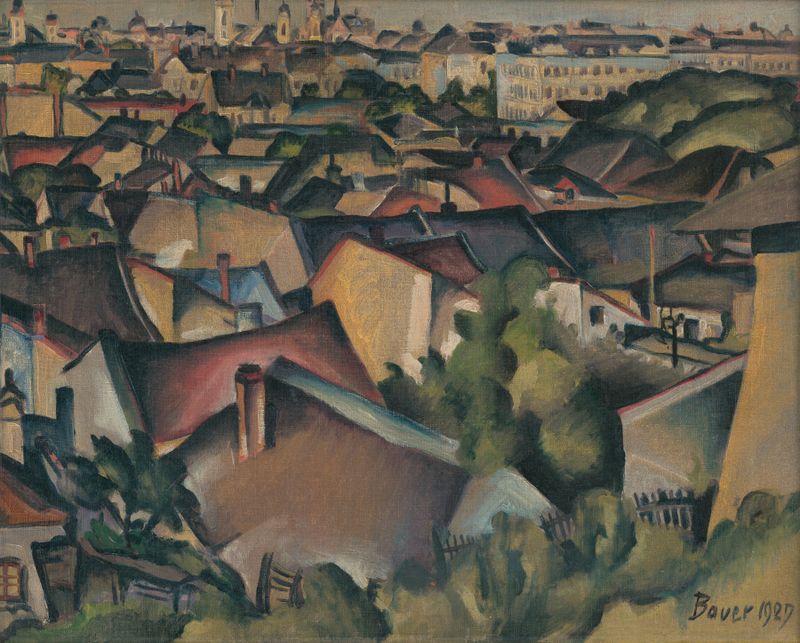
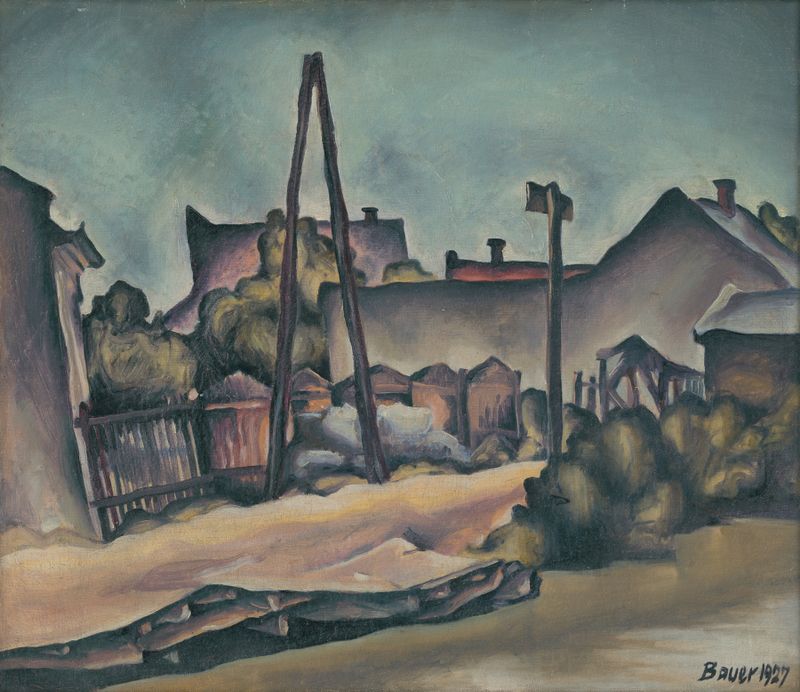
In the stillness of a village, where silence clings to the air like a soft fog, an unsettling void breathes through the canvas. The houses stand resolute but isolated, echoing the absence of life and the haunting memories of those who once filled these spaces. Focus your gaze on the foreground, where the quaintly crafted structures rise with a stoic simplicity. Each building is an architectural gem, its walls a tapestry of muted colors that blend yet stand apart, reflecting the artist's deft manipulation of light and shadow.
Notice how the gentle gradient of twilight filters through the rooftops, casting elongated shadows that deepen the sense of solitude. This interplay of light serves as a metaphor for the emotional landscape, infusing the scene with a subtle urgency — a call to observe what remains unsaid. Hidden beneath the surface lies a narrative of loss and memory. The figures, mere silhouettes, seem to inhabit a realm of nostalgia, their absence intensifying the poignancy of their surroundings.
This ghostly presence evokes questions about the lives once lived within these walls and the stories that have faded into the backdrop. The division between the vibrant, colorful architecture and the void of figures creates an emotional tension that underscores the uncertainty of existence and the passage of time. In 1924, the artist painted this work amidst a Europe recovering from the turmoil of war. Living in Slovakia, Bauer was influenced by the social changes surrounding him and the modernist movements that sought to explore identity and memory.
This piece reflects not only his personal exploration of heritage and loss but also a broader commentary on the collective human experience during a time of reflection and transformation in the art world.
More Artworks by Konštantín Bauer
Browse all →
Košický dvor
Konštantín Bauer
Košice na jar
Konštantín Bauer
Košická kalvária
Konštantín Bauer

Košické strechy
Konštantín Bauer

Zo starých Košíc
Konštantín Bauer
Na hlavnej ulici v Košiciach
Konštantín Bauer
Pohľad na Košice
Konštantín Bauer
Na okraji Košíc
Konštantín Bauer

Vnútro košického dómu
Konštantín Bauer

Zákutie Košíc
Konštantín Bauer





