
Zákutie Košíc — History & Facts
Can beauty exist without sorrow? In the dusky corners of Zákutie Košíc, a haunting melancholia seeps through the delicate brushstrokes, evoking an unsettling yet captivating atmosphere. Look to the left at the subtle interplay of shadows. The muted palette of browns and grays envelops the scene, creating a sense of both familiarity and estrangement. Notice how the light softly illuminates the surfaces, casting an ethereal glow on the cobblestone path, inviting yet foreboding.
Each element seems to whisper secrets of the past, drawing you deeper into this intimate yet desolate corner of Košice. Within this composition lies an intricate web of contrasts. The juxtaposition of the warm, inviting architecture against the cool, unsettling background evokes a powerful tension. Shadows cling to the edges of the buildings, suggesting the lurking presence of fear and uncertainty.
The absence of human figures amplifies the solitude; it feels as if the viewer has stumbled upon a forgotten moment, rich with unspoken stories and lost joys, echoing the bittersweet nature of memory. Painted in 1928, this work emerged during a time of great transition in Central Europe. Konštantín Bauer was exploring the depths of his artistic identity in a landscape shaken by political change and social upheaval. As traditional values clashed with modernity, his art began to reflect the complex emotions of his environment, capturing the essence of a world teetering on the edge of transformation.
More Artworks by Konštantín Bauer
Browse all →
Košický dvor
Konštantín Bauer
Košice na jar
Konštantín Bauer
Košická kalvária
Konštantín Bauer

Košické strechy
Konštantín Bauer

Zo starých Košíc
Konštantín Bauer
Na hlavnej ulici v Košiciach
Konštantín Bauer
Pohľad na Košice
Konštantín Bauer
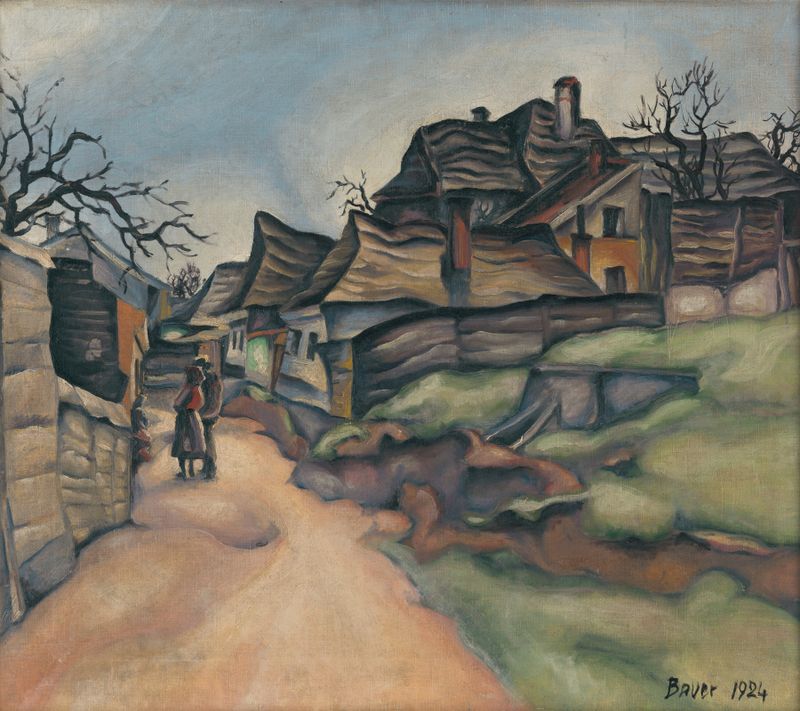
Domy na dedine s figurálnou štafážou
Konštantín Bauer
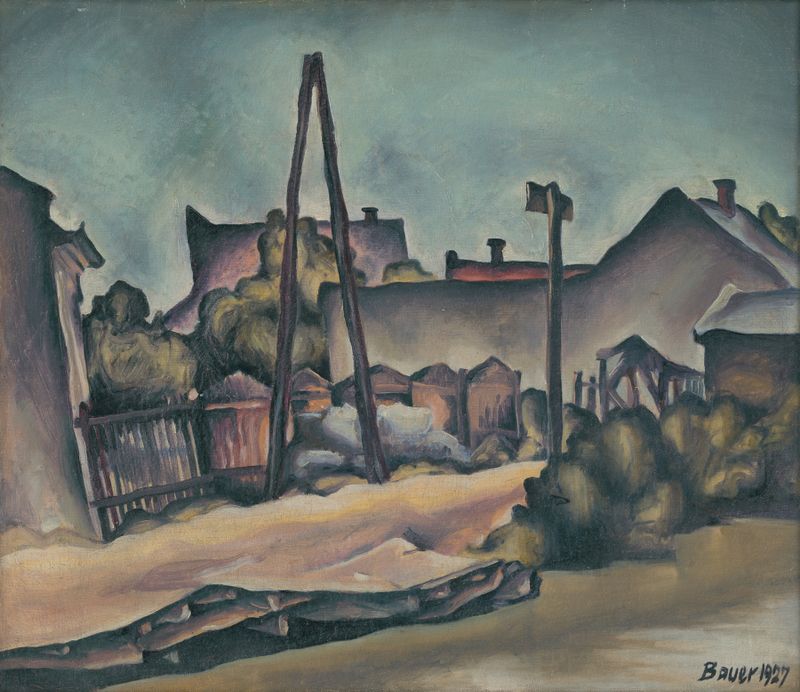
Na okraji Košíc
Konštantín Bauer

Vnútro košického dómu
Konštantín Bauer





