
Dorpsweg met huizen — History & Facts
Could beauty survive in a century of chaos? As you gaze at the landscape, the quaint homes lining the road beckon with a soft charm that belies their surroundings. Look to the right at the white-washed buildings, their warm hues glowing under a gentle sun, which casts elongated shadows that seem to whisper secrets of the past. The winding pathway invites the viewer into the scene, drawing your eye down to the distant horizon where the sky meets the earth, blending into gradients of blue and golden yellow.
Edridge’s delicate brushwork subtly captures the texture of the structures and foliage, harmonizing the interplay of light and shadow. In this serene composition, an undercurrent of tension simmers just beneath the surface. The houses, picturesque in their appearance, stand independent yet isolated, hinting at the possibility of loneliness or betrayal lurking in their facades. The lush greenery framing the road contrasts with the stillness of the buildings, suggesting the delicate balance between nature and human habitation – a reminder that beauty can indeed mask deeper emotional truths.
Each element in the painting, from the cobblestone path to the clouds drifting overhead, becomes a metaphor for the fragile existence of intimacy within a chaotic world. Henry Edridge created this work in 1811, at a time when Britain was undergoing significant social shifts due to the Napoleonic Wars and industrialization. Living in London, Edridge was part of a burgeoning cultural landscape that celebrated both the picturesque and the profound. His experiences as a portrait and landscape painter helped to inform his keen sense of observation, allowing him to capture not just the physical beauty of a moment, but also the nuances of human emotion and reflection amid times of turmoil.
More Artworks by Henry Edridge
Browse all →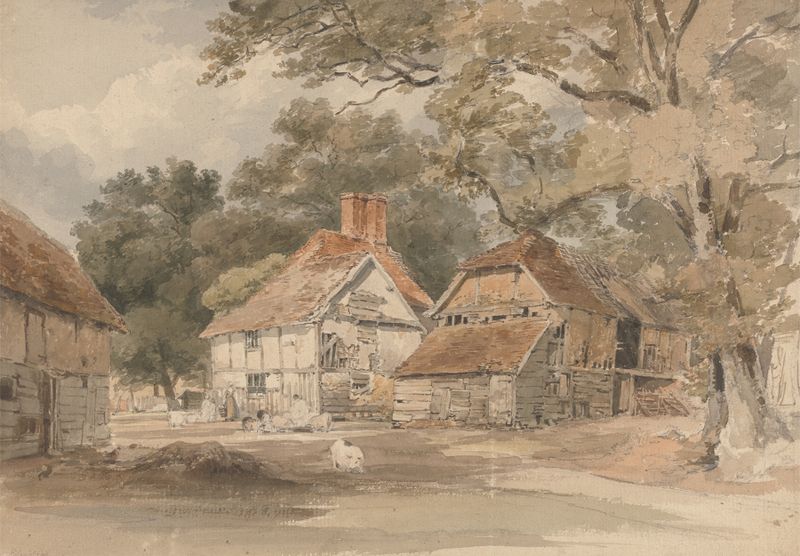
Farm Buildings among Trees
Henry Edridge
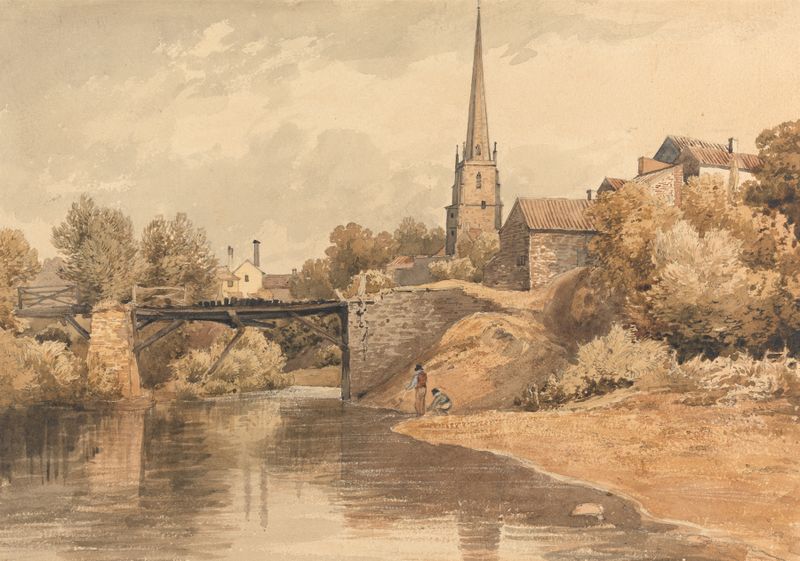
On the Monnow, Monmouth
Henry Edridge

Portrait of a Youth
Henry Edridge
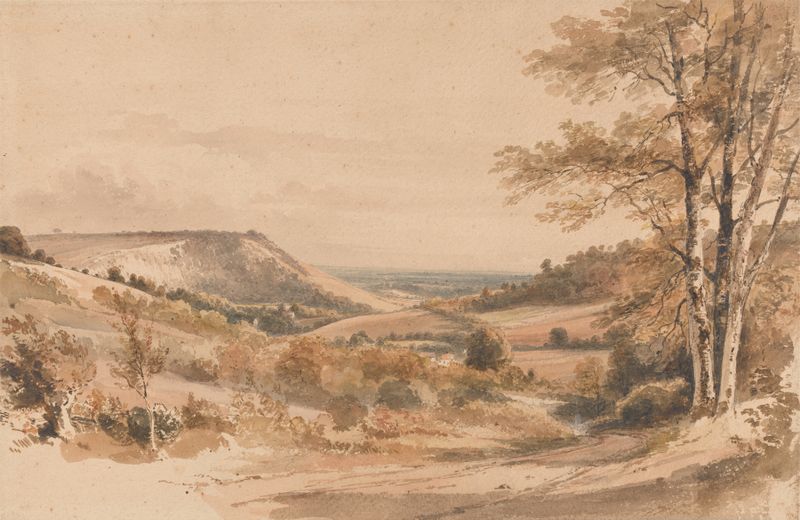
Boxhill from Westhumble Lane
Henry Edridge

Portrait of Two Children
Henry Edridge
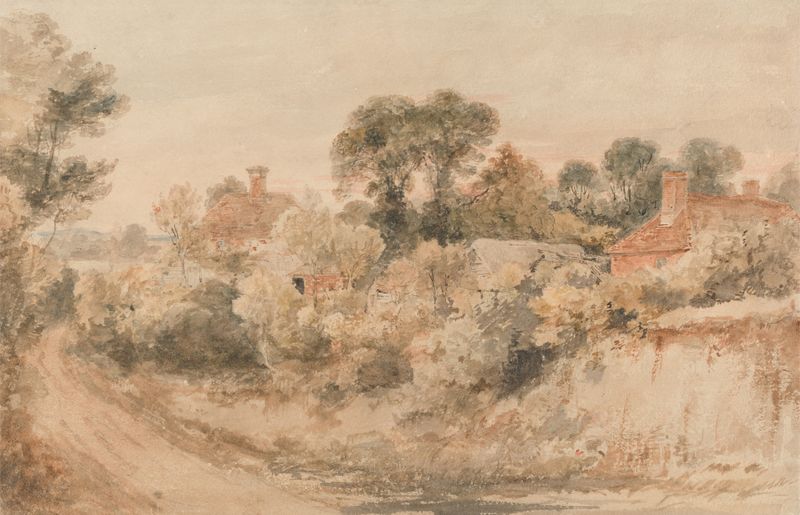
Great Bookham, Surrey
Henry Edridge
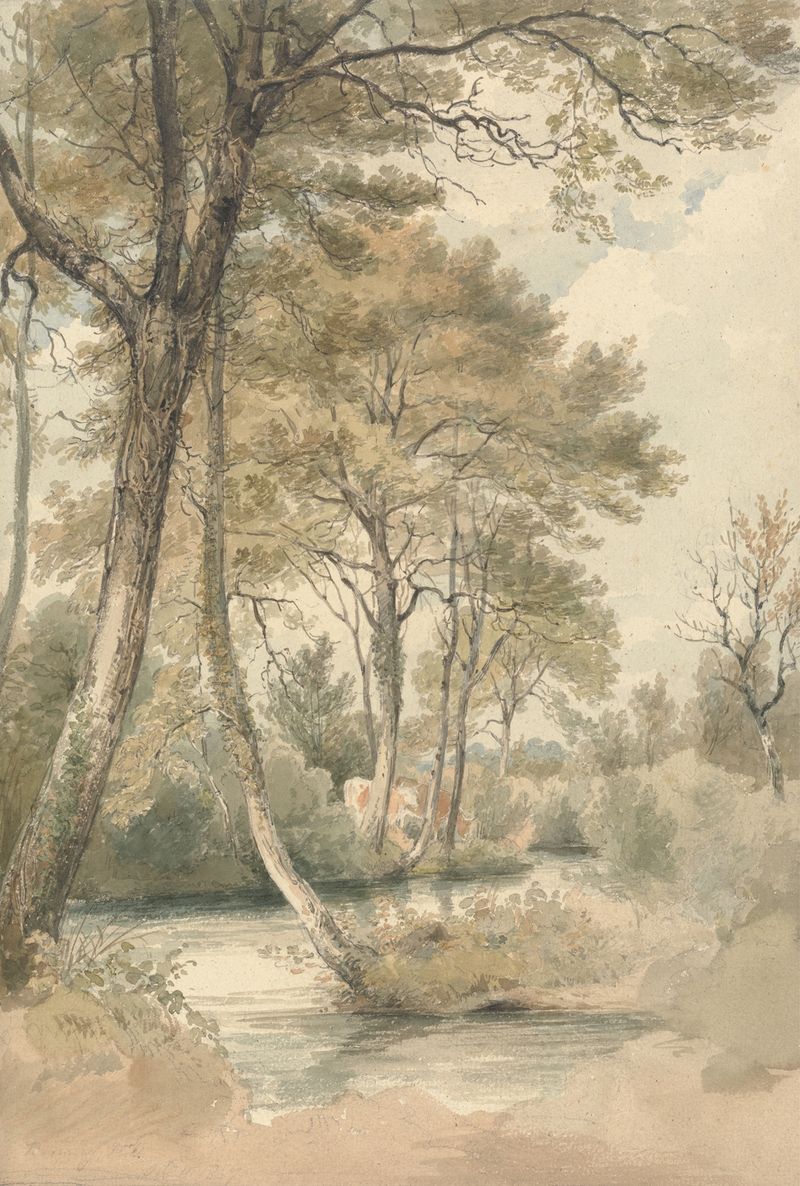
Stream with Trees and Cattle near Bromley Hill, Kent
Henry Edridge
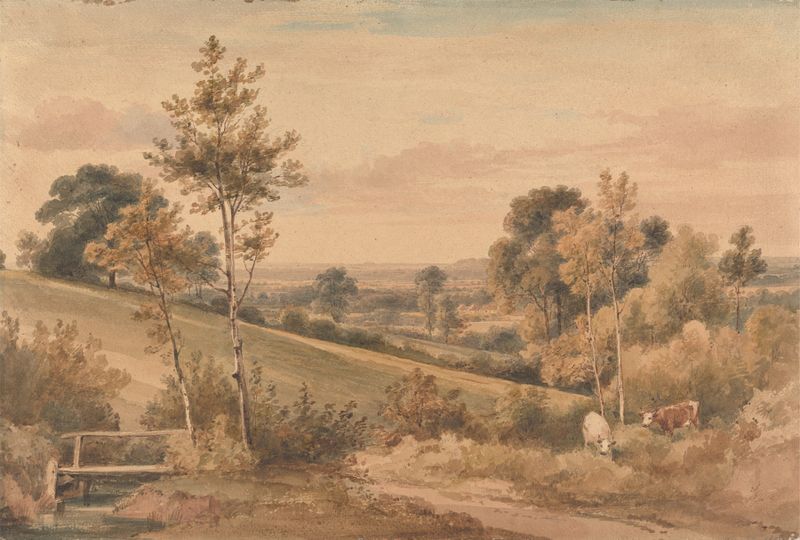
Little Bushey, Hertfordshire
Henry Edridge
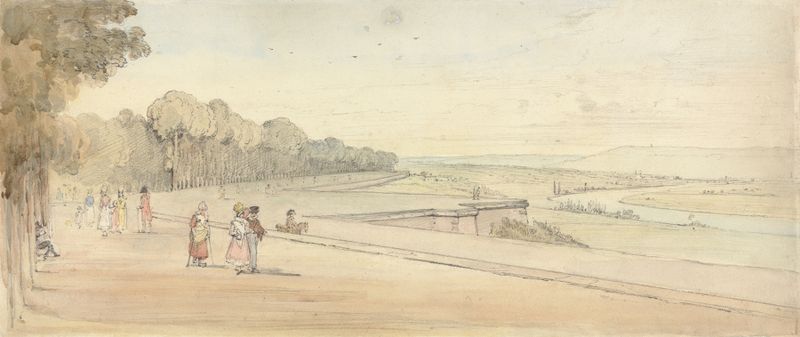
Terrace at St. Germain-en-Laye
Henry Edridge
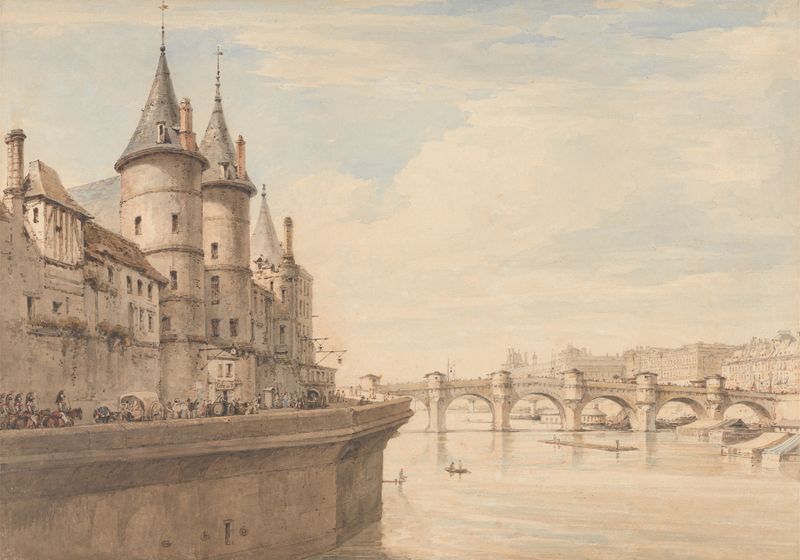
The Conciergerie, Paris
Henry Edridge





