
Drivende skyer — History & Facts
Can paint confess what words never could? In Drivende skyer, the artist captures an essence of solitude and contemplation that reverberates through the canvas, inviting the viewer to reflect upon their own existence. Focus on the vast sky that dominates the composition, where thick, swirling clouds dance in shades of gray and white. The lower horizon is grounded by a muted landscape, perhaps a distant meadow or water, subtly echoing the turbulence above. Notice how the artist employs broad brushstrokes to create a sense of movement—each cloud seems to billow and drift, evoking a feeling of transience and ephemerality.
The muted palette suggests an atmosphere heavy with unspoken thoughts and emotions, drawing the eye upward into the open expanse. What lingers beneath the surface is a profound tension between freedom and confinement. The clouds, while seemingly unfettered, are trapped within the frame, mirroring the human condition of yearning for liberation yet remaining bound by earthly realities. The void of unoccupied space invites introspection, encouraging viewers to confront the silence and ambiguity within themselves.
Each brushstroke becomes a whisper, a confession of the unarticulated feelings we harbor deep within. In 1897, Amaldus Nielsen painted this work during a period of personal and artistic evolution. Living in Norway, he was influenced by the natural landscapes surrounding him and the broader Symbolist movement, which sought to express the intangible through visual means. His experimentation with texture and form reflects not only his individual journey but also the shifting tides of art in a world on the brink of modernity.
More Artworks by Amaldus Nielsen
Browse all →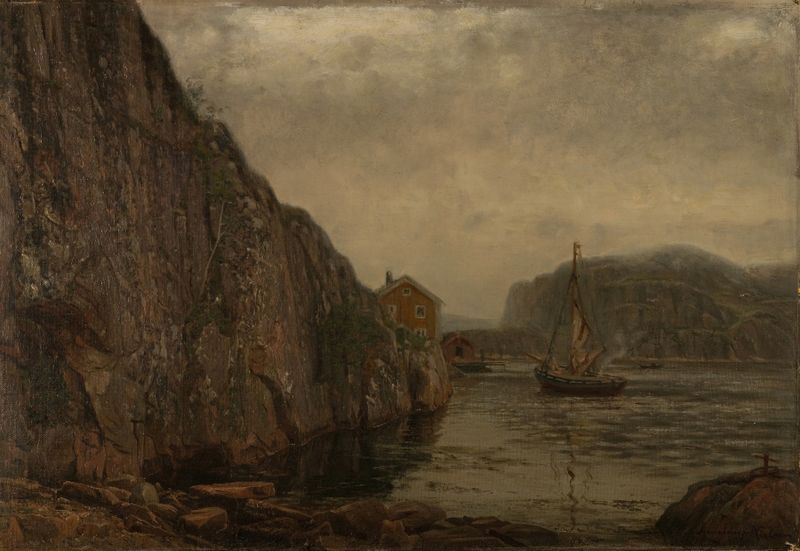
Skjærgård, Ny-Hellesund
Amaldus Nielsen
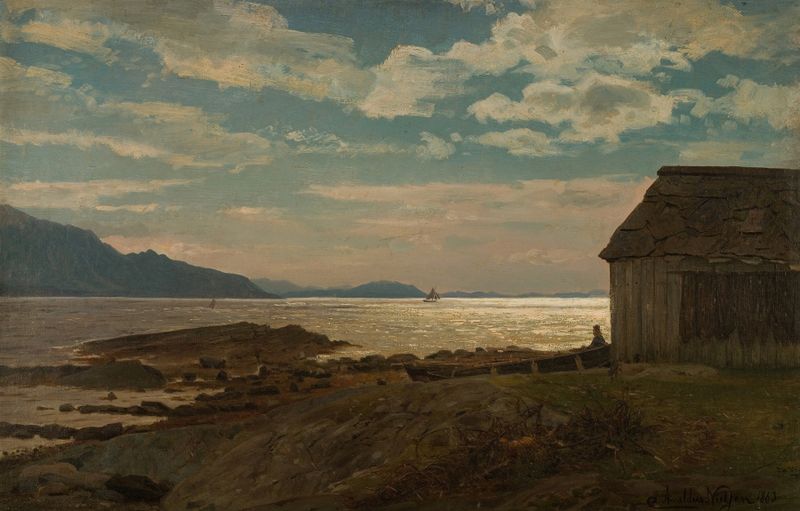
Fra Ølvestranden, Hardanger
Amaldus Nielsen
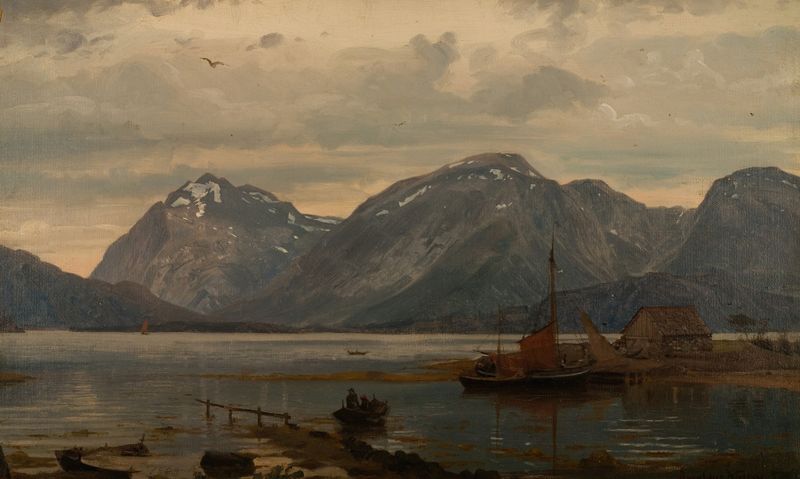
Fra Englafjellene, Hardanger
Amaldus Nielsen
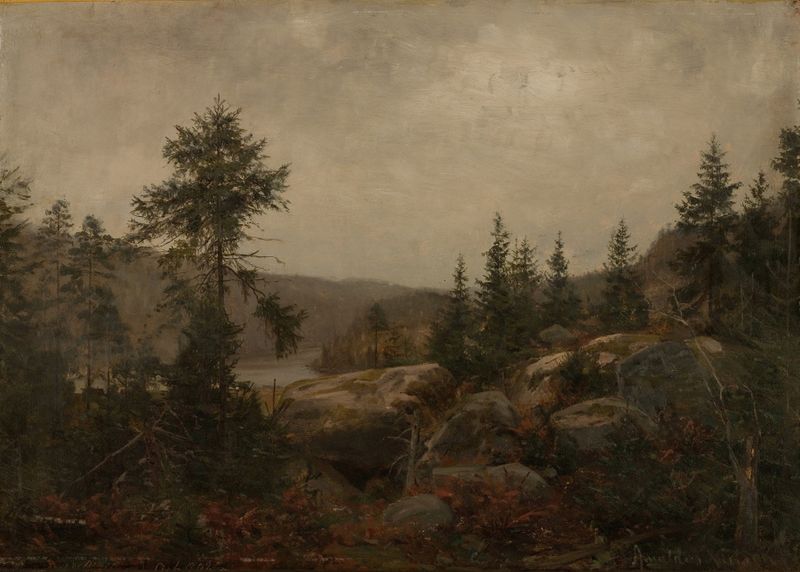
Duskregn . Gården Foss, Mandalselven
Amaldus Nielsen
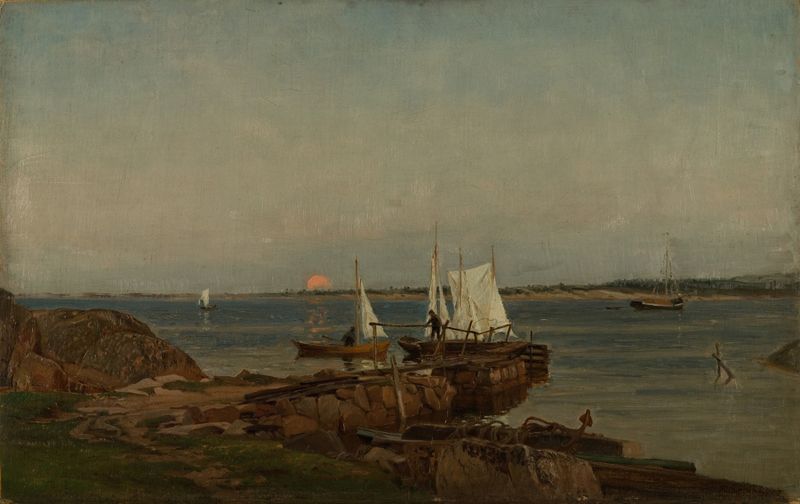
Sommernatt, Hvaler
Amaldus Nielsen
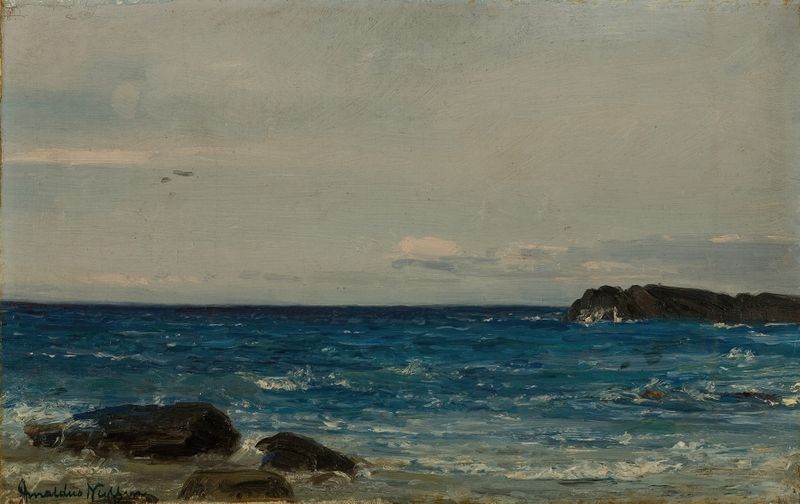
Fra Jæren
Amaldus Nielsen
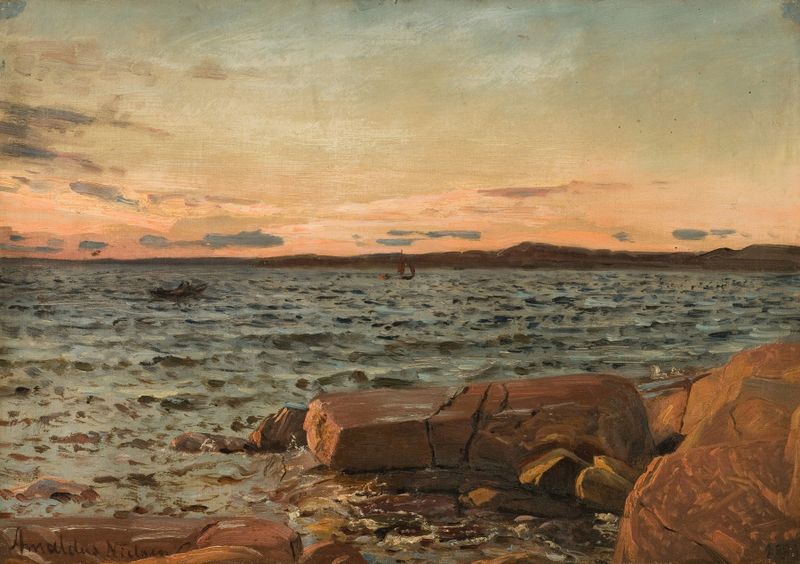
Solgangsvind, Hvaløene
Amaldus Nielsen
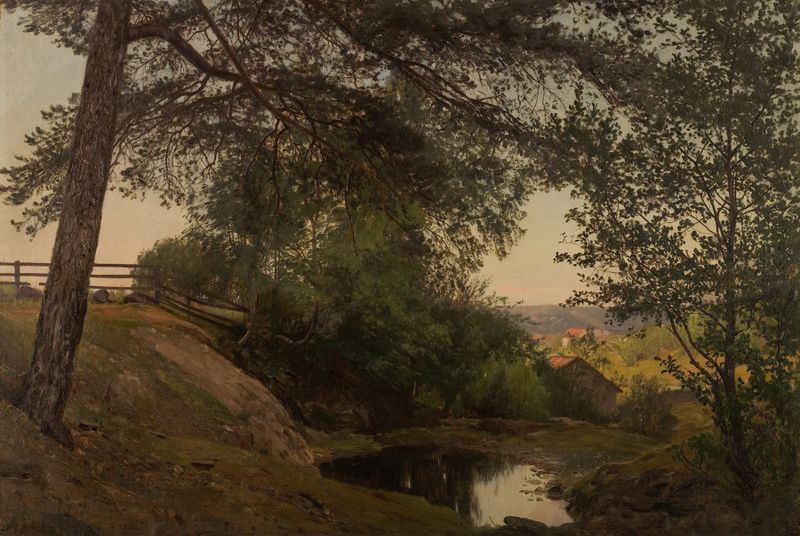
Mellom trærne. Lervik, Stord
Amaldus Nielsen

Båtbyggeri, Lillesand
Amaldus Nielsen
Regnstemning, Gudvangen
Amaldus Nielsen





