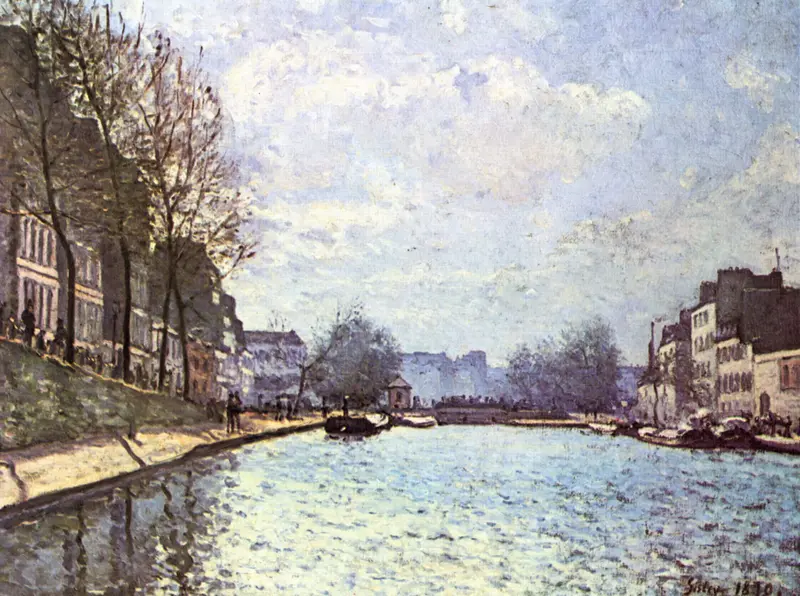
Du Quai de Javel (baraque d’aiguilleur) — History & Facts
In Du Quai de Javel (baraque d’aiguilleur), Henri Rivière presents a lively scene filled with vibrant colors. The painting features a bustling Parisian setting with figures engaged in daily activities. The use of light and shadow creates a dynamic atmosphere, highlighting the architecture and the people.
The colors are rich, with blues and greens dominating the palette, suggesting a lively day in the city. The painting is characterized by its loose brushwork, typical of the Impressionism style. Rivière employs a variety of techniques to convey movement and life, such as quick strokes and layered colors. The composition draws the viewer's eye through the scene, inviting them to explore the details of the architecture and the figures.
The overall effect is one of spontaneity and energy, capturing a moment in time. Henri Rivière was known for his depictions of Parisian life and landscapes, often focusing on the interplay of light and color. This work, created around the early 1900s, reflects the artist's fascination with urban scenes. An interesting fact about this painting is that it showcases Rivière's ability to blend architectural elements with the vibrancy of everyday life, making it a notable example of his oeuvre.
More Artworks by Henri Rivière

Sur les toits
Henri Rivière
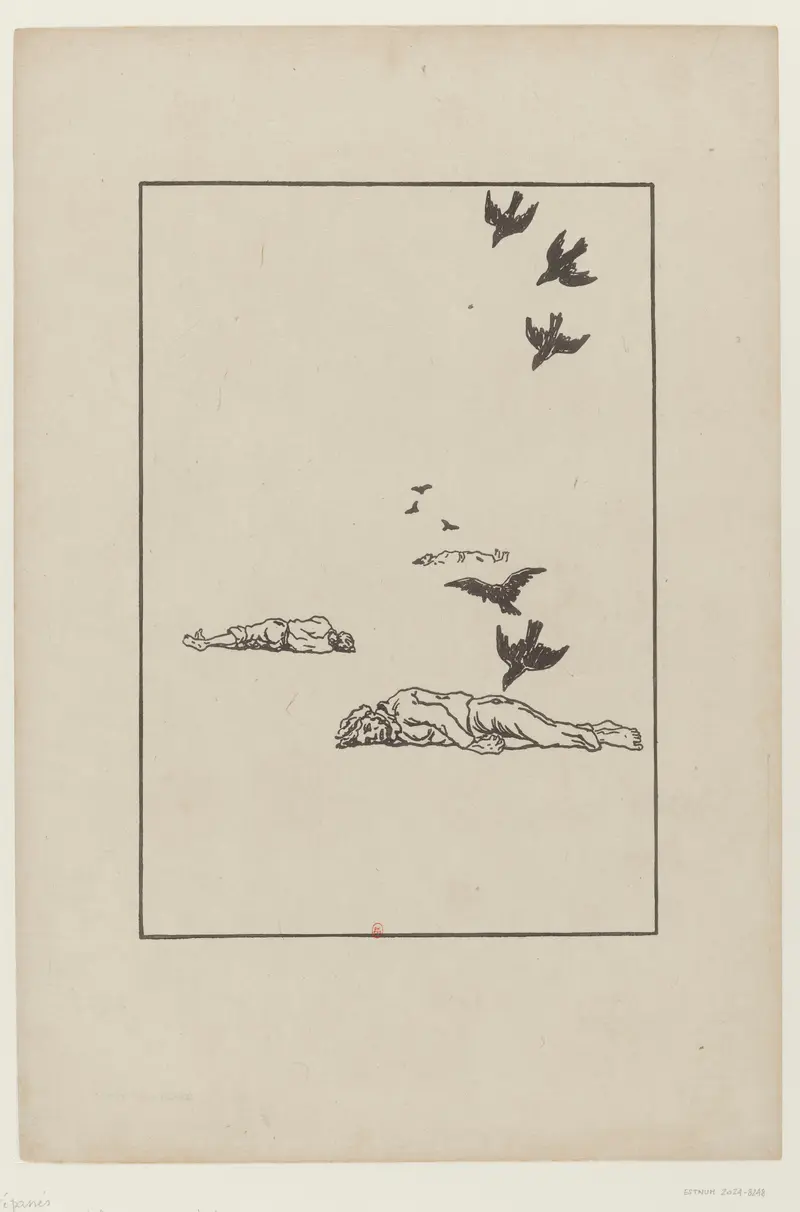
La Baie des trépassés
Henri Rivière
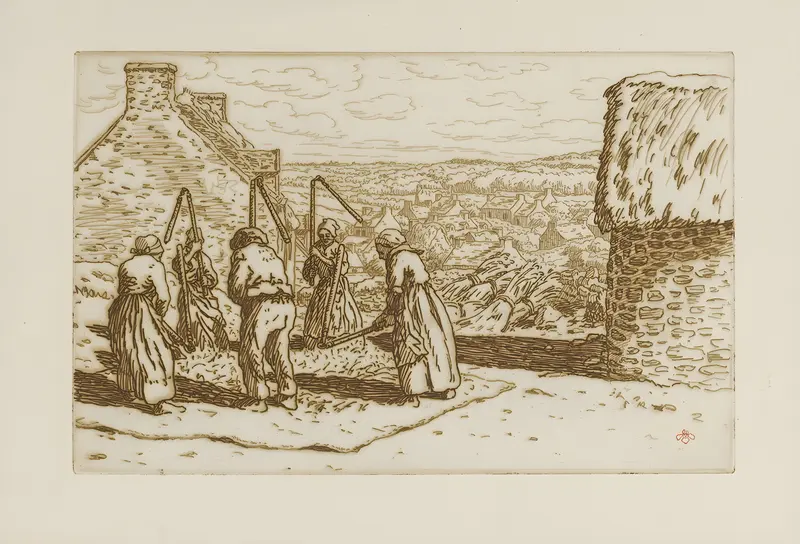
Homme et quatre femmes battant le blé
Henri Rivière

Barque à sec sur le sable au pied de la falaise
Henri Rivière
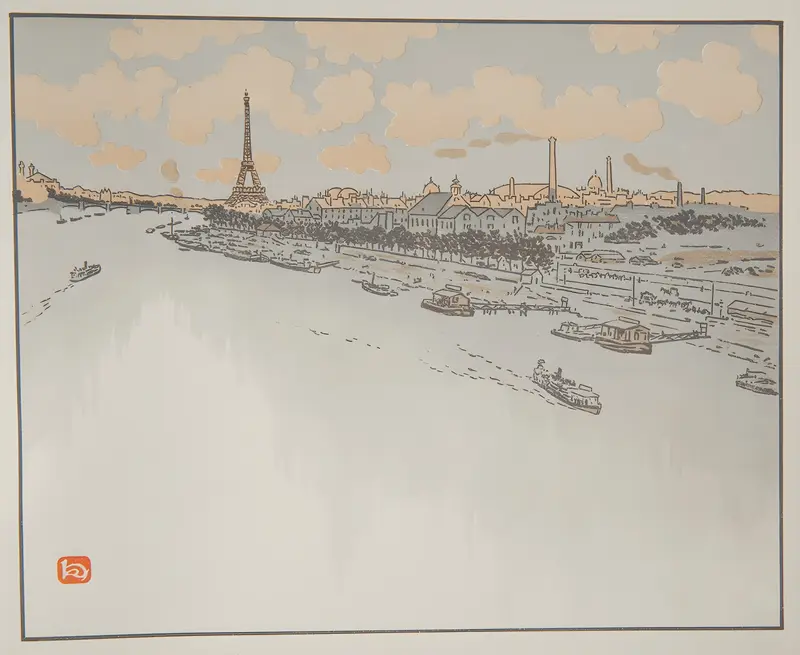
Du Point-du-Jour
Henri Rivière
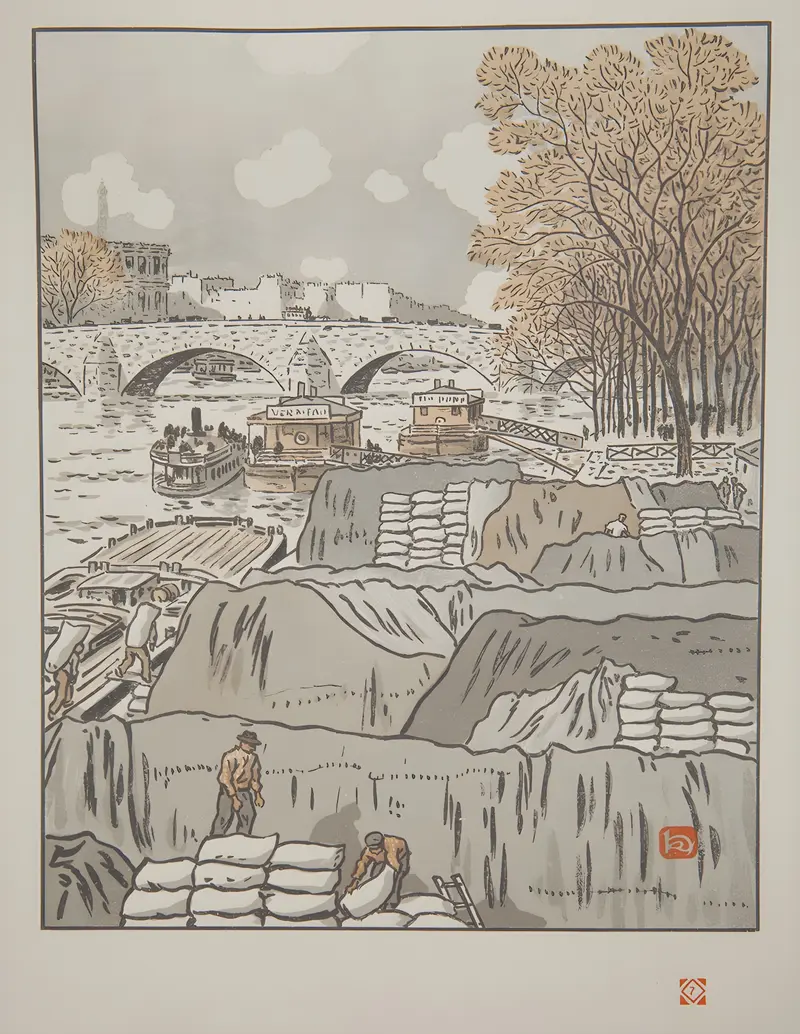
Du Pont des Saints Peres
Henri Rivière
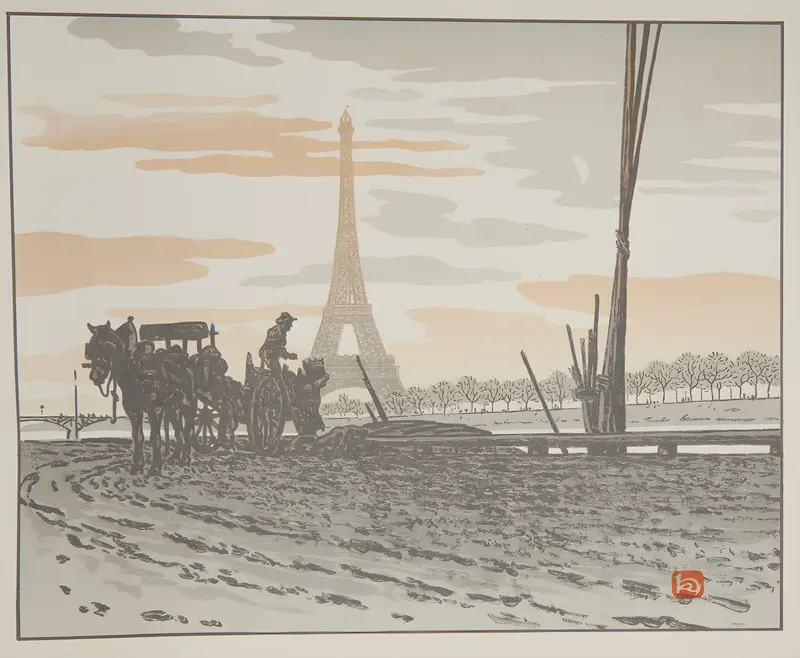
Du Quai de Pasy – Charboniers
Henri Rivière
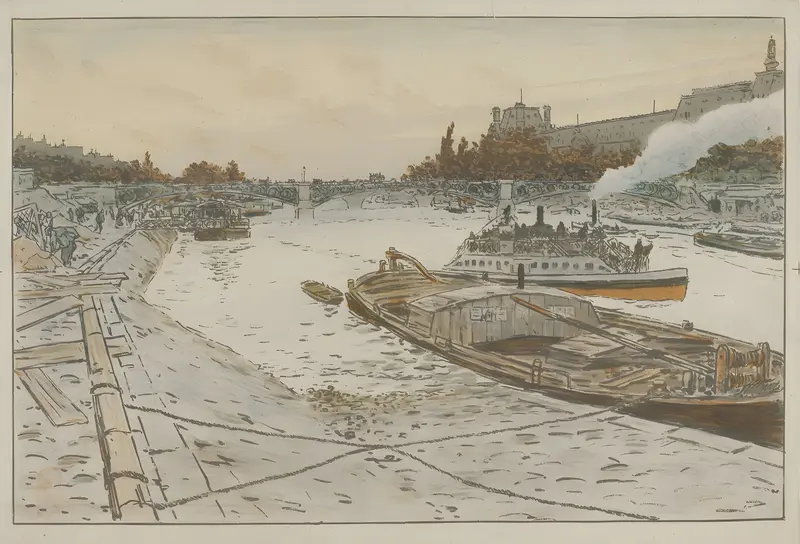
Le Pont des Saints-Pères (pont du Carrousel) et le Louvre
Henri Rivière
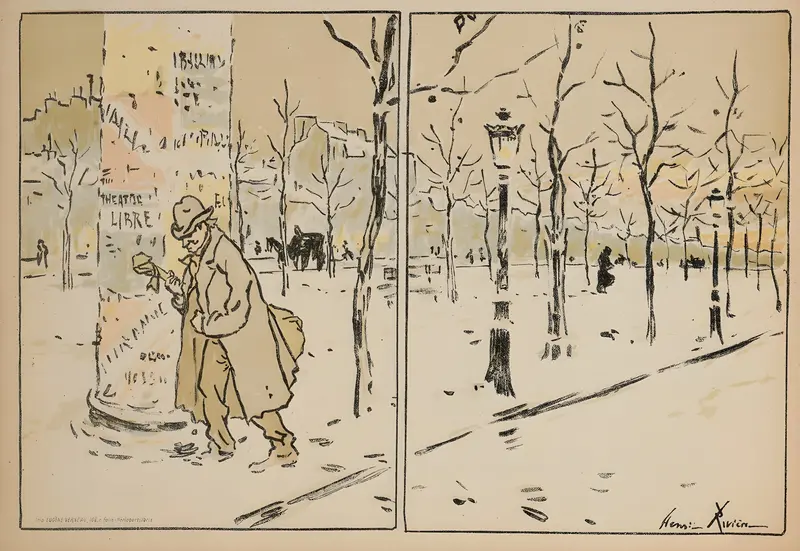
Paris en hiver, Programme pour le Théâtre Libre
Henri Rivière
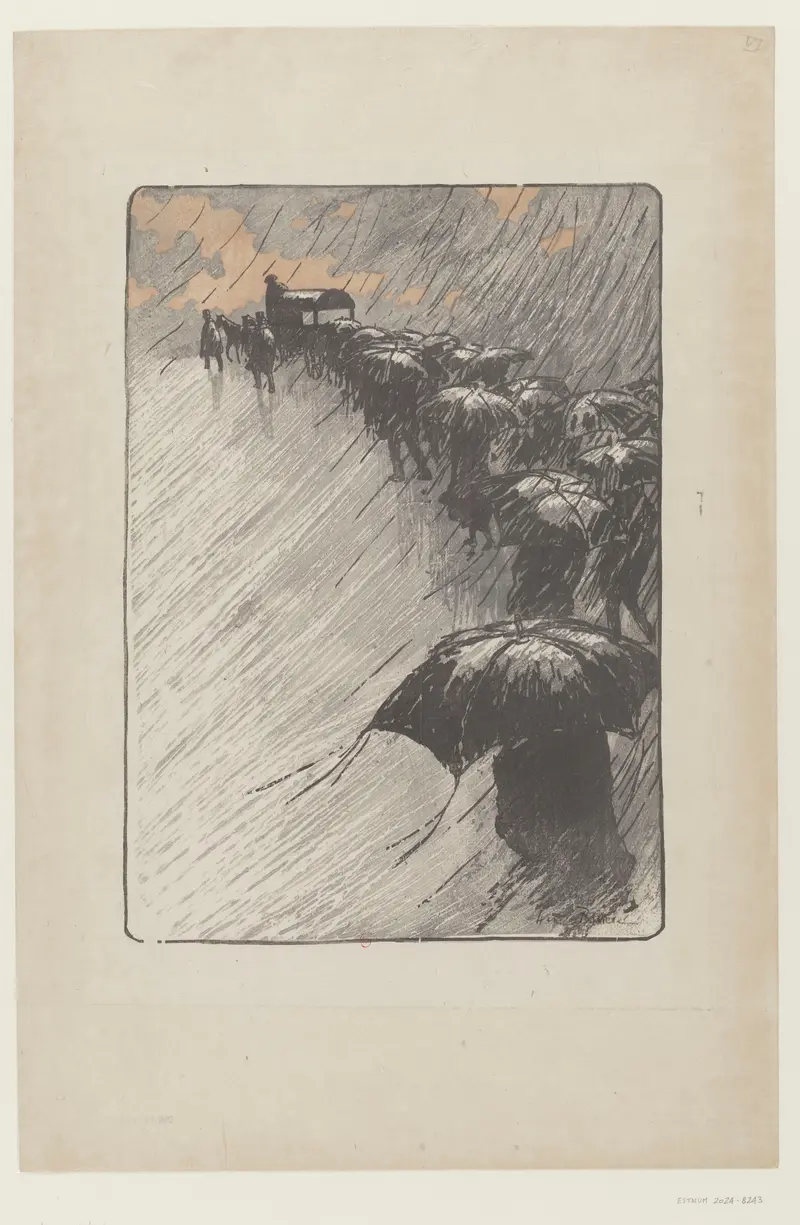
L’Enterrement aux parapluies
Henri Rivière