
Dusk Landscape — History & Facts
Can beauty exist without sorrow? In the gentle embrace of twilight, where day meets night, the landscape unfolds a delicate narrative of both wonder and melancholy. Look to the horizon, where the fading sun casts an ethereal glow over rolling hills. The soft pastels of pink and lavender blend seamlessly with deep blues, creating a sky that seems to breathe. Notice how the light gently caresses the treetops, imbuing the scene with a sense of calm yet whispering of an impending darkness.
Each brushstroke captures the fleeting moment, inviting you to linger in this transitory space where nature holds its breath. Amidst the tranquility lies a poignant tension—an interplay between the vibrant colors that evoke warmth and the encroaching shadows hinting at solitude. The stillness of the landscape suggests a depth of emotion, as if the viewer is witnessing not just a visual spectacle, but also an intimate moment of reflection. Here, the beauty of the scene is underscored by the acknowledgment that dusk is both an end and a beginning, a revelation wrapped in the embrace of twilight. Joseph Frank Currier created this piece during a period marked by introspection and a growing appreciation for the American landscape.
His work emerged amid a cultural shift that embraced naturalism, as artists sought to capture the essence of the world around them. Though the exact date of this landscape remains unknown, the thematic exploration of beauty and sorrow resonates profoundly within the broader context of 19th-century art.
More Artworks by Joseph Frank Currier
Browse all →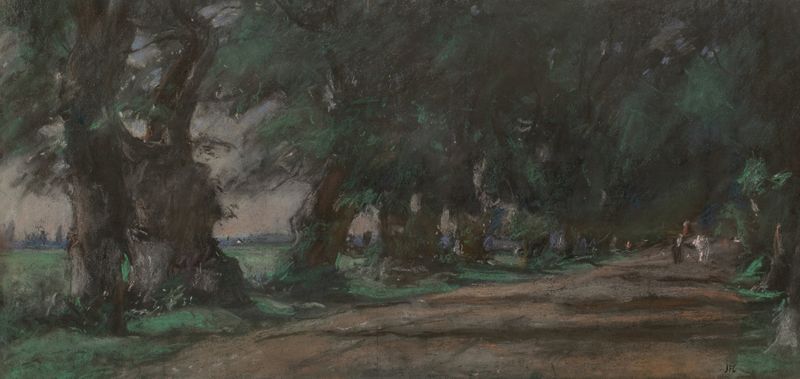
The Shaded Lane
Joseph Frank Currier
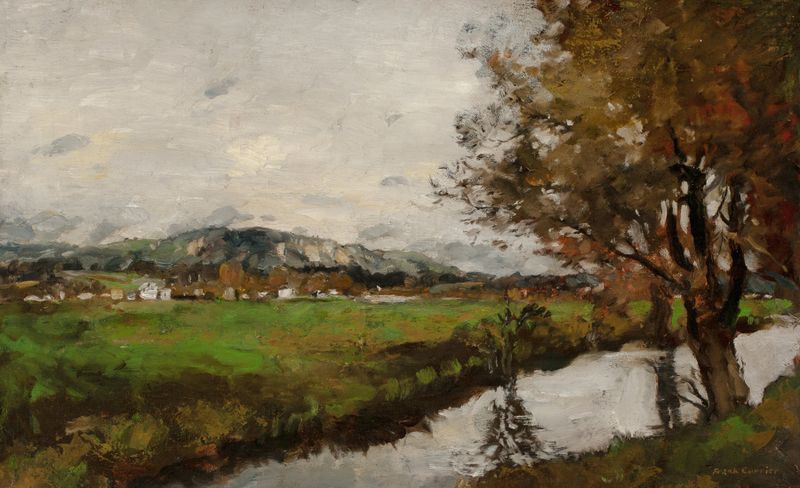
Canal at Dachau (Canal in Bavaria)
Joseph Frank Currier
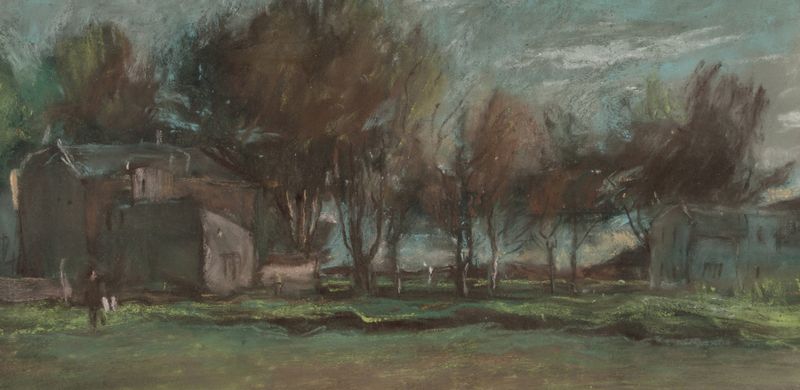
Trees by a Village
Joseph Frank Currier
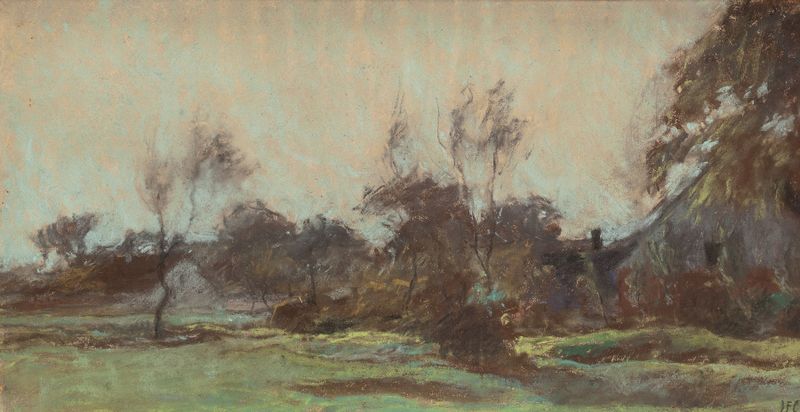
Morning Landscape
Joseph Frank Currier
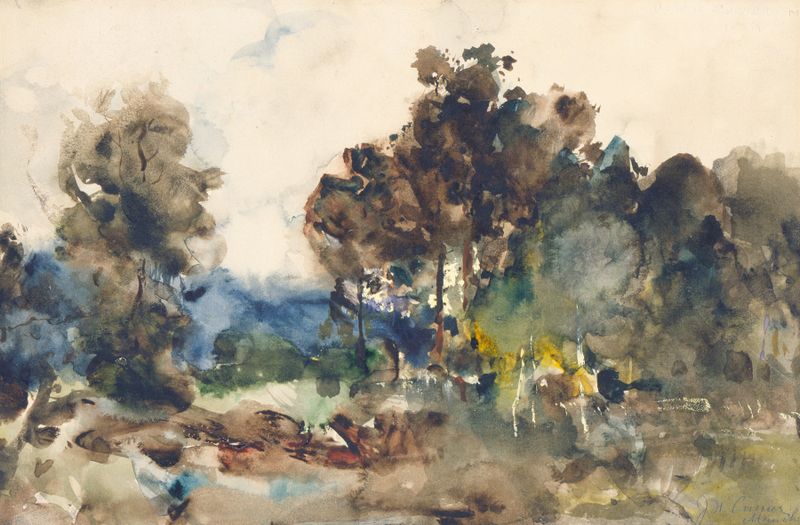
Landscape Sketch
Joseph Frank Currier
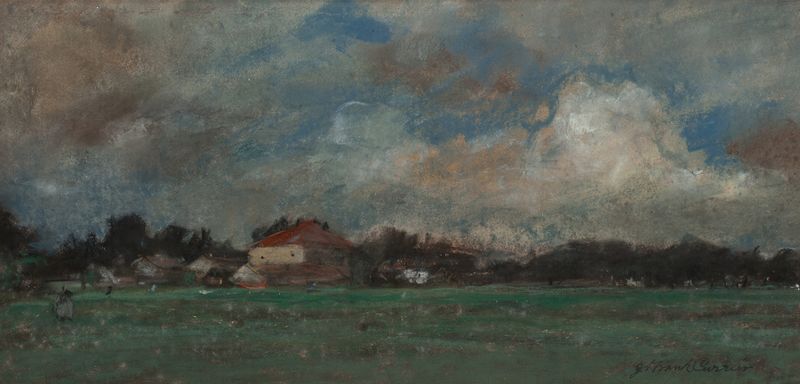
Stormy Sky
Joseph Frank Currier

Landscape near Dachau
Joseph Frank Currier
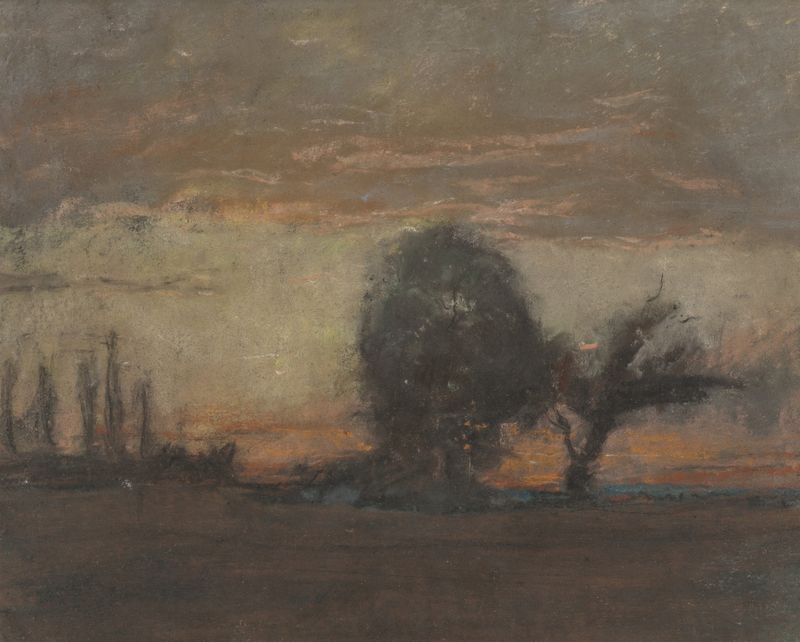
Evening Landscape
Joseph Frank Currier

Nocturnal Landscape
Joseph Frank Currier





