
Dutch Barges At The Mouth Of An Estuary — History & Facts
What first draws the eye in Dutch Barges At The Mouth Of An Estuary is the play of light across the water and sails—a moment suspended between the restless sky and the churn of the tide. The barges lean into the current, their flags snapping, while the clouds above seem to gather and break in the same breath. Hulk’s brushwork gives the water a sense of movement and weight, guiding the viewer from the rocky shore at the left to the open horizon at the right.
Each vessel is animated by small figures at work, their gestures purposeful, their presence anchoring the scene in daily labor. The Dutch tricolor on the central sail signals not only national identity but also a connection to a wider world of trade and travel, while the low horizon ensures that the vast, shifting sky is the true stage for the day’s unfolding. Painted in the mid-19th century, this work belongs to a tradition of marine painting that flourished in the Netherlands, where the sea was both livelihood and boundary. Artists like Hulk responded to a growing demand from merchants, shipowners, and a middle class eager to see their world reflected in art—pictures that celebrated the skill of sailors and the drama of coastal life.
The year 1850 places this painting at a time when Dutch harbors were modernizing, yet the sturdy barges and familiar estuary scene evoke a continuity with centuries of maritime heritage. Little is recorded about the specific journey of this canvas, but its survival in a collection today invites us to stand on that wind-swept shore, watching the barges ride the tide beneath a sky that never quite settles.
More Artworks by Abraham Hulk

A freshening breeze
Abraham Hulk
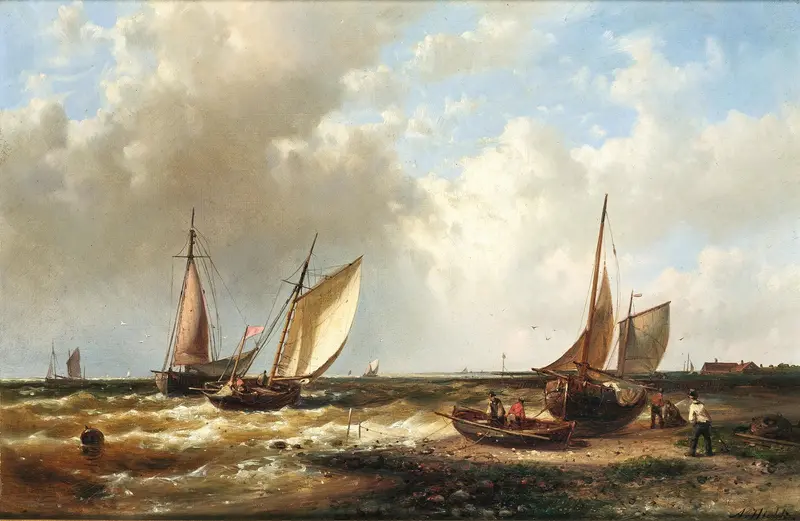
Fishermen at the Seaside
Abraham Hulk

Shipping off the coast
Abraham Hulk
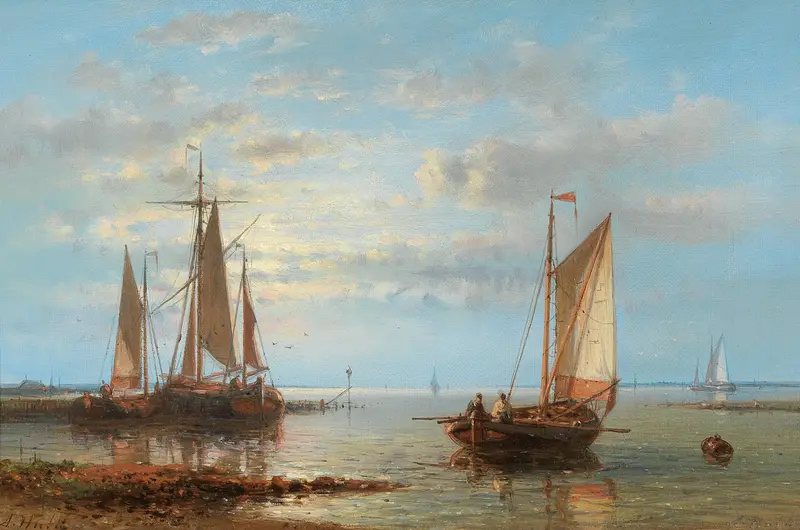
Sailing Boats on Rough Seas
Abraham Hulk
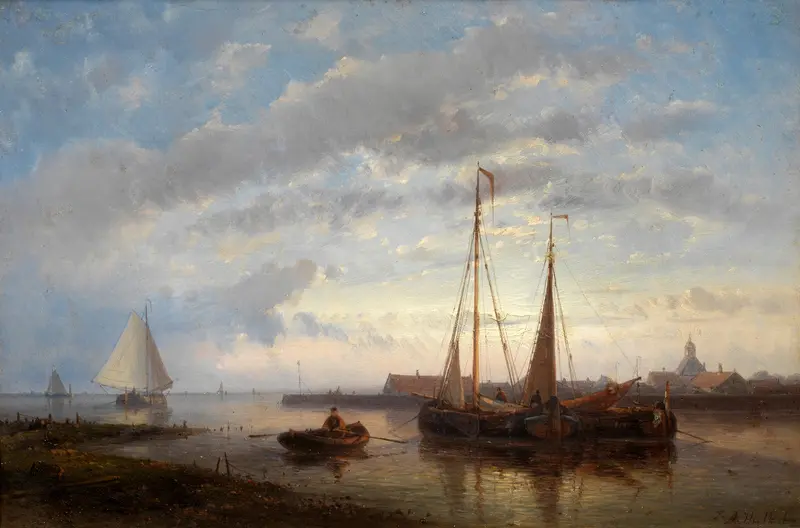
Fishermen at sunset
Abraham Hulk
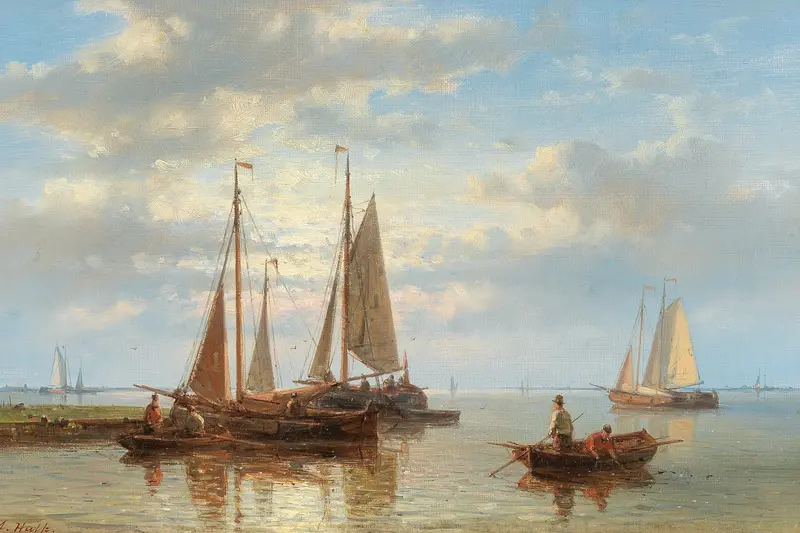
Sailing Boats On Rough Seas
Abraham Hulk
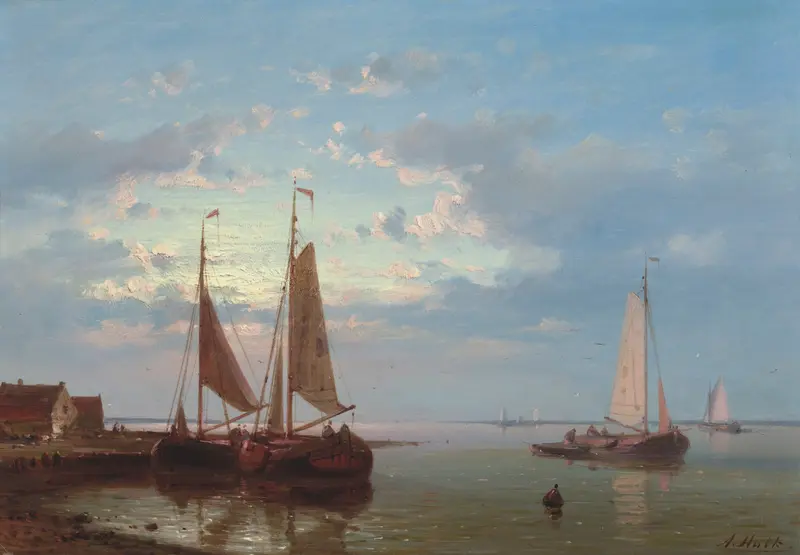
Fishing boats moored in a calm harbour
Abraham Hulk
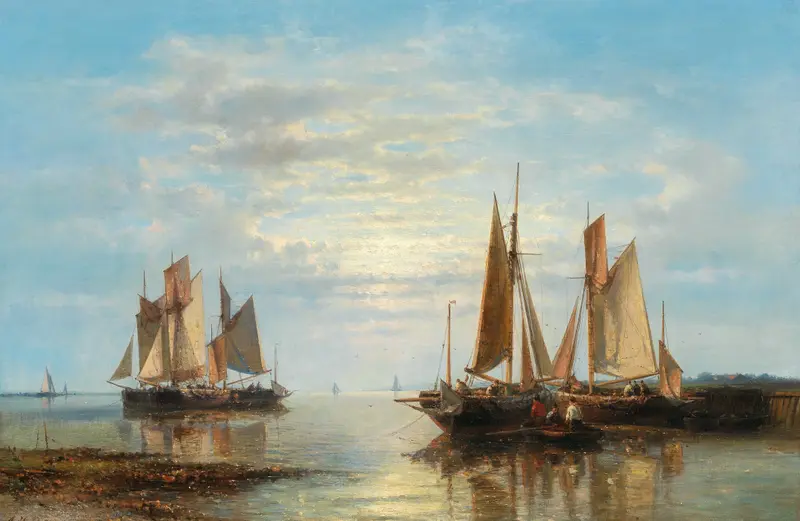
Sailing Boats On A Calm Sea
Abraham Hulk
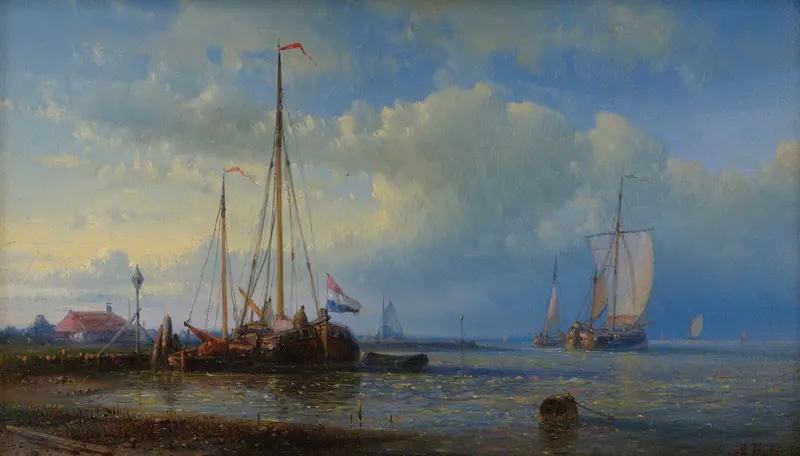
Seascape
Abraham Hulk
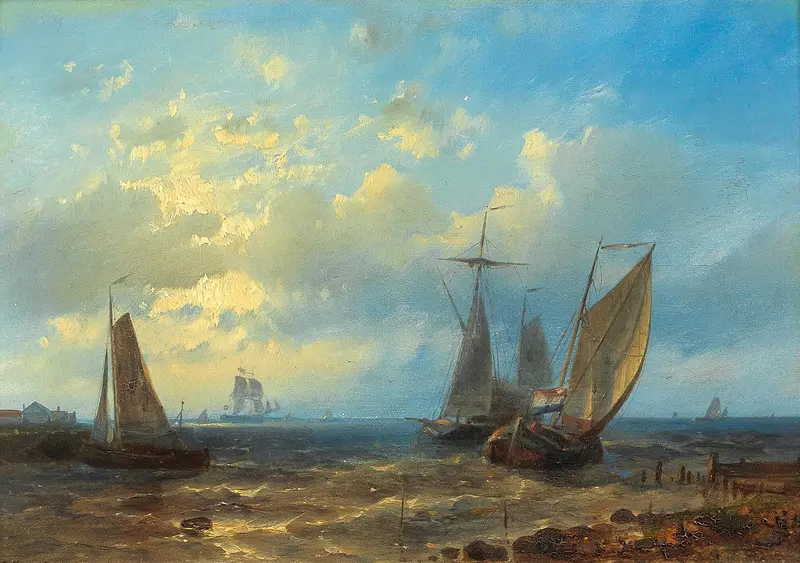
Fishing Boats By The Coast
Abraham Hulk





