
Early Autumn on Esopus Creek — History & Facts
Could beauty survive in a century of chaos? In Early Autumn on Esopus Creek, nature presents a tranquil answer, inviting us to pause and reflect on the delicate interplay between serenity and the passage of time. Look to the shimmering surface of the creek, where the light dances playfully, creating a sparkling contrast against the warm, earthy hues of autumn foliage. Notice the horizontal expanse of water that draws your gaze inward, flanked by trees dressed in vibrant oranges and deep yellows. Bricher's meticulous brushwork captures the gentle ripples, infusing the piece with movement while the clouds hover softly above, blending cool blues into the scene, echoing the transition of seasons. The painting subtly contrasts stillness with the inevitability of change.
Each leaf, painted with tender care, is both a celebration of life's beauty and a poignant reminder of its fleeting nature. The idyllic setting serves as a refuge from the tumult of the outside world, embodying a moment of peace amid the chaos of the late 19th century. Here, the viewer is invited to reflect on the depths of awe that nature elicits, standing as a testament to its endurance. Created between 1861 and 1897, this piece emerged during a transformative period for American art, as artists began to embrace realism and the beauty of the natural world.
Bricher, influenced by the Hudson River School, sought to evoke the sublime in his landscapes while navigating a rapidly industrializing society. This painting, encapsulating the essence of a serene autumn day, serves as a poignant reminder of beauty's resilience within the ever-changing tapestry of life.
More Artworks by Alfred Thompson Bricher
Browse all →
New England Coast
Alfred Thompson Bricher
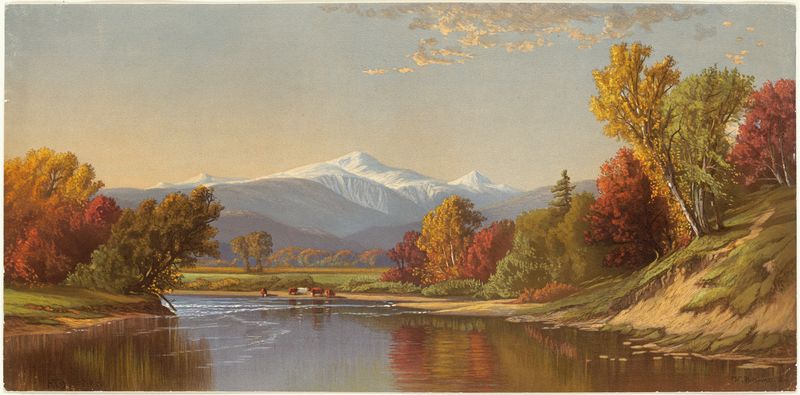
Late Autumn in the White Mountains
Alfred Thompson Bricher
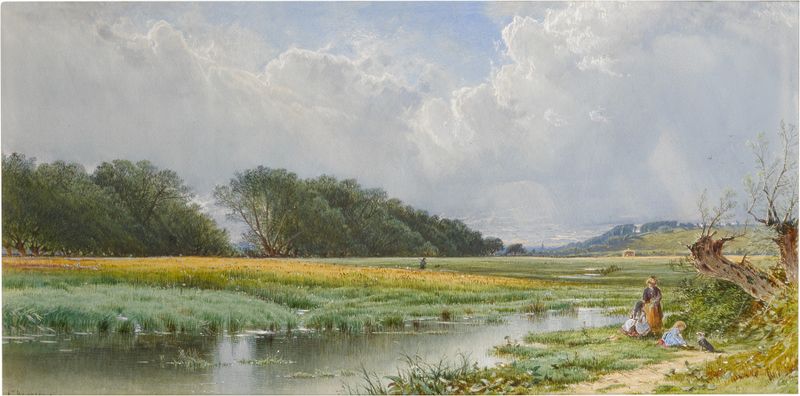
On the Meadows of Old Newburyport
Alfred Thompson Bricher

Along the Maine Coast
Alfred Thompson Bricher
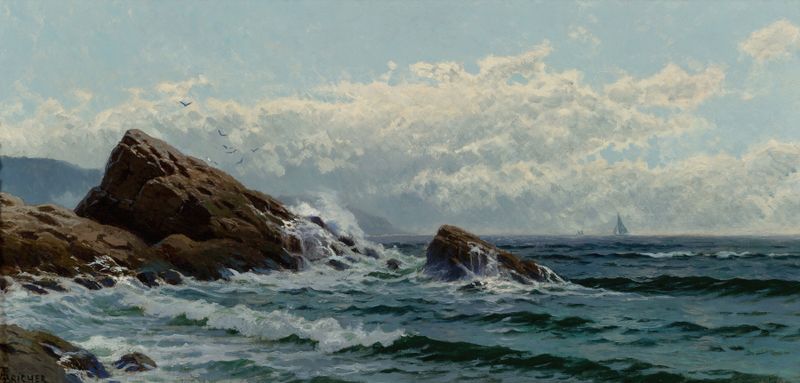
Crashing Waves
Alfred Thompson Bricher

At Water’s Edge
Alfred Thompson Bricher
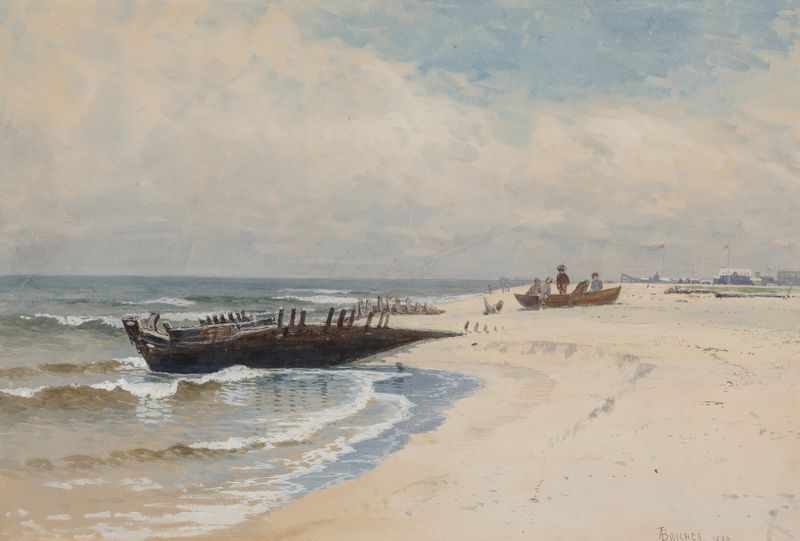
Low Tide
Alfred Thompson Bricher
Sunset on the Coast
Alfred Thompson Bricher

Castle Rock, Nahant, Massachusetts
Alfred Thompson Bricher

On the Meadows of Old Newburyport
Alfred Thompson Bricher





