
Efter storm, Spangereidleden — History & Facts
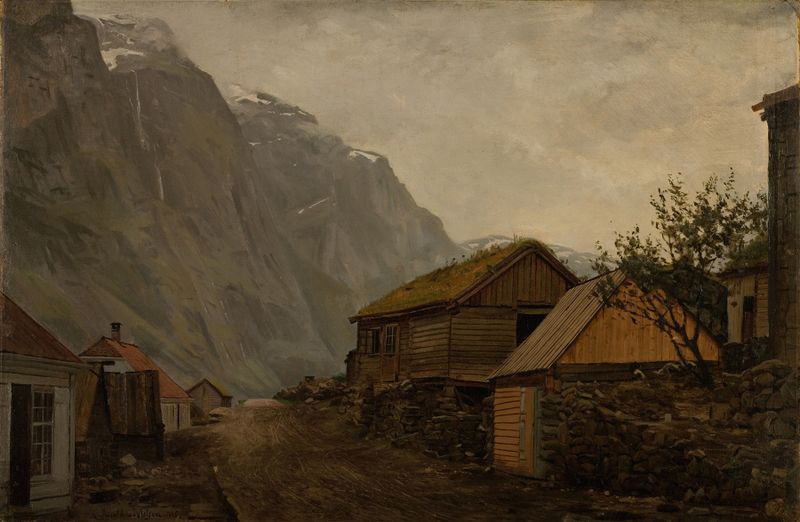
Who listens when art speaks of silence? In Efter storm, Spangereidleden, the void left by the storm emerges hauntingly, inviting contemplation on nature's vastness and human fragility. Look to the left at the desolate landscape, where dark clouds loom, their weight palpable against the horizon. The tumultuous waters glisten beneath a fleeting beam of light, hinting at a transient peace after chaos. Notice how the artist balances muted, earthy tones with splashes of brighter hues—reflecting hope amidst despair.
The brushwork conveys both turbulence and tranquility, guiding the eye from the storm-etched sky down to the serene shoreline. A juxtaposition of chaos and calm permeates the canvas. The wildness of the waters speaks of nature's ferocity, while the stillness of the land evokes a deep, contemplative silence. This interplay fosters an emotional tension, suggesting that after each storm, life continues—both in its chaotic beauty and its quiet revelations.
The ethereal light piercing through clouds suggests an eternal promise of renewal, yet the void it creates invites a deeper reflection on what may be lost in the aftermath. Amaldus Nielsen painted this work in 1859 while living in Norway, a time marked by romanticism's embrace of nature and emotion. This period saw artists grappling with the sublime and the ordinary, as they sought to convey the beauty and terror of their landscape. In a world in transition, Nielsen's connection to his surroundings reflects a profound understanding of the human experience amid nature’s might.
More Artworks by Amaldus Nielsen
Browse all →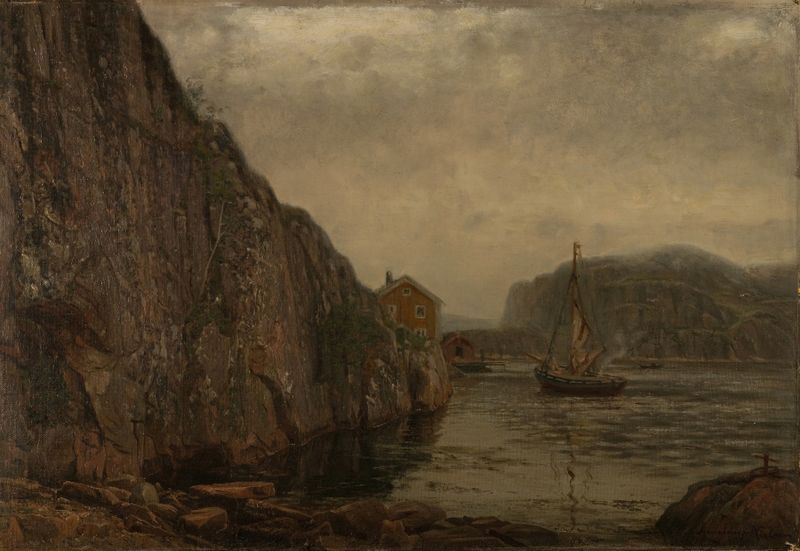
Skjærgård, Ny-Hellesund
Amaldus Nielsen
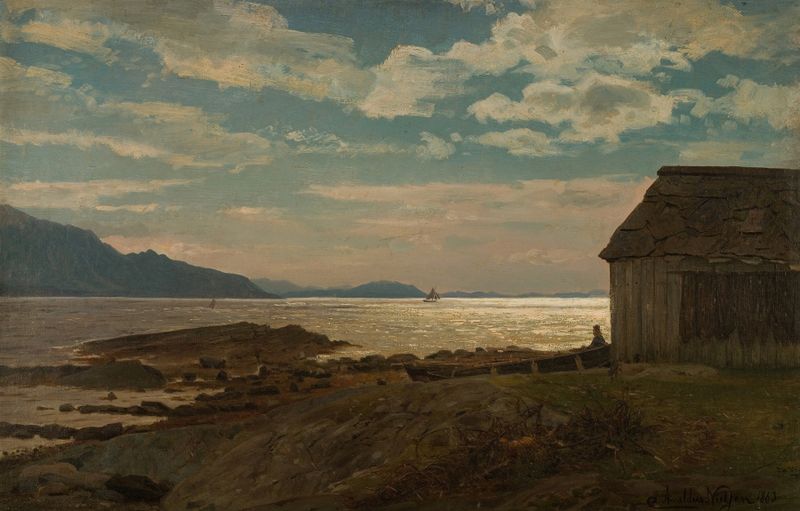
Fra Ølvestranden, Hardanger
Amaldus Nielsen
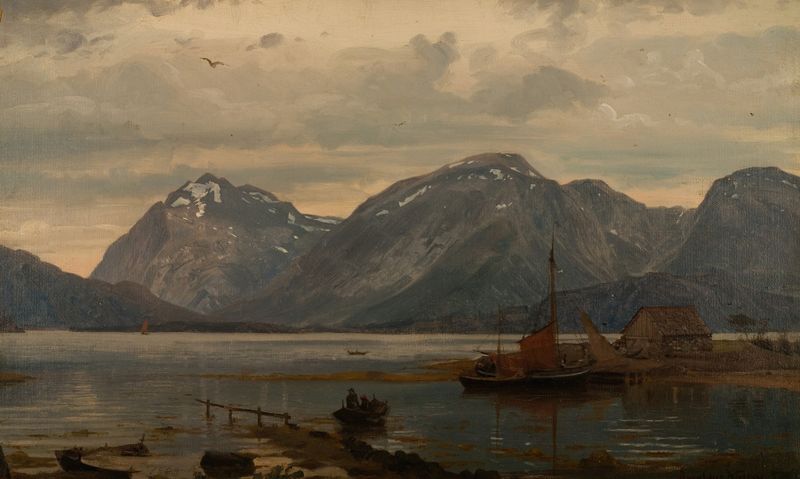
Fra Englafjellene, Hardanger
Amaldus Nielsen
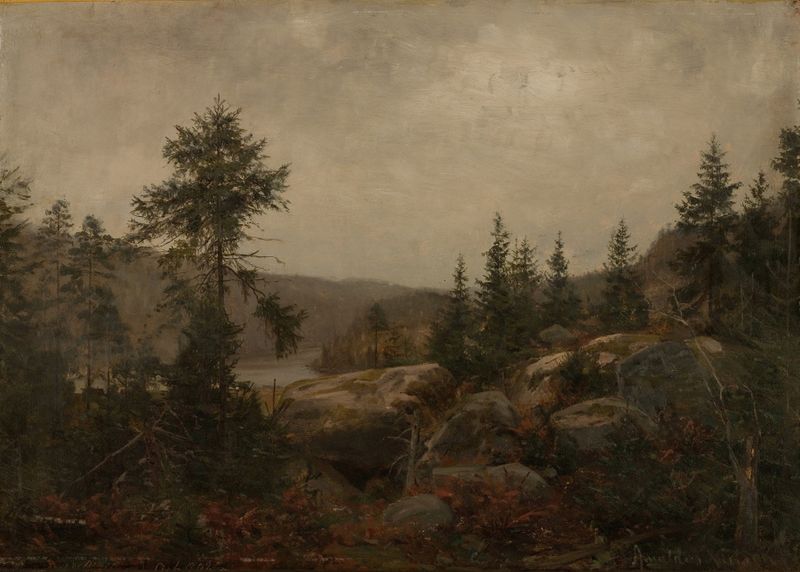
Duskregn . Gården Foss, Mandalselven
Amaldus Nielsen
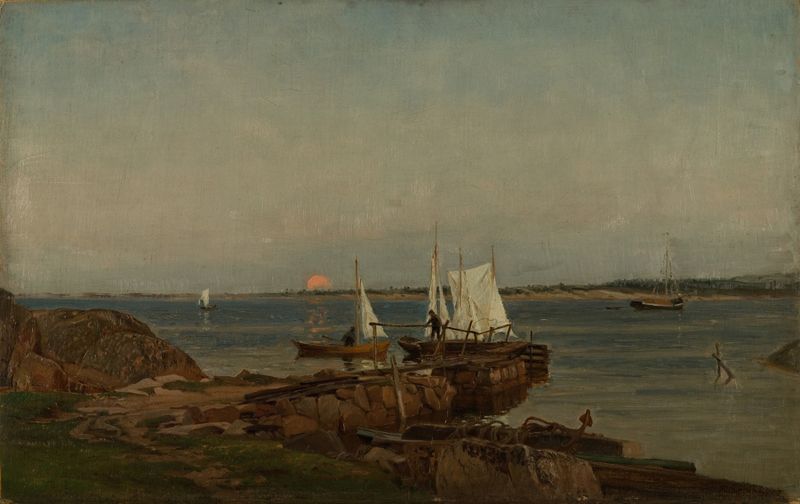
Sommernatt, Hvaler
Amaldus Nielsen
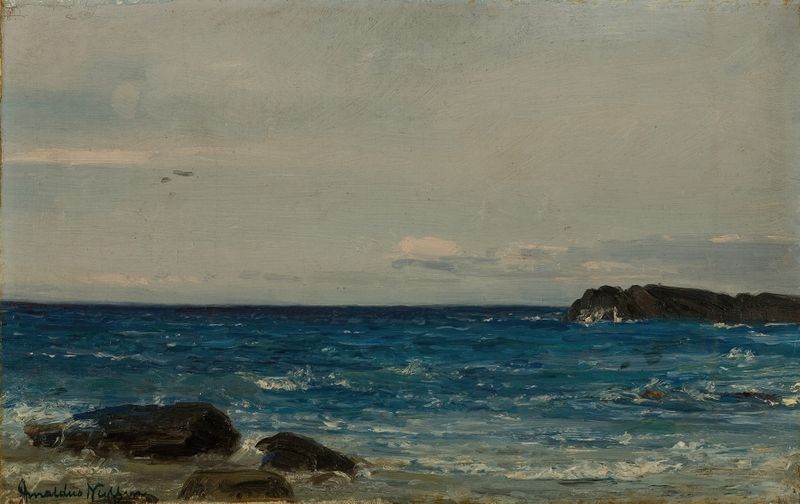
Fra Jæren
Amaldus Nielsen
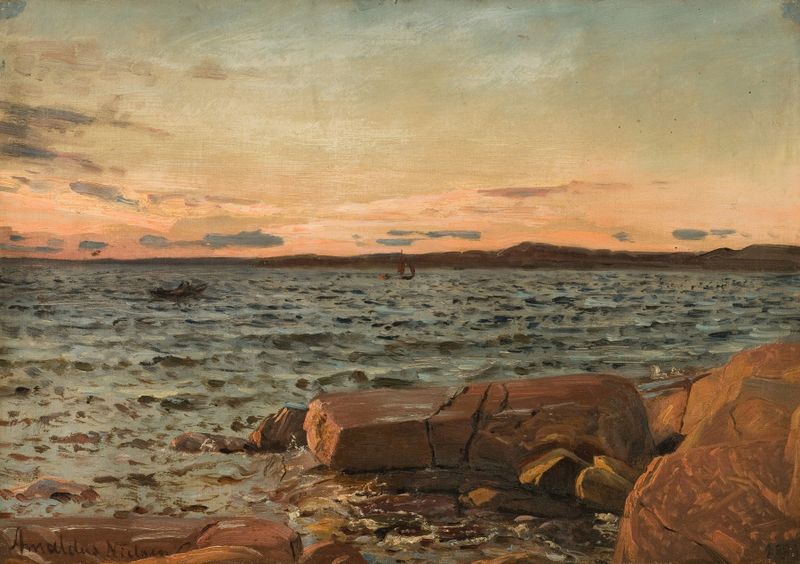
Solgangsvind, Hvaløene
Amaldus Nielsen
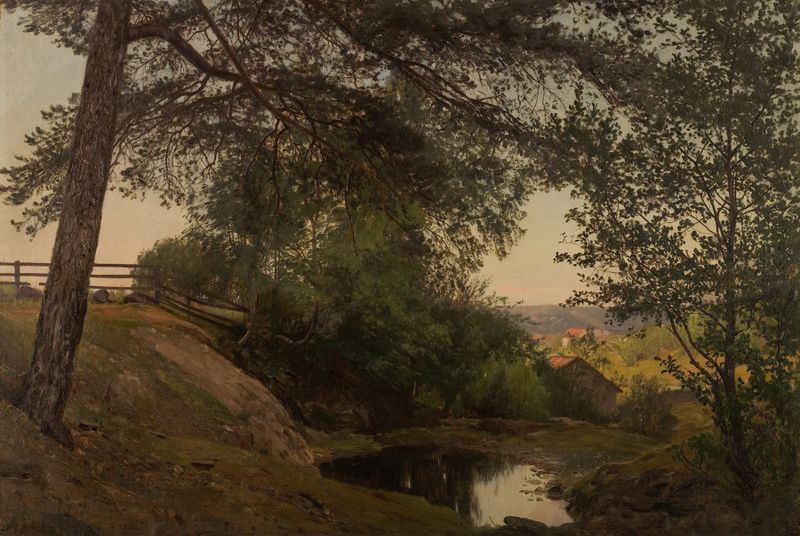
Mellom trærne. Lervik, Stord
Amaldus Nielsen

Båtbyggeri, Lillesand
Amaldus Nielsen
Regnstemning, Gudvangen
Amaldus Nielsen





