
Egger Lienz Totentanz 1809 — History & Facts
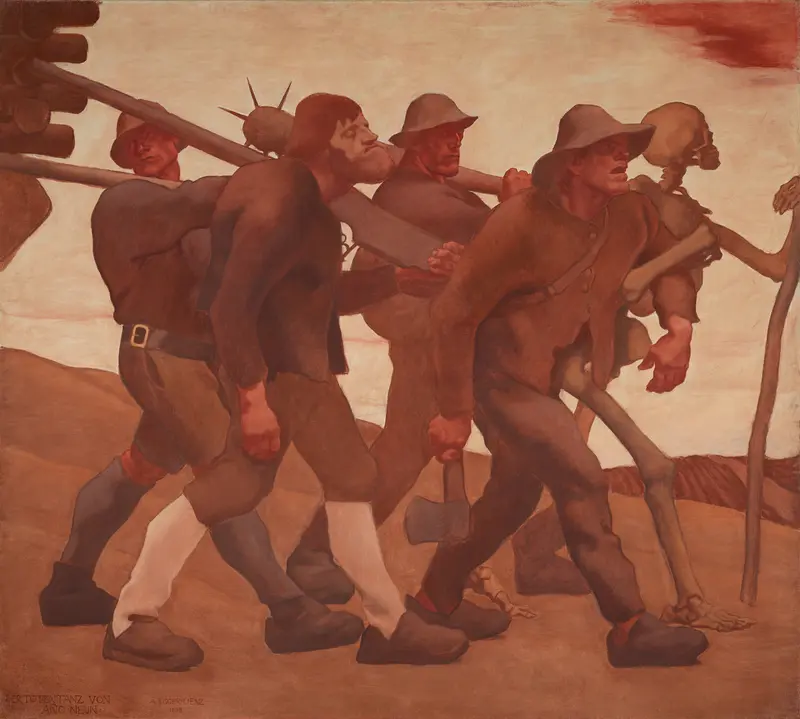
The grim procession that fills Egger Lienz Totentanz 1809 draws the viewer in with its unyielding rhythm, as if the figures are marching straight out of the canvas and into the room. Each man, rendered in heavy, monumental forms, is locked in step with the others, their faces set in expressions of exhaustion or grim resolve. The palette is earthy and muted, the background a stark, almost scorched yellow, which throws the figures into sharp relief.
The tools they carry—axes, shovels, and a spiked club—are not just implements but emblems of labor and violence, hinting at a story of struggle and mortality. The skeletal figure at the rear, with its bony hand gripping a shovel, breaks the human chain with a jolt: death itself has joined the march. Painted in 1920, this work by Albin Egger Lienz emerges from the shadow of war and upheaval that marked early twentieth-century Europe. The title, referencing the year 1809, evokes the Tyrolean Rebellion and the tradition of the Totentanz—the dance of death—a medieval motif in which Death leads people from all walks of life in a final procession.
In the wake of World War I, artists like Egger Lienz returned to such imagery to grapple with collective trauma and the relentless advance of fate. History has kept few traces of this particular painting beyond its reproduction in an artbook, but its raw power and somber mood speak for a generation haunted by conflict. Stand before it and you may find yourself unconsciously falling into step with the march.
More Artworks by Albin Egger Lienz
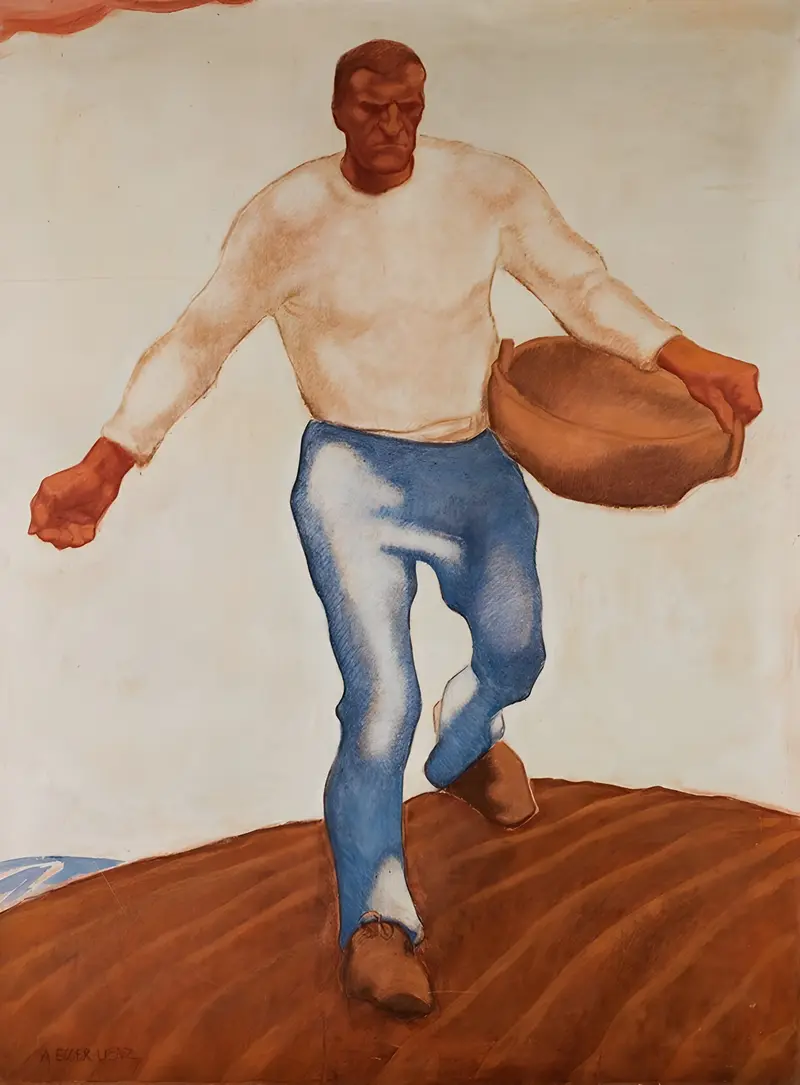
Der Sämann (The Sower)
Albin Egger Lienz
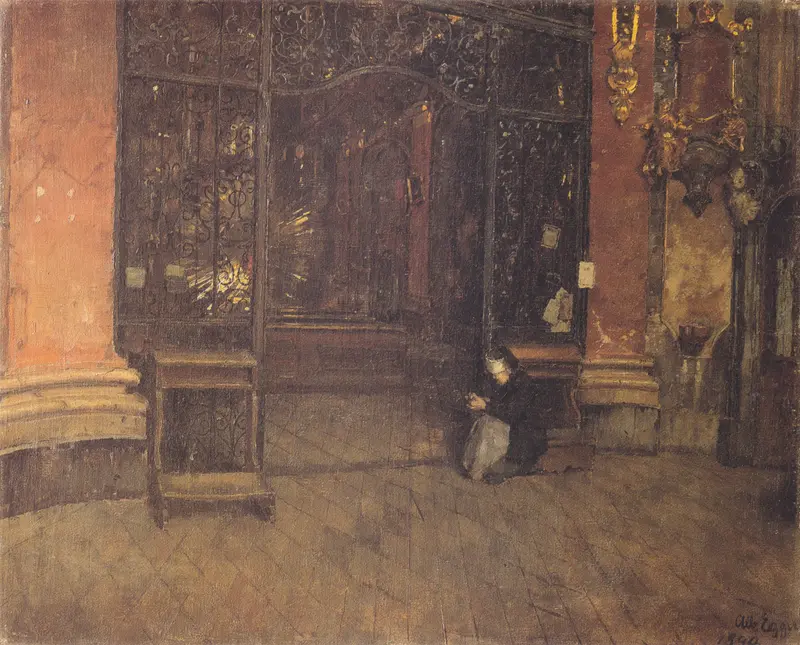
Inneres Der Johanneskirche In München
Albin Egger Lienz
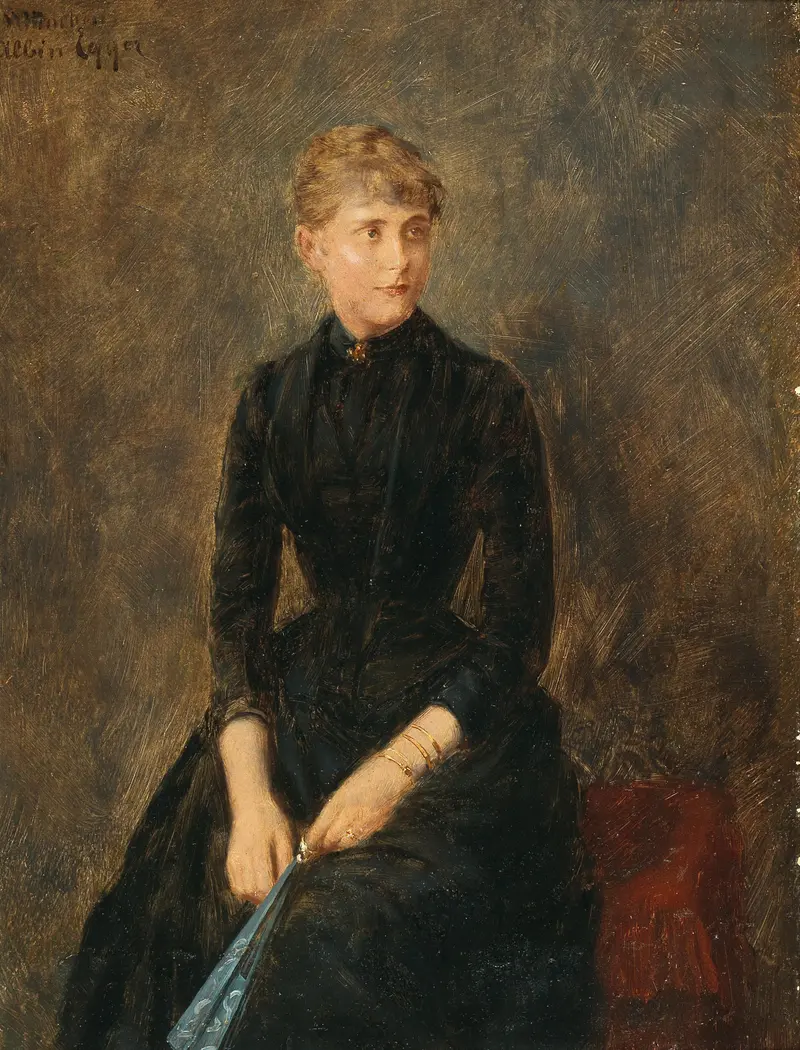
Portrait of the singer Hedwig Helbig
Albin Egger Lienz
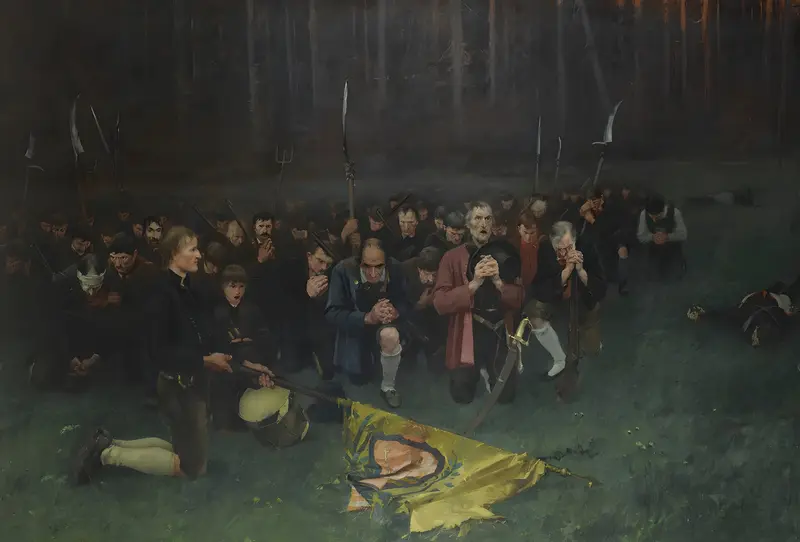
Prayer after the battle of Bergisel
Albin Egger Lienz
Study for the ‘Sensenmann’ in the ‘Das Kreuz’
Albin Egger Lienz
Der Totentanz Von Anno Neun
Albin Egger Lienz
Reapers in a GatheringStorm
Albin Egger Lienz
Carl Costenoble (Bildhauer und Stadtrat von Wien)
Albin Egger Lienz
Am Kalvarienberg In Bozen
Albin Egger Lienz
Kalvarienberg bei Bozen
Albin Egger Lienz





