
Art movement · c. 1905–1914 · Germany
Expressionism Art and Paintings
Expressionism is an art movement that began in Germany around 1905 and put the artist's inner feelings ahead of realistic appearance, with intense, non-naturalistic color, distorted forms and free, thickly applied paint. Its painters include Ernst Ludwig Kirchner, Wassily Kandinsky, Franz Marc and Egon Schiele, and they took their cue from Edvard Munch, whose The Scream of 1893 pointed the way.
Its two groups were Die Brücke, founded in Dresden in 1905, and the Blue Rider, formed in Munich in 1911. In 1937 the Nazis removed some 20,000 modern works from German museums as “degenerate”; Max Beckmann's Self-Portrait in Tuxedo was taken from Berlin's National Gallery that July.
Browse 3,060 Expressionism paintings and artworks below, all public domain and free to download.
Selected and written by Pavel MazuelasUpdated November 5, 2026
Part of Art Movements and Painting StylesRelated: Post-Impressionism, Symbolism, Famous Landscape Paintings
All Expressionism paintings and artworks
Landscapes, figures, abstract works, portraits and street scenes. All public domain, free to download.





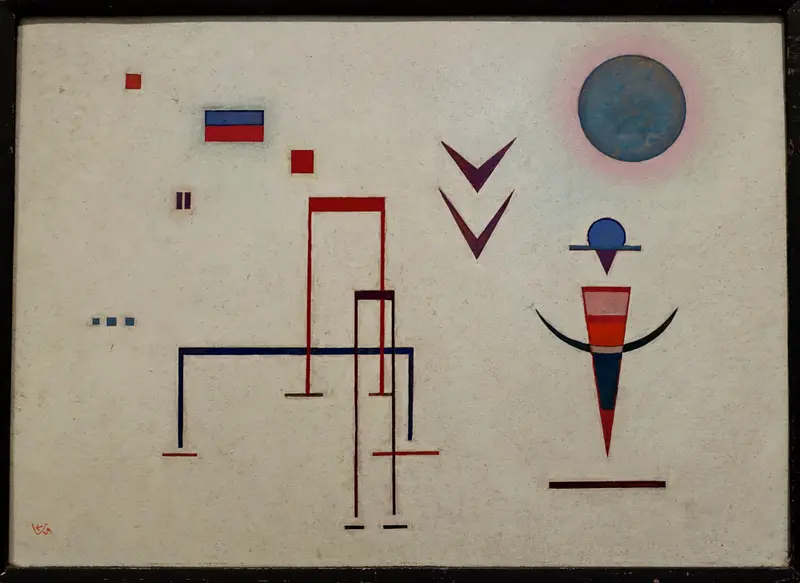


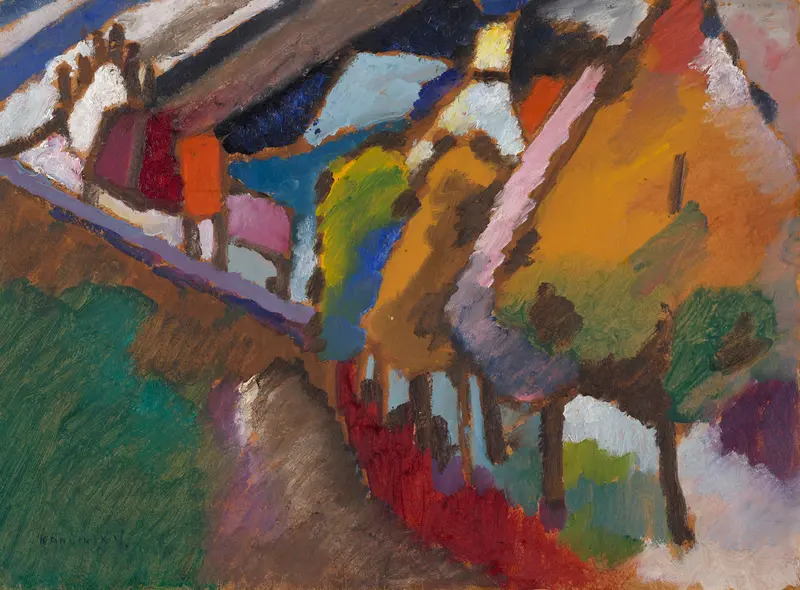

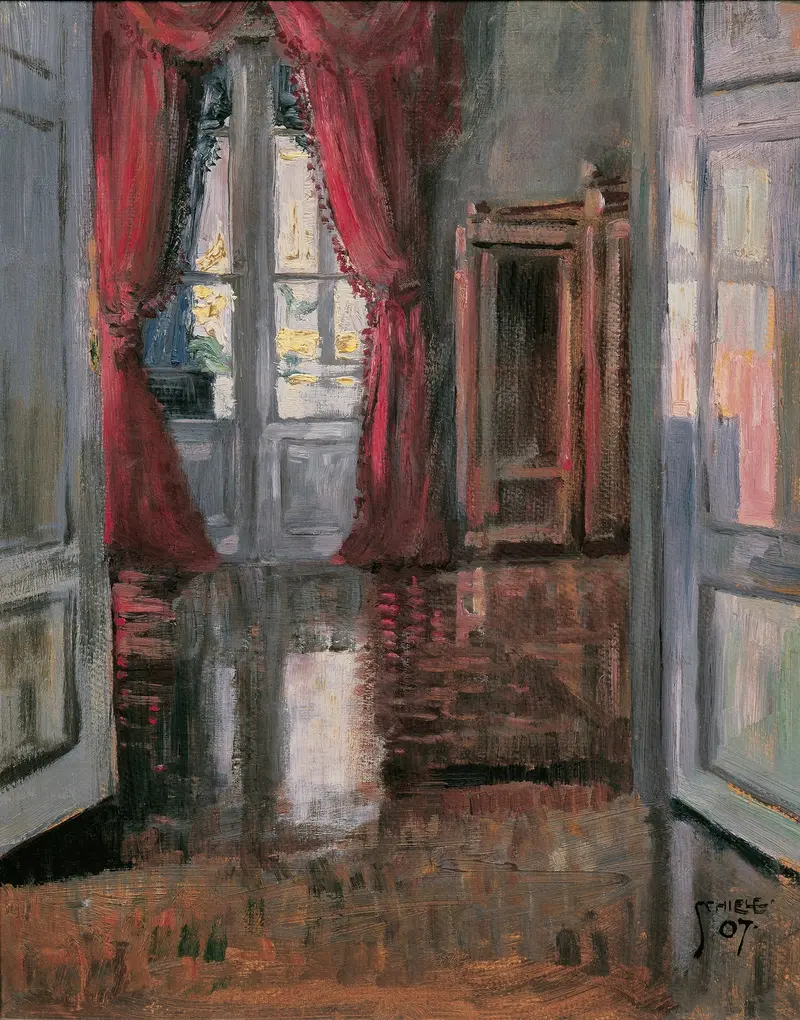

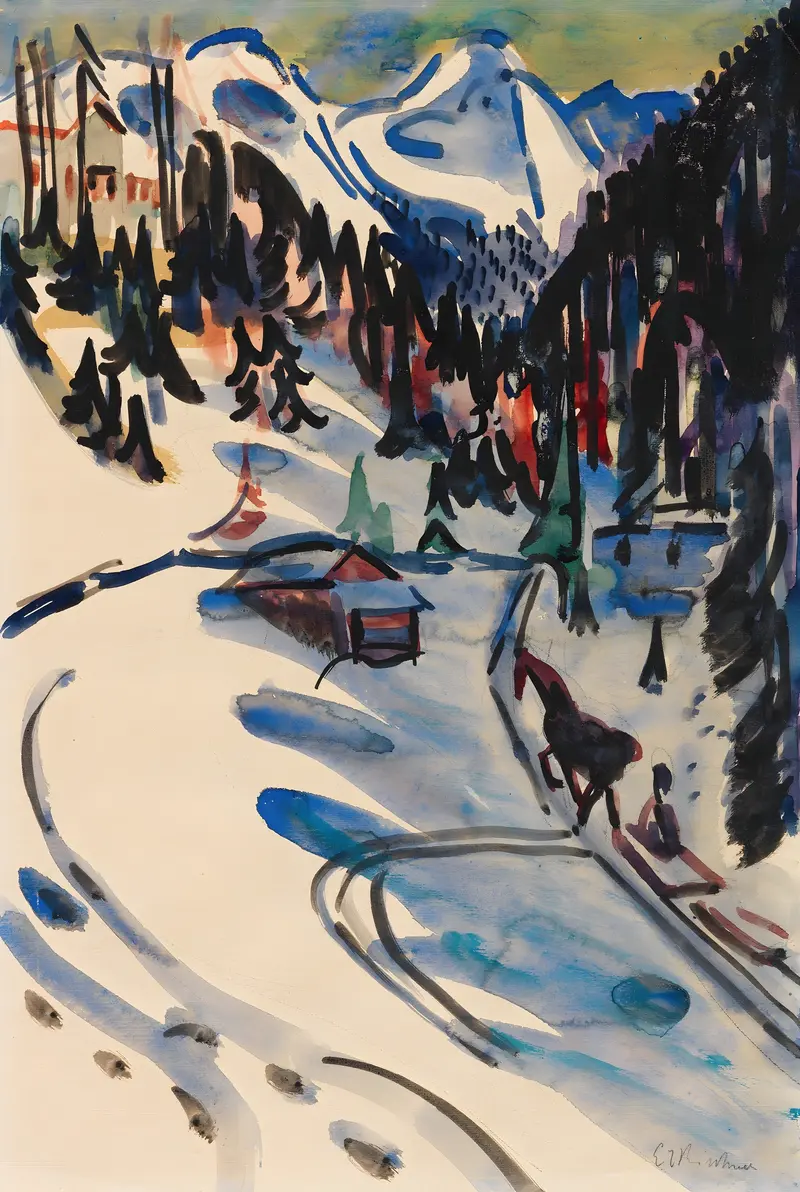





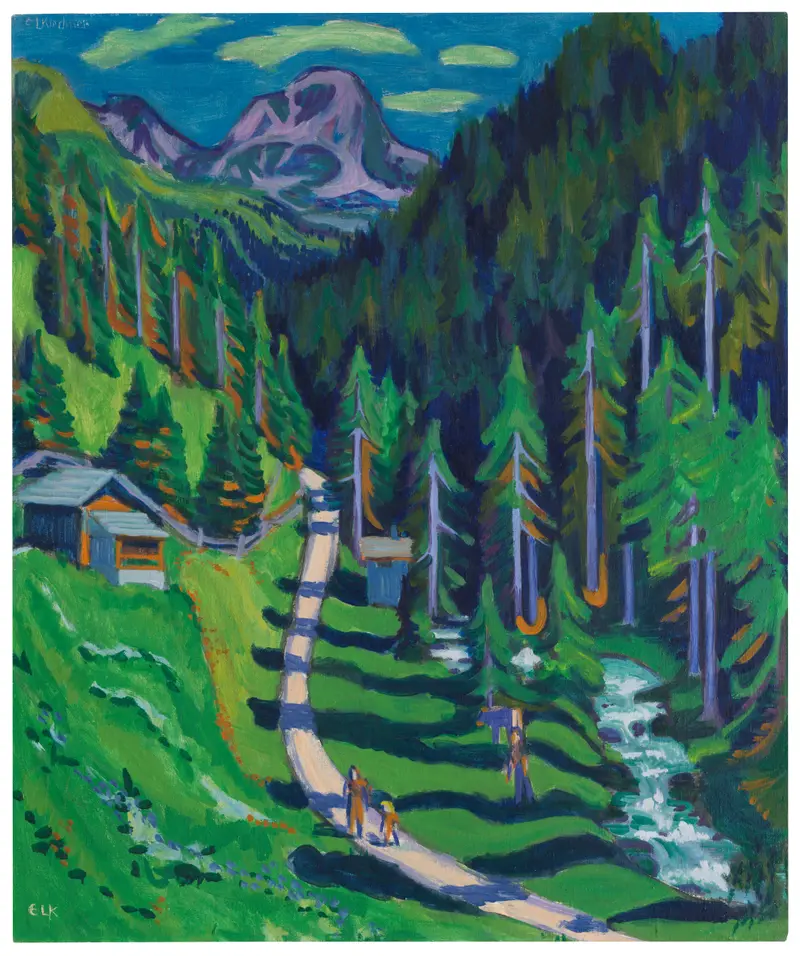
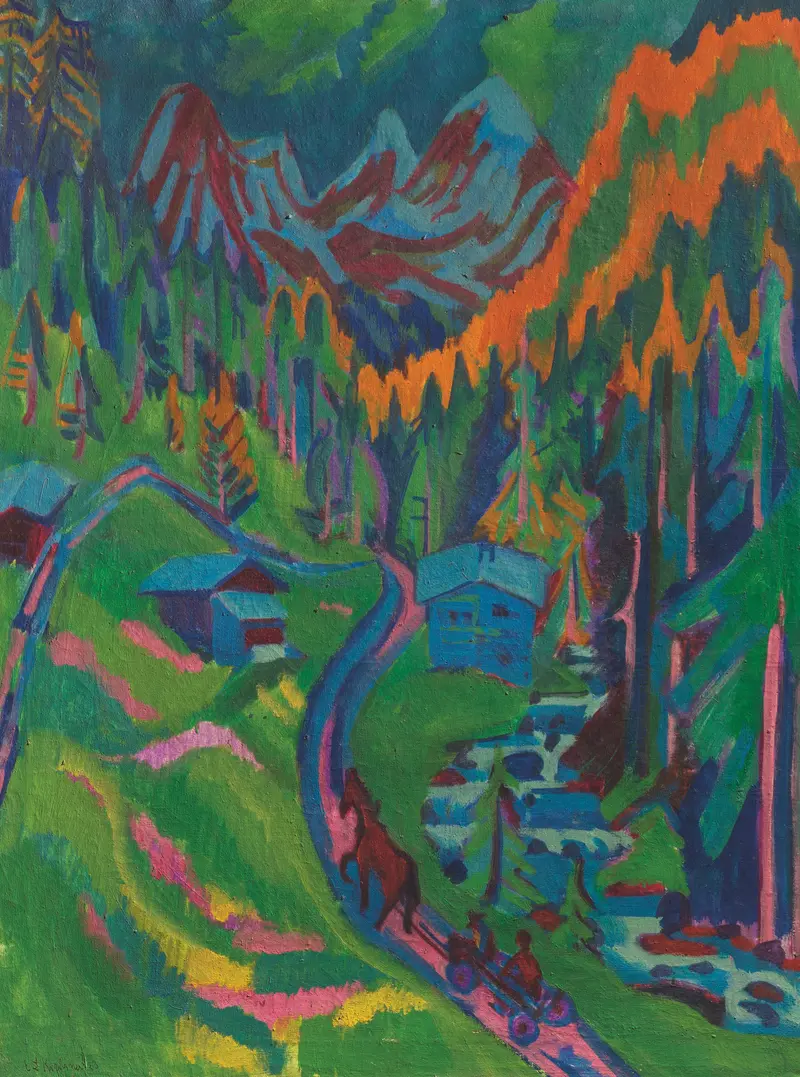

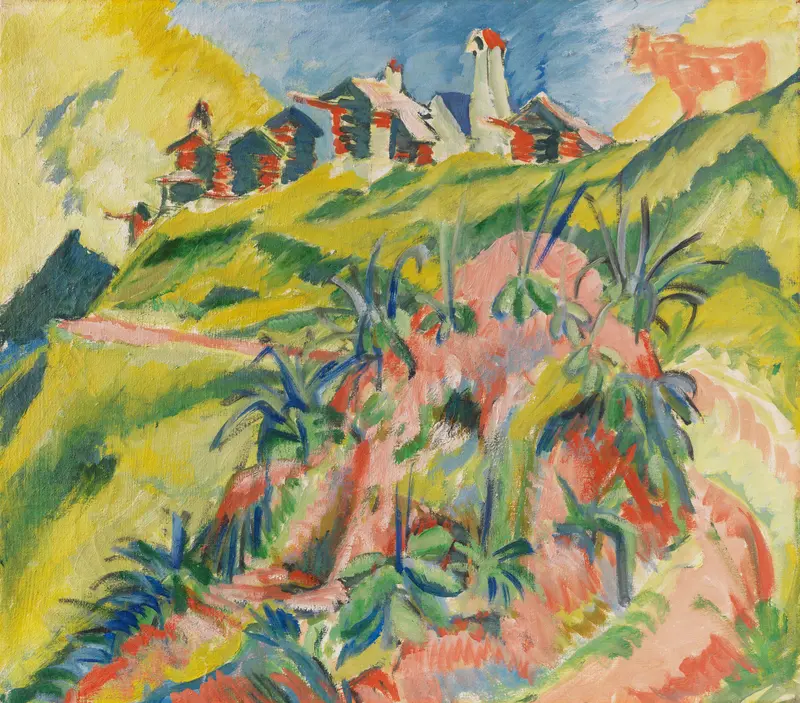
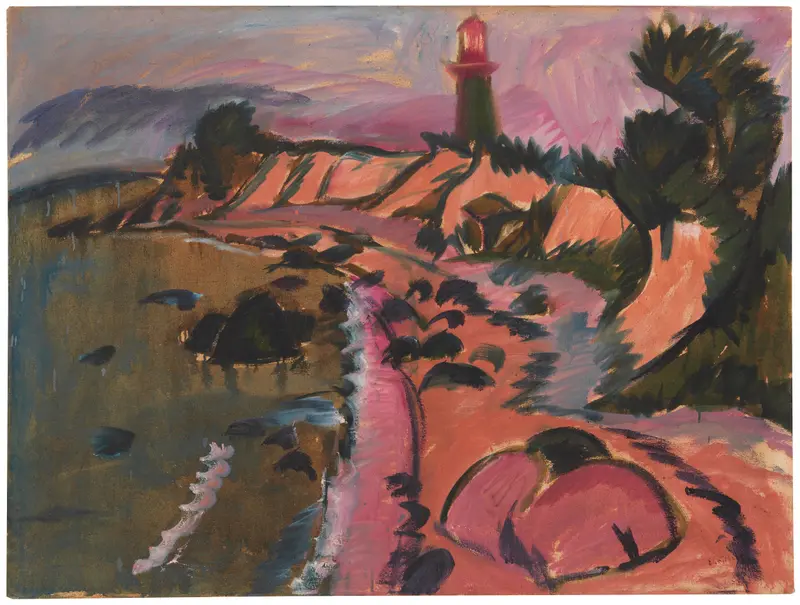


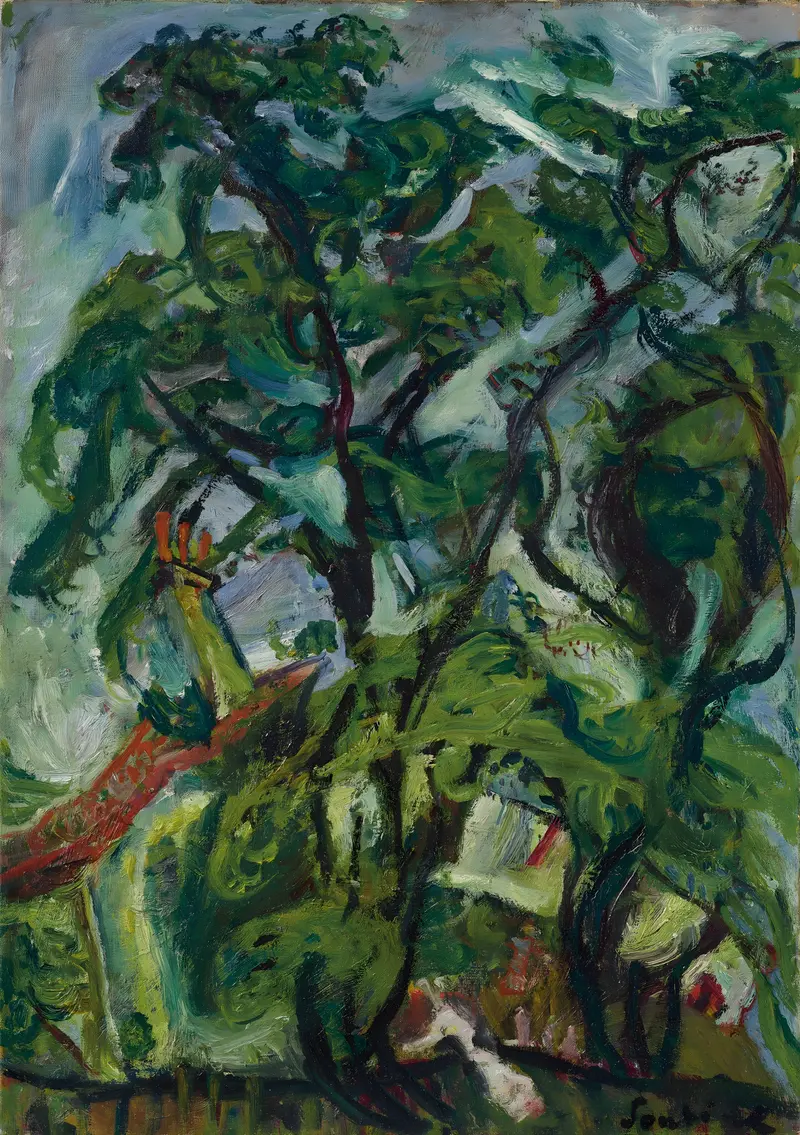

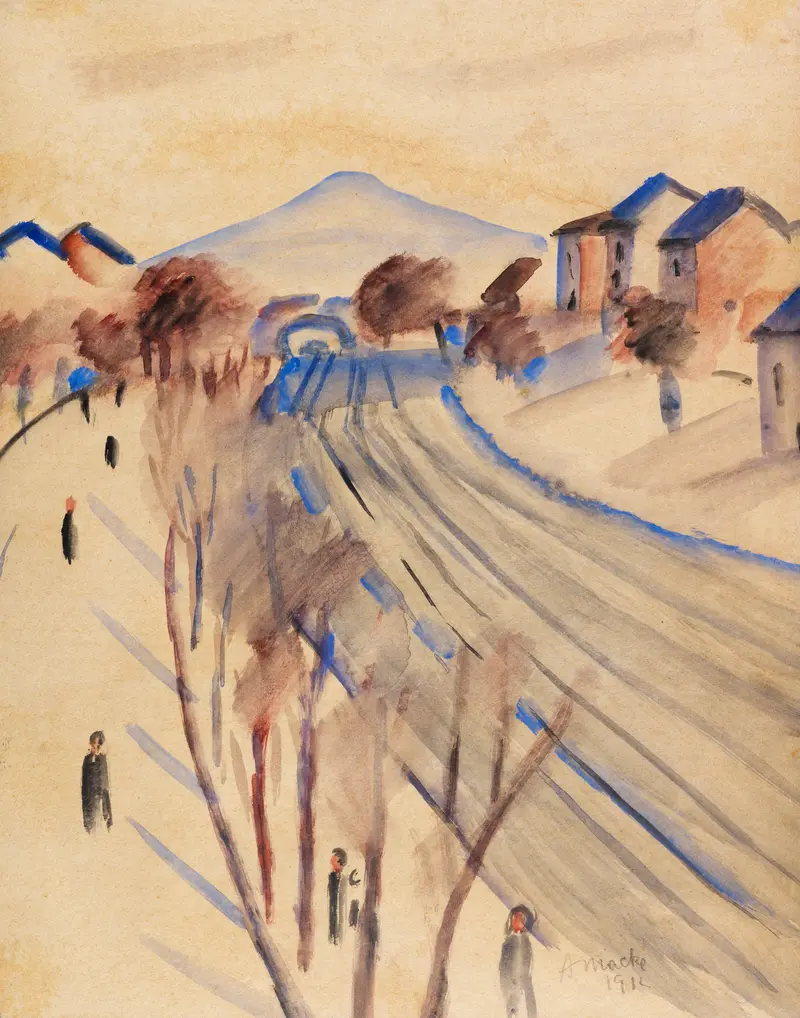
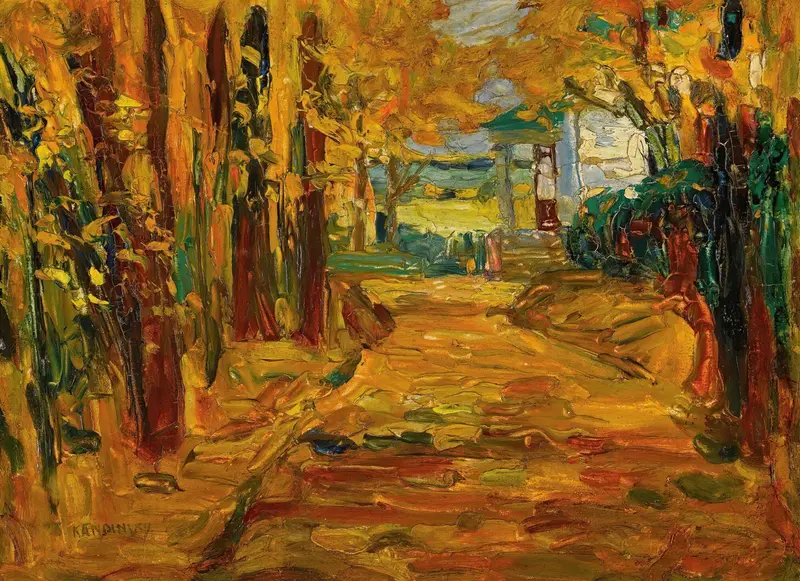

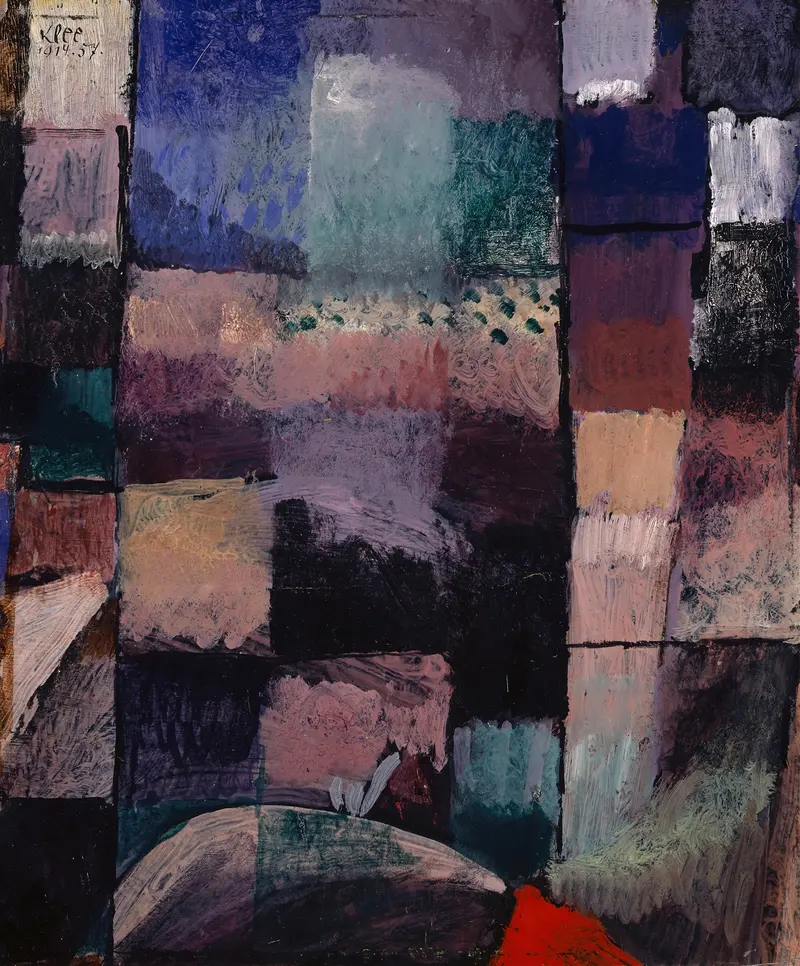
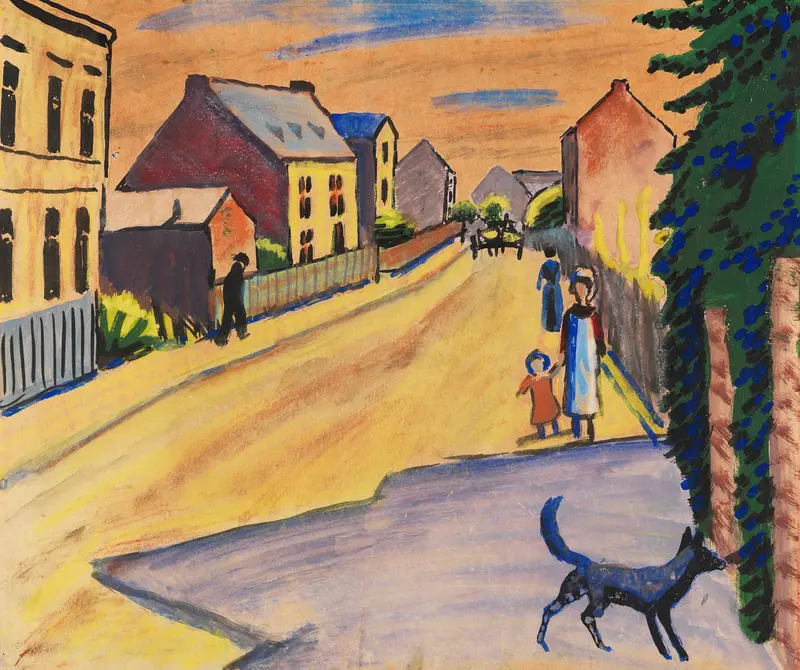

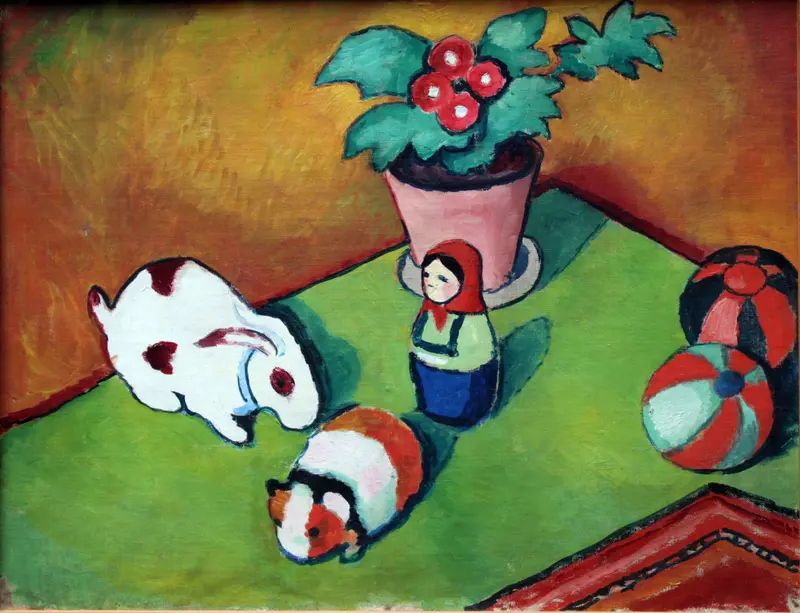
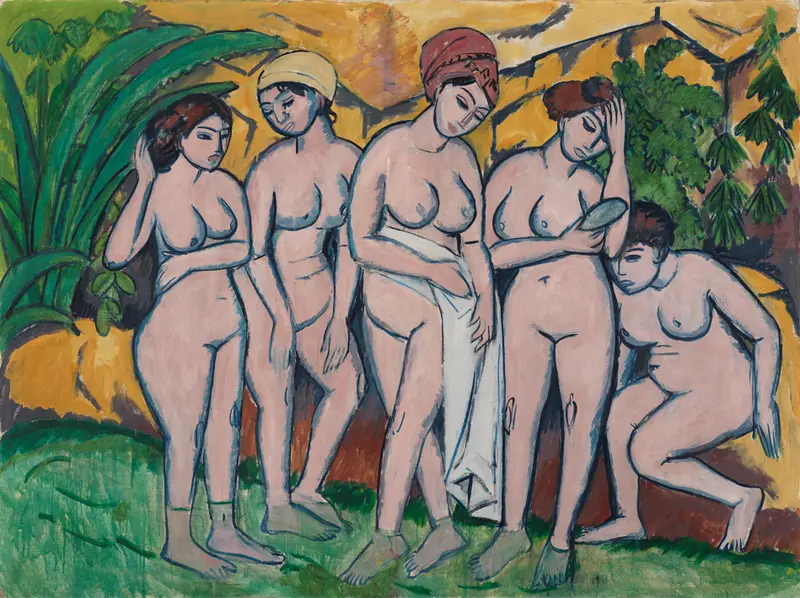
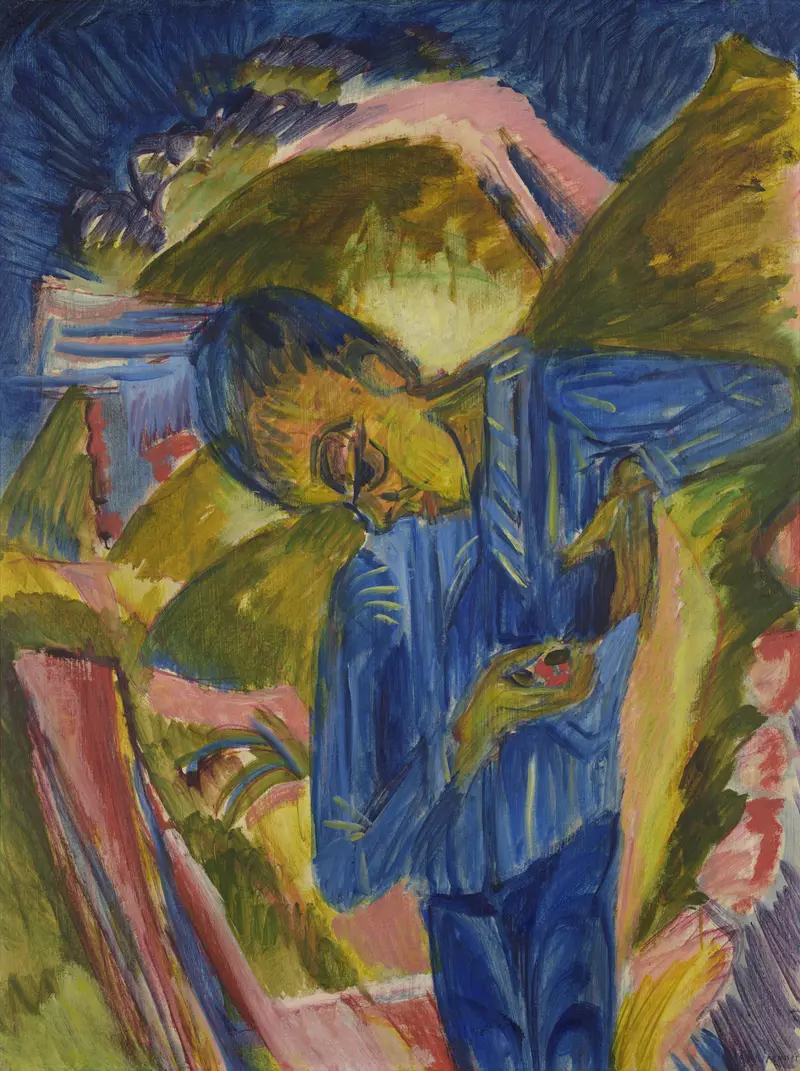
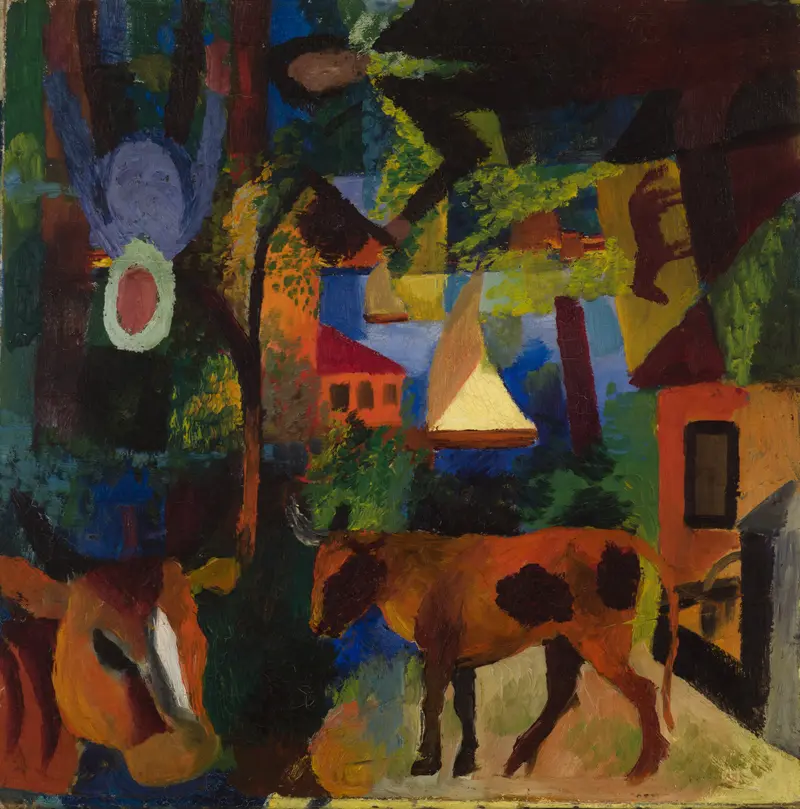
Famous Expressionist paintings
The best-known paintings of Expressionism. Click any painting to see it up close and download it free.
 The ScreamEdvard Munch
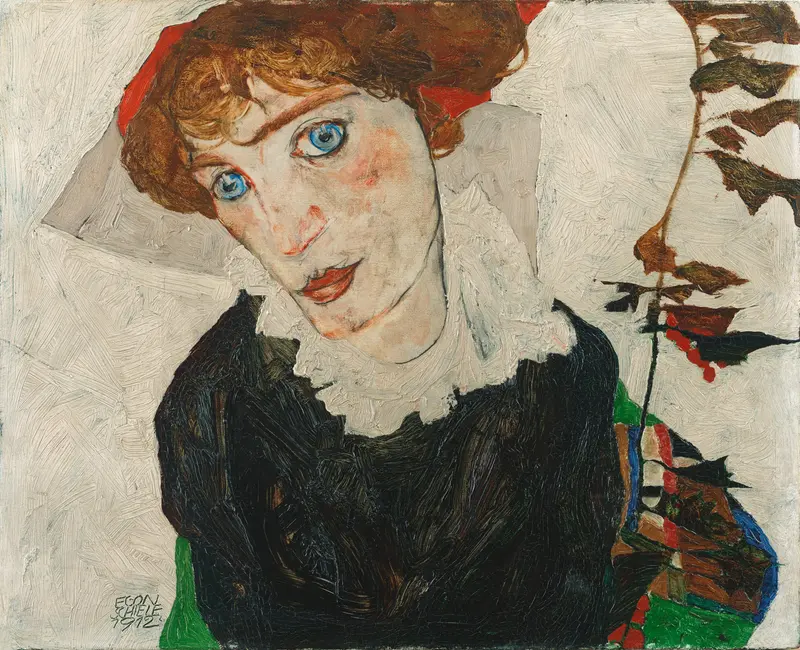 Portrait of Wally NeuzilEgon Schiele
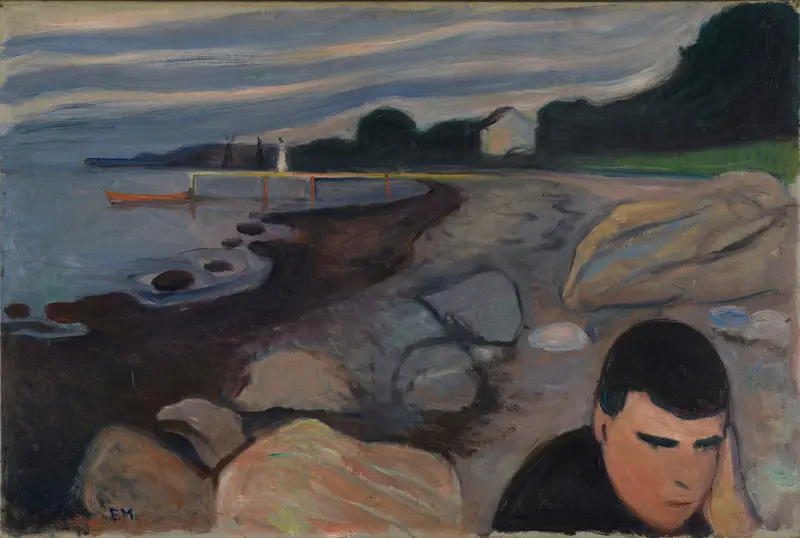 MelancholyEdvard Munch
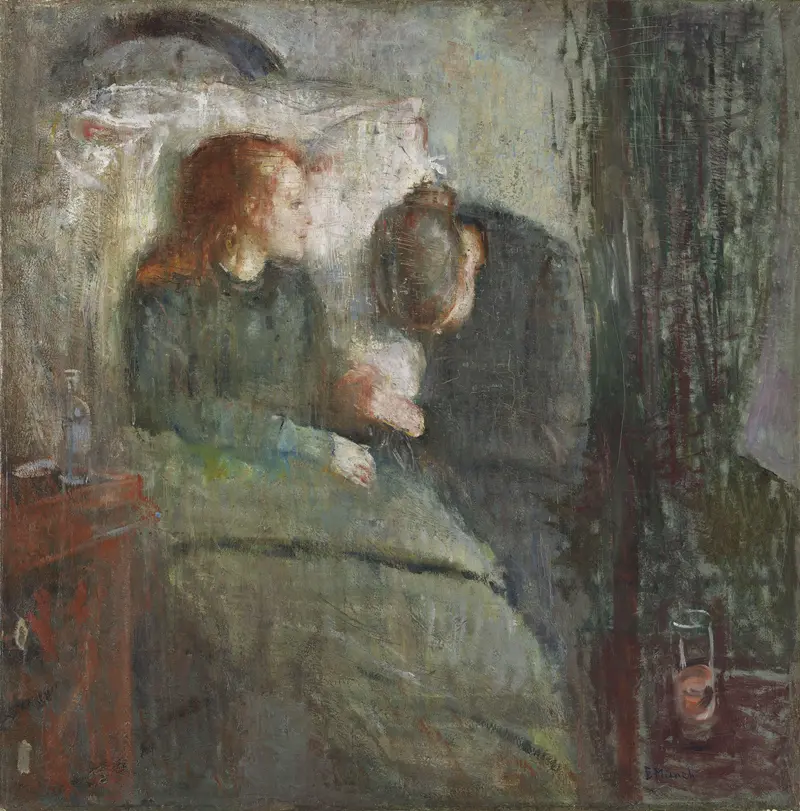 The Sick ChildEdvard Munch
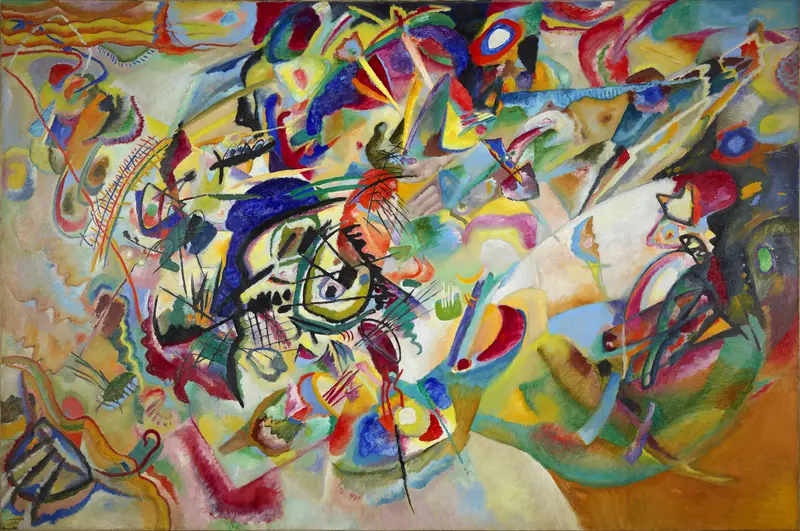 Composition VIIWassily Kandinsky
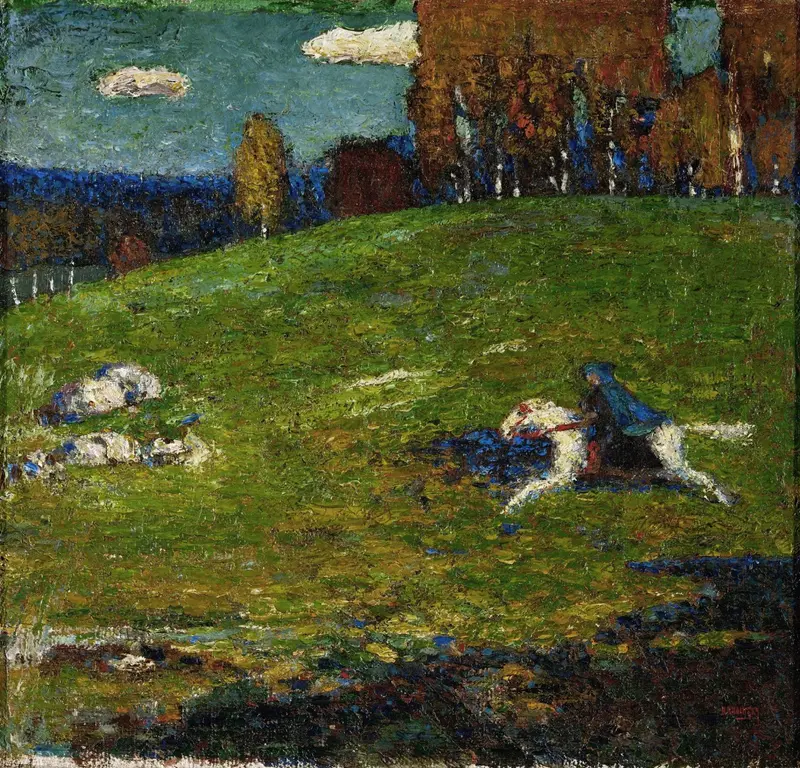 The Blue RiderWassily Kandinsky
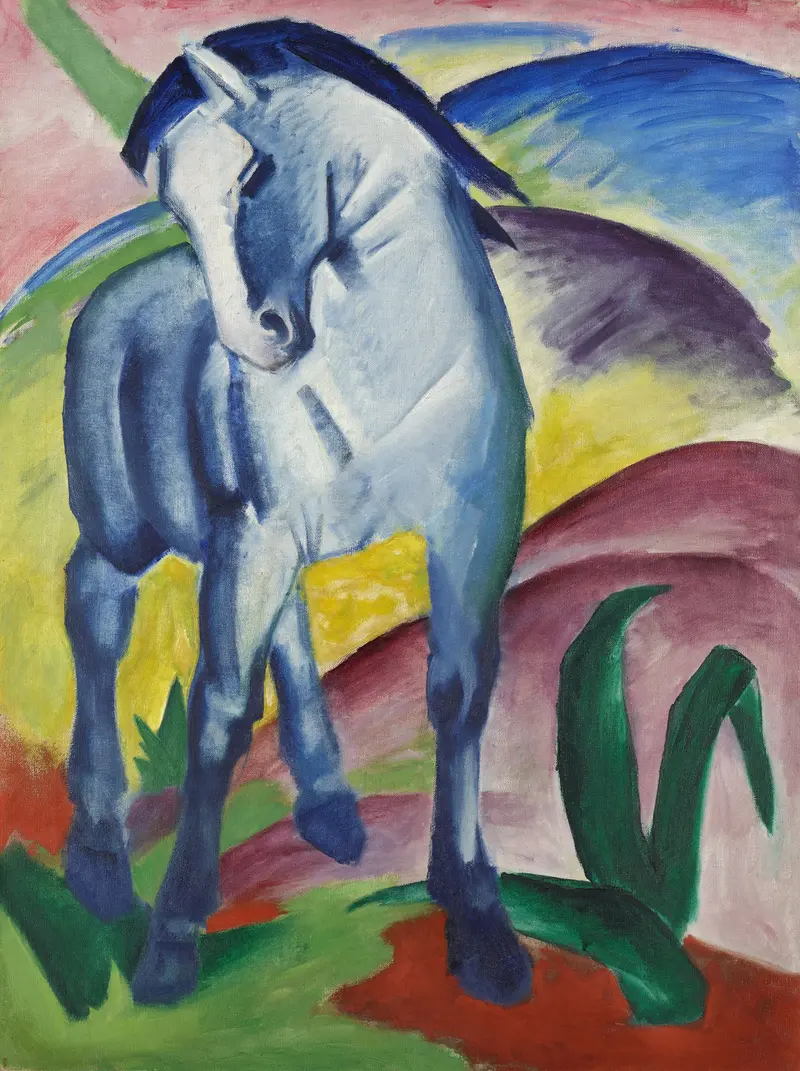 Blue Horse IFranz Marc
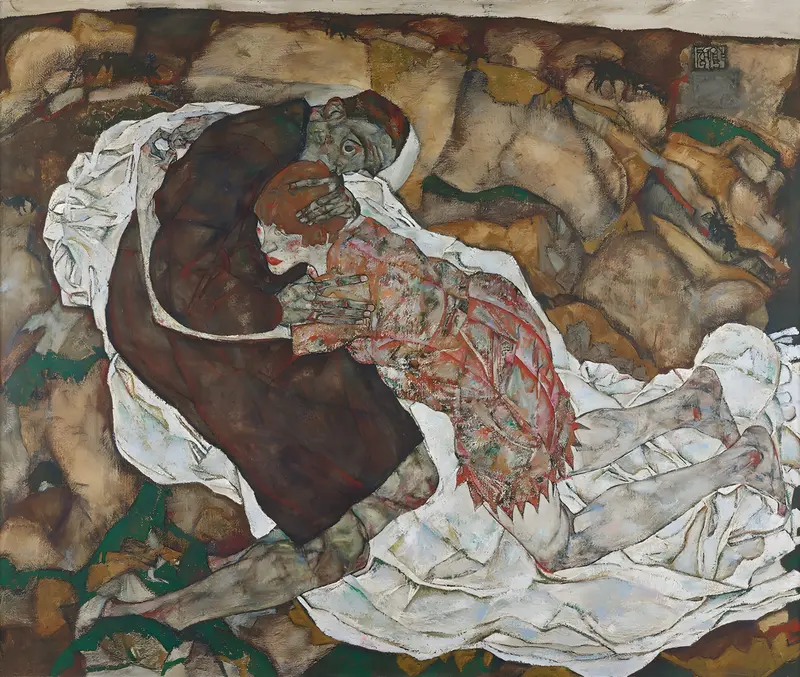 Death and the MaidenEgon Schiele
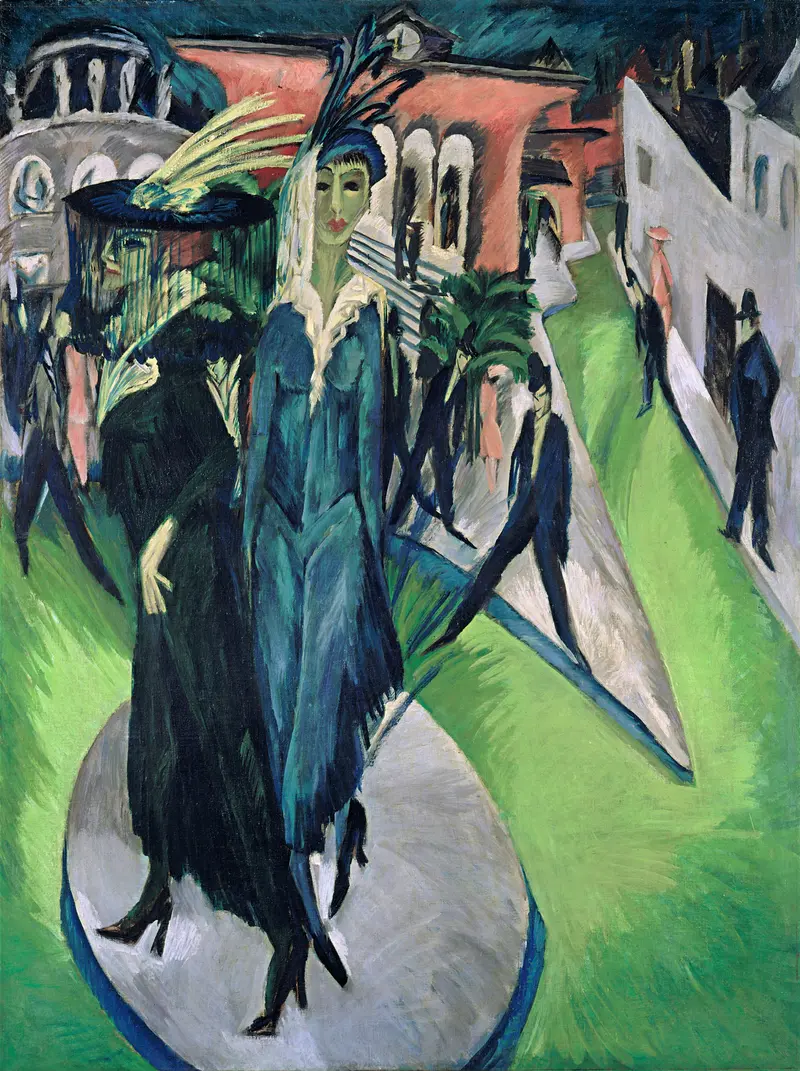
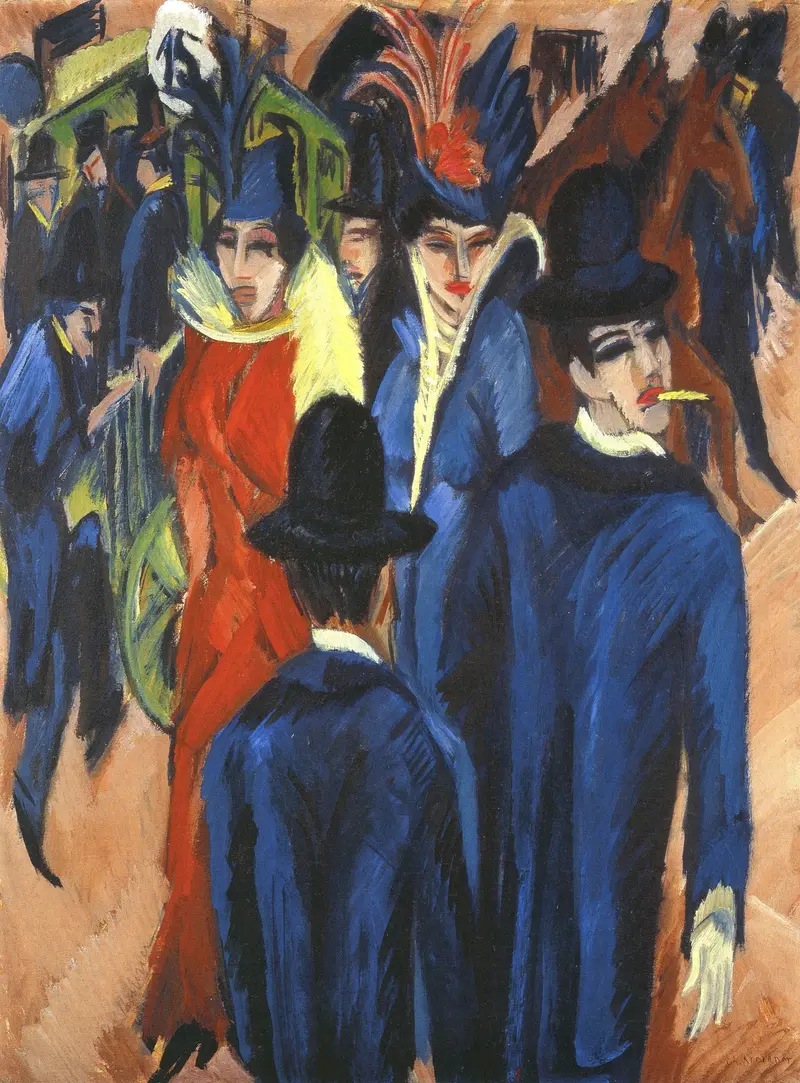 Berlin Street SceneErnst Ludwig Kirchner
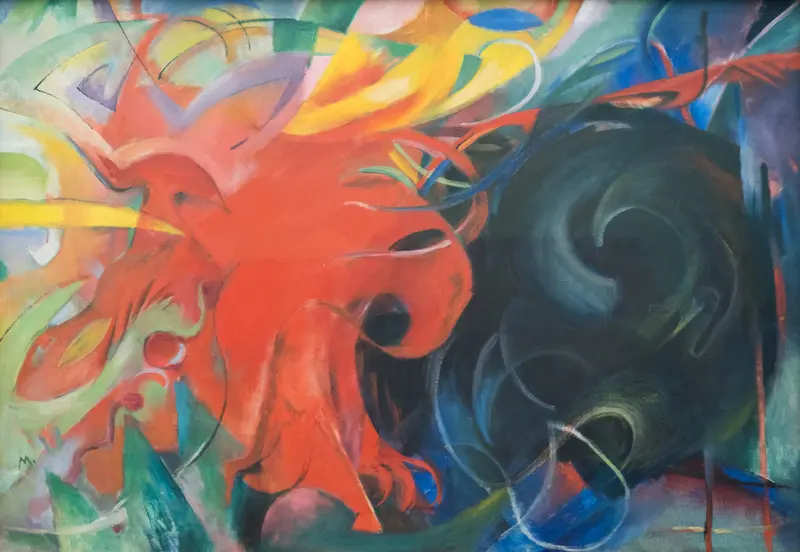
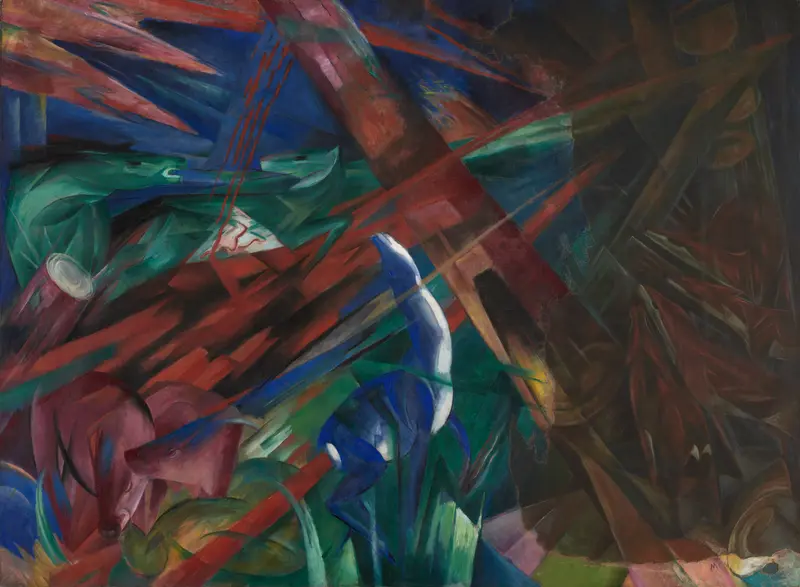 The Fate of the AnimalsFranz Marc
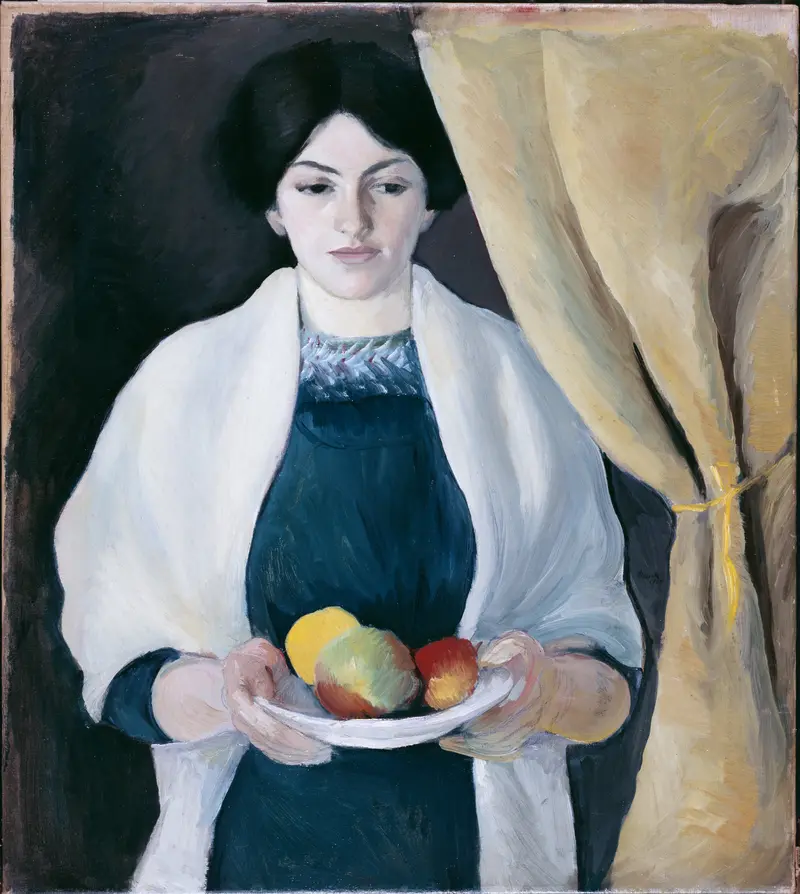 Portrait with Apples (The Artist's Wife)August Macke
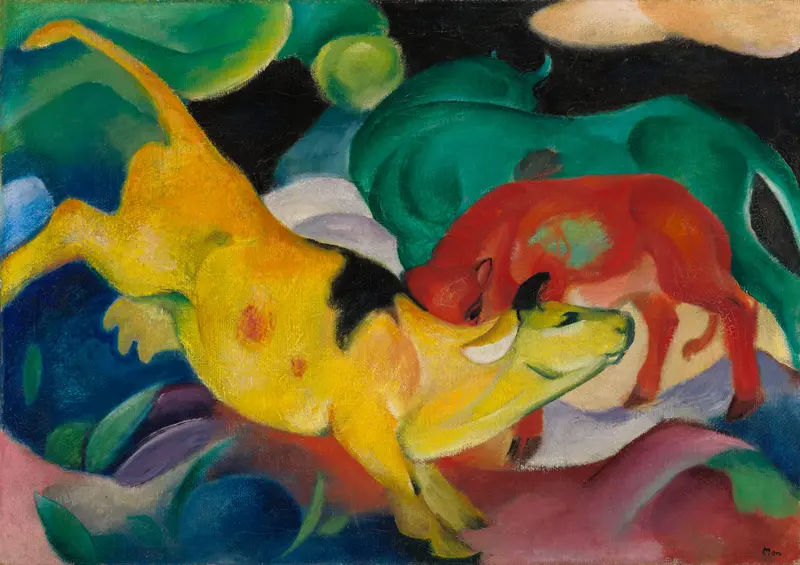
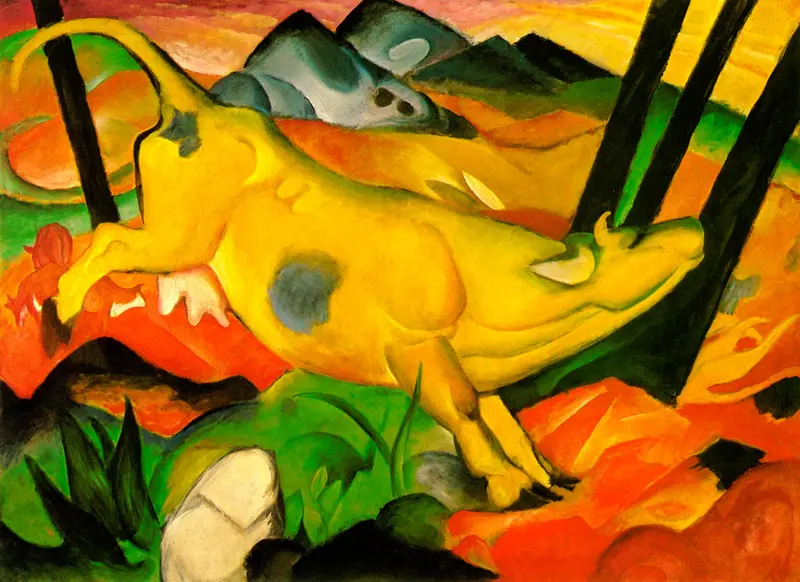 The Yellow CowFranz Marc
Famous Expressionist artists
Ten painters at the heart of Expressionism, from Munch and Kirchner to Schiele and the Blue Rider artists in Munich. Each link opens all their paintings.
 Edvard Munch1863–1944. The Norwegian forerunner: Nasjonalmuseet calls his Scream the turning point from Symbolism to the Expressionism of the 1900s, and Tate names him with Van Gogh as a model for the German Expressionists.
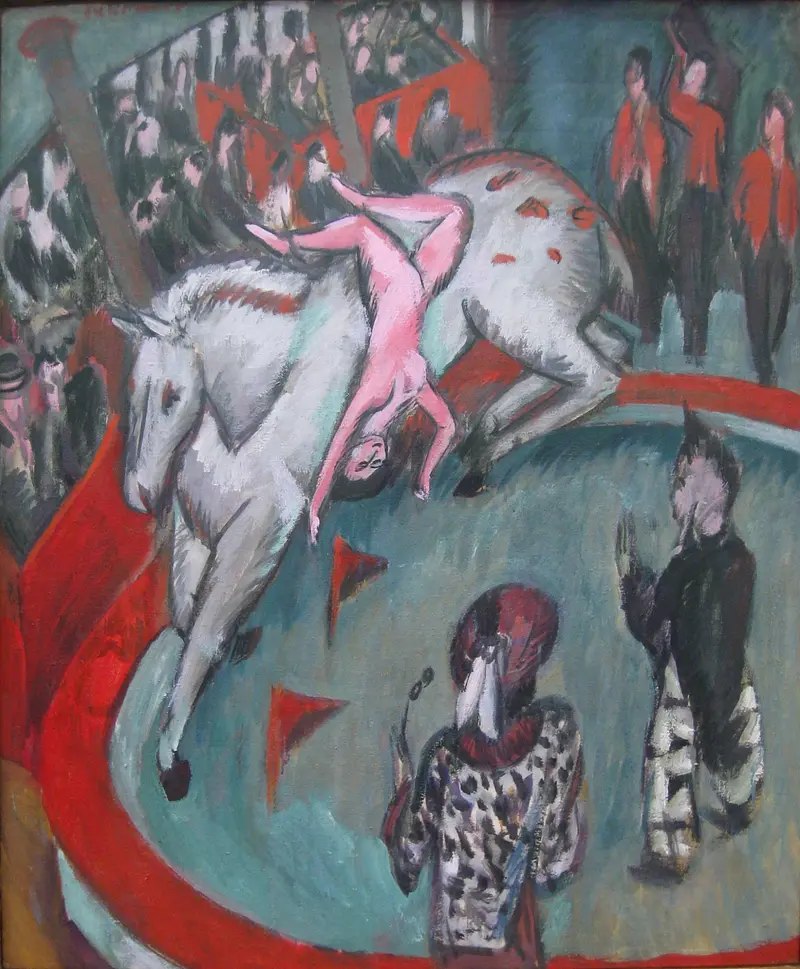 Ernst Ludwig Kirchner1880–1938. A founding member of Die Brücke in Dresden in 1905. After the group moved to Berlin in 1911 he painted the city's streets and its people in sharp, angular forms.
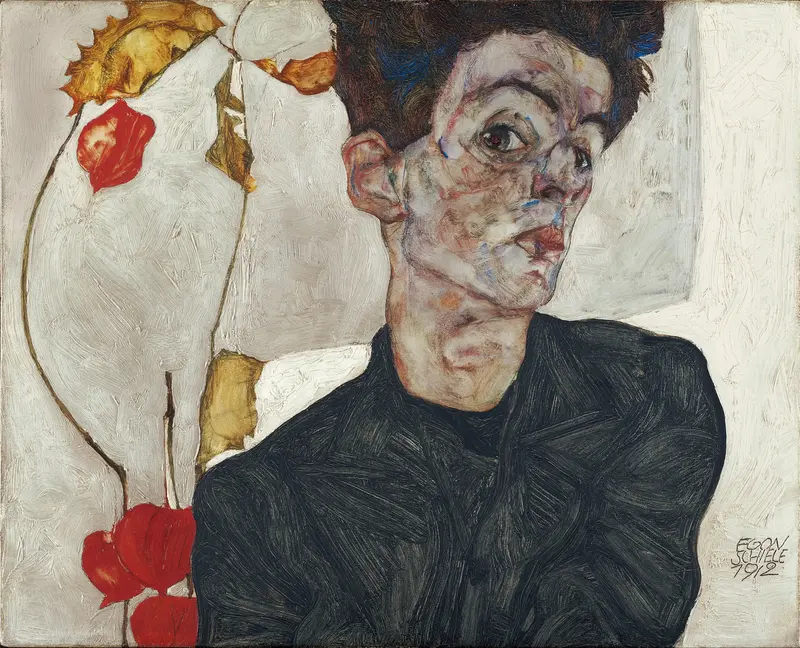 Egon Schiele1890–1918. Between 1910 and 1915 he formed what the Leopold Museum calls an unmistakably “Austrian” Expressionism, above all in self-portraits. He died of the Spanish flu at 28.
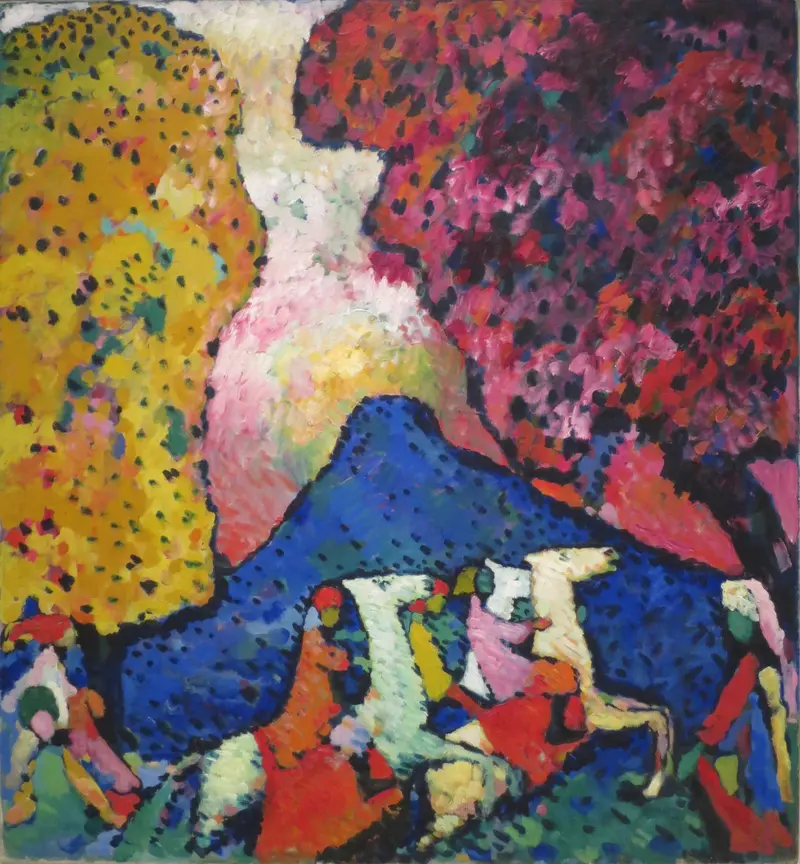 Wassily Kandinsky1866–1944. Russian-born leader of the Blue Rider in Munich with Gabriele Münter and Franz Marc; the group is said to have taken its name from his 1903 painting The Blue Rider, and his work moved toward abstraction.
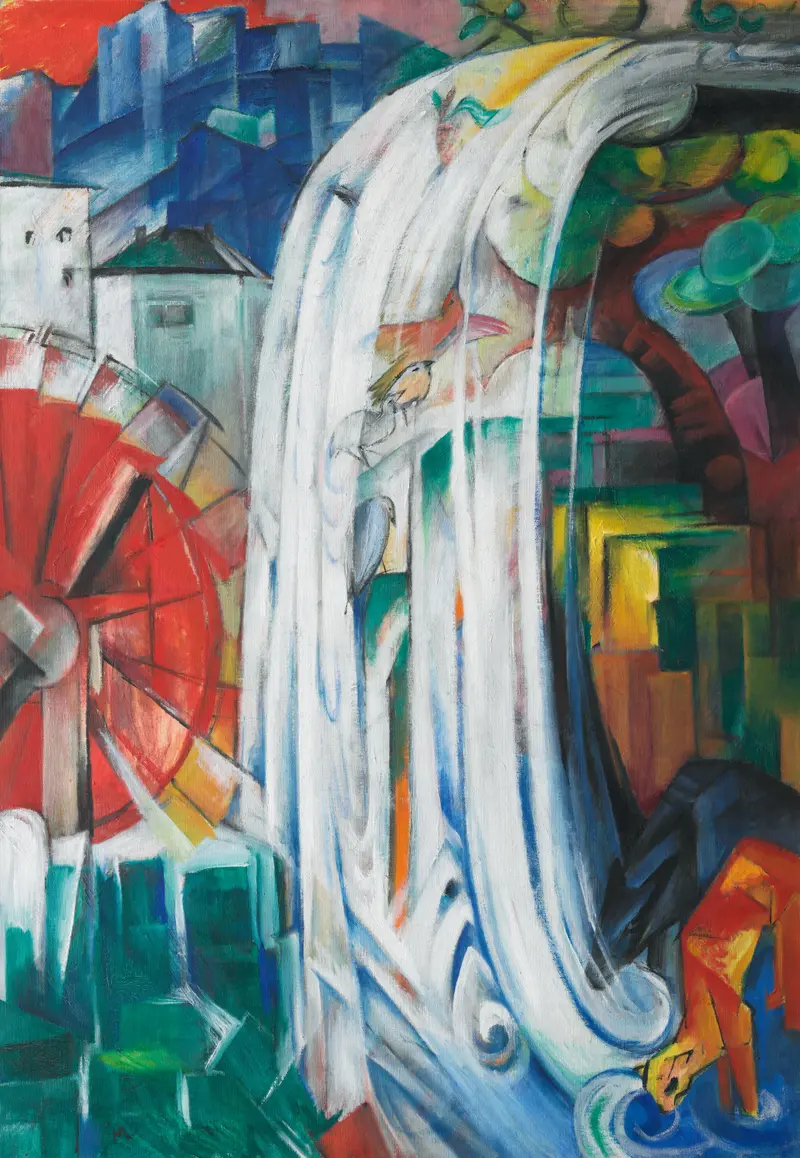 Franz Marc1880–1916. Co-founder of the Blue Rider who painted animals in symbolic colors: blue for the spiritual, yellow for the gentle and cheerful. He was killed at Verdun in 1916.
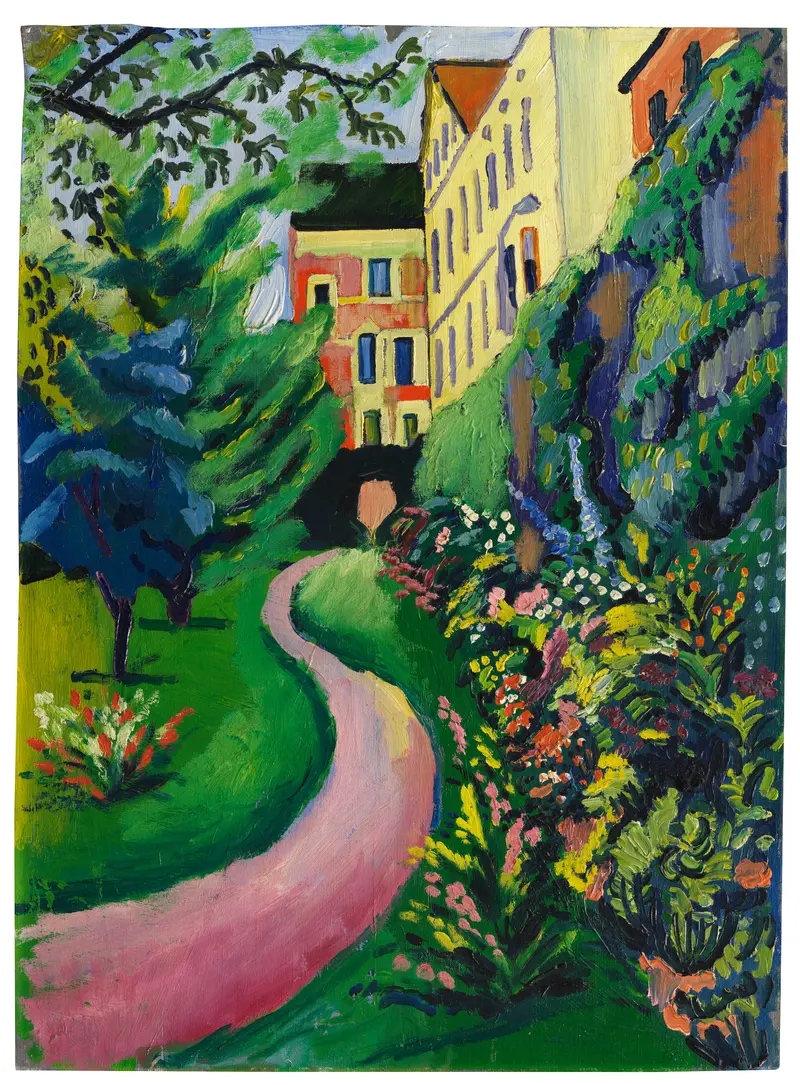
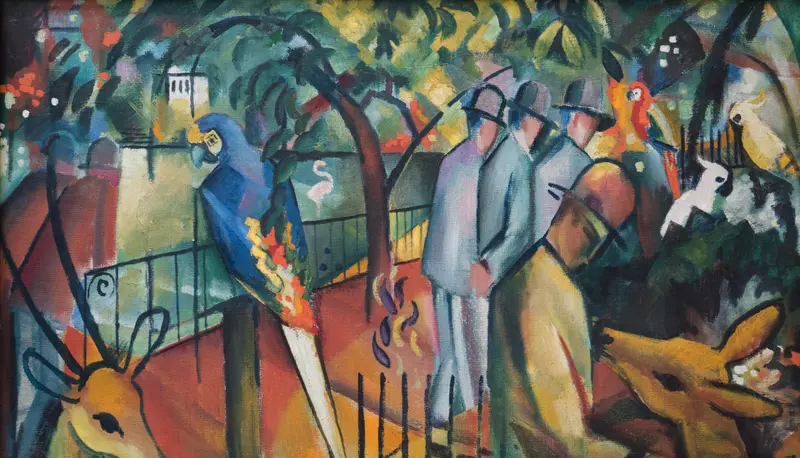
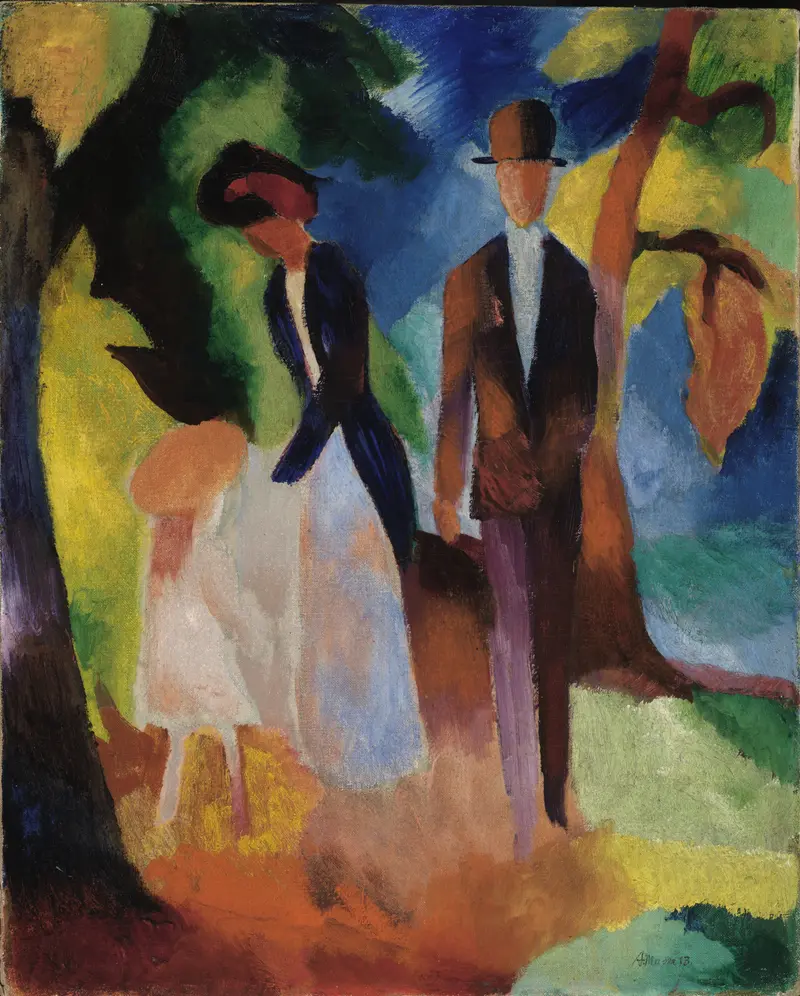 August Macke1887–1914. A Blue Rider painter of bright scenes of strollers, shop windows and gardens. He was killed in France in September 1914, at 27.
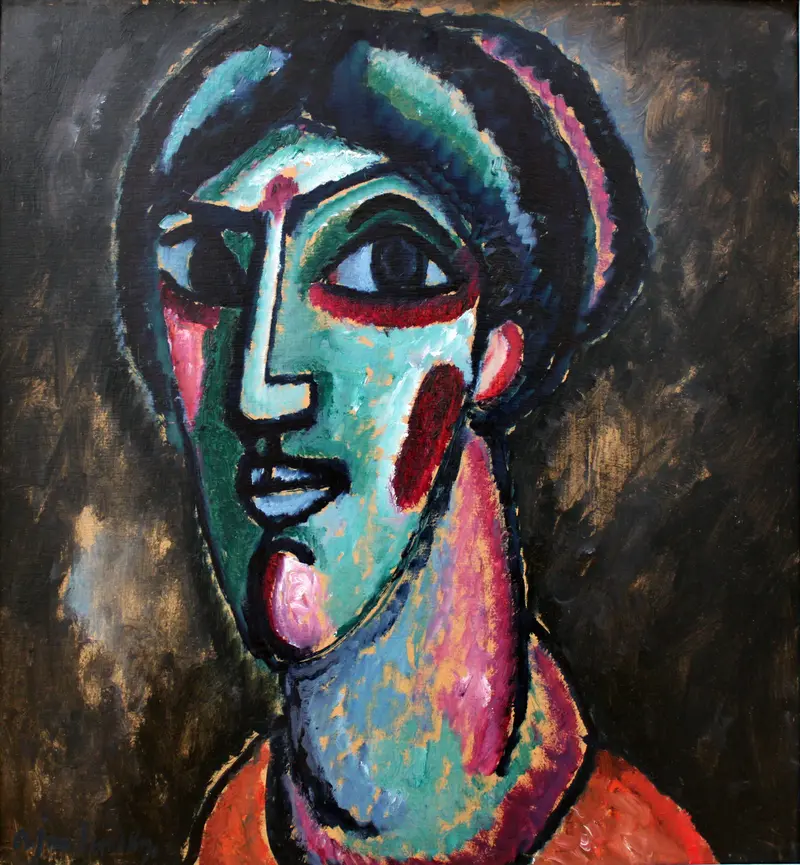 Alexej von Jawlensky1864–1941. Russian-born painter in Munich and a member of the Blue Rider, Tate notes; the group grew out of the New Artists' Association, founded in 1909.
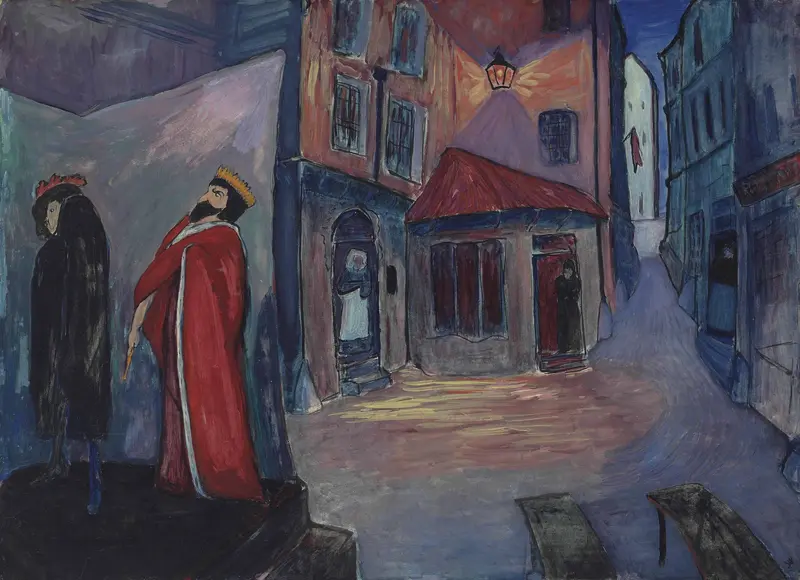
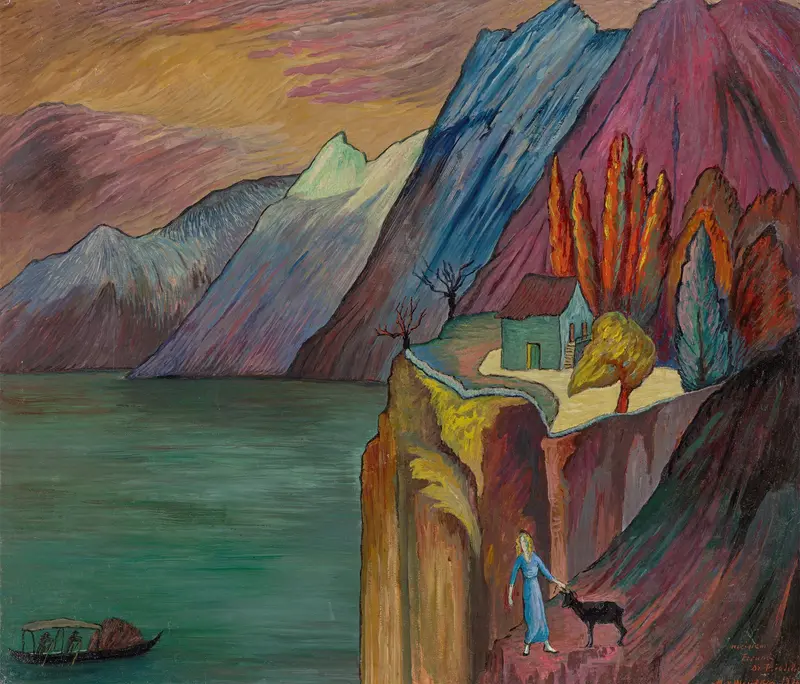 Marianne von Werefkin1860–1938. Russian-born painter whom Tate names with Kirchner, Kandinsky, Münter and Marc among the Expressionists; the New Artists' Association of Munich admitted women artists such as Werefkin.
 Max Beckmann1884–1950. Painter of hard, mask-like self-portraits. The Nazis removed his Self-Portrait in Tuxedo from Berlin's National Gallery in 1937; he died in New York in 1950.
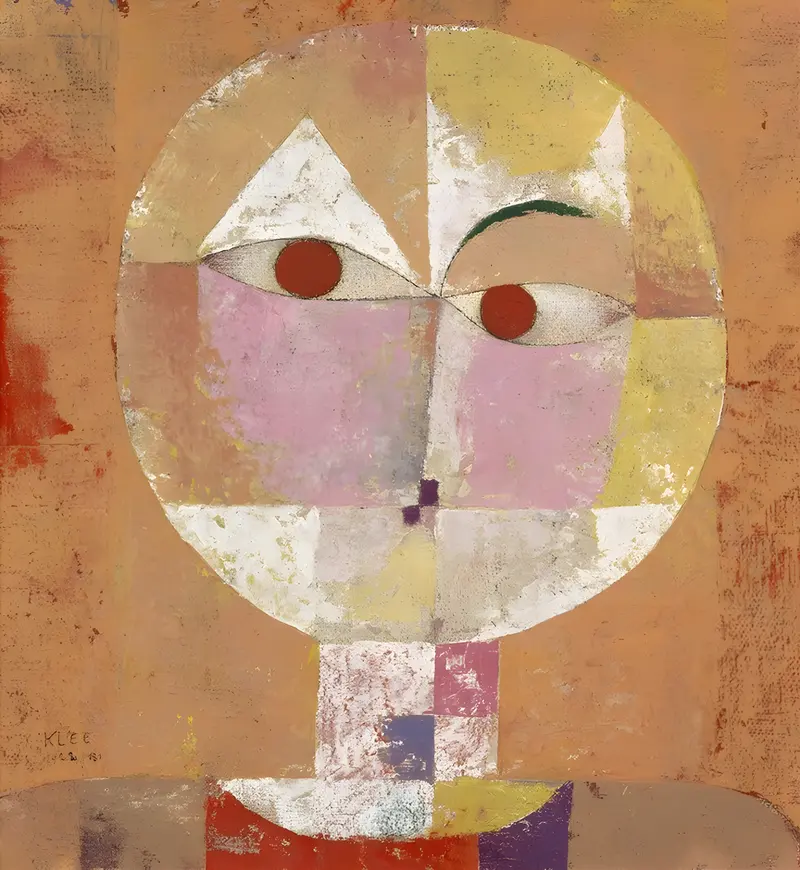 Paul Klee1879–1940. Swiss-born painter who formed creative bonds with the Blue Rider artists from 1911, Tate notes. Our catalog files more than 300 of his works under Expressionism.
Edvard Munch paintings
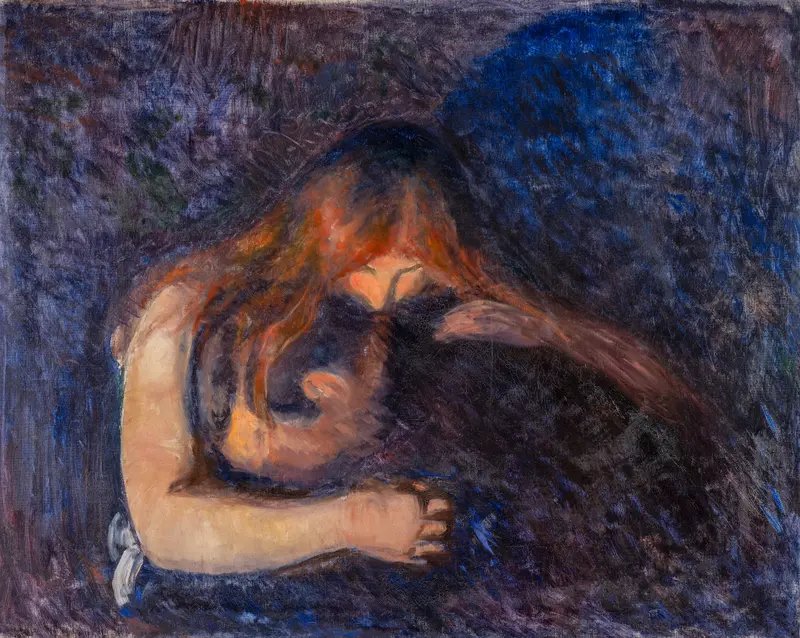
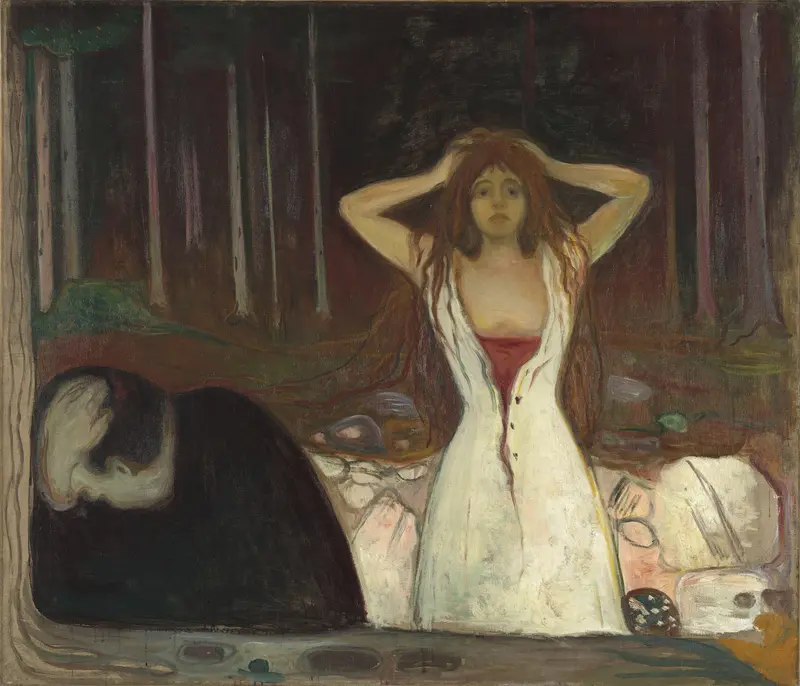
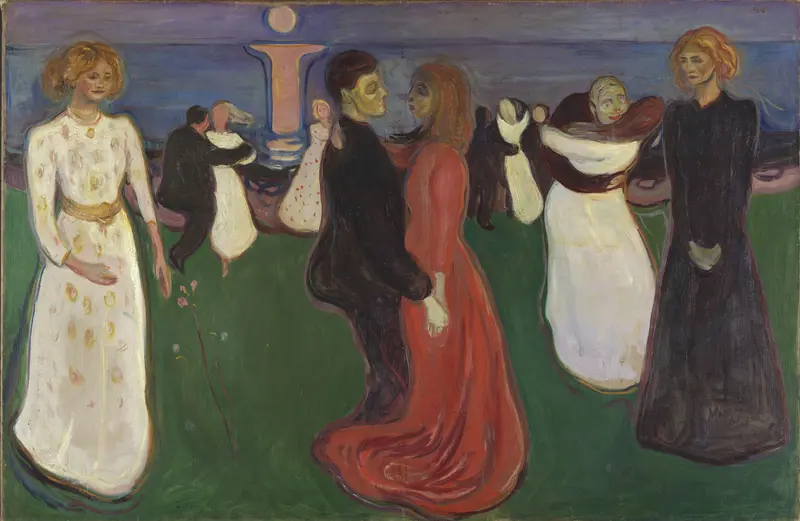
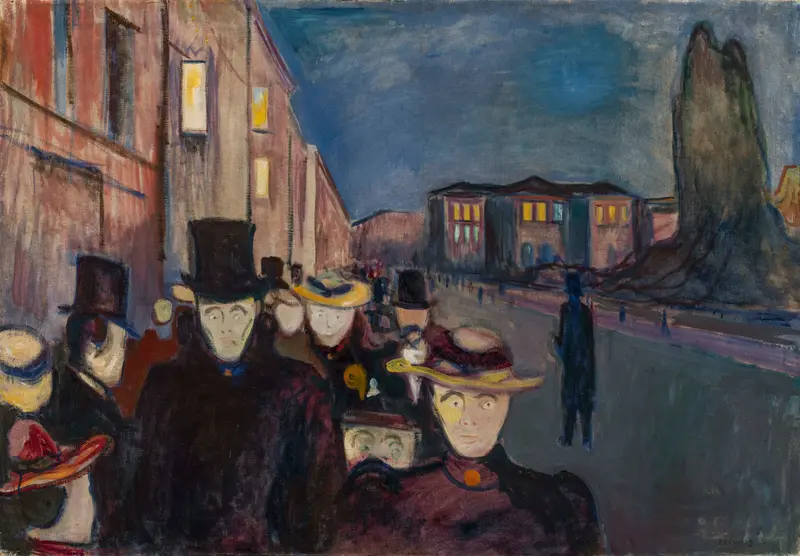
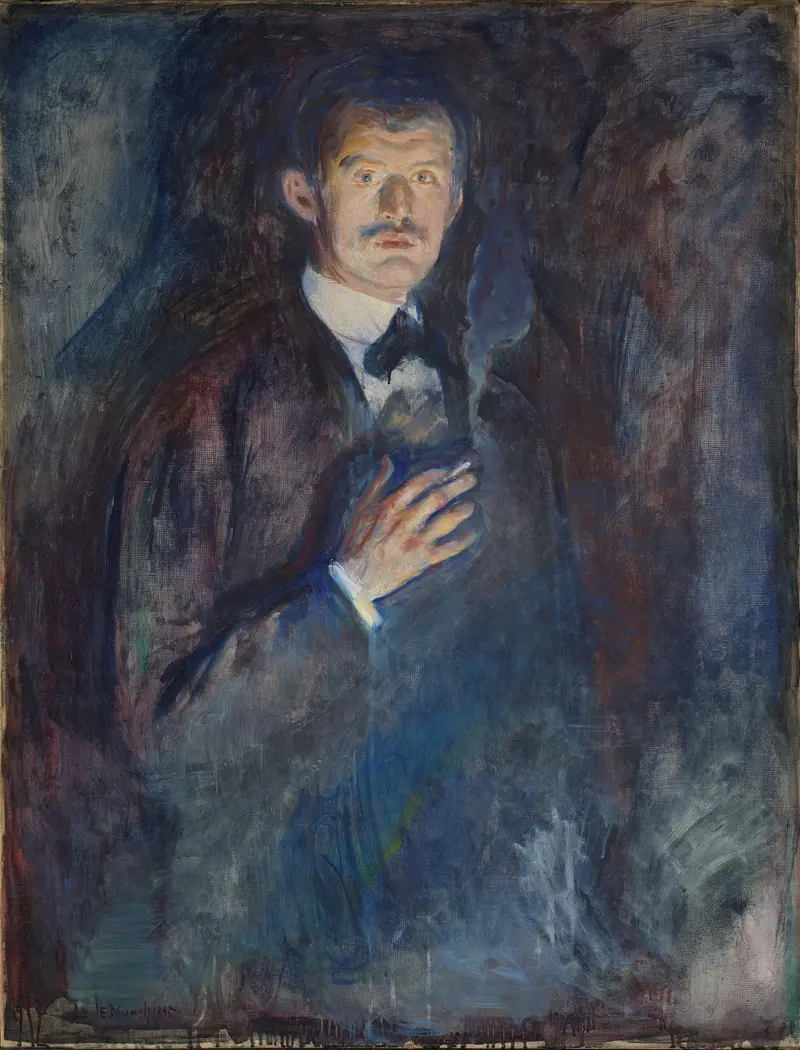
In the 1890s Munch painted love, jealousy, anxiety and death as one cycle, the Frieze of Life, and he kept returning to his motifs in new versions, Nasjonalmuseet notes. The Munch Museum owns several versions of The Scream, among them a painting in tempera and oil probably from 1910.
Die Brücke: German Expressionist paintings
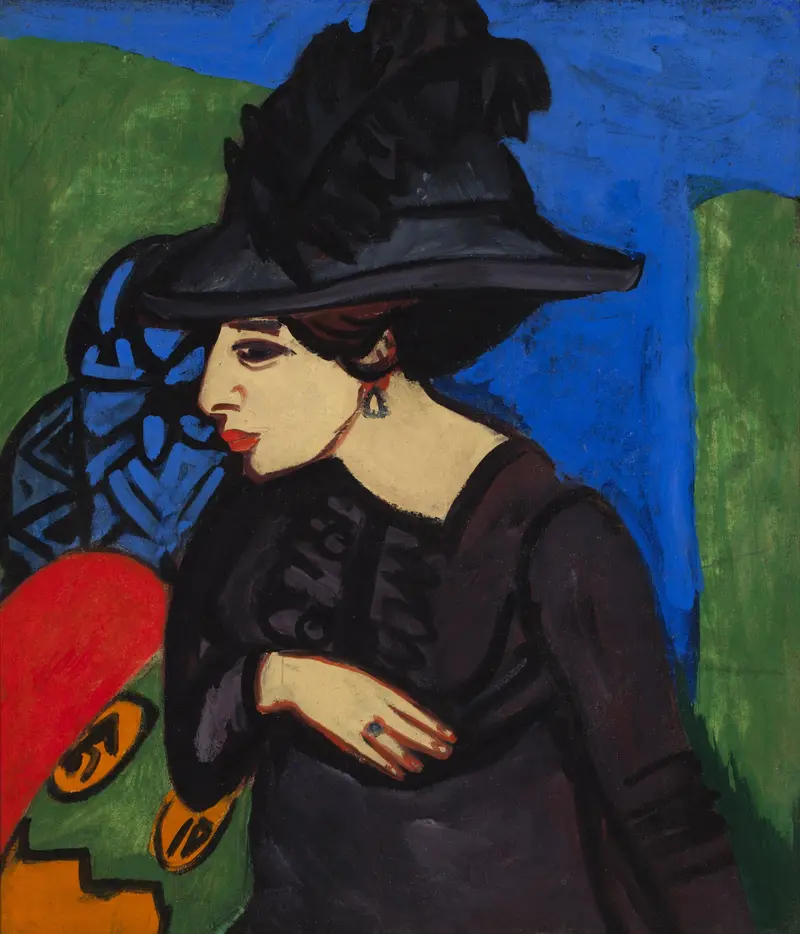
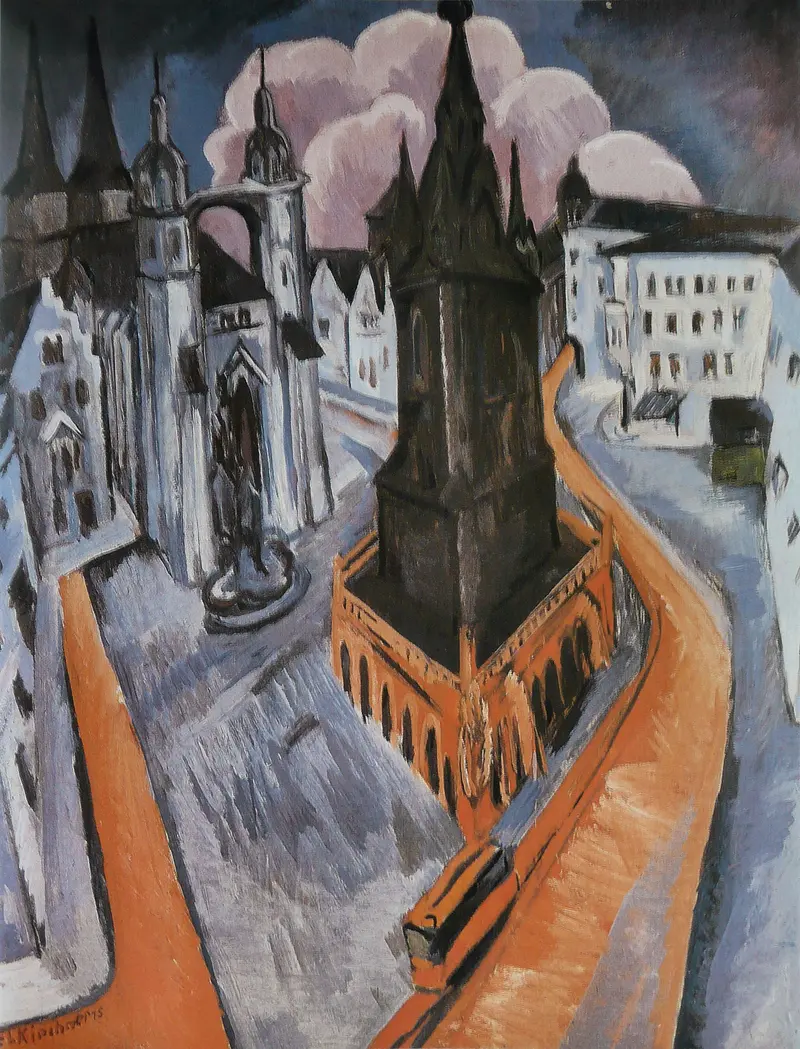
Four architecture students, Ernst Ludwig Kirchner, Erich Heckel, Karl Schmidt-Rottluff and Fritz Bleyl, founded Die Brücke (The Bridge) in Dresden on June 7, 1905; Max Pechstein and Otto Mueller joined later. The Brücke-Museum describes their shared style as animated, expressive brushwork and pure, intense color. The group moved to Berlin in 1911 and broke up in 1913.

The Blue Rider (Der Blaue Reiter) paintings
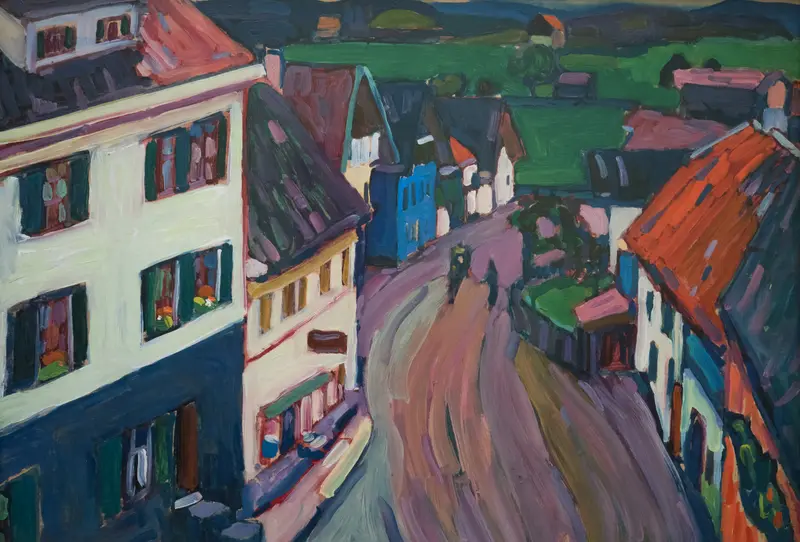
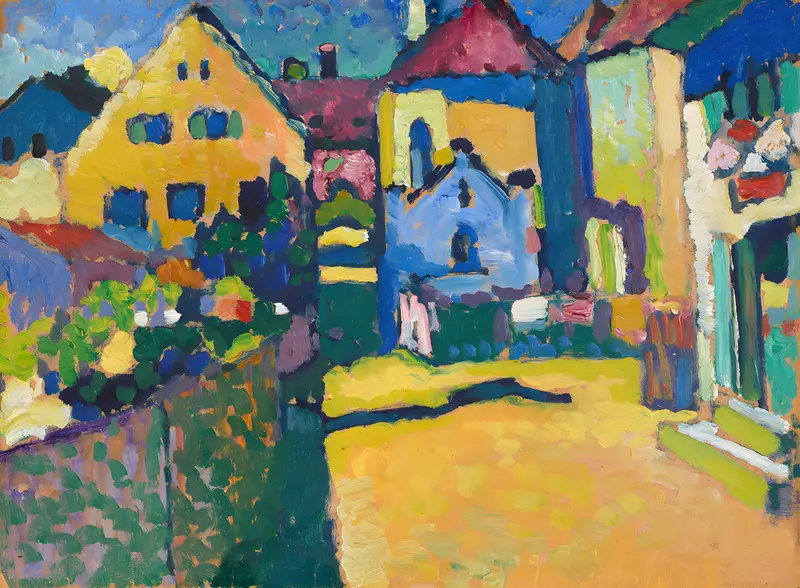
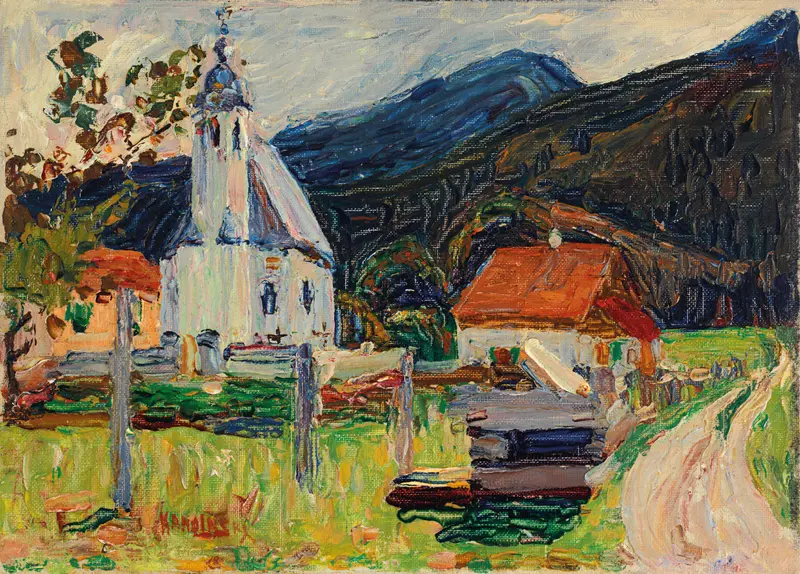
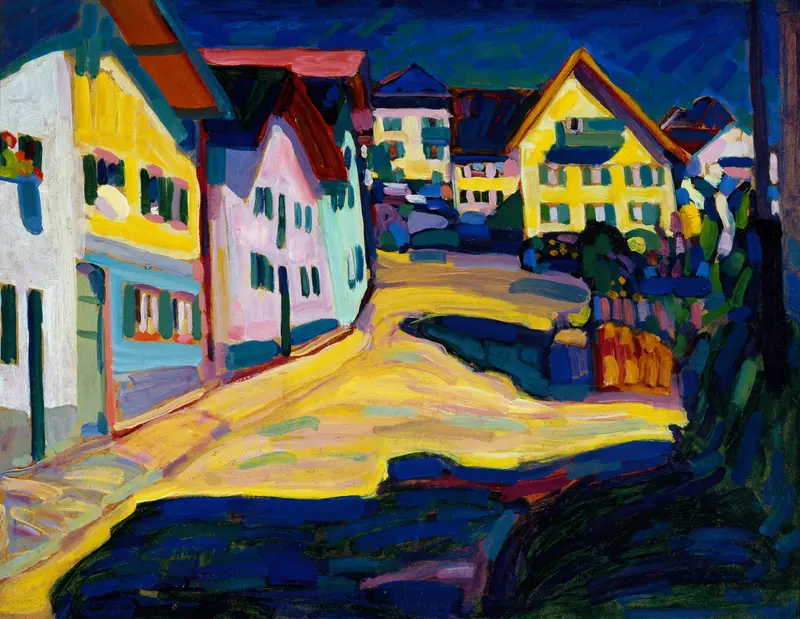
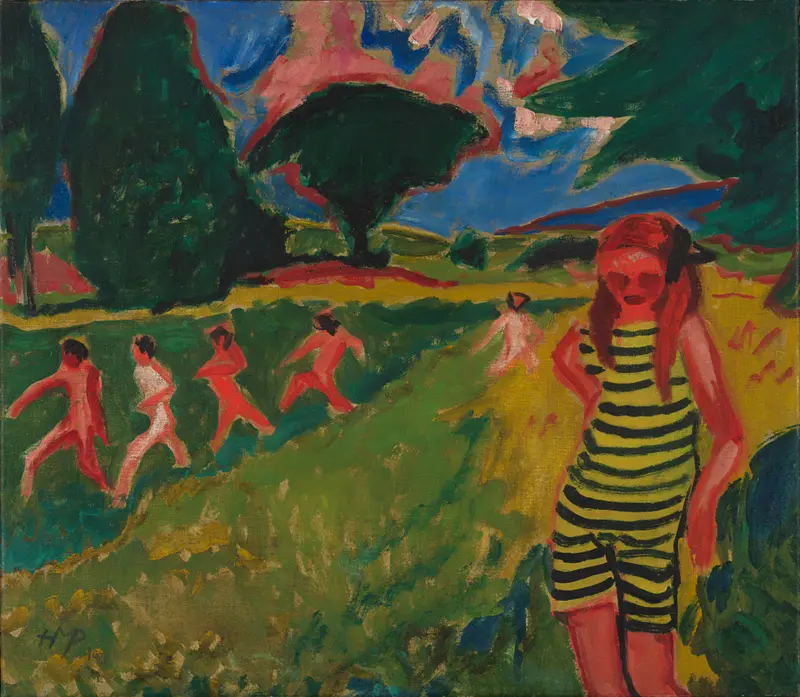
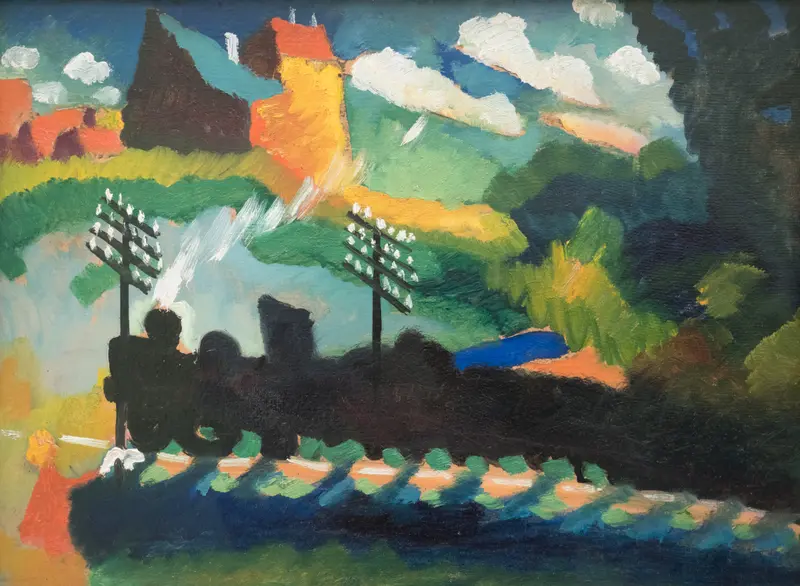
The Blue Rider came together in Munich in 1911, led by Wassily Kandinsky, Gabriele Münter and Franz Marc, with August Macke, Alexej Jawlensky and Marianne Werefkin among its members, Tate notes. Kandinsky and Münter worked in Murnau, south of Munich, where the editorial meetings for the Blue Rider almanac took place in 1911, says the Lenbachhaus.

Characteristics of Expressionism: how to recognize it
Feeling before appearance
The sky turns blood red and the face becomes a skull: Munch painted a feeling, not a view of the Oslo Fjord. Tate defines Expressionist art as the expression of subjective emotions and inner experiences, as opposed to realistic depictions of people or nature.
The Scream, Edvard Munch
Color with a meaning
Marc's horse is blue because, as he wrote to August Macke in 1910, blue was “the male principle, austere and spiritual.” In Expressionist painting, Tate notes, colors may appear intense and non-naturalistic.
Blue Horse I, Franz Marc
Distorted forms and the nervous city
Kirchner stretches the women into tall, pointed shapes and cuts the street into sharp, slanting lines. The Neue Galerie speaks of the picture's charged and anxious atmosphere; in Expressionist painting, says Tate, forms become distorted.
Berlin Street Scene, Ernst Ludwig Kirchner
Rough, worked paint
Munch built up thick paint, then scratched and scraped it, so the picture looks deliberately unfinished, Nasjonalmuseet notes. Expressionist brushwork is typically free and the paint generous and highly textured, says Tate.
The Sick Child, Edvard Munch
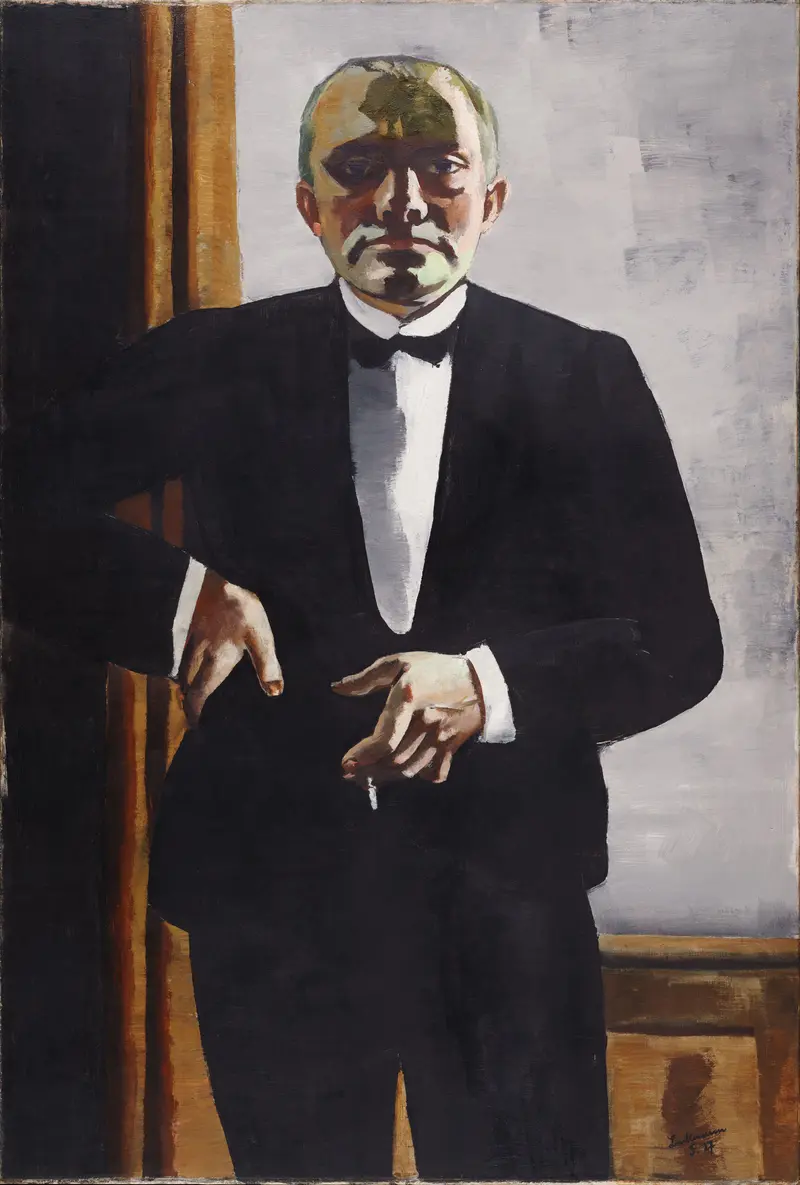
The face as a mask
Half of Beckmann's face is lost in shadow, and the thick paint makes it look like a mask, Harvard Art Museums notes. Tate says Expressionist portraits become dramatic expressions of the artist's inner feelings.
Self-Portrait in Tuxedo, Max Beckmann
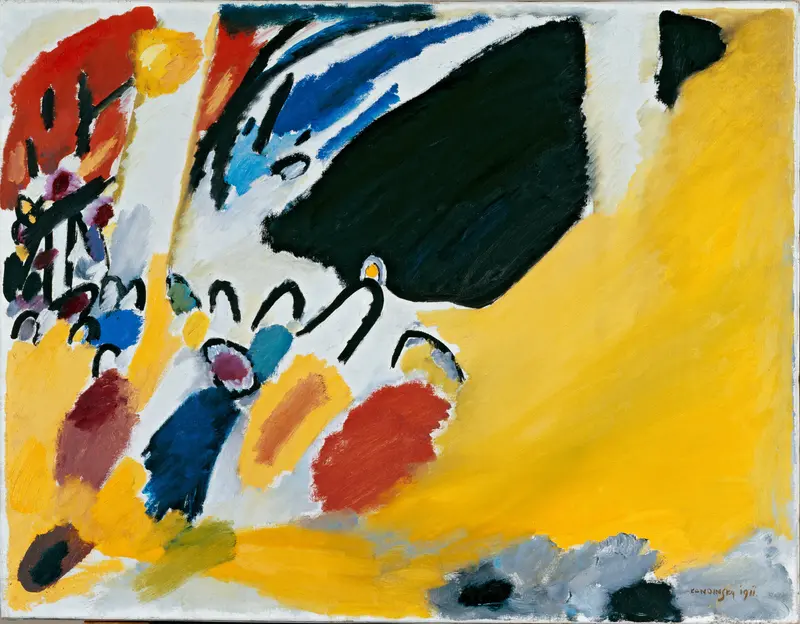
Toward abstraction
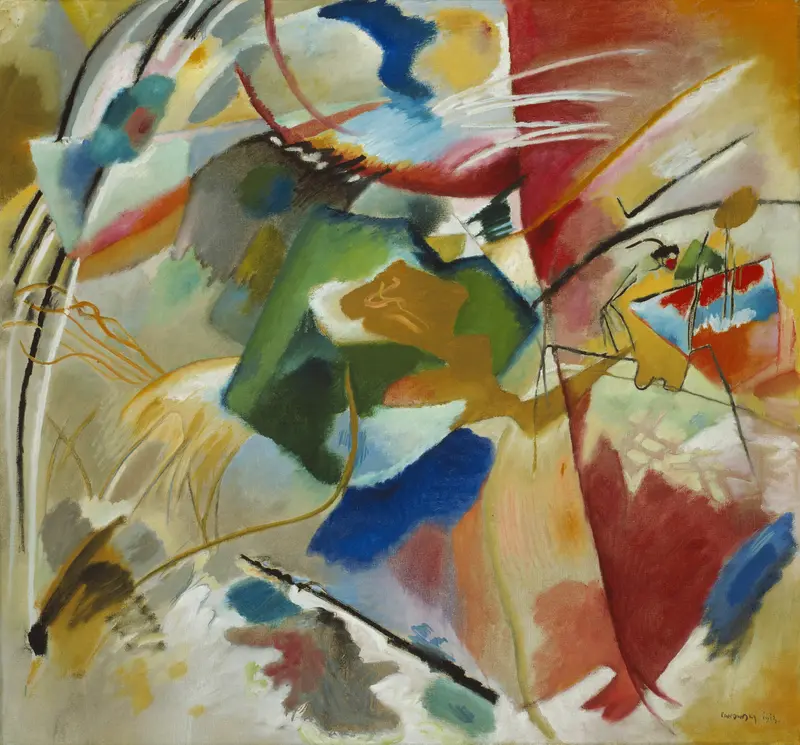
Kandinsky turned a concert of Arnold Schoenberg's music into a wave of yellow and a black wedge for the piano, with the listeners as patches of color. The Blue Rider artists emphasized abstraction, symbolism and expressive mark-making, says Tate.
Impression III (Concert), Wassily Kandinsky
Before and after Expressionism
 Post-Impressionismc. 1886–1905
 Symbolismc. 1886–1900
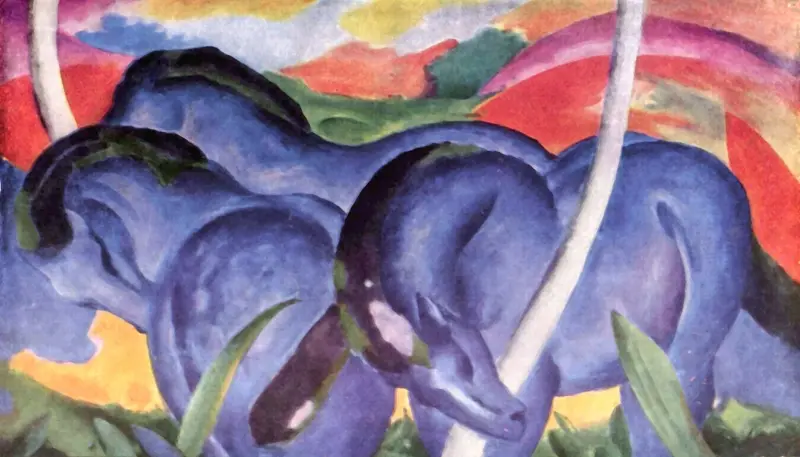 Expressionismc. 1905–1914
 Cubismc. 1907–1914
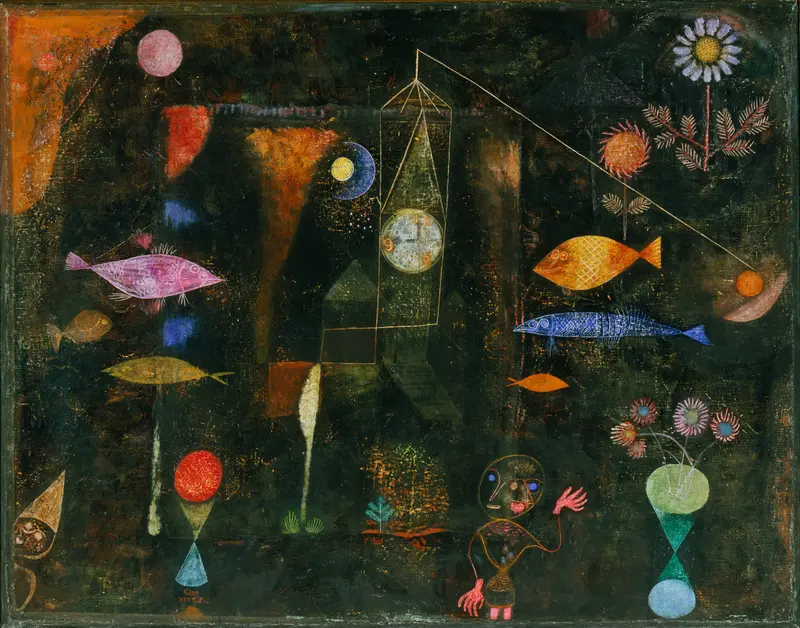 SurrealismFrom 1924
Expressionism vs Impressionism and Fauvism
| Compared | Impressionism | Expressionism | Fauvism |
|---|---|---|---|
| When | c. 1867–1886 | c. 1905–1914 | 1905–c. 1908 |
| Where | France (Paris) | Germany (Dresden, Munich, Berlin) and Austria | France (Paris and Collioure) |
| Aim | Catch passing light and everyday life, painted outdoors on the spot | Express inner feelings and spiritual themes rather than how things look | Strong color and simplified forms instead of realistic depth |
| Color and brushwork | Rapid, broken dabs of color | Intense, non-naturalistic color, distorted forms, free and thick paint | Bold color, often straight from the tube, in wild, loose dabs |
| Famous example | Monet, Impression, Sunrise | Munch, The Scream | Derain, The Pool of London |
| Key artists | Monet, Pissarro, Morisot, Degas | Munch, Kirchner, Kandinsky, Marc, Schiele | Matisse, Derain, Vlaminck, Dufy |
List of famous Expressionist paintings and their artists
The famous Expressionist paintings: who painted them, when, and where each one is today.
Show the listHide the list
| Painting | Painted by | Year | Medium | Size | Located in | City |
|---|---|---|---|---|---|---|
| The Scream | Edvard Munch | 1893 | Tempera and crayon on cardboard | 91 × 73.5 cm (35.8 × 28.9 in) | National Museum, Oslo | Oslo |
| Portrait of Wally Neuzil | Egon Schiele | 1912 | Oil on panel | 32 × 39.8 cm (12.6 × 15.7 in) | Leopold Museum | Vienna |
| Melancholy | Edvard Munch | c. 1892 | Oil on canvas | 64 × 96 cm (25.2 × 37.8 in) | National Museum, Oslo | Oslo |
| The Sick Child | Edvard Munch | 1885–1886 | Oil on canvas | 120 × 118.5 cm (47.2 × 46.7 in) | National Museum, Oslo | Oslo |
| Composition VII | Wassily Kandinsky | 1913 | Oil on canvas | 200 × 300 cm (78.7 × 118.1 in) | Tretyakov Gallery | Moscow |
| The Blue Rider | Wassily Kandinsky | 1903 | Oil on canvas | 52.1 × 54.6 cm (20.5 × 21.5 in) | Private collection | Zurich |
| Blue Horse I | Franz Marc | 1911 | Oil on canvas | 112 × 84.5 cm (44.1 × 33.3 in) | Lenbachhaus | Munich |
| Death and the Maiden | Egon Schiele | 1915 | Oil on canvas | 150 × 180 cm (59.1 × 70.9 in) | Belvedere Museum | Vienna |
| Berlin Street Scene | Ernst Ludwig Kirchner | 1913–1914 | Oil on canvas | 121 × 95 cm (47.6 × 37.4 in) | Neue Galerie | New York |
| The Fate of the Animals | Franz Marc | 1913 | Oil on canvas | 195 × 263.5 cm (76.8 × 103.7 in) | Kunstmuseum Basel | Basel |
| Portrait with Apples (The Artist's Wife) | August Macke | 1909 | Oil on canvas | 66 × 59.5 cm (26 × 23.4 in) | Lenbachhaus | Munich |
| The Yellow Cow | Franz Marc | 1911 | Oil on canvas | 140.5 × 189.2 cm (55.3 × 74.5 in) | Guggenheim Museum | New York |
| Woman in a Green Jacket | August Macke | 1913 | Oil on canvas | 44 × 43.5 cm (17.3 × 17.1 in) | Museum Ludwig | Cologne |
| Dead City III | Egon Schiele | 1911 | Oil on panel | 37.3 × 29.8 cm (14.7 × 11.7 in) | Leopold Museum | Vienna |
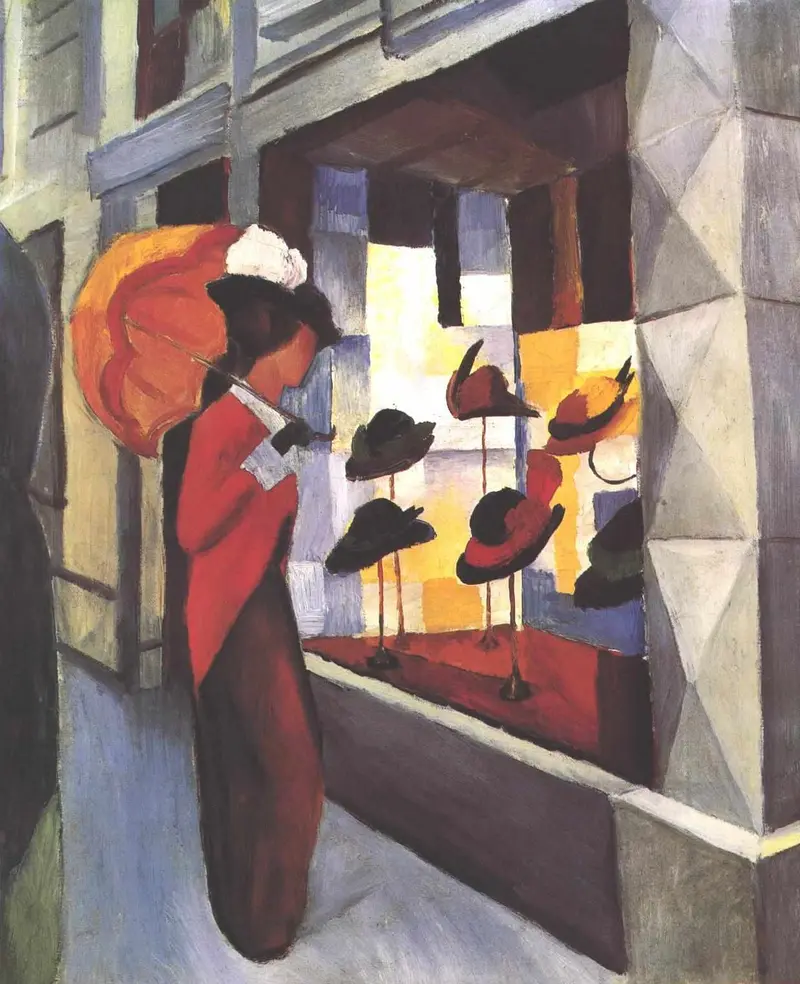
| Woman with a Parasol in Front of a Hat Shop | August Macke | 1914 | Oil on canvas | 60.5 × 50.5 cm (23.8 × 19.9 in) | Museum Folkwang | Essen |
| Half-Length Nude with Hat | Ernst Ludwig Kirchner | 1911 | Oil on canvas | 76 × 70 cm (29.9 × 27.6 in) | Museum Ludwig | Cologne |
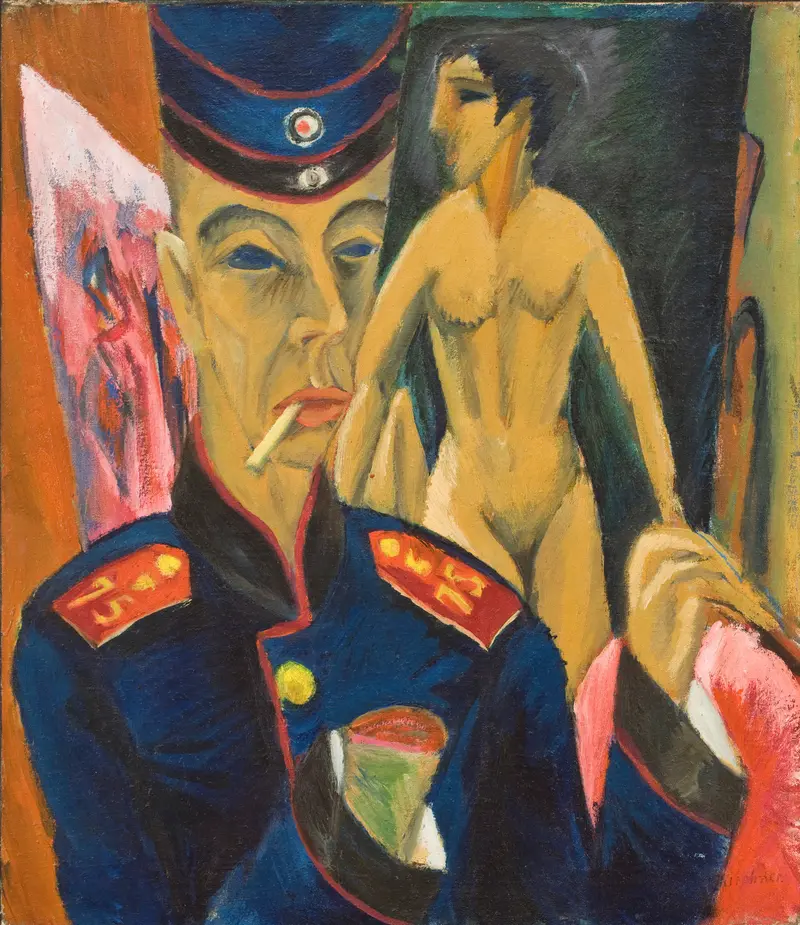
| Self-Portrait as a Soldier | Ernst Ludwig Kirchner | 1915 | Oil on canvas | 69 × 63.3 cm (27.2 × 24.9 in) | Allen Memorial Art Museum | Oberlin, Ohio |
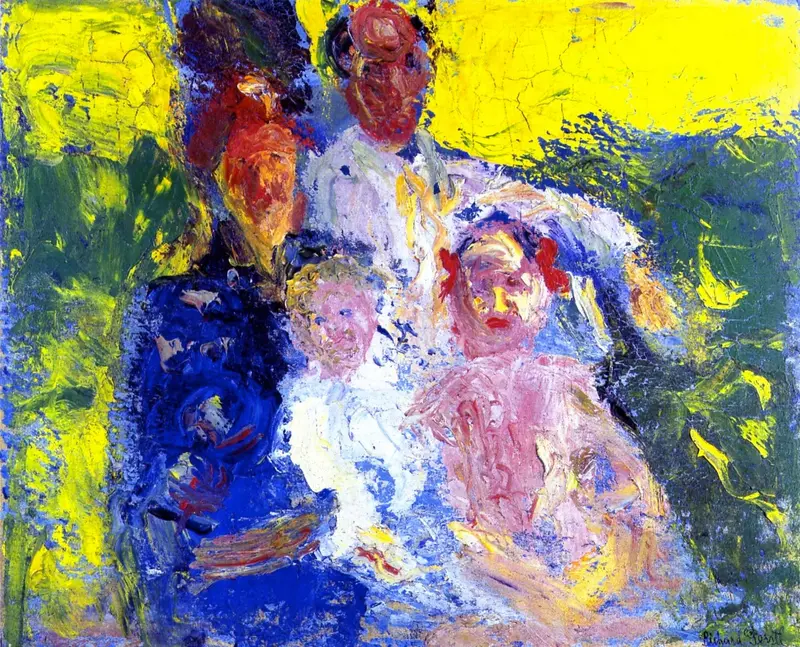
| The Schönberg Family | Richard Gerstl | 1908 | Oil on canvas | 88.8 × 109.7 cm (35 × 43.2 in) | mumok | Vienna |
| Self-Portrait in Tuxedo | Max Beckmann | 1927 | Oil on canvas | 139.5 × 95.5 cm (54.9 × 37.6 in) | Harvard Art Museums | Cambridge, Massachusetts |
| Impression III (Concert) | Wassily Kandinsky | 1911 | Oil on canvas | 78.4 × 100.6 cm (30.9 × 39.6 in) | Lenbachhaus | Munich |
Expressionism: questions and answers
What is Expressionism in art, and what does it mean?
In art, Expressionism means painting feelings rather than appearances: the artist distorts what he or she sees in order to express inner emotions, experiences or spiritual ideas. Tate traces the term to modern artists working in Germany in the early 20th century. The Getty's Art & Architecture Thesaurus describes a style that flourished between 1905 and 1920, especially in Germany, and gave up traditional standards of realism and proportion, distorting line, color and form.
Sources: Tate: Expressionism · Getty AAT: Expressionist
What are the characteristics of Expressionism?
Expressionist paintings use intense, non-naturalistic color, distorted forms and free, thick, highly textured brushwork, Tate says, so that an ordinary landscape or portrait becomes a dramatic expression of the artist's feelings. Tate describes German Expressionism as simplified shapes, bright colors and gestural brushstrokes. Typical subjects were anxious city streets, nudes in nature, animals in symbolic colors and searching self-portraits, and the Blue Rider artists moved toward abstraction.
Sources: Tate: Expressionism · Tate: German expressionism · Tate: Der Blaue Reiter · Neue Galerie New York: Ernst Ludwig Kirchner, Berlin Street Scene (archived page) · Lenbachhaus: Franz Marc, Blue Horse I (German) · Leopold Museum: Egon Schiele
When did Expressionism start and end?
Expressionism began around 1905 and was at its height before the First World War. Die Brücke was founded in Dresden on June 7, 1905, and broke up in 1913; the Blue Rider, formed in Munich in 1911, dispersed when war came in 1914. The style then spread across Europe, but the Nazis, in power from 1933, persecuted modern artists, and in 1937 they removed some 20,000 modern works from German museums and mocked 650 of them in the exhibition Degenerate Art.
Sources: Brücke-Museum: The Brücke artists · Tate: Der Blaue Reiter · Tate: Expressionism
Who started Expressionism, and where did it begin?
Expressionism began in Germany. Four architecture students, Ernst Ludwig Kirchner, Erich Heckel, Karl Schmidt-Rottluff and Fritz Bleyl, founded Die Brücke in Dresden in 1905, says the Brücke-Museum, and the Blue Rider followed in Munich in 1911 under Wassily Kandinsky, Gabriele Münter and Franz Marc. Tate says these artists took their cue from the dramatic paintings of Vincent van Gogh and Edvard Munch, and set themselves against the academic realism taught in art schools.
Sources: Brücke-Museum: The Brücke artists · Tate: Der Blaue Reiter · Tate: Expressionism
Who are the famous Expressionist artists?
The best-known Expressionist painters are Edvard Munch in Norway, Ernst Ludwig Kirchner of Die Brücke, Wassily Kandinsky, Franz Marc and August Macke of the Blue Rider, and Egon Schiele in Vienna. Tate also names Gabriele Münter, Marianne Werefkin and Oskar Kokoschka. Many Expressionists, including Emil Nolde, Erich Heckel, Karl Schmidt-Rottluff, Münter and Kokoschka, lived past 1955, so their paintings are still in copyright in many countries and are not shown here.
Sources: Tate: Expressionism · Tate: Der Blaue Reiter · Brücke-Museum: The Brücke artists · Cornell University Library: Copyright Term and the Public Domain
What is Edvard Munch's art style, and is The Scream Expressionism?
Yes, The Scream is usually seen as the starting point of Expressionism. Nasjonalmuseet in Oslo, which owns the 1893 painting, calls it a key turning point from Symbolism to the Expressionism of the 1900s, with vibrant, non-realistic colors and a quick, spontaneous-looking technique. Munch's style of the early 1890s, with simplified forms and flowing lines, grew out of Symbolism, the museum notes, and Tate names him with Van Gogh as a model for the German Expressionists.
Sources: Nasjonalmuseet: Edvard Munch, The Scream · Nasjonalmuseet: Edvard Munch, Melancholy · Tate: Expressionism
What is German Expressionism?
German Expressionism is the early 20th-century German art movement that put the artist's inner feelings ahead of copying reality, using simplified shapes, bright colors and gestural brushstrokes, as Tate defines it. Its two main groups were Die Brücke, led by Ernst Ludwig Kirchner, and the Blue Rider, led by Wassily Kandinsky and Franz Marc. Tate notes that expressionism also appears in music, photography, performance and film.
Sources: Tate: German expressionism · Tate: Expressionism
What was Die Brücke (The Bridge)?
Die Brücke (The Bridge) was the first Expressionist group, founded in Dresden on June 7, 1905, by Ernst Ludwig Kirchner, Erich Heckel, Karl Schmidt-Rottluff and Fritz Bleyl; Max Pechstein, Otto Mueller and, briefly, Emil Nolde joined later. Tate says the name may stand for a bridge between artists and society. The members painted with pure, intense color and quick brushwork, painted themselves bathing in the lakes near Dresden, moved to Berlin in 1911 and broke up in 1913.
Sources: Tate: Brücke · Brücke-Museum: The Brücke artists
What was the Blue Rider (Der Blaue Reiter)?
The Blue Rider (Der Blaue Reiter) was a group of Expressionist artists who came together in Munich in 1911, led by Wassily Kandinsky, Gabriele Münter and Franz Marc, with August Macke, Alexej Jawlensky and Marianne Werefkin among its members. It grew out of the New Artists' Association of Munich, founded in 1909, and is said to have taken its name from Kandinsky's 1903 painting The Blue Rider. The group explored the spiritual side of art through color and abstraction, and it dispersed when the First World War began in 1914.
Sources: Tate: Der Blaue Reiter
What is the difference between Expressionism and Impressionism?
Impressionism records what the eye sees; Expressionism shows what the artist feels. The Impressionists, led by Claude Monet from the 1860s, painted out of doors and quickly to catch passing light, in rapid, broken dabs of color, Tate explains. The Expressionists, from about 1905 in Germany, distorted forms and used intense, non-naturalistic color to express inner emotions, and turned against the academic realism of the art schools.
Sources: Tate: Impressionism · Tate: Expressionism
How are Expressionism and Fauvism related?
They are close cousins. Fauvism, led by Henri Matisse and André Derain in France from about 1905, used strong color, often straight from the tube, and fierce brushwork; Tate calls it a form of expressionism and says it is often compared with German Expressionism, which emerged at the same time and also grew out of Post-Impressionism. Die Brücke blended Post-Impressionism and Fauvism with old German art and with African and South Pacific art, Tate adds.
Sources: Tate: Fauvism · Tate: Brücke
What came after Expressionism?
After the First World War many German artists turned to New Objectivity (Neue Sachlichkeit), a realist style of the 1920s named after a 1923 exhibition in Mannheim and part of a wider “return to order,” says Tate. In the 1940s and 1950s American painters developed Abstract Expressionism, which Tate describes as an increasingly abstract form of expressionist painting, and in the 1980s the neo-expressionists revived the style internationally.
Sources: Tate: Neue Sachlichkeit (New Objectivity) · Tate: Expressionism · Tate: Abstract expressionism · Tate: Neo-expressionism
Where can you see famous Expressionist paintings?
In Munich, the Lenbachhaus holds a large Blue Rider collection, including works given by Gabriele Münter in 1957, with Marc's Blue Horse I and Kandinsky's Improvisation 19. In Vienna, the Leopold Museum has the largest Schiele collection in the world, and the Belvedere owns his Death and the Maiden. In Oslo, the National Museum shows The Scream and The Sick Child, and the Munch Museum owns more versions of The Scream. In New York, the Neue Galerie has Kirchner's Berlin Street Scene.
Sources: Lenbachhaus: Kandinsky, Improvisation 19 (German) · Lenbachhaus: Franz Marc, Blue Horse I (German) · Leopold Museum: Egon Schiele · Belvedere, Vienna (Google Arts & Culture) · Nasjonalmuseet: Edvard Munch, The Scream · Munch Museum: The Scream · Neue Galerie New York: Ernst Ludwig Kirchner, Berlin Street Scene (archived page)
Is Expressionist art in the public domain, and can I download it free?
The famous works and the painters featured here are. Every painter featured here died in 1955 or earlier, so their paintings are in the public domain in countries where copyright ends 70 years after the artist's death; in the United States, works published before 1931 are public domain. You can download them free. Expressionists who died later, such as Emil Nolde (1956), Oskar Kokoschka and Karl Schmidt-Rottluff, are still in copyright in many countries, so check the rules where you publish.
Sources: Cornell University Library: Copyright Term and the Public Domain
How we chose the famous paintings
The famous paintings on this page are the Expressionist paintings known most widely around the world, measured by the number of languages that have an encyclopedia entry about each one, checked in November 2026. No painter has more than three of them, which is why Munch's The Dance of Life and Ashes and Marc's The Large Blue Horses appear in their own rows further down, and we list only paintings with entries in at least two languages.
We include only paintings that the holding museum, Wikidata or our own catalog classes as Expressionist, or that the museum files with the Blue Rider. Munch's paintings of the early 1890s sit between Symbolism and Expressionism; Nasjonalmuseet calls The Scream the turning point between the two. We show only painters who died in 1955 or earlier, so famous works by Emil Nolde, Oskar Kokoschka, Erich Heckel, Karl Schmidt-Rottluff and Gabriele Münter are not here.
Dates, sizes and locations come from the museums' own records and from Wikidata.
Spotted a mistake? Tell us and we will correct it.