Eglise de vieux moulin près Compiègne (Oise) — History & Facts
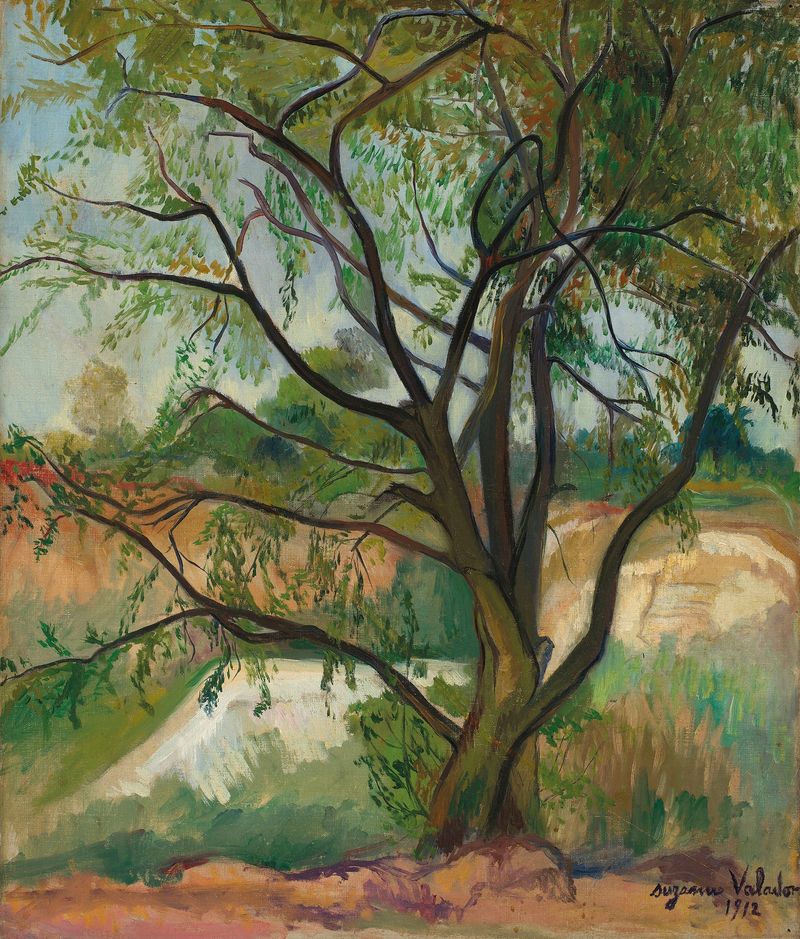
What secret hides in the quiet of the canvas? Within the serene embrace of a rural landscape, innocence dances in the light that filters through delicate branches, revealing untold stories waiting to be uncovered. Look to the left at the church steeple, its tall, slender form reaching toward the sky, a beacon of calm amidst the lush greenery of the countryside. Notice how the rich greens and muted browns interlace, creating a harmonious symphony that invites the viewer into a world both pastoral and timeless. The soft brushstrokes breathe life into the scene, as dappled sunlight bathes the church in an ethereal glow, while shadows fall gently on the earth below, hinting at the fleeting nature of time. Hidden beneath the surface, a tension between the simplicity of rural life and the weight of impending change unfurls.
The idyllic scene belies the chaos of a world on the brink of war, as the tranquility portrayed may soon be disrupted. The artist's choice of color not only captures the innocence of the moment but also serves as a poignant reminder of the fragility that accompanies peace. The stillness of the landscape invites contemplation, urging the viewer to ponder what lies beyond this serene facade. Created in 1914, Eglise de vieux moulin près Compiègne (Oise) reflects Suzanne Valadon's growth as an artist during a time when Europe was on the cusp of turmoil.
Painting from her studio in Montmartre, she sought to capture the essence of the pastoral world, contrasting the beauty of nature with the societal changes looming on the horizon. Valadon’s works during this period often celebrated the themes of innocence, simplicity, and the serene, offering a refuge from the unrest that would soon engulf the continent.